
A lounge’s identity is built into the space, not simply added as a logo. Effective airport lounge branding brings together brand colours, textures and distinctive visual elements with local materials and cultural references. Lighting and layout help the space feel welcoming, recognisable and easy to use.
Passengers notice the atmosphere as well as the service. A considered interior can make a lounge feel distinctive while meeting practical needs and supporting comfort. The challenge is to express the brand clearly in a space that works for different travellers.
This article explains how interior design, brand identity and local character can work together. It explores the choices that shape a lounge’s visual experience, from wall graphics and finishes to lighting, layout, and areas for work or relaxation.
Key Takeaways
- Use distinctive visual elements to make a lounge recognisable, while keeping the overall design comfortable and functional.
- Bring the brand into the space through carefully selected surfaces and graphics, rather than relying on logos alone.
- Use local references thoughtfully to give the lounge a stronger connection to its setting.
- Plan different zones for working, relaxing and socialising so the interior supports varied passenger needs.
Brand identity through interior design
Colours, textures and visual details turn a lounge’s identity into a physical experience. Start with a defined palette and carry it through walls, furniture and signage. For example, repeating an accent colour at the entrance, in the seating area and in the work zone creates continuity without making every surface identical. A consistent material palette also helps passengers recognise the brand across different locations.
To make multiple lounges recognisable, set core design rules for colour, typography, graphics and finishes, then adapt them to each site’s layout and character. A shared graphic style can stay consistent, while locally relevant artwork or materials give each lounge distinction. The aim is a recognisable identity with room for site-specific choices.
Outdoor terraces and biophilic details can extend the experience beyond the main lounge. Plants, natural textures and terrace views add visual variety to the interior palette. Energy-efficient lighting can highlight greenery and key design features. As a practical step, identify which natural elements passengers can see from their seats, then plan lighting to keep those features visible.
Wallpaper, rugs and graphic design can give separate areas a clear visual purpose. A destination-inspired wall graphic can create a focal point, while a rug can distinguish a seating cluster from a nearby route. Choose durable graphics and finishes suited to busy interiors, and keep their colours aligned with the wider lounge identity.
Inclusive design makes a visual system easier for more passengers to use. Provide clear routes between the entrance, seating and facilities, with legible signs and strong contrast between text and background. Offer different seating options, including chairs, sofas and quieter areas. These practical details help passengers find their way and use the lounge comfortably, without relying on decoration alone.
Lounge examples show how material choices can convey a sense of place. The Primeclass Lounge at Muscat International Airport and Qatar Airways’ Al Mourjan Business Lounge at Hamad International Airport use cultural references and materials in their designs. Durable graphical wallpaper can also make interior spaces more distinctive.
The Emirates lounge at Dubai International Airport features marble flooring, dark wood panelling and a neutral-toned palette and finishes. San Diego International Airport Terminal One debuted a 5,000-square-foot terrace.
Airport lounge branding
A strong programme aligns the lounge’s physical identity with its passenger-facing communications. Separate the fit-out scope from campaign placements, then plan how each touchpoint contributes to a consistent brand experience.
Branding and fit-out costs
In the UK, branding and fit-out budgets depend on project scope rather than a standard lounge price. A fit-out may involve layout changes, finishes, lighting and installation, while branding may cover graphics and other visual touchpoints. The cost depends on the project and is provided after a quote request. Key factors include the lounge area, existing surfaces, material choices and installation complexity. Keep campaign media separate: digital screens, static displays and tabletop placements are advertising formats, not interior fit-out.
Current branding trends
Current approaches combine physical finishes with digital and integrated brand touchpoints. Digital screens carry changeable content, while static displays and tabletop placements offer other points of contact. Interior design trends also include locally sourced materials, energy-efficient lighting, plants and greenery. Together, these choices can make a space distinctive while supporting a considered approach to materials and lighting. Durable wall graphics add a fixed visual layer, particularly when a lounge needs a strong focal point without a layout change.
Successful UK lounge examples
No1 Lounge at London Heathrow Airport Terminal 2 was listed as a World’s Leading Airport Lounge winner from 2022 to 2025. That recognition makes it a useful UK reference for considering how the full lounge experience contributes to a clear identity. For a practical design exercise, map the passenger journey from entrance to seating, then assign each point a consistent visual cue. A wall graphic at arrival and coordinated displays near seating can reinforce the same identity without treating the award as proof of a particular design feature.
Creating a sense of place
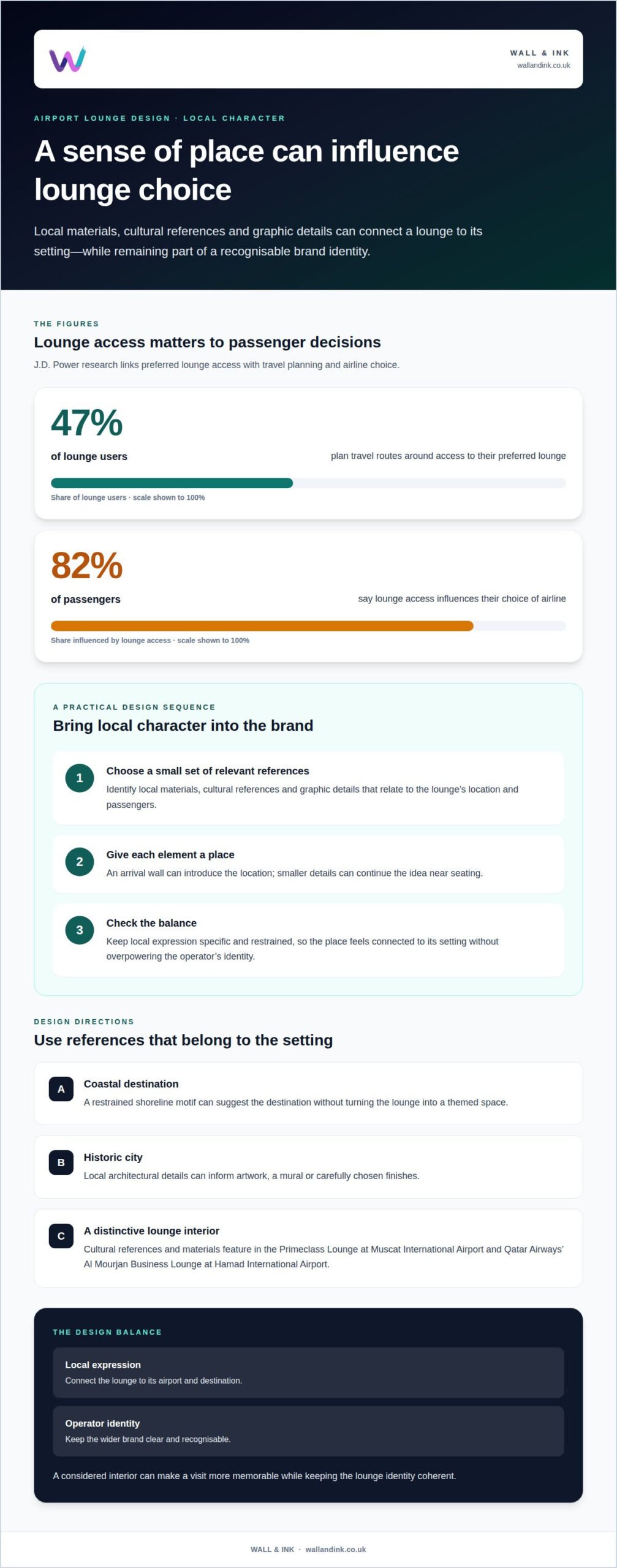
Local character can make a lounge feel connected to its airport rather than interchangeable with another terminal. J.D. Power research found that 47% of lounge users plan travel routes around preferred lounge access, while access influences airline choice for 82%. A place-specific experience can therefore contribute to how passengers remember a visit and choose where to travel.
Begin with the setting. Identify local materials, cultural references and graphic details that can be brought into the interior without overpowering the lounge identity. A UK airport lounge might draw on nearby architecture, landscape or craft traditions through a mural, artwork or carefully chosen finishes. Keep references specific and restrained, so they add context rather than make the space feel themed.
There is no single visual formula for creating a sense of place. A lounge serving a coastal destination might use a restrained shoreline motif, while one near a historic city could reference local architectural details. These are design directions, not fixed templates. Select elements that relate to the lounge’s location and passengers, then integrate them into the wider brand system.
A simple design process keeps local character coherent. First, choose a small set of relevant references, such as a material palette and graphic motif. Next, decide where each belongs: an arrival wall can introduce the location, while smaller details can continue the idea near seating. Finally, review the balance between local expression and the operator’s identity, making sure both remain clear.
How can this improve customer experience and loyalty? A recognisable setting can make a visit more memorable, while consistent brand cues help returning passengers identify the lounge. J.D. Power’s findings show that lounge access can influence travel planning and airline choice, so a distinctive experience can support the wider passenger relationship. Design should also make the space comfortable and easy to navigate, rather than relying on decoration alone.
How do airports and airlines design lounge branding and interiors?
Airports and airlines can start with the passenger journey, then shape the space around its needs. A practical plan connects arrival, seating, work areas and quieter zones, making the lounge easier to understand. Lighting supports the atmosphere and can draw attention to key design features, such as reception or a focal wall.
Next, organise the layout around different activities. Provide clear routes between the entrance, seating and facilities, with quiet areas for passengers who want to work or relax. A lounge might also include spaces for socialising or family play. These zones should feel distinct but belong to one coherent interior. Consistent colours, signage and materials help connect them.
Passenger dwell time shapes how those zones work. Passengers typically spend 30-90 minutes inside airport business lounges. That makes seating comfort, convenient work surfaces and clear wayfinding important design considerations. A mix of chairs, sofas and private areas can serve different needs without forcing every passenger into the same setting.
Lighting and wellness features can add another layer. A yoga space, meditation room or healthy food option can support travellers seeking a quieter experience. Use lighting to create a welcoming atmosphere and highlight those areas without making routes difficult to follow. At an international airport, intuitive signs and visible landmarks help passengers orient themselves within a busy terminal.
Finally, align the interior with the brand at every passenger touchpoint. Set a consistent visual system for finishes, graphics and signage, then adapt it to the lounge’s layout. This keeps the identity legible across arrival, work and relaxation zones. Strong airport lounge branding comes from a joined-up experience, not a logo applied in isolation.
For a branded focal point, plan custom lounge wall graphics around the interior palette and passenger journey.
Lighting can shape the lounge’s mood and draw attention to design elements, creating a relaxing, inviting atmosphere. It should complement an easy-to-navigate layout, with private, quiet areas where passengers can relax or work.
Personalisation can also come through the settings available to passengers. Spaces for work, socialising, family gaming or play offer different ways to use the lounge and serve a range of preferences.
Wall & Ink
Wall & Ink can translate an airport lounge’s visual identity into a wall feature through Commercial Wall Murals and Direct-to-Wall Printing. These options suit projects where a blank or underused wall needs a distinctive visual role, such as reinforcing a destination theme or defining a seating area.
Wall & Ink uses UV printing technology to apply artwork directly to walls. The service includes bespoke design consultation, digital visualisations and professional on-site installation, connecting the proposed graphic with the space before installation begins. Consider this approach when a lounge needs a tailored wall treatment that fits its palette, layout and local character.
To discuss wall graphics for your lounge, contact Wall & Ink.
Turn the lounge concept into a clear design brief
Before commissioning a visual feature, define what passengers should notice first and what the space should communicate. A concise brief can set out the lounge’s audience, preferred atmosphere, key brand colours and the wall or area intended for the feature. This gives the design a clear purpose instead of treating decoration as an isolated decision.
For airport lounge branding, connect the brief to the physical space. Consider sightlines from the entrance, nearby seating and existing finishes. A visualisation can help assess scale, colour balance and placement before installation, making it easier to align the graphic with the wider interior plan.
Wall & Ink can help develop a tailored wall feature for a commercial setting. Share your project requirements and explore how a mural could support the intended atmosphere. Discuss your project with Wall & Ink and take the next step towards a considered lounge design.
Wall & Ink for Airport Lounge Branding
Wall & Ink provides Direct-to-Wall Printing and Commercial Wall Murals for airport lounge branding projects that call for visual features on interior walls.
If you’re planning a lounge and want wall graphics as part of its branding, turn to Wall & Ink to discuss your project. Its Retail and Hospitality Graphics can also bring branded visuals into hospitality settings.
Frequently Asked Questions
What does branding mean for an airport lounge?
Airport lounge branding is the set of choices that makes a lounge identifiable and gives passengers a consistent impression. It extends beyond the logo to names, messaging, service details and printed materials. For example, a lounge can use a consistent naming style and tone across booking details, menus and signs, helping passengers recognise the same identity at each stage of their visit.
What are the key elements of an airport lounge brand identity?
Key elements include a clear logo, a defined colour palette, consistent typography, recognisable imagery and a distinct tone of voice. For effective airport lounge branding, document approved logo versions, colour references, type styles and image treatments in a concise brand guide. Include practical examples for menus, signs and digital information so staff and suppliers can apply the identity consistently across passenger communications.