
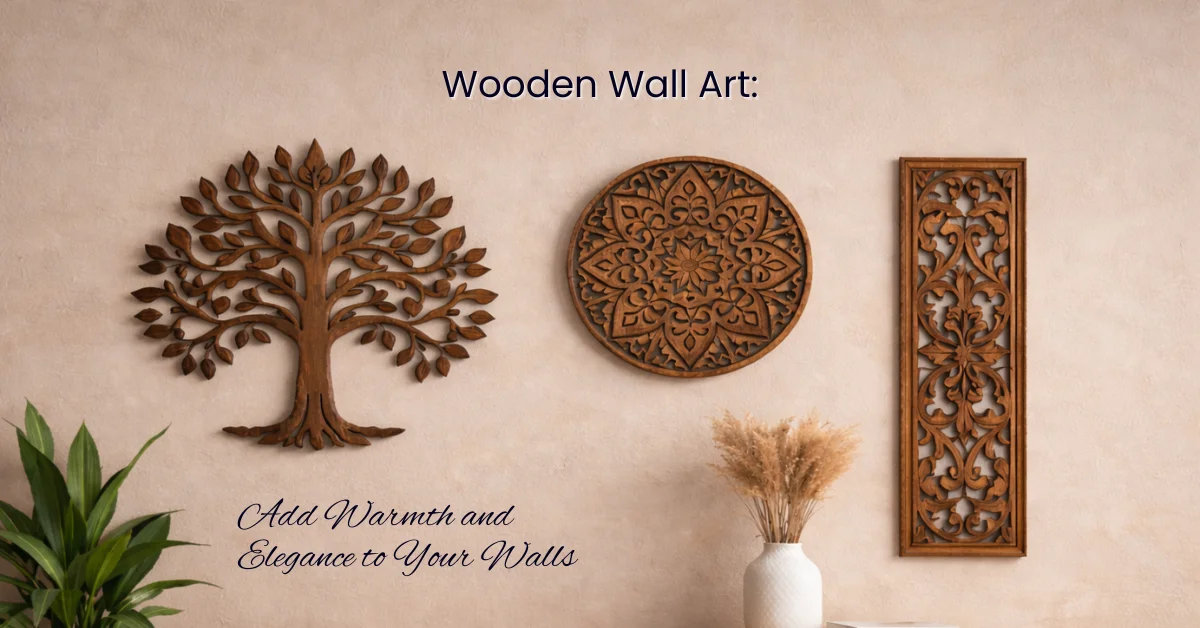
Walk into any well-designed room, and you immediately notice how it feels. Is it cold and clinical, or warm and inviting? Often, the secret ingredient isn’t the expensive sofa or the plush rug it’s what’s hanging on the walls. In recent years, homeowners and decorators have turned away from stark minimalism and embraced natural textures. This shift has crowned wooden wall art as a must-have element for modern interiors.
Unlike flat prints or generic canvas paintings, wood brings an organic, tactile quality to a space. It introduces grain patterns, knots, and varying shades of timber that tell a story of nature. Whether you live in a rustic farmhouse, a contemporary city apartment, or a boho-chic bungalow, incorporating wood art instantly grounds the room. It adds warmth that paint simply cannot replicate and offers a sense of permanence and craftsmanship. From intricate carvings to reclaimed barn wood mosaics, wooden wall art is more than just decoration; it’s a way to bring the calming essence of the outdoors inside, creating a sanctuary of elegance and comfort.
When we talk about wood art, we aren’t just referring to a single style. The versatility of timber allows artists to create a staggering variety of designs, ensuring there is something for every taste. Understanding the different types available helps you choose the perfect piece that resonates with your personal style.
One of the most traditional and stunning forms is wooden carved wall art. These pieces often feature intricate reliefs where the artist chips away material to reveal a picture or pattern. The depth created by the carving catches light and shadow, making the artwork feel alive as the lighting in your room changes throughout the day. Subjects range from floral motifs and wildlife to abstract geometric patterns.
For those seeking a spiritual or meditative vibe, wooden mandala wall art is an exceptional choice. These are typically laser-cut or hand-carved circular designs featuring complex, symmetrical patterns radiating from a center point. They are perfect for adding a focal point to a bedroom or a yoga space, symbolizing balance and harmony.
If you prefer a more modern or industrial look, consider wood mosaics or panels. These are often made from reclaimed wood blocks cut at different depths and stained in various shades. When assembled, they create a 3D effect that is incredibly tactile. This type of wooden wall art decor works beautifully as a feature wall, adding architectural interest without the need for structural renovation.
Artists often blend wood with other materials like metal, resin, or glass. A slab of live-edge wood poured with blue resin can mimic a river, while wood combined with iron accents fits perfectly in industrial lofts. Wooden art on wall surfaces doesn’t have to be purely timber; these mixed media pieces offer a contemporary twist on traditional materials.
Whether you choose a delicate mandala or a rugged reclaimed panel, selecting the right wooden art for wall placement can transform a blank space into a gallery of natural beauty.
Sometimes, a room demands drama. Small frames can get lost on a sprawling expanse of drywall. This is where large wooden wall art steps in to anchor the space. A statement piece draws the eye immediately, setting the tone for the entire room and often acting as a conversation starter.
Large-scale art changes the perception of room size. Surprisingly, a single massive piece can make a small room feel larger and less cluttered than a gallery wall of tiny frames. Large wood pieces, such as oversized carved headboards repurposed as art or floor-to-ceiling installations, bring a sense of grandeur.
One of the most popular trends in statement decor is wooden world map wall art. These aren’t your standard geography class posters. We are talking about high-quality, laser-cut wooden continents installed directly onto the wall. Often available in different wood tones (oak, walnut, mahogany) to distinguish countries or regions, these maps add a sophisticated, worldly vibe to home offices or living rooms. They appeal to travelers and dreamers alike, serving as a visual log of past adventures and future plans.
If a single solid piece feels too heavy, consider wooden wall art panels. Triptychs (three-panel sets) allow you to cover a large area while maintaining a feeling of airiness. The gaps between the panels let the wall color peek through, integrating the art with the room. You might find a continuous scene carved across three panels or a geometric pattern that flows from one section to the next.
For those who march to the beat of their own drum, unusual wooden wall art offers endless possibilities. Think of driftwood sculptures that snake up a wall, or abstract assemblages of burnt wood (Shou Sugi Ban) that create stark, black textures. These pieces challenge the traditional idea of “pictures on a wall” and move into the realm of sculpture. They are perfect for modern homes where texture is prioritized over color.
Wood is the chameleon of the design world. It adapts to the environment it is placed in. However, styling it correctly ensures it enhances your decor rather than clashing with it. Here is how to navigate different styles and trends, particularly those gaining traction in the UK.
This is the natural habitat for wall art wooden pieces. Think distressed finishes, visible knots, and rough-hewn textures. A reclaimed barn wood sign or a window frame repurposed with botanical prints fits seamlessly here. The key is imperfection—the wood should look like it has lived a life before reaching your wall.
Contrary to popular belief, wood works beautifully in minimalist spaces. The trick is to choose pieces with clean lines and smooth finishes. A simple, large circle of polished walnut or a set of sleek, vertical slats can add warmth to a white room without adding visual clutter. The “Japandi” style (a mix of Japanese rustic minimalism and Scandinavian functionality) relies heavily on these understated wooden elements.
Bohemian decor loves natural materials. Pair a wooden mandala wall art piece with macramé hangings and plenty of houseplants. The intricate patterns of the wood complement the organic shapes of the leaves, creating a lush, relaxed atmosphere.
If you are crafty, making your own art is rewarding.
Wooden wall art UK trends are currently leaning towards sustainability and heritage. British homeowners are increasingly seeking pieces made from locally sourced or reclaimed timber (like old railway sleepers or scaffolding boards). There is also a resurgence of marquetry—the art of applying pieces of veneer to a structure to form decorative patterns—updated with modern geometric designs.
Finding the perfect piece involves knowing where to look. The market is flooded with mass-produced items, but for wood art, quality and authenticity matter.
Platforms like Etsy are goldmines for unique, handmade items. You can connect directly with artisans who craft wooden wall art decor in their home workshops. This is often the best place to find custom pieces or specific dimensions to fit an awkward wall space. Look for sellers with high ratings and detailed photos of the wood grain.
Many high-street home retailers now carry “artisan-style” collections. While these are convenient, be sure to check the materials. Ensure you are buying real wood rather than plastic composites designed to look like timber. Stores specializing in ethical or sustainable homewares are often better bets for genuine solid wood pieces.
Don’t underestimate your local creative community. Visiting craft fairs allows you to touch the wood and see the finish in person. You might also find local carpenters willing to create a commissioned piece, such as a custom headboard or a specific map, which ensures you get exactly what you want while supporting local business.
Image Idea: A graphic illustration of a laptop screen open to an artisan marketplace page next to a photo of a bustling local craft market stall filled with wooden goods.
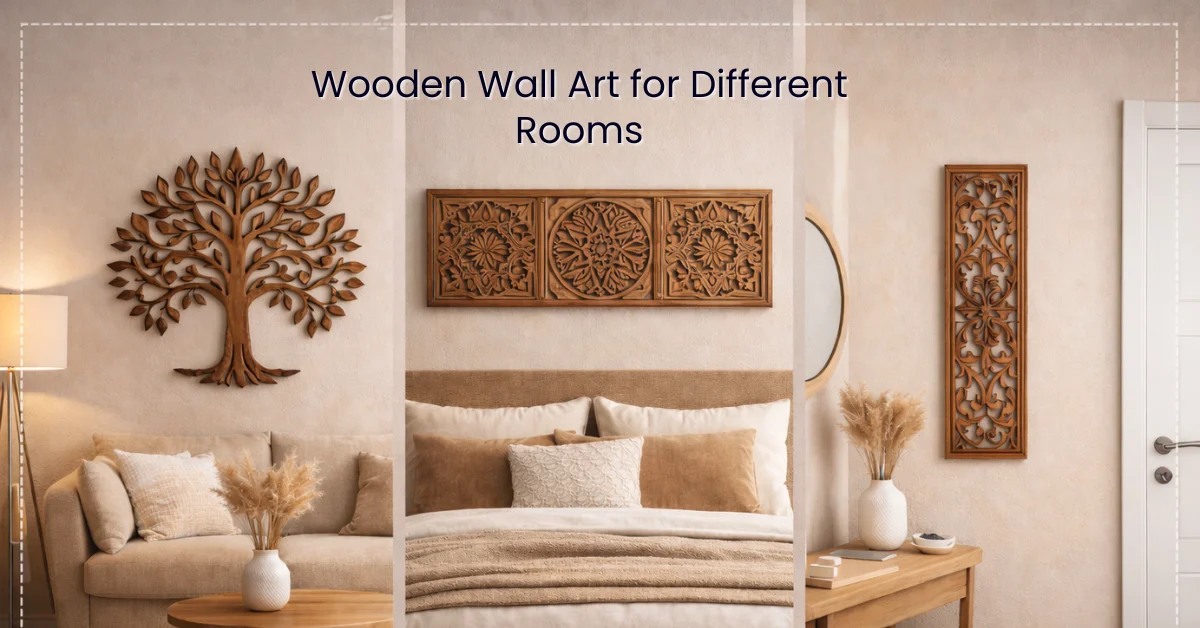
Wood is versatile, but different rooms have different needs—both aesthetically and practically. Here is how to place wooden art for wall spaces throughout your home.
This is the place for your statement pieces. Above the sofa is prime real estate for wooden wall art panels or a large landscape carving. Ensure the art is at least two-thirds the width of the sofa to maintain balance. If you have a fireplace, a rustic wood mantel piece or art leaning on the mantel creates a cozy focal point.
The bedroom should be a sanctuary, so opt for calming designs. A wooden mandala wall art piece painted in white or soft grey tones creates a serene vibe above the bed. Alternatively, a long, horizontal piece of raw timber with a live edge can act as a visual headboard, grounding the bed and adding texture to soft linens.
Wood art adds appetite appeal in dining spaces. Consider a series of smaller carved panels depicting herbs or botanicals. Large typographic signs (e.g., “Gather” or “Eat”) made of wood are popular, but try to find ones with unique fonts or distressed finishes to avoid looking generic.
You can use wood here, but proceed with caution. Humidity is wood’s enemy. If you want wooden art on wall surfaces in a bathroom, ensure it is thoroughly sealed with a marine-grade varnish. Bamboo is a great alternative here as it is naturally more resistant to moisture. A teak wood sculpture or a mirror framed in driftwood can turn a bathroom into a spa-like retreat.
These transitional spaces often feel narrow and cold. A series of vertical wooden slats or a collection of small, framed wooden geometric shapes can guide the eye down the hall, adding interest without protruding too much into the walkway.
Incorporating wooden wall art into your home is one of the most effective ways to bridge the gap between nature and modern living. It softens hard architectural lines, absorbs sound to reduce echo, and introduces a layer of sophisticated warmth that paint alone cannot achieve. Whether you opt for a grand wooden world map wall art to chart your travels, or a set of delicate wooden wall art panels to frame a cozy reading nook, the result is the same: a home that feels curated, grounded, and undeniably elegant. So, look at your bare walls not as empty spaces, but as canvases waiting for the timeless beauty of wood.