
A damp cloth can do more harm than a speck of dust. If you’re wondering how to clean a printed wall without fading or smearing the image, pause before you start. The right method depends on the print and the wall surface beneath it.
It’s tempting to reach for a familiar household cleaner or rub at a stubborn mark. But advice for painted walls doesn’t automatically apply to printed surfaces. Moisture, abrasive cloths and cleaning products may affect the ink or finish. A mark that looks like dirt could also be damage to the print itself.
This guide explains how to remove dust and light marks cautiously, what to avoid and when to stop. Start with a gentle dry-cleaning approach, then check with the installer or print provider before using liquid or tackling a persistent stain. Direct-to-wall prints can involve different inks, finishes and substrates, so care advice should match your installation rather than rely on guesswork.
Key Takeaways
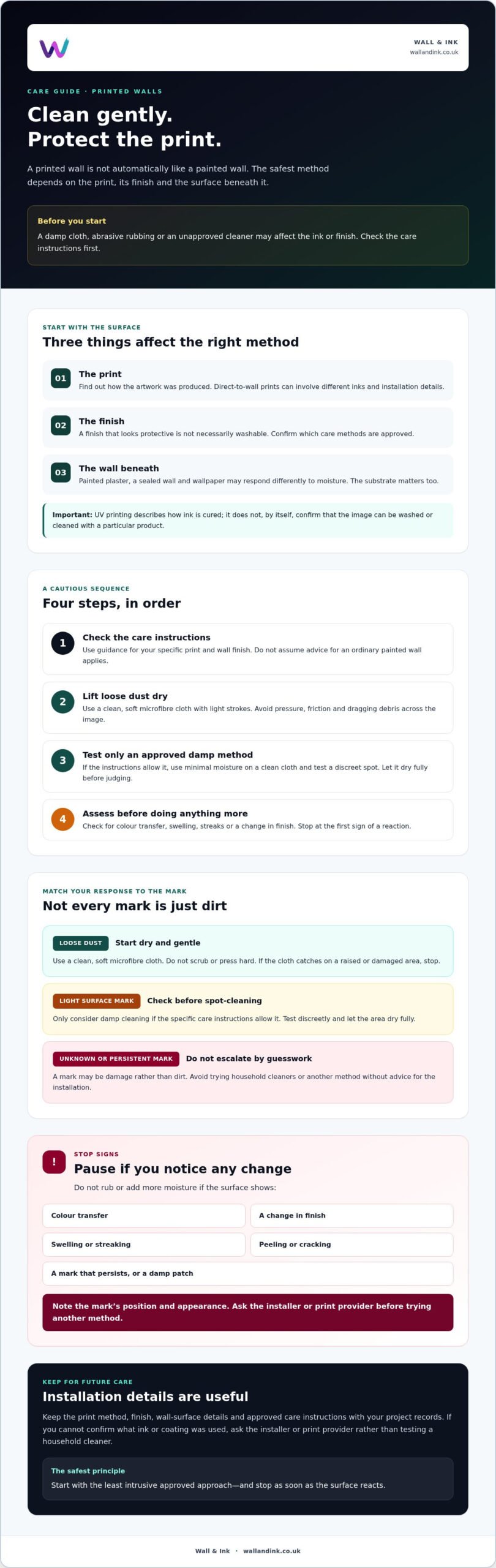
- Before cleaning a printed wall, check the print, any protective finish and the wall surface. Each can affect which care methods are suitable.
- Follow a cautious sequence: check the care instructions, gently remove dry dust with a clean, soft microfibre cloth, then assess the result.
- Match your response to the mark. Dust, a light surface mark and an unknown stain call for different levels of caution.
- Stop if you notice colour transfer, a change in finish, peeling or a mark that persists. Record what you see and ask the installer before trying another method.
- Keep installation details and approved care instructions to help guide future maintenance.
How to Clean a Printed Wall Safely: Start with the Print and Surface
A printed wall may be an image applied directly to the wall or a print on a material installed over it. The cleaning method depends on more than the visible artwork. The print process, any protective finish and the substrate beneath it can all affect how the surface responds to moisture or friction. Advice for ordinary painted walls may not be suitable.
First, work out what you’re dealing with. Loose dust, a fresh surface mark and a persistent stain aren’t the same problem, so don’t automatically treat them the same way. Check the installer’s or manufacturer’s care instructions before trying anything. Guidance for your specific installation takes precedence over general advice.
What should you identify before cleaning a printed wall?
Look through your project records for details of the print method, finish and wall surface. If you can’t confirm what ink or coating was used, contact the installer or print provider rather than testing a household cleaner. This is especially relevant for direct-to-wall printing. Wall & Ink uses UV printers to apply artwork to physical wall surfaces, but care advice still needs to match the individual installation.
Inspect the mark before touching it. Peeling, cracking, colour transfer or damp patches may indicate an issue with the print or wall, rather than dirt sitting on the surface. Don’t rub these areas. Note their position and appearance, and ask for advice before cleaning.
Why do the wall surface and print finish matter?
Painted plaster, a sealed wall and wallpaper can respond differently to moisture. Some wallpaper materials include paper, fabric or vinyl, as outlined in this overview of modern wallpaper materials. A surface that tolerates a little moisture may not behave like a more absorbent or delicate one. The printed layer and the wall beneath it may also have different sensitivities.
UV printing describes how ink is cured. It doesn’t, by itself, confirm that an image is safe to wash or clean with a particular product. A finish that looks protective isn’t necessarily washable. Without care instructions for the specific product, don’t treat the print as a standard painted wall. Confirm the method first, then choose the least intrusive approach approved by the installer or manufacturer.
How to Clean a Printed Wall: A Cautious Step-by-Step Method
A measured process reduces the chance of turning a small mark into a damaged finish. If you’re asking how to clean a printed wall, work in this order: check the care instructions, remove loose dust, test an approved method if needed, then assess the surface before continuing.
- Check the instructions. Confirm which cleaning methods are suitable for the specific print and wall finish. Don’t assume advice for an ordinary painted wall applies to a printed surface.
- Remove dry dust. Use a clean, soft microfibre cloth with light strokes. Avoid pressure and friction.
- Test before spot-cleaning. Consider damp cleaning only if the instructions allow it. Test the approved method somewhere discreet and let the area dry fully.
- Assess before proceeding. Look for colour transfer, swelling, streaks or a change in finish. Stop if anything looks different.
General guides, such as Reader’s Digest’s overview of how to clean walls simply and safely, may help with conventional wall surfaces. A printed wall needs a more specific check. Don’t transfer a general method to the print unless its care instructions confirm it’s suitable.
How should you remove dust from a printed wall?
Use a clean, soft microfibre cloth and gentle strokes to lift loose dust. Start with a relatively clean area and avoid dragging debris across the image. Don’t scrub or press hard. Abrasive pads, stiff brushes and forceful wiping can scuff the surface, even without liquid. If the cloth catches on a raised or damaged area, stop rather than pulling at it.
How do you test a damp-cleaning method first?
Check the care instructions before introducing water or any cleaning solution. If damp cleaning is approved, use a clean cloth with minimal moisture and test a discreet spot. Let it dry fully before judging the result, as a wet surface can conceal streaks or other changes. Continue only if there’s no colour transfer, swelling, streaking or change in finish. Stop at the first sign of a reaction. Don’t add more moisture to try to correct it.
When planning a future mural, ask about the print and finish and keep the care guidance with the installation details. Explore direct-to-wall printing as an option for bespoke wall artwork, and confirm the appropriate maintenance advice for the specific surface.
Which Cleaning Method Is Safest for Marks on a Printed Wall?
The safest response depends on what the mark appears to be and what the print’s care instructions allow. Use this comparison as a cautious guide, not as permission to apply a method that hasn’t been approved for your particular surface.
| What you see | Cautious first response | Proceed only if | Stop if |
|---|---|---|---|
| Loose dust | Lift it gently with a clean, soft cloth, without scrubbing. | The cloth moves freely and the surface remains unchanged. | The print catches, flakes, transfers colour or looks scuffed. |
| Light surface mark | Check the installation’s care instructions before considering a damp method. | The instructions permit it, and a discreet test area dries without a visible change. | You see streaking, swelling, colour transfer or a change in finish. |
| Unknown or stubborn stain | Don’t try stronger products or harder rubbing. Photograph the mark and ask the installer or print provider for advice. | The provider confirms a suitable method for the print and wall surface. | The mark persists, or the area shows signs of print or wall damage. |
This distinction matters: a stain on the surface may need different attention from fading, peeling or moisture damage. If you’re unsure which you’re seeing, treat it as unknown rather than testing increasingly aggressive methods. General surface-cleaning guides offer helpful background context, but they can’t confirm what’s appropriate for a specific printed wall installed by Wall & Ink.
Can you use water or detergent on a printed wall?
Only use water or detergent if the maker or installer confirms that the print, finish and underlying wall can tolerate it. If damp cleaning is approved, follow the instructions exactly and use no more moisture or product than specified. Don’t guess a dilution or assume that a detergent labelled gentle is suitable. For expert advice on how to clean a printed wall, always follow the specific instructions for that installation.
Which cleaners and tools should you avoid unless approved?
Abrasive pads, scouring powders and hard-bristled brushes can damage the image or finish. Avoid solvents, bleach and strong chemicals unless the responsible provider expressly approves them. Don’t soak the area, use steam or rub repeatedly when compatibility is unknown. More force isn’t a reliable next step. If a cautious approach doesn’t resolve the mark, stop and seek professional advice.
How to Handle Stubborn Marks Without Making the Damage Worse
A mark that remains after a gentle, approved cleaning method needs a closer assessment, not more force. Dirt may sit on top of the image, but fading, peeling or moisture damage can look like a stain at first. Repeated wiping can spread a mark or alter a delicate or unidentified finish, making it harder to work out what caused the change.
What should you do about a stubborn stain?
Pause if a cautious method hasn’t worked. Don’t press harder, repeat the same treatment over and over or introduce an unapproved chemical. Before contacting the installer or print provider, record:
- the mark’s location and approximate size
- what it looks like, including any change in colour or texture
- the cleaning method and materials already tried
A clear photograph can help show how the mark changes over time. Share these details and ask for guidance that matches the specific print, finish and wall surface. This is safer than applying a general wall-cleaning method to an unknown coating.
How can you tell if the print or wall is damaged?
Look closely before touching the area again. Colour on the cloth, blurred image detail, peeling edges or a change in sheen may indicate that the print or its finish has been affected. Bubbling, dampness or a breakdown in the wall surface could point to an issue beyond a surface mark. These signs don’t confirm the cause, but they are reasons to stop cleaning and seek qualified advice.
If the material or cause is uncertain, leave the area alone until you’ve spoken to the installer or print provider. This is particularly important if the mark is spreading or the wall feels damp. A cleaning attempt won’t resolve an underlying surface issue, and extra moisture or friction could make visible damage worse.
In a home, school, workplace or customer-facing setting, routine checks can help identify marks early. Ask the people responsible for the space to report changes rather than trying different products on the spot. Keep installation details and care guidance accessible so anyone maintaining the area knows what has been approved. If you’re planning a new mural, discuss the wall surface and future care as part of your project. Explore direct-to-wall printing and consider what maintenance information you’ll want to keep after installation.
When to Ask the Installer and How to Plan a Printed Wall
Stop before trying another cleaning method if you don’t know what the print or finish is made from, if colour transfers to the cloth, if the surface changes or if a mark persists. These signs don’t necessarily identify the cause, but more cleaning could make the problem harder to assess. Contact the installer or print provider for advice specific to that wall.
What information should you give the installer when asking for advice?
Useful details can help the installer understand the surface and what may have happened. Share where the mark is, what it looks like and any installation information you have, such as the print method or wall substrate. Explain which cleaning method and cloth you used, and describe any change afterwards, including transfer, streaking or a change in sheen. Ask for guidance on that print and substrate, rather than relying on general wall-cleaning tips.
Keep the reply with your installation records. Care instructions can help with future upkeep, particularly if responsibility for maintaining the space changes. In a home, workplace or shared setting, make sure the person who next cleans the area can find the approved guidance. Keeping a clear record helps prevent guesswork about how to clean a printed wall.
What should you consider when planning a new printed wall?
Plan around the room’s use, the wall surface and the level of maintenance that feels practical. A wall in a busy area may need different planning from one in a quieter space, but the suitable print and care approach depends on the actual materials and installation. Raise maintenance expectations during the design conversation and ask what information will be available about the finished print and substrate.
Wall & Ink specialises in custom murals printed directly onto wall surfaces using UV printers. Its service includes bespoke design consultations and digital visualisations to help you plan artwork in relation to the space. Discussing the wall and how it will be used can also help you ask informed questions about future care. If you’re planning a mural, explore Wall & Ink’s direct-to-wall printing service.
Keep Your Printed Wall Looking Its Best
The safest way to clean a printed wall is to match your approach to the print, finish and underlying surface. Start by checking the care instructions and removing loose dust gently. If a mark persists, don’t increase pressure or reach for a stronger cleaner without approval. Colour transfer, a change in finish or signs of moisture damage are reasons to stop and ask the installer or print provider.
Keep installation details and approved care guidance somewhere easy to find. They’ll help you make informed decisions later, whether you’re maintaining a home mural or a graphic in a shared space.
Wall & Ink uses UV printers to apply artwork directly to wall surfaces, with bespoke design consultations, digital visualisations and professional on-site installation. Explore Wall & Ink’s direct-to-wall printing service to consider an approach for your space.
Frequently Asked Questions
Can you clean a printed wall with water?
Only use water if the care instructions for that specific print and wall surface permit it. Some finishes or substrates may react to moisture, so don’t assume a method suitable for painted plaster will also suit a printed wall. If damp cleaning is approved, follow the installer’s instructions and test a discreet area first. Stop if you notice colour transfer, swelling, streaks or a change in finish.
What is the safest way to remove dust from a printed wall?
Use a clean, soft microfibre cloth and light strokes to lift loose dust. Don’t press hard or scrub, as friction may scuff the print or finish. Check that the cloth moves freely over the surface, and avoid abrasive pads and stiff brushes. If the surface catches, flakes or transfers colour, stop and ask the installer or print provider for advice before continuing.
Can you use washing-up liquid on a printed wall?
Don’t use washing-up liquid unless the print’s manufacturer or installer confirms it’s suitable. Detergents can affect some finishes, and the underlying wall may respond differently from the printed layer. There isn’t a universal dilution or product that can be recommended for every printed wall. Check the installation’s care instructions first. If detergent is approved, follow the specified method and test a discreet area before treating a visible mark.
How do you remove a stubborn mark from a printed wall?
Stop if gentle, approved cleaning hasn’t removed the mark. Don’t increase pressure or try a stronger product without surface-specific advice. Photograph the mark, note its location and appearance, and record what you’ve already used. Then contact the installer or print provider with those details and ask which method is suitable for the print, finish and substrate. A persistent mark could be damage rather than dirt on the surface.
Can you use disinfectant or bleach on a printed wall?
Avoid disinfectant and bleach unless the responsible provider confirms that the specific product is suitable for the print, finish and wall surface. Strong chemicals may alter colour or damage a coating, and a disinfectant’s suitability can’t be judged by its label alone. Don’t use it to tackle an ordinary mark. Check the care instructions or ask the installer before applying any chemical cleaner, and stop if the surface changes.
What should you do if colour comes off while cleaning a printed wall?
Stop immediately if colour transfers to the cloth. Don’t continue wiping, add water or try another cleaner, as further contact could worsen the affected area. Note where the transfer occurred, which method you used and whether the print looks different. Take a clear photograph and contact the installer or print provider for advice. Colour transfer may indicate that the image or finish has been affected, so don’t treat it as a routine mark.
How often should you clean a printed wall?
There’s no single cleaning schedule for every printed wall. The right frequency depends on the room, how the surface is used and the care guidance for its print and finish. Avoid unnecessary wet cleaning. Remove loose dust gently when it becomes visible, provided the care instructions allow dry dusting. In shared spaces, keep the approved instructions accessible so routine upkeep is consistent and people don’t improvise with unsuitable products.
Can you clean a printed wall with a steam cleaner?
Don’t use a steam cleaner unless the installer or manufacturer explicitly approves it for the complete installation. Steam combines heat and moisture, which may affect the image, finish or underlying wall. Compatibility can’t be assumed. If the care instructions don’t mention steam cleaning, ask the print provider before using one. For an unknown or persistent mark, document what you can see and seek guidance rather than applying heat or moisture.
Planning a mural? Explore Wall & Ink’s direct-to-wall printing service and discuss your design and wall surface with the team.