
What if the most trustworthy reception wall isn’t the one with the largest logo? Clients may arrive feeling uncertain, so a law firm’s reception needs to feel professional and discreet without becoming cold or intimidating. Thoughtful reception wall graphics can make a strong first impression while keeping the space calm and welcoming.
The right design can express your firm’s identity without copying another practice or overwhelming visitors. The key is to balance brand colours, imagery and scale with the wall itself and the way people use the reception area.
This guide explores design directions suited to law firms, from restrained brand-led graphics to subtle nature-inspired imagery. You’ll learn how to assess the wall, consider viewing angles and reception use, and prepare for a professional installation. You’ll also see how bespoke direct-to-wall printing can adapt a logo or other imagery to your space, while a digital visualisation helps you review scale and placement before production. Use these ideas to prepare a clearer brief and discuss a design that feels distinctive, appropriate and true to your firm.
Key Takeaways
- Start with what visitors need to notice and understand when they arrive, rather than treating the reception wall as a backdrop.
- Explore six adaptable reception wall graphics directions, from restrained logo-led branding to abstract compositions in your firm’s colours.
- Compare concepts by brand fit, tone, readability, scale, wall suitability and maintenance expectations before settling on a design.
- Record the wall dimensions, surface condition, access points and nearby furniture or signage to help shape a practical project brief.
- Assess a provider’s design support, visualisation, surface review and installation plan. Direct-to-wall printing may suit some briefs, but not every wall.
Reception wall graphics for law firms: what should visitors notice first?
Reception wall graphics are custom visual content applied directly to a wall or displayed as wall art to communicate a firm’s identity and help visitors orient themselves. In a law firm, the reception is more than a branded backdrop. It is where clients arrive, work out where to go and begin to take in the character of the practice.
This is part of Environmental graphic design, where graphic elements are considered within the built environment and the visitor’s experience of it. The wall should work with the reception desk, entrances and nearby directions, not compete with them. Consider what visitors can see on arrival, what they need to understand and how long they may spend in the space.
What impression should a law firm reception create?
There’s no single visual style that suits every firm. A reassuring direction might use open spacing, legible wording and considered colour. A contemporary approach could pair clean typography with a restrained abstract composition. A traditional feel might draw on established brand colours and formal, balanced layouts. Choose according to your clients, practice identity and existing interior, rather than a supposed ranking of styles.
Keep the main message clear from the distance at which visitors first encounter it. Large lettering can be easier to read, but excessive scale or detail may dominate a compact reception. A deliberate visual hierarchy helps visitors notice the firm name or key message first, while leaving the space welcoming and uncluttered.
Which brand elements can become reception graphics?
Start with approved assets: the firm’s logo, brand colours, typography, values and imagery. A logo can establish who visitors have arrived to see, but on a large wall it may not offer enough context by itself. Supporting colour, a concise values statement or carefully selected imagery can give the composition purpose without adding unnecessary information.
Before adapting artwork, check the firm’s brand guidelines and asset files. Confirm permitted logo versions, colour values, clear space and any rules for use alongside text or imagery. These details matter at wall scale, where small layout choices become more prominent. A bespoke design consultation can help translate approved assets into a layout for the space. A digital visualisation can then show how its scale and placement may appear before production.
Six reception wall graphic directions for a law firm
The following reception wall graphics are illustrative concepts, not client case studies. Adapt them to the firm’s established identity, visitors and reception layout. Each direction balances information and visual impact differently, so consider both its intended tone and its practical design risks.
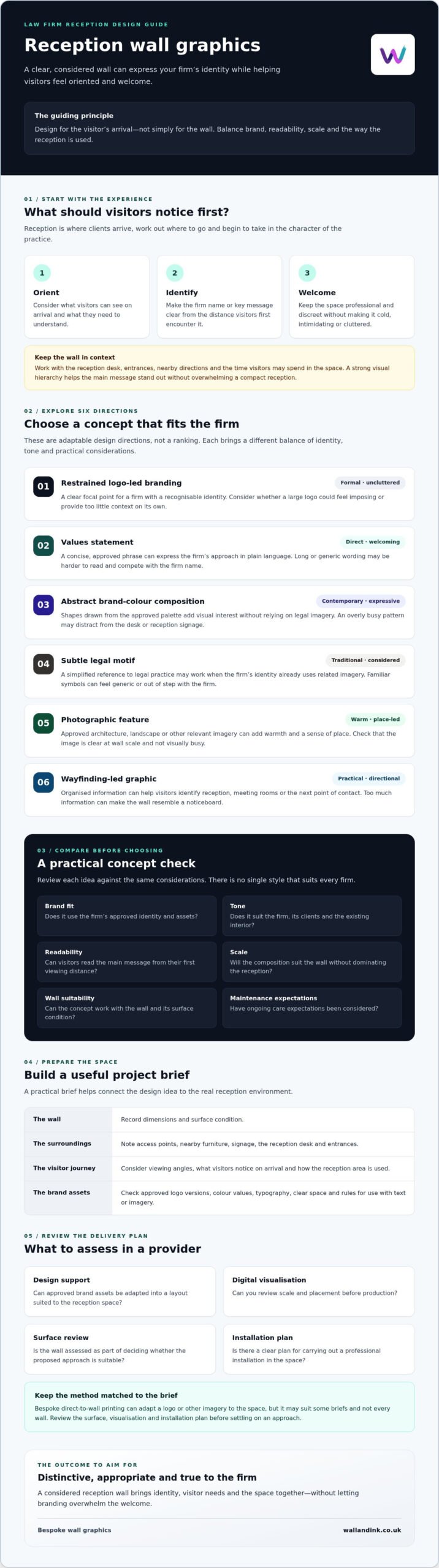
- Restrained logo-led branding: A good fit when the firm has a clear, recognisable identity and wants a formal, uncluttered focal point. The tone is assured; the risk is that an oversized logo may feel imposing or offer little context on its own.
- Values statement: A concise, approved phrase can suit a firm that wants to express its approach in plain language. It can feel direct and welcoming, but long or generic wording may be difficult to read and could compete with the firm name.
- Abstract brand-colour composition: Shapes drawn from the firm’s approved palette can add visual interest without relying on legal imagery. This can feel contemporary, though an overly busy pattern may distract from reception signage or the desk.
- Subtle legal motif: A simplified reference to legal practice may suit a firm whose existing identity uses such imagery. It can create a traditional tone, but familiar symbols may look generic or suggest a style that doesn’t match the firm.
- Photographic feature: Approved architecture, landscape or other relevant imagery can add warmth and a sense of place. It suits brands that already use photography; the risk is that a low-resolution or visually busy image may lose clarity at wall scale.
- Wayfinding-led graphic: A carefully organised graphic can help visitors identify reception, meeting rooms or the next point of contact. It suits spaces where orientation is a priority, but too much information can make the wall resemble a noticeboard.
Which graphic ideas suit a traditional or contemporary practice?
Understated typography, balanced layouts and restrained palettes may sit comfortably with an established, formal identity. More expressive abstract compositions can suit a firm with a contemporary visual language. Neither direction is automatically more professional. Base the choice on the practice’s own brand and interior, not assumptions about its legal specialism. Keep a clear hierarchy and make every word intended for visitors readable from the point where they enter.
How can logos, statements and imagery work together?
Choose one primary focal point, then use supporting elements sparingly. For example, a logo might lead, with a short values statement or subtle image providing context. Check brand rules and use approved assets. Photographs need suitable resolution for their intended display size. Have the firm approve names, claims and client-facing wording before artwork goes to print. A design consultation and digital visualisation can help stakeholders review the composition in context. For a bespoke option, explore commercial wall murals, including direct-to-wall printing, and confirm that the proposed approach suits the brief and wall.
How to compare reception wall graphic concepts before choosing
A prominent graphic can still feel professional. The difference lies in hierarchy and restraint: give the firm name or main message a clear role, limit competing details and leave visual space around the focal point. Compare concepts against the actual reception, not just a design shown on screen. Use the criteria below to focus the discussion.
| Concept | Brand fit | Tone and readability | Scale | Wall suitability | Maintenance expectations |
|---|---|---|---|---|---|
| Logo-led | Strongest where the logo and guidelines are established. | Formal and direct; check that the mark reads clearly from the entrance. | Allow clear space so it doesn’t overwhelm the wall. | Review obstructions and surface condition before setting placement. | Ask what cleaning approach is appropriate for the chosen finish. |
| Values statement | Works if the wording reflects the firm’s approved identity. | Can feel personal; keep text concise and legible at a distance. | Check line breaks and letter size against the available wall area. | Assess whether the wall is visible from visitor seating and arrival points. | Confirm any care requirements for the selected surface and finish. |
| Abstract brand-colour composition | Relies on accurate use of approved colours. | Contemporary and visual; avoid busy detail that competes with signage. | Review how the pattern sits around furniture and architectural features. | Check for uneven areas or features that could interrupt the artwork. | Ask the provider about care expectations for the proposed finish. |
| Photographic or wayfinding feature | Needs approved imagery or accurate visitor information. | Imagery can attract attention; directions must remain easy to scan. | Test image crop or sign placement at the intended viewing distance. | Check lighting, sightlines and nearby signs. | Confirm care guidance for the specific material and finish. |
How do direct-to-wall graphics compare with wallpaper or vinyl?
Direct-to-wall printing applies artwork to the wall surface. Wallpaper and vinyl use separate materials and installation methods. None is universally best. Compare the design flexibility each project needs, the preparation required for the specific surface and how the proposed installation will be carried out. Ask the provider to assess the wall and explain any preparation, finish or care considerations. Don’t assume compatibility, removability or longevity without project-specific information.
How can a firm judge whether a concept is readable and balanced?
Review the design from the distance visitors will first see it, taking the reception’s lighting and contrast into account. Can someone identify the firm name quickly? Is supporting text still readable? Does the logo lead, or are several elements competing? A digital visualisation can help stakeholders judge scale and placement in context. Gather feedback from colleagues who interact with visitors as well as those who use the space day to day. The final choice should suit both the brand and the wall, so confirm surface and maintenance expectations before approving production.
Plan law-firm reception wall graphics around the space and visitor journey
A strong project brief starts with the wall and the people who use the reception. Note what visitors see as they enter, where they pause and how they find the right person or meeting room. This helps keep the design relevant to the space, rather than treating the wall as a separate feature.
What should a law firm include in its design brief?
Gather the firm’s approved brand files, any preferred message, the intended audience and reference images that show the visual direction. Decide who will make project decisions and who must approve names, legal wording and final artwork. Agreeing approval responsibilities early helps keep feedback organised.
Record the wall’s width and height, and take clear photographs that show its condition and surrounding area. Include doors, sockets, lights, reception furniture, existing signage and the visitor’s usual approach. These details give a designer a more useful basis for considering layout and placement.
- Wall dimensions and photographs taken from more than one angle
- Notes on visible marks, uneven areas or other surface concerns
- Furniture, signage and features that may affect the composition
- Brand assets, approved wording and the person responsible for sign-off
- Access details, including any practical restrictions around the wall
A design consultation can help turn these materials into a workable brief. Before production, review a digital visualisation showing the proposed artwork in the reception. It lets stakeholders assess scale and placement in context, including how the design sits alongside the desk, signage and visitor sightlines. Check the visualisation against the measurements and flag any adjustments before approving the artwork.
What should the firm check before installation?
Ask the printing specialist to assess whether the wall is suitable for the proposed approach and whether preparation may be needed. Surface compatibility and finish are project-specific, so confirm these rather than assuming the wall is ready. Agree the installation sequence with the project team, including how access will be provided and whether furniture or nearby items need to be moved.
Plan how visitors and staff will use the reception during on-site work. Confirm which areas need to remain accessible, how people will be directed around the work area and who will coordinate arrangements on the day. Wall & Ink’s service can bring design consultation, digital visualisation, direct-to-wall printing and professional on-site installation together, subject to project requirements.
To discuss a bespoke reception wall graphics project, talk with Wall & Ink about your reception wall and share the measurements, photographs and brand materials you’ve prepared.
Choose a bespoke reception wall graphics partner and take the next step
A suitable specialist should help you assess the brief as well as develop the artwork. Before proceeding, make sure you understand how the design will be reviewed, what the wall requires and what the on-site work involves. Clear answers help your firm decide whether the proposed method fits the space and project aims.
What should a specialist explain before a project proceeds?
Use this checklist to guide the discussion:
- Artwork development: Ask how your brand assets, preferred message and design references will inform the artwork.
- Visualisation: Find out how the proposed design will be shown in context, and how you can review its scale, placement and layout before production.
- Wall suitability: Share photographs and details of the surface, then ask what assessment or preparation may be needed. Suitability depends on the specific wall and proposed approach.
- Installation plan: Clarify the intended process, access requirements and any arrangements needed for furniture, staff or visitors.
- Project scope: Confirm what the work includes, who approves final artwork and what needs to be agreed before installation is scheduled.
Don’t rely on assumptions about finish, care or surface compatibility. Ask for project-specific information, and make sure the firm’s authorised decision-makers approve the design and any client-facing wording.
How does Wall & Ink support a bespoke reception project?
Wall & Ink provides commercial wall murals and direct-to-wall printing using UV printers. Its service brings together design consultation, digital visualisation and professional on-site installation. Client logos or photographs can be adapted into wall-ready artwork, giving the design a connection to the firm’s own identity rather than a ready-made look.
Direct-to-wall printing is one bespoke option, not a universal answer. The right approach depends on the brief and the wall, so share the details and confirm suitability with the project team before moving ahead.
To start a discussion, prepare clear wall photographs, accurate dimensions, approved brand assets and a short outline of what the graphic should achieve. Then discuss your reception wall graphics project with Wall & Ink.
Shape a reception that reflects your firm
The strongest reception wall graphics start with a clear purpose: help visitors feel oriented while expressing the firm’s identity in a way that suits its clients and interior. A restrained logo, concise message or considered image can each work, provided the visual hierarchy is clear and the design feels right for the space.
Before choosing a direction, compare concepts for readability, scale and brand fit, then check the wall, surrounding features and visitor sightlines. Preparing accurate dimensions, photographs and approved brand assets will also give a project discussion a practical starting point.
Wall & Ink provides bespoke design consultation and digital visualisation, alongside direct-to-wall printing and professional on-site installation. A visualisation can help your team review placement and scale before production, while a project-specific discussion can establish whether the approach suits your wall and brief.
Discuss your reception wall graphics project with Wall & Ink to explore a design that feels considered, professional and distinctly yours.
Frequently Asked Questions
What are reception wall graphics for a law firm?
Reception wall graphics for a law firm are bespoke visual designs created for a reception wall, either printed directly onto its surface or displayed as wall art. They may use the firm’s logo, approved colours, typography, values or imagery. A design concept is a proposal, not proof of a completed installation. Review the artwork in context, including its scale and placement, before treating it as final.
How can reception wall graphics make a law firm look more professional?
Consistent use of the firm’s approved branding can make the reception feel more considered, while a clear visual hierarchy helps visitors identify the firm name or key message. Choose a visual tone that fits the practice and its existing interior, whether contemporary, traditional or understated. Keep text legible and avoid competing elements. These choices shape the space’s presentation, but they can’t guarantee how any individual visitor will respond.
Which wall graphic ideas work well in a law firm reception?
Options include a restrained logo-led design, a concise statement approved by the firm, an abstract composition using brand colours or carefully selected imagery. Each can suit a different identity and reception layout, so none is a universal recommendation. For instance, a simple logo may offer a clear focal point, while imagery can add context. Consider the wall’s scale, nearby signs and furniture, and ensure every message is approved and readable.
Can graphics be printed directly onto a law firm reception wall?
Yes. Direct-to-wall printing uses a specialist printer to apply artwork directly onto a wall surface, rather than installing a separate wall covering. It can create bespoke, brand-led designs, but the specific wall and project requirements need assessing first. Share photographs and dimensions, and ask the printing specialist to review surface suitability, any preparation required and how the proposed artwork will be positioned before production.
Are direct-to-wall graphics better than wallpaper or vinyl for a reception?
Not automatically. Direct-to-wall printing applies artwork to the wall itself, while wallpaper and vinyl use separate materials and installation approaches. The right option depends on the desired design, the wall’s condition, preparation needs and the project scope. Ask providers to explain their proposed method and any surface requirements. Compare the approaches for your specific reception rather than assuming one is always better for appearance, performance or future changes.
How do you prepare a reception wall for graphics?
Start by recording the wall’s width and height, taking clear photographs and noting visible marks, uneven areas, fixtures, nearby furniture and signage. Share this information with the printing specialist for a surface review. Preparation depends on the particular wall and proposed method, so don’t assume it is ready to print. Coordinate access, furniture movement and the work sequence with the project team before agreeing an installation date.
How much do reception wall graphics cost?
The cost of a bespoke project depends on its requirements, so a reliable figure needs a project assessment rather than a general estimate. The area to be printed and the complexity of the surface can affect pricing, alongside the agreed design and project scope. Provide accurate dimensions and photographs, then ask what the proposed work includes. This gives the provider practical information to assess the wall and discuss the brief.
How can a law firm preview reception wall graphics before installation?
A digital visualisation places proposed artwork into an image of the intended reception, helping the team review scale and placement in context. It can make it easier to assess how the design relates to the desk, entrances and nearby signage before production. Share clear photographs and accurate wall measurements to support the review. Confirm with the provider what the visualisation shows and how your team can request changes or approve the artwork.