
What if a school wall mural could support learning and feel like a natural part of the space, rather than simply filling a blank wall? The best school wall murals start with more than a theme. They bring learning goals, pupils’ needs and the wall itself into the same plan.
Choosing artwork raises practical questions. Will pupils be able to read it from across the room? Does the subject suit the age group and school community? Will the finished mural work in a busy setting, and how can installation fit around school routines? These details matter as much as the visual concept.
This guide explains how to turn a mural idea into bespoke, wall-ready artwork, assess the intended space and review a digital visualisation before printing. It also compares direct-to-wall UV printing with applied wall coverings and outlines the steps involved in professional on-site installation. A clear process helps your school plan a mural that suits its purpose and setting, with fewer surprises along the way.
Key Takeaways
- Choose school wall murals around a clear learning purpose, the pupils who use the space and the school community’s identity.
- Plan artwork for its location. Content, scale and viewing distance all affect how easily pupils can understand it.
- Understand how direct-to-wall UV printing differs from wallpaper and vinyl, so you can choose an approach that suits the project.
- Consider the wall’s material, condition, measurements, obstructions and access when planning installation.
- Use a design consultation and digital visualisation to develop and review bespoke artwork before on-site printing.
School wall murals: how to make the walls support learning
A school wall mural is bespoke artwork created for a particular wall, learning space and audience. It might express school identity, help pupils find their way, introduce a subject or make an area feel more welcoming. Murals can be produced using different techniques, as the overview of Mural explains, but a school mural’s value depends on how well the artwork fits its setting.
Start with the need, not just an attractive image. A graphic without a clear audience or objective may add colour, but it can also compete with displays, signage or classroom activity. A defined purpose gives the design team a practical basis for choosing content, scale and placement. It also helps the school assess whether the artwork reflects its priorities, without assuming that a mural alone will improve attainment.
What can a school wall mural achieve?
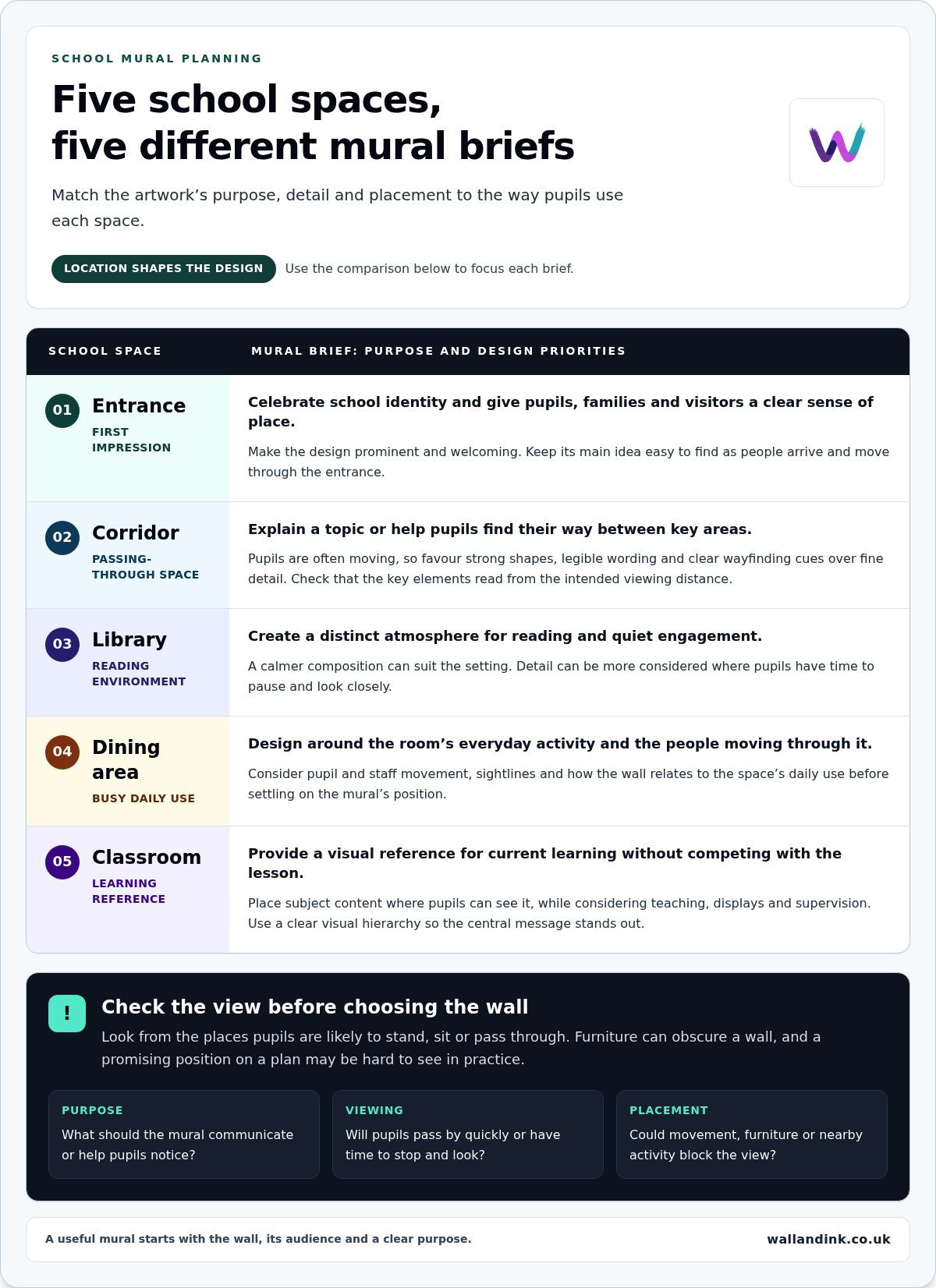
Set one main aim before developing the visual concept. For example, a mural at the entrance could celebrate the school’s identity and give pupils and visitors a clear sense of place. A corridor graphic might explain a science topic or mark a route between key areas. In a library, artwork could help create a distinct reading environment; in a classroom, it might provide a visual reference for current learning.
The aim determines what pupils need to see and how they’ll see it. A route graphic calls for clear, quickly understood cues. A topic-based mural can include more detail if pupils have time to stop and engage with it. Agreeing the purpose early keeps the content focused and makes decisions about size and location more straightforward.
Which school spaces could benefit from a mural?
Each location brings different viewing conditions and routines. Match the artwork’s detail and scale to how pupils use the space:
- Entrance: A prominent, welcoming design can communicate school identity to pupils, families and visitors.
- Corridor: Pupils are often moving through, so strong shapes, legible wording and clear wayfinding cues may work better than fine detail.
- Library: A calmer composition can help set the atmosphere, with detail suited to pupils who can pause and look closely.
- Dining area: Consider pupil and staff movement, sightlines and how the wall relates to the room’s daily use.
- Classroom: Place subject content where pupils can view it without distracting from teaching, displays or supervision.
Before settling on a wall, consider movement, supervision and what happens there throughout the day. A surface that looks ideal on a plan may be obscured by furniture or difficult to see from where pupils gather. Check the view from the places pupils are most likely to stand, sit or pass through. The right position makes the mural easier to notice and more useful in practice.
How to design school wall murals for different ages and subjects
A strong design brief turns a broad idea into artwork that fits its audience and location. Set out who will use the space, what the mural should communicate, where it will sit and the tone it should create. For example, a lively classroom feature and a calm library scene may serve different purposes, even if both relate to the same subject.
Then consider how pupils will encounter the artwork. A wall viewed from across a busy corridor needs clear forms and readable wording. A mural in a classroom or library, where pupils can stop and look, may support finer detail. Colour, contrast and scale affect visibility and emphasis, but they can’t guarantee a particular learning outcome. Use them to organise the artwork so its main idea is easy to find.
How should mural content vary by age group?
For younger pupils, familiar visual cues and a simple focal point can make a concept easier to approach. Older learners may engage with more detailed subject-led content, provided it remains legible from the intended viewing distance. Keep wording concise and establish a clear visual hierarchy: give the central message prominence, then use supporting details where there’s room to read them.
Age is a guide, not a template. Avoid stereotypes and reflect the school’s own pupils, values and use of the space. A bespoke design brief can capture these considerations before they become fixed in the artwork.
How can a mural connect with a subject or theme?
Start with a curriculum topic the school wants to bring into the environment. A map could anchor a geography theme; a timeline could show historical change; a scientific process could be laid out as a sequence; literary imagery could suggest a story or setting. The connection should be purposeful, not a collection of subject symbols added simply to fill the wall.
A well-chosen image can prompt questions and conversation, but the mural should complement teaching rather than claim to deliver measurable results on its own. Keep the detail relevant to the chosen topic, and check that key elements remain clear from the places where pupils will view them.
Before finalising the design, review a digital visualisation in the intended space. Wall & Ink’s design consultations and visualisations help schools see how bespoke artwork relates to the room, its scale and surrounding features before direct-to-wall printing. If your school is shaping an idea into a wall-ready concept, explore bespoke school murals.
Direct-to-wall printing or applied graphics for school murals?
School wall murals can be created using different application methods. With direct-to-wall UV printing, a printer applies digital artwork straight onto the wall. Wallpaper and vinyl take a different approach: the design is printed or produced on a separate material, which is then applied over the wall surface. The right choice depends on the brief, the artwork and the site.
Direct printing lets bespoke artwork be prepared for the dimensions and features of the chosen wall. Doors, edges and other visible features can be considered as part of the layout, rather than treated as an afterthought. Wall & Ink uses UV printers to print school artwork directly onto walls. This method differs from installing wallpaper or applying vinyl graphics.
How do the application methods compare?
| Consideration | Direct-to-wall UV printing | Wallpaper or vinyl |
|---|---|---|
| Application method | Digital artwork is printed directly onto the wall surface. | Artwork is carried on a separate material applied over the wall. |
| Design process | The layout can be prepared around the wall’s dimensions and visible features. | The design must be planned for the material, its dimensions and how it will be fitted to the wall. |
| Project considerations | Assess the wall’s condition, surface and access for the printing process. | Consider the surface, material, joins or edges, and how the applied covering fits the space. |
What is different about direct-to-wall UV printing?
The printer works at the wall, transferring the digital design directly onto its physical surface. This makes it possible to develop artwork for a particular wall rather than relying on a standard-sized printed panel. Measurements, corners and fixed features can inform the composition, while a digital visualisation helps the school review how the design sits in its intended setting before printing begins.
Surface and access still matter. The wall’s material and condition are part of planning, as are obstructions that could affect the layout or printing area. Direct printing does not mean every design suits every wall, so consider the project as a whole before finalising the artwork.
When might wallpaper or vinyl suit a project instead?
Applied coverings may suit briefs where a separate material is preferred, or where the design and site conditions point towards that approach. They bring different practical considerations, such as material dimensions, fitting and visible joins or edges. Neither method is automatically right for every school. Compare the intended appearance, wall surface and project requirements before choosing how the artwork should be applied.
How to prepare a school for wall mural printing
Good preparation gives the design and on-site work a clear basis. Before arranging school wall murals, bring the purpose, wall details and school routine into one plan. Consider surface suitability and project requirements together, so the artwork and installation arrangements reflect the actual site.
A practical preparation sequence
- Set the brief. Record the mural’s purpose, intended audience, preferred location, subject matter and desired tone. Note any school branding, existing artwork or visual assets to include, along with who needs to approve the design.
- Document the wall. Measure its width and height, take clear photographs and describe the surface material and condition. Include visible fixtures, corners, doors, sockets, display boards and other obstructions that could affect the artwork or printing area.
- Review the site. Consider access to the wall and the space needed for the work. Identify how pupils and staff usually move through the area, whether furniture needs to be moved and how normal activities can be kept separate from the work area.
- Develop and review the design. Use the brief and wall information to shape artwork for the space. A digital visualisation allows the school to review scale, position and how the design relates to surrounding features before the artwork is finalised.
- Coordinate installation. Agree access arrangements and suitable working times with the people responsible for the site. Plan how the room or corridor will be managed during on-site printing and how the work will fit around teaching, supervision and daily routines.
What details make a useful project brief?
Measurements and photographs help turn an idea into a workable layout. A broad description such as “a science mural” gives little direction; identifying the wall, audience and topic helps define what belongs in the design. Include details such as a fixed display board that must remain visible, or a doorway that divides the available surface. Share relevant branding and artwork assets, and establish the school’s internal review process early.
How can schools plan for on-site installation?
Coordinate with the staff responsible for the building and the space. They can help align access, room use and pupil movement with the installation plan. A digital visualisation and clear project coordination help resolve design and placement decisions before printing, reducing uncertainty on site. Wall & Ink develops bespoke school artwork and carries out professional on-site printing, with the plan shaped around the chosen wall and brief.
Ready to turn your school’s brief into a practical mural plan? Plan a school wall mural with Wall & Ink.
Commission bespoke school wall murals with Wall & Ink
Commissioning school wall murals involves more than choosing an image. The artwork needs to reflect the school’s purpose, suit its chosen wall and be prepared for direct printing. Wall & Ink brings design development and professional on-site installation together, taking a project from an initial conversation to artwork printed directly onto the wall using UV printers.
What happens during the mural design and visualisation process?
The process begins with a design consultation. The school can share its aims, intended audience, preferred location and visual references, such as a subject theme, colours or existing school artwork. These details guide a bespoke design direction shaped around the brief rather than selected from a standard template.
Next, a digital visualisation shows how the proposed artwork could look in its intended setting. This gives the school a chance to consider the composition alongside the actual wall, including its dimensions and visible features. It’s a practical point to review the balance, placement and relationship between the mural and the surrounding space before the design is prepared for printing.
Once the design direction is agreed, it informs the wall-ready artwork and on-site printing plan. The final composition is tailored to the chosen wall, so the design and physical setting are considered together. Wall & Ink then carries out the direct-to-wall UV printing and professional installation, taking the project from digital concept to finished mural.
How can a school start planning its mural?
Begin with three essentials: the project’s purpose, the preferred location and any early ideas for the artwork. A school might have a clear subject in mind, or simply know that a particular entrance, corridor or classroom needs a stronger sense of identity. Either is a useful starting point for a design consultation.
Details about the wall help shape the next steps. Measurements, photographs and information about fixtures or obstructions help relate the artwork to the space. The school can also share relevant branding, reference images and approval requirements. Together, these details give the design process a clear direction and help align the visualisation with the site before printing.
From the first design discussion to digital visualisation and on-site printing, Wall & Ink provides a bespoke process for school and educational murals. Discuss a bespoke school wall mural with Wall & Ink and share your project purpose, preferred space and initial ideas.
Bring your school mural idea to the wall
Successful school wall murals begin with a clear purpose, a suitable location and artwork shaped for the pupils who will see it. Consider the wall’s dimensions and features, viewing distance and the school’s daily routines as part of the plan. These practical details help connect the design to its setting.
Wall & Ink’s bespoke design consultations help develop school ideas into wall-ready artwork. Digital visualisations let you review the proposed design in its intended space before printing. Once the design is ready, direct-to-wall UV printing and professional on-site installation take the project from concept to finished wall.
Have a purpose, preferred space or early visual idea in mind? Discuss a bespoke school wall mural with Wall & Ink and take the next step towards a mural designed for your school. With a clear brief and a practical process, you can move forward with confidence.
Frequently Asked Questions
What are school wall murals used for?
School wall murals can express school identity, support wayfinding, introduce a subject or make an area feel more welcoming. Their purpose should match the pupils and staff who use the space. For example, a mural near an entrance could communicate the school’s character, while a topic-based design in a classroom could provide a visual reference. A clear aim helps guide the mural’s content, scale and placement.
How do you design a mural for a school?
Begin with a brief covering the audience, learning purpose, chosen wall, desired tone and content. Consider how far away pupils will view it and whether they’ll pass by or have time to look closely. Keep important wording concise, use visual hierarchy to make the main idea clear, and tailor the level of detail to the age group. A digital visualisation helps the school review the design in its intended setting before printing.
Can a mural be printed directly onto a school wall?
Yes. Wall & Ink uses UV printers to print digital artwork directly onto school walls. The design can be developed for the dimensions and features of the selected wall, rather than applied as a separate wallpaper or vinyl covering. Surface material and condition are relevant to planning, so the wall and project requirements are considered together. Digital visualisation offers a way to review the artwork’s position and composition before printing.
How do schools prepare a wall for mural printing?
Start by recording the wall’s measurements, material and condition, then take clear photographs. Note doors, fixtures, display boards and other obstructions that may affect the design or printing area. Share the mural’s purpose, relevant school branding and any approval requirements. The school should also coordinate site access and room use with the staff responsible for the space, so installation planning accounts for pupil movement and daily activities.
Can school wall murals include curriculum-related content?
Yes. Bespoke school wall murals can incorporate content linked to a chosen subject or topic. Ideas might include a map for geography, a timeline for history, a scientific process or imagery inspired by literature. Keep the curriculum connection relevant to the school’s brief and make key details clear from the intended viewing distance. Artwork can provide a prompt for discussion, but it shouldn’t be presented as a guarantee of learning outcomes.
How long does it take to install a school wall mural?
Installation time depends on the individual project, so there isn’t one duration that applies to every school mural. The artwork’s size and complexity, wall conditions, access and site plan can all affect scheduling. Design development and digital visualisation also take place before on-site printing. Wall & Ink plans professional installation around the project brief and chosen wall, helping schools coordinate access and use of the space.
Are wall murals suitable for school corridors and classrooms?
Yes, both can suit a mural if the design and placement fit how the space is used. In corridors, pupils are often moving, so prominent shapes and concise wording can be easier to take in at a glance. In classrooms, pupils may have more time to examine subject detail. In either location, consider sightlines, supervision, nearby displays and daily routines when selecting the wall and planning the artwork.