
What if the best place to start commissioning bespoke wall art isn’t with the image, but with the wall itself? Its dimensions, surface, position and purpose all affect what will work. A design that looks compelling on a screen may feel very different once it fills a room.
It’s understandable to be unsure where to begin, or whether a mural, framed artwork, wallpaper or vinyl graphic is the right format. Start by shaping the idea around the space, then make the intended result clear before production. Consider the scale and visual impact alongside practical details such as the wall surface and how the room is used.
This guide explains how to build a clear brief, compare formats and prepare for a bespoke commission. You’ll also learn how Wall & Ink’s direct-to-wall printing fits into the process, from consultation and free design visualisation with every booking to professional on-site printing. With the wall guiding your decisions, it’s easier to explain what you want and choose an approach suited to the space.
Key Takeaways
- Start commissioning bespoke wall art with the wall’s purpose, dimensions and character, then build a brief around the result you want.
- Use references, colour direction, brand assets and a visualisation to assess the design in context.
- Compare direct wall printing with wallpaper, vinyl graphics and framed artwork to find the format that suits your desired coverage and finish.
- Plaster, brick, concrete, painted walls, wood, tile and glass can all inform design decisions. The wall surface and project shape the final approach.
- Understand how consultation, visualisation, project planning and professional on-site printing guide a WALL&INK commission from concept to print.
What does commissioning bespoke wall art involve?
A bespoke wall-art commission is artwork developed for a particular wall, space and purpose, rather than a finished design chosen from existing stock. The image, composition and dimensions are considered in relation to where the artwork will sit and how people will experience it. The result is designed for that setting, rather than simply made to fit a standard print size.
A stocked print can still suit a room, but it’s selected from artwork that already exists. A wall-specific commission starts with the setting. A landscape, for example, could be composed to draw the eye along a narrow corridor, while a reception design might centre on a logo or focal point. The wall’s proportions and surroundings inform the composition.
Context changes the brief. Scale affects whether details remain legible across a large surface, while viewing distance influences how much detail or contrast is useful. Room function matters too. A calm, open composition may suit a bedroom, while a busy public-facing space may call for a clearer visual message. The wall’s surface and features, such as doors or architectural edges, also affect how the image can be arranged.
Commissioning bespoke wall art is a design decision as well as an artwork choice. The clearer you are about the space and intended effect, the easier it is to develop a composition that feels considered rather than simply enlarged to fill a gap.
What makes wall art genuinely bespoke?
A bespoke brief translates your imagery, brand assets, message or visual preferences into a design for a specific setting. Composition and scale need to work with the room’s architecture, including its proportions and sightlines. Bespoke describes how the design is developed, not how it is applied: a commissioned design could be produced using different formats or techniques.
This location-led approach has a wider precedent in Public art, where works are created for particular shared places. In a home or business, the same principle applies on a more personal scale: the wall and its surroundings help shape the artwork, rather than serving as a backdrop chosen afterwards.
Who commissions wall art, and what is it for?
People commission wall art for different reasons, but the setting gives each project its purpose. In a home, it can express personal taste or establish a room’s character. In a workplace, it may reinforce identity or help create a distinctive environment. Schools can use murals to support visual storytelling and give shared spaces a sense of place.
Retail and hospitality settings may use wall art to communicate a brand, set an atmosphere or make an interior more memorable. Make that aim clear before making visual decisions. A useful starting question is: what should this wall say or do for the people who use the space? The answer turns a broad idea into a focused commission.
How to shape a bespoke wall-art brief and approve the design
A clear brief turns an initial idea into decisions that can be tested against the actual room. When commissioning bespoke wall art, describe not only the image you have in mind, but also what the wall needs to achieve and how people will see it. You don’t need specialist design language. Useful references and accurate details provide a practical starting point.
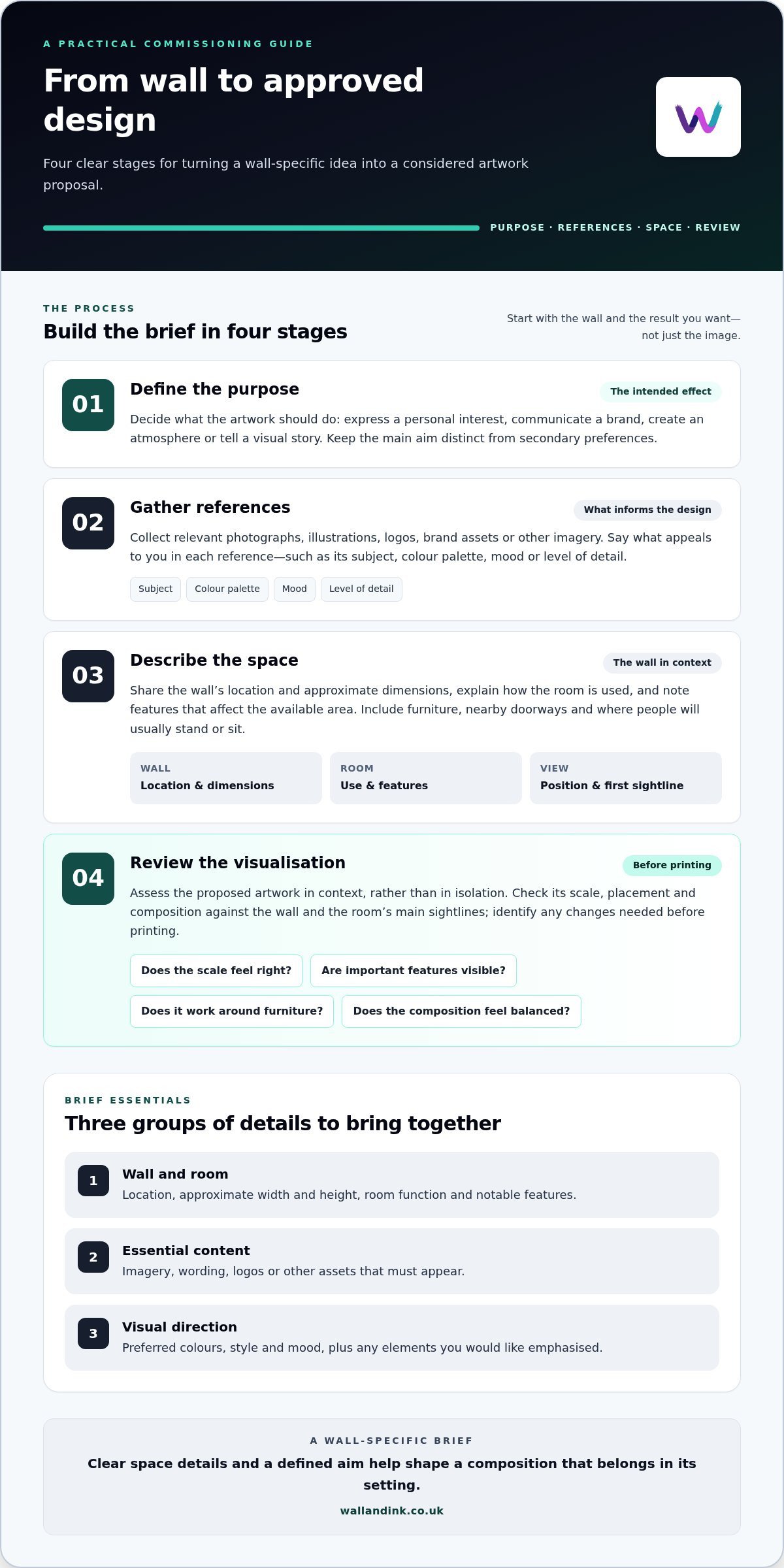
- Define the purpose. Decide whether the artwork should express a personal interest, communicate a brand, create a particular atmosphere or tell a visual story. Separate the main aim from secondary preferences.
- Gather references. Collect relevant photographs, illustrations, logos, brand assets or other imagery. Note what appeals to you in each reference, such as its subject, colour palette, mood or level of detail.
- Describe the space. Give the wall’s location and approximate dimensions, explain how the room is used, and mention furniture or architectural features that affect the available area. Consider where people will usually stand or sit, and what they’ll see first.
- Review the visualisation. Look at the proposed artwork in context. Assess its scale, placement and composition, then identify any changes needed before printing.
What should you include in a wall-art brief?
Separate the essentials from your preferences. This keeps the design focused if not every idea can take equal prominence.
- Wall and room: the wall’s location, approximate width and height, room function and notable features.
- Essential content: imagery, wording, logos or other assets that must appear.
- Visual direction: preferred colours, style and mood, plus any elements you’d like emphasised.
If you’re using a photograph or brand asset, include it with your references and explain how it relates to the intended design. Mention if furniture sits in front of the wall or a doorway is nearby, as these details can affect the image arrangement. Include likely viewing positions too. A design mainly seen from across a reception area may need a different balance from one viewed close up in a corridor.
How does a digital visualisation help?
A visualisation helps you assess how the artwork’s scale, placement and composition will relate to the intended setting before it’s printed. It lets you judge the proposal against the wall, rather than considering the artwork in isolation. Check whether important features remain visible, whether the composition works around furniture and whether the design feels balanced from the room’s main sightlines.
WALL&INK includes a free design visualisation and consultation with every booking. Use that stage to discuss your references and the practical context of the wall, then give specific feedback. “Make the logo easier to notice from the entrance” is more actionable than “make it pop”. Clear feedback helps refine the design around your priorities.
Once your direction is clear, discuss your wall-art idea with WALL&INK and start shaping a considered, wall-specific design.
Compare bespoke wall-art formats before choosing your approach
The right format depends on the design, wall surface, setting and role the artwork needs to play. A full-wall image has different requirements from a small focal detail or a piece you may want to move. Compare how each option covers the wall and how its material or display method affects the final composition.
Direct-to-wall printing versus wallpaper and vinyl
Direct-to-wall printing applies the image straight onto the wall surface. Wallpaper and vinyl are separate materials placed over it, so their edges, joins or boundaries remain part of the design. That difference can affect how continuous an image appears and how it relates to features such as corners or doorways. No format is right for every project: let the intended design and wall guide your choice.
A wall mural versus framed or standalone commissioned art
A mural uses the wall itself as the display surface. It can occupy a substantial area and shape the feel of a room, making it suited to a design intended to work at room scale. Framed art keeps the image within a distinct boundary and can be repositioned as a separate object. Consider how much clear wall is available, what should draw attention, and whether the artwork should be part of the setting or remain a standalone piece.
For an image designed around a particular wall, direct printing can connect the composition to the surface and its proportions. WALL&INK’s Direct-to-Wall Printing is an option for artwork developed for the space. Compare the formats against the project’s practical needs before choosing a method.
How to prepare the wall and artwork for a bespoke commission
Preparation starts with understanding the wall and image, not applying a one-size-fits-all set of technical instructions. Direct-to-wall printing can be used on a range of surfaces, while the specific wall and project inform the design and planning. Share what the wall is made from and how the space is used so these details can shape the commission.
Which wall surfaces can direct printing accommodate?
WALL&INK can print on plaster, brick, concrete, painted walls, wood, tile and glass. These surfaces differ in appearance and texture, which can affect how a design relates to the wall. A composition for a smooth painted surface, for example, may need a different visual approach from one planned for brick, where the texture is part of the setting.
Each surface still needs to be considered in relation to the project. Don’t assume that a listed surface makes a print waterproof or establishes its suitability for exterior exposure. WALL&INK prints resist moisture but are not waterproof. Exterior projects need to be planned for their specific requirements.
How should the artwork fit the wall?
Think about the wall as a shape within the room. Its proportions, edges and architectural features all influence the composition. Note where doors, windows, switches or changes in surface interrupt the available area, and consider whether nearby furniture might cover important parts of the image. A focal point behind a tall cabinet, for instance, may be less effective than one placed in a clear sightline.
Artwork also needs to hold together at the scale at which it will be viewed. Image quality matters because a source image that looks clear on a small screen may not retain the same definition when enlarged. Composition matters just as much: a close crop may feel strong from a distance but lose context up close, while fine details may be difficult to appreciate across a large room. There’s no universal image specification for every design, so consider the source material alongside the intended size and viewing distance.
Before approving the artwork, decide what viewers should notice first and where they’re likely to see it from. Check how the image sits within the wall’s proportions, what happens at its edges and whether furnishings or architectural details compete with the focal point. These practical checks connect the artwork to the real space, rather than treating the wall as a blank rectangle.
To discuss how your wall surface and artwork can work together, plan your wall-art printing project with WALL&INK.
What to expect when commissioning bespoke wall art from WALL&INK
With WALL&INK, commissioning bespoke wall art follows a practical sequence from initial discussion to professional on-site printing. The consultation establishes what you want the wall to achieve and brings the design, setting and surface into the project plan. The aim is to connect the artwork to the real space before printing.
How WALL&INK turns the brief into a wall print
A consultation and free design visualisation are included with every booking. The visualisation shows how the proposed artwork could sit on its intended wall, helping you consider scale, placement and composition in context. It provides a clear design reference before the on-site stage, so you can judge the image as part of the room.
Once the design direction is established, project planning leads into professional on-site printing. WALL&INK uses vertical direct-to-wall printing technology to apply the image to the wall itself. Rather than installing a separate printed panel or covering, the print is produced directly on the chosen surface. The wall and project inform the planning, while the on-site process brings the approved design into the space.
Each stage has a purpose: consultation defines the brief, visualisation makes the concept easier to assess, planning connects it to the project, and on-site printing produces the design. If you have a particular image, brand asset or visual emphasis in mind, keep that priority clear throughout the process to maintain a shared understanding of the intended result.
What to know about inks, protection and warranty
WALL&INK uses UV-cured inks that are odourless, quick-drying and suitable for indoor use, including settings such as nurseries, schools and healthcare environments. Prints resist light surface scratches and moisture, but they are not waterproof. Keep that distinction in mind when considering the room and how the wall will be used.
An optional clear protective coating is available for high-traffic areas. It may be worth considering where the wall is more exposed to everyday contact. The coating is a project choice and does not change the print’s stated moisture resistance.
The 12-month warranty covers ink fading, peeling or material defects under normal indoor conditions. Its scope is specific, so consider it alongside the setting and intended use of the artwork. These details help clarify the service and its safeguards before you proceed.
Ready to develop a wall-specific design? Start your bespoke wall-art project with WALL&INK.
Turn your wall-art idea into a considered project
A strong commission starts with a clear intention for the space. Before taking the next step, decide what you want people to notice, feel or understand when they see the wall. That priority can guide the design and keep decisions focused as the project develops.
WALL&INK includes a free consultation and design visualisation with every booking, helping you consider the proposed artwork in its intended setting. Professional on-site printing is available nationwide across the UK. The 12-month warranty covers ink fading, peeling or material defects under normal indoor conditions.
If you’re ready to move from an idea to a wall-specific plan, discuss your bespoke wall-art project with WALL&INK and start shaping a design around your space.
Frequently Asked Questions
Can I commission bespoke wall art using my own photograph or logo?
Yes, WALL&INK can adapt your photograph or logo for a wall design. Share the image you want to use and explain which details should be most prominent. Small lettering in a logo, for example, may need particular attention to remain legible at the intended viewing distance. The consultation and visualisation help show how your supplied material can work within the space.
How does a wall-art design visualisation work?
A design visualisation shows the proposed artwork in the context of its intended wall, helping you assess how the layout may look in the space. WALL&INK provides a free design visualisation and consultation with every booking. Use the mock-up to assess the overall balance and how important details relate to nearby features. It’s a practical reference for discussing adjustments before the project moves to on-site printing.
Can wall printing be used in schools, nurseries or healthcare settings?
Yes, WALL&INK’s UV-cured inks are suitable for indoor use, including schools, nurseries and healthcare settings. They’re odourless and quick-drying. For a school project, consider how pupils and staff will view the artwork and whether its message or imagery suits the space. The design can then be considered in relation to the room’s use.
Is a wall print waterproof?
No. WALL&INK prints resist moisture, but they aren’t waterproof and shouldn’t be treated as a waterproof layer or barrier. This distinction matters when deciding where a design belongs: moisture resistance doesn’t mean a print is suitable for ongoing direct water exposure. Consider the wall’s environment and everyday use, particularly if water may regularly reach the surface.
Can direct-to-wall printing be used on brick, tile or glass?
Yes, WALL&INK can print on brick, tile and glass, as well as plaster, concrete, painted walls and wood. The surface informs how the project is planned, so a design for textured brick may need different visual consideration from one intended for a smoother surface such as glass. Share the surface details to help shape the artwork for the wall.
Does bespoke wall art need a clear protective coating?
Not necessarily. WALL&INK offers an optional clear protective coating for high-traffic areas, where walls may receive more everyday contact. Whether it’s relevant depends on the setting and how the wall is used. A prominent shared area, for example, may have different practical demands from a quieter room. The coating is an optional project consideration, not a requirement for every bespoke wall print.
What does the 12-month wall-printing warranty cover?
The 12-month warranty covers ink fading, peeling or material defects under normal indoor conditions. The warranty applies to those stated issues and conditions. It isn’t a promise that a print is waterproof or protected against every kind of damage. Consider the wall’s intended use alongside the warranty terms when deciding on the design and setting.