
Could a still image make a room feel more immersive than a wall of screens? It can, when the design creates a clear visual world instead of competing with the space. Immersive room graphics provide a lasting backdrop, while projection and interactive displays can add movement, sound and changing content.
It’s understandable to associate immersion with technology, but a room doesn’t need to be covered in screens to feel cohesive and engaging. Bespoke graphics can carry a visual story across walls. Direct-to-wall printing creates a seamless finish on suitable surfaces such as plaster, brick, concrete, wood and tile.
This guide explains what immersive room graphics can do, how printed designs compare with digital displays, and where the two approaches can work together. It also covers practical decisions, from the room’s purpose and layout to its surfaces and lighting. Digital visualisation lets you review how artwork may look in the intended space before printing begins, helping you plan a design that fits the room as well as the idea.
Key Takeaways
- Immersive room graphics establish a physical visual layer, whilst projection and displays can add changeable content or interaction.
- Use scale, composition, colour and viewpoint to make the artwork work with the room’s purpose.
- Compare permanence, coverage and changeability to decide whether printed graphics, projection or screens best suit your space.
- Plan around the audience, room use, layout and surfaces before settling on an artwork direction.
- Wall & Ink’s process moves from consultation and bespoke design to free visualisation and professional on-site printing.
What Are Immersive Room Graphics and What Do They Add?
Immersive room graphics are designed wall images that shape how a space looks and feels by carrying a visual idea across part or all of its interior. Unlike digital displays, printed graphics form a physical layer on the wall. They can establish a setting, communicate a theme or reinforce a brand, but they don’t provide sound, movement or interaction on their own.
That distinction helps set realistic expectations. Graphics can work alongside AV equipment, lighting and furniture, with each element contributing a different part of the experience. A printed landscape might provide a consistent environment, whilst projection adds moving content for a presentation. The design should support the room’s purpose rather than compete with its technology. The broader principles of immersive design also consider how visual and other sensory elements combine to shape an experience.
How Do Immersive Graphics Differ from a Standard Feature Wall?
A standard feature wall usually creates one focal point with a striking colour, image or pattern. Immersive room graphics are planned in relation to the room as a whole. Their scale, placement and visual continuity can draw attention beyond one decorative panel and help occupants feel part of a coherent setting.
For example, a classroom mural could carry a learning theme across a broad wall, with key details positioned where pupils can see them. It remains a visual aid, not an interactive lesson. The effect depends on sightlines, wall dimensions and how the artwork meets doors, corners and existing fixtures.
Which Spaces Can Use Immersive Room Graphics?
The right approach depends on who uses the space and what it needs to communicate. A design that suits a visitor area may not work in a quiet home or busy classroom. Consider the audience and intended atmosphere before choosing imagery, coverage and visual detail.
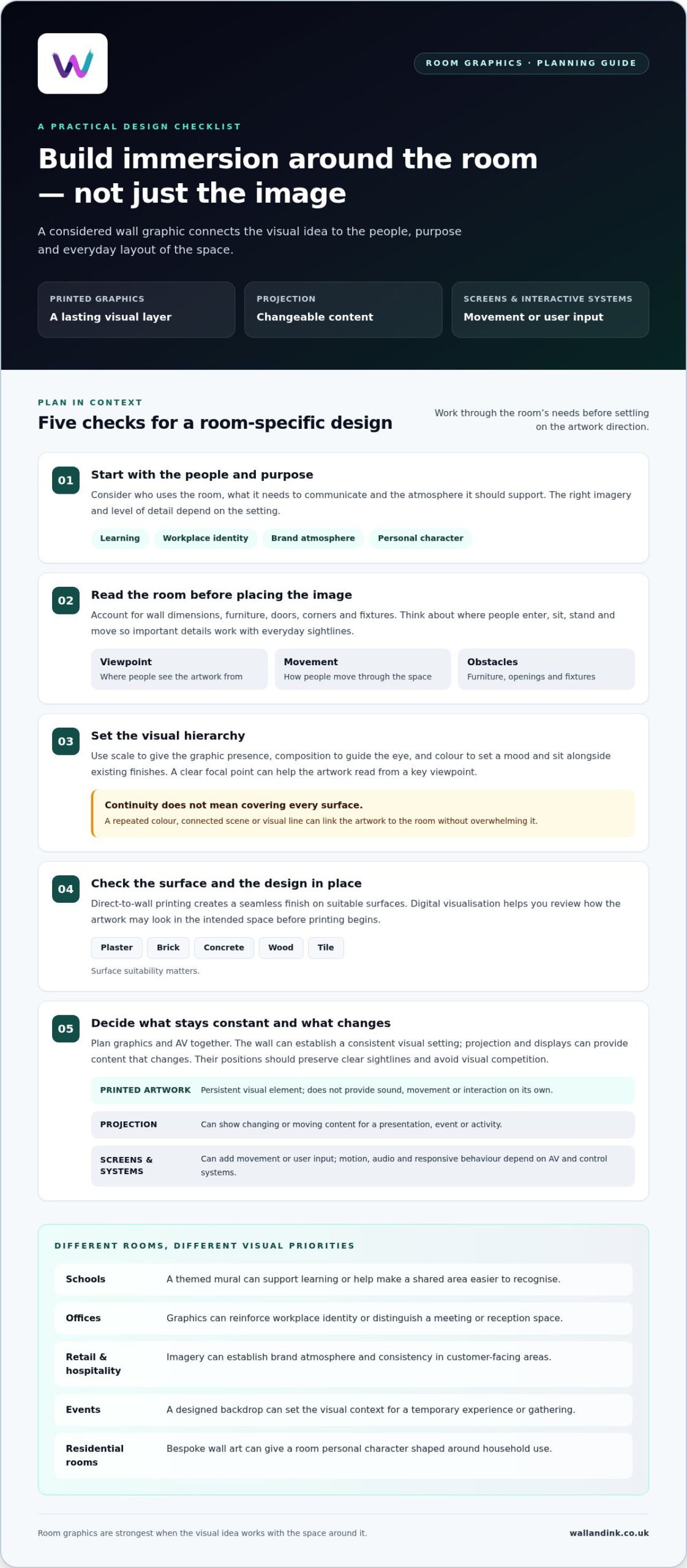
- Schools: A themed mural can support learning or help make a shared area easier to recognise.
- Offices: Graphics can reinforce workplace identity or create a distinct visual setting in a meeting or reception space.
- Retail and hospitality: Imagery can help establish brand atmosphere and make a customer-facing area feel consistent.
- Events: A designed backdrop can set the visual context for a temporary experience or gathering.
- Residential rooms: Bespoke wall art can give a room a personal character, shaped around how the household uses it.
These are starting points, not fixed formulas. Room layout, viewing distance and the people who use the space all affect what will feel appropriate. A considered design makes the wall imagery part of the environment without assuming that one style or level of coverage suits every setting.
How Do Wall Graphics Build an Immersive Visual Experience?
A wall graphic feels integrated when its visual choices respond to the room, not just the image itself. Scale determines whether details can be read from the usual viewing distance. Composition directs the eye, while colour sets a mood and helps the artwork sit alongside existing finishes. A design for a reception area, for example, may need a clear focal point visible from the entrance. A learning space may call for imagery arranged at pupils’ eye level.
Scale gives a graphic presence; continuity helps the eye read it as part of the surrounding space. Continuity might come from a repeated colour, a connected scene across adjacent walls or a visual line leading towards a particular area. It doesn’t mean covering every surface. A carefully chosen wall area can give a room a strong visual direction without overwhelming its occupants.
Viewpoint matters, too. Artwork that looks balanced in a flat design file may feel crowded once furniture, doorways and circulation routes are taken into account. Consider where people enter, sit, stand and move. These everyday sightlines help determine which parts of a design should be prominent and which can sit in the background.
Placement can also serve a practical purpose. A graphic can draw attention towards a learning zone, reinforce a brand message behind a reception desk or create a focal point in a visitor space. It supports the room’s function through imagery and composition. Motion, audio and responsive behaviour, however, depend on the relevant AV and control systems.
What Makes a Wall Design Feel Room-Specific?
A room-specific design accounts for its dimensions, sightlines, furniture and normal patterns of movement. Digital visualisation shows how artwork may sit within that setting, making it easier to judge scale, placement and balance before printing. Supplied logos or imagery can be incorporated into a layout, while a wider bespoke concept can establish a visual direction around the room’s purpose. Both approaches can be assessed in context.
How Can Graphics Work Alongside Projection and Interactive Displays?
Printed artwork provides a persistent visual element, while projected content can change to suit a presentation, event or activity. Screens and interactive systems can add movement or user input. The formats can complement each other: the wall design establishes a consistent visual setting, and AV provides the elements that change. Planning their positions together helps preserve clear sightlines and avoid visual competition.
For a cohesive result, decide what should stay constant and what needs to change. A branded environment might use fixed graphics to carry its identity, with a display reserved for current information. A learning room could use a permanent visual framework alongside projected lesson content. WALL&INK’s bespoke direct-to-wall printing can establish that fixed visual layer, with artwork developed to suit the intended space.
Immersive Room Graphics vs Projection and Displays: Which Approach Fits?
Choose the format around what the room needs to do. Immersive room graphics provide a consistent, printed visual environment. Projection and screens can present content that changes, and AV systems can add movement or interaction. The approaches can also be combined rather than treated as competing solutions.
| Format | Permanence | Changeability | Visual coverage | Interaction |
|---|---|---|---|---|
| Direct-to-wall graphics | Fixed on the wall once printed | Artwork changes require a new design and print | Can cover a selected wall area or extend across connected surfaces | None from the graphic itself |
| Projection | Content is temporary | Projected imagery can be changed | Can cover a chosen projection surface | Only when paired with interactive technology |
| Display screens | The screen remains installed; content can change | Digital content can be updated | Limited to the screen area or coordinated screens | Only when the display system includes interactive features |
Use the comparison as a starting point, not a ranking. Consider the room’s purpose, how often its content needs to change, the area you want to cover and the type of experience people should have. A stable brand environment and a frequently updated presentation space may call for different choices.
When Are Permanent Wall Graphics a Strong Fit?
Printed graphics suit spaces that need a consistent mural, environmental branding or visual learning support. Direct-to-wall artwork becomes part of the room’s surface, without a separate display occupying the visual field. Plan the artwork around the chosen wall area and its surface. This makes graphics a practical anchor where the visual message is intended to stay consistent.
When Should Projection or Displays Be Part of the Plan?
Consider AV when the experience depends on changing information, moving imagery or audience interaction. Projection and screens serve a different purpose from fixed artwork: they deliver changeable content rather than a lasting printed design. In a combined concept, a mural can establish the setting or brand identity, whilst projection or a display presents current material. Plan their positions together so each element has a clear role.
The best fit is the one that matches the brief. If the room needs both a stable visual foundation and changeable content, a coordinated design can use printed graphics as a backdrop or visual anchor, with AV providing the elements that need to move or respond.
How to Plan Immersive Room Graphics for Your Space
A clear brief starts with the people who use the room, what the space needs to achieve and where the artwork will be seen. Then map the layout, prioritise the message and review a visualisation before approving the composition. This sequence turns an initial idea into a practical design direction.
Work through these steps in order:
- Define the audience and purpose. Identify who uses the room and what the graphics should help them notice, feel or understand. A visitor space might need to communicate a brand at a glance, whilst a learning environment may need to support a particular topic.
- Map the room layout. Note entrances, key viewpoints, furniture and places where people gather. Consider how the room is used throughout the day, not only how it looks when empty. This reveals where artwork will be visible and where it may be obscured.
- Set the visual hierarchy. Decide which message or image needs to attract attention first. Keep essential wording distinct from decorative imagery, and consider how lighting, furniture and viewing distance affect legibility. Avoid placing important content where a screen, shelving or seating will block it.
- Collect the content. Bring together brand assets, reference images, preferred messages and any content requirements. Separate items that must appear, such as a logo or key phrase, from inspiration that can guide the style without needing to be reproduced exactly.
- Review the artwork in context. Look at a room-specific digital visualisation to assess scale, placement and composition against the actual space. Invite feedback from people who understand how the room will be used, then refine the design before it moves to print.
Start with the Audience, Purpose and Room Layout
Begin with the room’s real users and their typical routes through it. Mark where people enter, pause, sit or look towards a focal point. Then identify the one idea the design should communicate most clearly. This hierarchy helps prevent a wall from becoming crowded with competing messages, and gives decorative elements a supporting role instead of letting them distract from the room’s purpose.
Prepare Artwork and Review the Room Visualisation
Gather usable files and references early, and note any wording or brand elements that must remain accurate. A digital visualisation places the proposed artwork in the intended room, helping you judge how the composition relates to sightlines, furniture and lighting. Use feedback to resolve concerns about emphasis or placement before approval. WALL&INK includes a free design visualisation and consultation with every booking. Start planning your wall graphic brief.
How Wall & Ink Delivers Immersive Room Graphics from Design to Print
Wall & Ink turns a room concept into a bespoke wall design through consultation, artwork development, free digital visualisation and professional on-site printing. This keeps the creative direction connected to the room, so the finished mural is planned around its intended use and suitable surfaces.
- Consultation: The discussion establishes the room’s purpose, audience, visual priorities and overall direction for the project. It also considers the wall area and how the design should sit within the space.
- Bespoke design: Artwork is developed for the brief, whether that means working with supplied brand assets or creating a broader visual concept. The composition is planned for the chosen wall area, rather than treated as an image separate from the room.
- Free design visualisation: A digital visualisation shows how the proposed artwork may appear in the intended room. This gives you the opportunity to review its placement and overall balance before printing.
- Professional on-site printing: Direct-to-wall vertical printing applies the approved artwork to the surface, producing a high-resolution, seamless mural on compatible walls and other surfaces.
Printing is available on plaster, brick, concrete, painted walls, wood, tile, glass and most painted surfaces. The surface and design brief inform the printing approach. UV-cured inks are odourless, quick-drying, safe for indoor use and fade-resistant. The result is a physical visual layer that can complement lighting or AV without replacing those systems.
What Should You Know About Wall Surfaces, Inks and Protection?
The finish depends on a suitable surface, so the wall’s condition forms part of project planning. The prints resist light surface scratches and moisture, but they are not waterproof. For high-traffic areas, an optional clear protective coating is available. A 12-month warranty covers ink fading, peeling or material defects under normal indoor conditions. These details help set clear expectations for how the mural is intended to perform.
What Happens After You Share Your Room Concept?
The free consultation helps shape the brief and establish a design direction. The free visualisation then places the proposed artwork in the room, making it easier to review the composition in context before printing. Feedback can help refine the design to fit the space and its intended use. Share your room concept with Wall & Ink to discuss a bespoke immersive wall graphic project.
Give Your Room Concept a Clear Next Step
The most useful starting point isn’t choosing an image. It’s deciding what the room should communicate consistently and what parts of the experience may need to change over time. That distinction gives immersive room graphics a defined role, rather than treating the wall as an isolated decorative feature.
Bring together the room’s purpose, the people who use it and the impression you want them to take away. Then consider which elements should remain part of the physical environment and which are better delivered through projection or screens. A focused brief helps align imagery, placement and technology, while giving everyone a shared reference point for reviewing creative choices.
Wall & Ink can translate that direction into a practical wall-printing project, from initial concept through to finished artwork. If you’re ready to explore what could work in your room, discuss your immersive room graphics project with Wall & Ink. Start with the idea you want the space to convey.
Frequently Asked Questions
What are immersive room graphics?
Immersive room graphics are wall designs created to give a space a defined visual character and support how it’s used. They might establish a setting in a visitor area, reinforce a school’s learning theme or add a distinctive feature at home. The artwork is printed onto a physical surface, so it remains part of the room rather than changing like content on a screen.
Can wall graphics make a room feel immersive without projection?
Yes. A carefully chosen wall design can give a room a strong sense of place without projection. For example, a nature-inspired mural in a waiting area can create a consistent visual atmosphere, even when the room’s lighting and furniture remain unchanged. The effect depends on how the image relates to the room, its use and what people see from their usual positions.
Are immersive room graphics interactive?
No. Printed immersive room graphics are static artwork, so they don’t respond to movement, touch or changes in the room. A mural can help set the context for an activity, such as providing a visual theme for a school space, but interaction needs separate technology designed for that purpose. If an experience needs user input, plan the graphic and interactive system as distinct elements.
Can direct-to-wall printing work on brick, tile or glass?
Yes, direct-to-wall printing is available on brick, tile and glass, as well as plaster, concrete, wood and painted walls. The surface needs to be suitable for the intended print, so its condition and finish matter. For example, artwork planned for a brick wall should take the surface texture into account.
Are UV-cured wall-printing inks suitable for indoor spaces such as schools?
Yes. WALL&INK’s UV-cured inks are odourless, quick-drying and safe for indoor use, including schools and nurseries. They’re also fade-resistant. The artwork can be planned around the room’s users, purpose and the visual information that needs to stand out.
Are wall prints waterproof or resistant to scratches?
Wall prints resist light surface scratches and moisture, but they aren’t waterproof. Don’t treat moisture resistance as protection from direct or prolonged water exposure. For high-traffic areas, an optional clear protective coating is available. A 12-month warranty covers ink fading, peeling or material defects under normal indoor conditions.
Can printed wall graphics work alongside projection and interactive displays?
Yes. Printed graphics can provide a permanent backdrop, whilst projection and displays deliver content that changes or responds when the relevant AV technology is included. For instance, a fixed visual design could establish the setting for an event, with a screen showing current information. Planning the elements together helps each one serve a clear purpose without expecting the print itself to move or interact.