
A leased office can still express who your business is. Leasing-friendly office branding uses fit-outs, colours, logos, signage and wall graphics to reflect your identity and communicate your values to employees and clients, while respecting the lease terms and any required approvals.
Branding a workspace means more than adding a logo to reception. Layout, visual details and wayfinding all help create a consistent experience, but the lease can determine what you may change and what must be removed at the end of the tenancy.
This guide explains how office branding can support your team and visitors in a leased space. It also covers removable features and lease-end reinstatement, helping you create a distinctive workplace while planning for practical requirements.
Key Takeaways
- Align your office layout and visual details with your company’s values, while accounting for the needs of employees and visitors.
- Use brand colours, logos and signage purposefully to create a consistent identity across key spaces.
- Review lease terms before changing surfaces or fixtures, and consider how branded elements can be removed when the tenancy ends.
- Explore direct-to-wall printing and commercial wall murals when you want branded imagery applied directly to office walls.
Brand identity in office fit-outs
A fit-out can express a company’s identity through layout, finishes and branded features. In a leased office, the agreement helps determine which changes are practical.
Temporary branding and permanent fit-outs
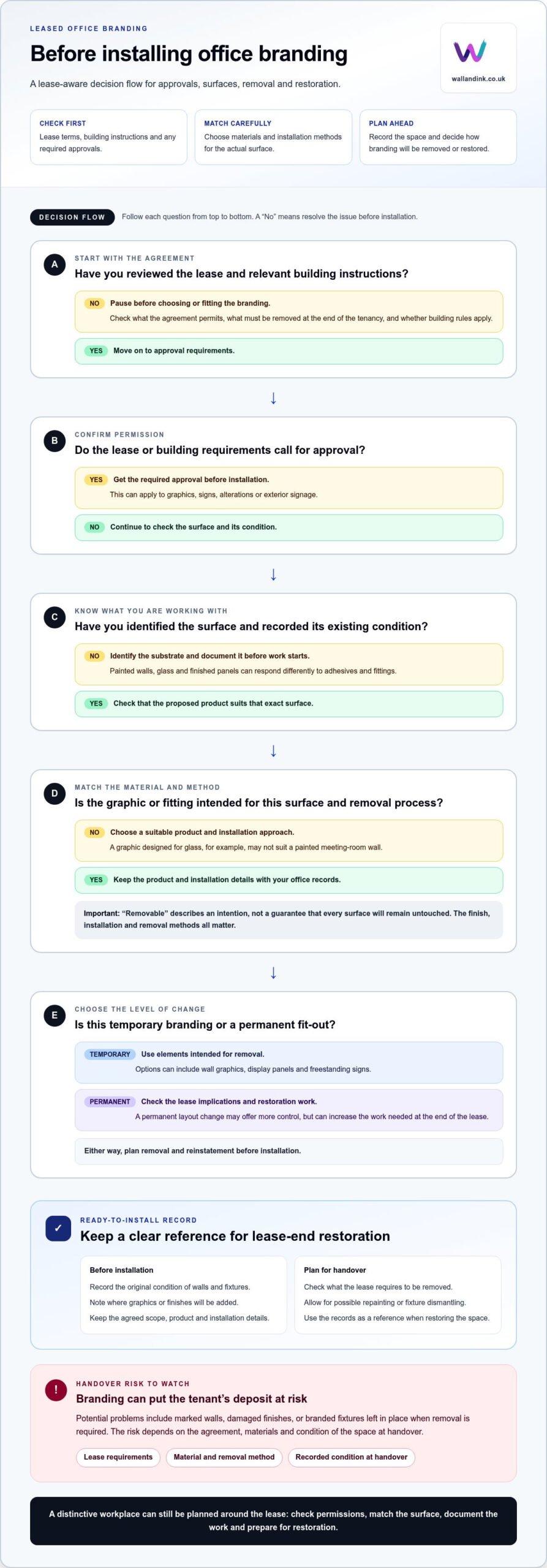
Temporary branding uses elements intended for removal, while a permanent fit-out makes more lasting changes. The difference matters because a lease may require you to return the space to its original condition.
For example, removable graphics can communicate your values without altering built-in fixtures. A permanent layout change may offer more control, but can increase the work required at the end of the lease. The agreement and any required approvals shape the right balance between flexibility and permanence.
Removing branding and restoring the space
Restoration means removing branded elements and returning the office to the condition required by the lease. This may involve taking down wall graphics, repainting surfaces or dismantling branded fixtures.
Plan for this work before installation. Record the original condition of walls and fixtures, and note where you add graphics or finishes. These records give your team a clear reference when the tenancy ends. Follow the lease’s restoration requirements when planning the branding.
Branding risks to the tenant’s deposit
Branding can put a tenant’s deposit at risk if installation or removal causes damage or conflicts with the lease’s handover requirements. Examples include marked walls, damaged finishes or branded fixtures left in place when removal is required.
The risk depends on the agreement, materials and condition of the space at handover. Review the lease and record each surface’s existing condition before making changes. A removal plan can flag repainting or fixture dismantling well before the lease ends, rather than leaving the work until handover.
Removable branding suppliers and installation
UK commercial graphics specialists can provide branding designed for office walls and other interior surfaces. Their installation approach matters because the substrate, finish and removal method affect the condition of the space afterwards.
Discuss the surface, design area and lease-end reinstatement plan before installation. Do not assume that “removable” means damage-free. Match the method to the wall and record the agreed scope, so the branding supports the office while accounting for restoration responsibilities.
Using brand colours, logos and signage
Colour, logos and signs make a workplace recognisable without changing its basic layout. In a leased office, the agreement and the surfaces involved help determine which elements are suitable.
Removable and non-damaging branding options
Removable branding uses visual elements designed to come down when a tenancy or campaign ends. This matters because some agreements require the office to be returned to its original condition.
Wall graphics, display panels and freestanding signs can express a company’s identity without rebuilding the space. Commercial leases may allow decorations and fittings, subject to their terms. Treat “removable” as a design intention, not a guarantee that every surface will remain untouched. The finish, installation and removal methods all matter.
Materials for removable office graphics
Choose materials to suit the surface and planned removal process. Painted walls, glass and finished panels can respond differently to adhesives and fittings.
Before choosing graphics, identify the substrate and record its condition. Check that the product is intended for that surface and fits the lease requirements. A graphic designed for glass, for instance, may not suit a painted meeting-room wall. Keep product and installation details with your office records so the removal plan reflects what was fitted.
Wall graphics, window decals and signage
Wall graphics, window decals and signs can carry brand colours, logos and directions throughout the workplace. Repeat your palette across walls, furniture and decorative details for a consistent look. Place logos in prominent areas such as reception and meeting rooms, then use consistent signage and wayfinding to help visitors navigate.
Leases may permit decorations and fittings, but alterations remain subject to the agreement and any required approvals. Read those terms before installing graphics or signs. Exterior signage can also be governed by lease or building requirements, including rules set for a business park. Check the relevant agreement and building instructions to establish whether approval is required before installation.
What office branding means
Office branding connects an organisation’s identity with how its workplace looks and functions. It can include visual features, furniture, room names and the layout of shared areas. For example, a consultancy might use a clear welcome point and private discussion rooms to convey a practical, confidential approach. These choices give employees and visitors visible cues about how the organisation works.
Leasing-friendly office branding also considers how design choices fit the building and tenancy. Let company values guide decisions from the outset, rather than adding them as decoration after the layout is settled. A business that prioritises teamwork might create accessible project areas, while one handling sensitive conversations may need private rooms. Each choice should connect identity with a real workplace function.
Start by mapping the activities your office needs to support. Identify where employees focus, collaborate, meet clients and take breaks, then assess whether the furniture and routes serve those tasks. For example, a shared project table near relevant resources can support collaboration, while positioning it away from quiet work areas can reduce disruption.
Make the visitor journey easy to follow. A clearly marked reception, consistent room names and legible directions help guests find their way without relying on staff at every turn. These details express your company’s character while solving a practical navigation problem. Clear purposes for shared spaces also help employees.
A leasing-friendly office branding brief can bring these considerations together. Set out the organisation’s priorities, the activities each area must support and the experience you want to create for staff and visitors. Compare the brief with the lease and existing building features before committing to changes. This keeps the design grounded in how the office will be used, not just how it looks in a visualisation.
Which office branding options are removable and non-damaging?
Removable branding is designed to come down at the end of a tenancy, but no option is automatically damage-free. The surface, attachment method and removal process all affect the result. A graphic applied to glass, for example, interacts with a different substrate from one applied to a painted wall.
Some lease agreements require tenants to return office premises to their original condition. That may mean removing branded elements and restoring affected surfaces. Plan around the materials and condition of each area rather than relying on a product label alone. Even removable designs may need careful removal or follow-up repairs.
Options to consider include:
- Freestanding display elements: position signs or branded panels without fixing them to walls.
- Wall graphics: use them only after assessing the wall finish and the intended removal process.
- Window graphics: consider glass as a separate surface, with its own cleaning and removal requirements.
Before installation, record the condition of each surface and keep details of the materials used. These records give the facilities manager a reference for planning removal and help identify where repainting or other reinstatement work may be needed before handover.
Read the lease alongside the branding plan. The agreement sets the return requirements, while the installation method affects the work involved. If you change a wall, window or fixture, record its original condition, the branding applied and the planned removal method. This creates a practical handover record instead of relying on memory.
For a wall-based design, explore wall branding options as part of your wider fit-out plan. Match the design to the surface and lease requirements, then account for removal before installation begins.
Wall & Ink: Direct-to-Wall Printing
Wall & Ink creates custom office artwork with Direct-to-Wall Printing, applying designs directly to walls using UV printers. For a distinctive branded feature, a Commercial Wall Mural can bring company imagery, values or visual identity into a reception or meeting space.
Digital visualisations let you review a proposed design in context before installation. In a leased office, this supports planning but does not replace reviewing the lease or obtaining any required approvals. Direct-to-wall printing is not a removable graphic, so consider the surface, tenancy requirements and end-of-lease restoration before choosing a permanent wall design.
If a wall mural suits your office and lease plan, contact Wall & Ink to discuss your project.
Give your office identity a clear direction
Before settling on a design, decide what people should understand when they enter and use the space. A clear creative brief connects your organisation’s values with the practical experience of employees and visitors. It also helps keep leasing-friendly office branding aligned with the office’s surfaces and tenancy requirements. Include existing brand artwork, preferred colours and the wall’s purpose, such as reception or a collaboration area.
For wall-led branding, Wall & Ink offers Direct-to-Wall Printing and Commercial Wall Murals. Its work also includes Residential Wall Art. Digital visualisations can help you consider how proposed artwork will sit within the intended space before installation. Match the design discussion to your workplace goals and lease conditions, so creative direction and practical constraints are considered together.
Share your office branding requirements with Wall & Ink to discuss a design direction for your space. Contact Wall & Ink about office branding. A considered brief gives your team a practical starting point for creating a workplace that feels recognisably yours.
Frequently Asked Questions
So, what is office branding?
Office branding uses a workplace’s design and visual details to express what an organisation stands for. It can include colour, imagery, furniture and the way people move through the space. For example, a technology firm might create an open project area to support collaboration, while naming meeting rooms after products can help visitors recognise the company’s work.
How can office branding be installed without damaging walls or floors?
Choose an installation approach suited to the surface, and avoid unnecessary fixings. Freestanding signs, existing mounting points and carefully selected wall graphics can limit contact with finishes. Clear the work area and use suitable coverings to protect floors during installation. Assess the substrate first, then follow the material’s installation and removal instructions. Adhesives and fixings behave differently on painted walls, glass and flooring.
Which UK suppliers offer removable office branding and lease-safe installation?
UK commercial graphics specialists can provide removable branding and discuss the surface, installation method and lease-end removal plan. Check that the approach fits the lease and document the materials and agreed scope; “removable” does not guarantee damage-free removal.