
Empty walls can add character without locking a room into a permanent layout. Removable murals and adhesive picture ledges offer a fit-out friendly wall decoration option: they add colour or display space while leaving room for future changes. The right choice depends on whether you need a visual focal point, somewhere to display objects, or both.
A blank wall need not be a problem to fill. Decoration works best when it suits the room and how it is used. At home, that might mean a considered display; in a commercial space, it also means allowing for future changes to the fit-out.
This article covers practical ways to make empty walls more interesting, from planning a balanced arrangement to choosing removable murals or adhesive picture ledges. It also explains how direct-to-wall printing can create a custom mural for residential or commercial interiors.
Key Takeaways
- Balance wall art with the room’s furniture, colours and available space instead of filling every blank area.
- Compare removable murals and adhesive picture ledges by the change you want to make and how flexible the fit-out needs to remain.
- Choose commercial wall decoration with the space’s use, surface and future layout changes in mind.
- Explore direct-to-wall printing when you want a custom mural created as part of a residential, commercial or educational interior.
1. Making empty walls more interesting
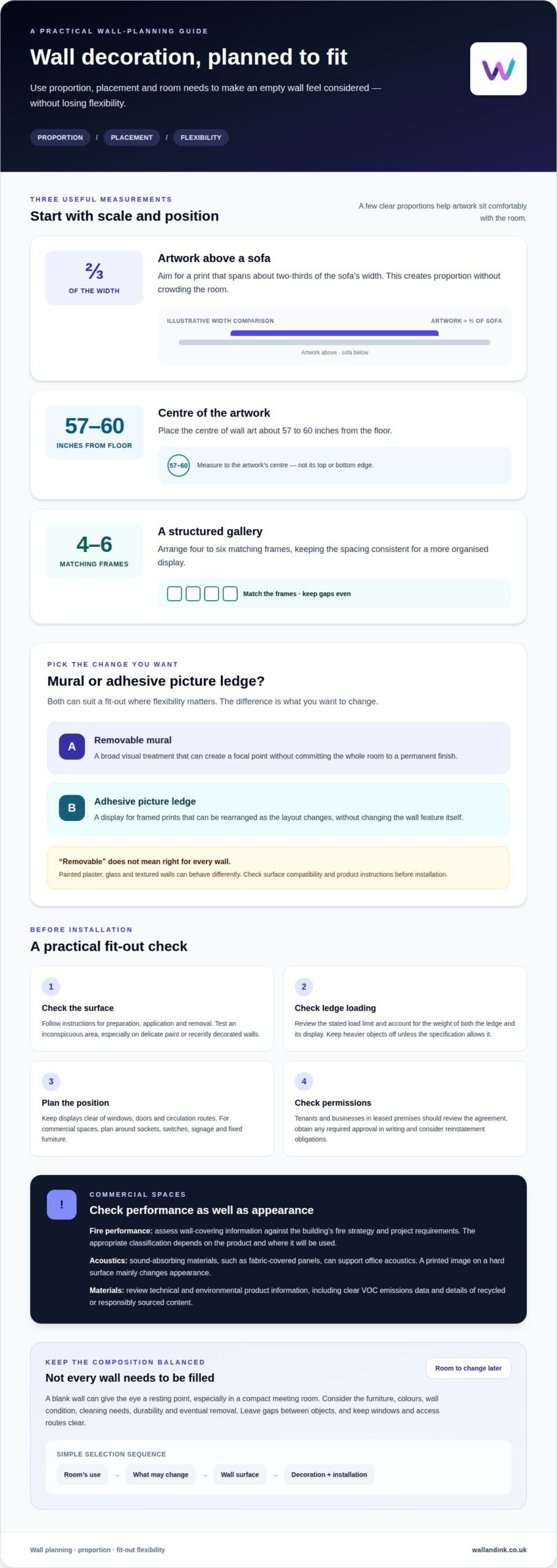
Start with the wall’s role and the furniture beneath it. A print above a sofa should span about two-thirds of its width, creating proportion without crowding the room. Place the centre of wall art about 57 to 60 inches from the floor. For a structured gallery, arrange four to six matching frames and keep their spacing consistent. A fit-out friendly wall decoration scheme also leaves room for future changes.
For UK commercial buildings, assess wall-covering fire performance against the building’s fire strategy and the requirements relevant to the project. Choose finishes with documented fire-performance information. The appropriate classification depends on the product and where it will be used.
Wall decorations can support office acoustics when they incorporate sound-absorbing materials, such as fabric-covered panels. A printed image on a hard surface mainly changes the room’s appearance. Consider echo and existing soft furnishings before treating decoration as an acoustic solution.
When choosing finishes, consider the wall’s condition, cleaning needs, durability and eventual removal. Adhesives can affect paint or plaster when removed, while busy corridors need surfaces that withstand regular contact. Check the substrate and product instructions before installation. For shelves, locate hidden wiring or plumbing first, then choose fixings suited to the wall and intended load.
To source sustainable, low-VOC materials in the UK, review manufacturers’ technical and environmental product information. Look for clear VOC emissions data and details of recycled or responsibly sourced content. Compare like with like, and include these criteria in the fit-out specification before selecting a finish.
Keep the composition selective. Leaving one wall blank gives the eye a resting point, especially in a compact meeting room. A mirror can make a room feel more spacious, while shelves can display books, framed photographs or samples. Leave gaps between objects and keep windows and access routes clear. A simple plan linking wall size, furniture and room use makes each choice more deliberate.
2. Removable murals and adhesive picture ledges
A removable mural can create a focal point without committing the whole room to a permanent finish. Adhesive picture ledges provide a display for framed prints that can be rearranged as the layout changes. Both suit fit-outs where flexibility matters, but “removable” does not mean suitable for every wall or surface.
Start by identifying the substrate: painted plaster, glass and textured walls can behave differently. Follow the product instructions for surface preparation, application and removal. A mural generally needs a clean, dry surface and careful alignment; picture ledges need level positioning and suitable adhesive. Test an inconspicuous area first, especially on delicate paint or recently decorated walls.
For ledges, check the stated load limit and include the weight of both the ledge and its display. Keep heavier objects off adhesive-mounted ledges unless the specifications allow for that load. Arrange frames, mark the intended position, then apply the ledge as directed. Keep displays clear of windows, doors and circulation routes.
UK tenants and businesses in leased premises should review the tenancy agreement or lease before decorating. Terms may restrict alterations or require permission, even for changes intended to be removable. Get any required approval in writing and consider reinstatement obligations before applying adhesive materials.
Choose between a mural and ledges by deciding what needs to change: the wall’s appearance, the displayed content, or both. A mural provides a broad visual treatment; ledges make it easier to switch framed images without changing the wall feature. Either way, plan the dimensions, check surface compatibility, follow the manufacturer’s instructions and keep the removal guidance for the end of the fit-out.
For a larger, custom-designed feature in a workplace or learning environment, explore commercial wall mural ideas as another way to make a wall more distinctive.
3. Which wall decoration options are suitable for commercial fit-outs in the UK?
Choose wall decoration to suit the space’s function, expected changes and daily use. A reception area might suit a large visual feature, while a meeting room may need restrained graphics that do not compete with screens. In a shared office, removable displays can help teams refresh information without redesigning the whole room. The best fit-out friendly wall decoration serves the space now and allows for later layout changes.
For temporary displays, heavy-duty adhesive strips can hang décor without damaging walls. They suit lightweight items such as small framed notices, subject to the strip’s instructions and the wall surface. Clean and prepare the application area as directed, then position each item away from doors, fire equipment and busy walkways. Don’t assume every adhesive works on every finish.
Printed wall features can give a reception, retail area or staff space a clear visual identity. Align the artwork with the organisation’s purpose: a school could use an educational image, while a professional office might choose a restrained pattern. Before installation, check the wall’s suitability and plan around sockets, switches, signage and fixed furniture. A digital visualisation helps assess scale and placement before work begins.
Modular framed displays offer another practical option. A facilities team can update individual notices or images as needs change, rather than replacing a larger wall treatment. Use consistent frame sizes and a defined layout to keep the result organised. In corridors, keep signs, access points and routes clear.
Use this selection sequence: identify the room’s use, decide how often its content may change, assess the wall surface, then choose the decoration and installation method. In a leased office, include reinstatement needs and any approval process in the project plan. For retail and hospitality spaces, consider cleaning routines and customer flow. This approach makes decoration easier to manage and reduces disruption as a commercial fit-out evolves.
4. How do paint, wallpaper, wall panels and decals compare for cost and durability?
Compare finishes by their installation, upkeep and removal requirements, not material alone. A low initial outlay may not be practical in a busy corridor if repairs are difficult. For an adaptable interior, consider how the wall will be used and whether the decoration may need to change.
- Paint: Works across broad areas and allows colour changes. Scuffs may need touch-ups, and a new colour usually means preparing and repainting the surface.
- Wallpaper: Adds pattern or texture across a wall. Its performance depends on the material, installation and room conditions; removal can involve preparation and surface repairs.
- Wall panels: Create a defined finish and can protect the wall behind them. Compare panel material, fixing method and the effect on the existing surface when removed.
- Decals: Add targeted graphics without covering the whole wall. Adhesion and removal depend on the product and substrate, so follow instructions and test an inconspicuous area.
For budgeting, separate material, surface preparation, installation and future maintenance. Project costs depend on these factors. Include removal or reinstatement needs in the comparison, particularly where a tenancy or changing layout affects the plan.
Durability also depends on location. A reception wall may need a different finish from a corridor exposed to frequent contact. Check cleaning instructions, repair methods and suitability for the substrate before choosing. Keep product information with the fit-out records so facilities teams can maintain the finish correctly.
To choose, define the required lifespan and visual effect, assess the wall, then compare whole-life maintenance and removal. If a bespoke image is central to the space, explore custom wall mural options as an alternative to repeating patterns or separate graphics.
Wall & Ink: Direct-to-Wall Printing
Wall & Ink’s Direct-to-Wall Printing suits projects that need a custom image printed directly onto an interior wall. It can work well when standard paint or repeat-pattern finishes cannot deliver the desired visual impact. Wall & Ink creates Commercial Wall Murals for workplaces and public-facing spaces, as well as Residential Wall Art and School and Educational Murals.
Advanced UV printers apply artwork directly to the wall, and digital visualisations help you assess the design in context before installation. This approach can suit a reception feature, branded interior or educational display that needs to work with the room’s layout. The design and printing process is tailored to the project and wall surface.
Discuss a direct-to-wall mural for your space with Wall & Ink.
Plan a wall that can evolve with your space
Before choosing a finish, decide what the wall needs to do as the room changes. A useful project brief records the intended image, wall surface, surrounding furniture and how the space may be used later. This gives the design process a clear starting point and helps align the visual result with practical fit-out needs.
For a distinctive feature that feels integrated with the room, Wall & Ink provides Direct-to-Wall Printing, including Commercial Wall Murals and Residential Wall Art. It can suit businesses seeking a custom visual treatment and homeowners planning a considered focal point. The right fit-out friendly wall decoration works for the space now and supports your longer-term plans.
Share your project requirements and explore the options with Wall & Ink. A well-planned wall can give your space a clear identity and room to move forward.
Wall & Ink for Fit-Out-Friendly Wall Decoration
Wall & Ink provides Direct-to-Wall Printing for projects where wall decoration is part of the fit-out. Services include Commercial Wall Murals, Retail and Hospitality Graphics, and Exterior Wall Printing.
Turn to Wall & Ink for wall decoration in commercial, retail, hospitality and exterior spaces. Residential Wall Art and School and Educational Murals are also available for homes and educational settings.
Frequently Asked Questions
What does fit-out friendly wall decoration mean?
Fit-out friendly wall decoration means choosing finishes suited to a space’s current use and manageable when its layout or purpose changes. For example, a business might use a repositionable display for changing notices or plan a feature wall around movable furniture. Match the decoration and fixing method to the wall surface, the display’s purpose and future alteration needs.
What are the best removable wall coverings for rented offices and shops?
For rented offices and shops, favour lightweight displays and coverings designed for removal from the intended surface. A small feature area can be easier to update than a full-room treatment, while framed notices can be replaced individually as information changes. Check product instructions for surface compatibility and removal, then record the wall’s condition before installation so you can assess it afterwards.
Which wall finishes are easiest to install and remove without damaging walls?
Lightweight items attached with removable adhesive systems are generally simpler to fit than permanently fixed panels, but no method guarantees damage-free removal from every wall. Paint quality, surface texture and previous repairs can affect the result. Follow the manufacturer’s removal instructions, test the system in a discreet area first, and avoid applying it over loose, flaking or delicate finishes.