
Wall graphics can shape a pub’s character before a customer orders a drink. Well-planned bar and pub interior wall graphics give a space a clear visual theme, from rustic to nautical or modern, and turn a bare wall into part of the experience. The design should work with the room, rather than compete with its furniture, lighting or layout.
A strong atmosphere takes more than an attractive image. Colour, scale and placement all affect how a mural feels in a space. In a commercial setting, the wall’s surface and day-to-day use also matter when planning the print.
This guide explains how to choose graphics that support your pub’s identity, adapt popular interior styles and meet practical mural material needs. You’ll also learn what to consider when planning a design, preparing a wall and choosing a direct-to-wall approach, so the finished result feels intentional as well as visually distinctive.
Key Takeaways
- Choose wall art that reinforces your pub’s identity, and position it so it works with the room’s layout and drinks areas.
- Build a rustic, nautical or modern look through considered imagery, colour and visual consistency rather than repeating the same subject.
- Assess the wall surface and the demands of the commercial setting when planning mural materials and application.
- Custom mural pricing depends on the project’s design, dimensions, wall and preparation requirements; understand these factors before planning your budget.
Choosing wall art to create a pub atmosphere
Start with the feeling you want guests to associate with the pub. A framed coat of arms, historic building detail or house logo can reinforce local identity; a landscape or illustrated menu can add character without making the wall feel like signage. Choose one clear visual direction, then assess how it fits the room’s furniture, lighting and existing finishes.
Scale affects how an image reads from a table or the entrance. A large feature wall can anchor a dining area, while smaller prints can suit a snug or corridor. Before settling on dimensions, view the design against the wall and from the main customer sightlines. Fine lettering and intricate details may be difficult to read across a busy room.
Create a coordinated interior without repeating the same subject. Several pieces can share a frame finish, background tone or colour palette while depicting different local landmarks, drinks or archival illustrations. This connects separate areas, such as the bar and a quieter seating zone.
- Map the room: note entrances, seating, service points and existing focal features.
- Choose the purpose: use a logo for identity, local imagery for place, or atmospheric artwork for a relaxed corner.
- Test placement: compare the proposed scale and colours with the actual wall and furnishings.
Keep practical use in mind. Above a drinks cabinet, leave room for the tallest bottles and objects. Near a working bar, position artwork so it won’t obstruct bottle handling or make the surface awkward to use. A home bar might be a sideboard, cabinet or small trolley, so make the design fit the available wall and furniture rather than assuming there’s a separate room.
Planning permission isn’t automatically required for an internal wall graphic, but the building’s status and the scope of the work can affect whether consent is needed. If the pub is leased, get the landlord’s approval before changing a wall. Consider these points when choosing the design and location, before planning installation.
Rustic, nautical and modern design themes
Pub wall art can reinforce a venue’s theme or give traditional details a fresh interpretation. Choose a direction that suits the building, furnishings and identity, then keep the imagery consistent across the space.
Rustic pub wall graphics
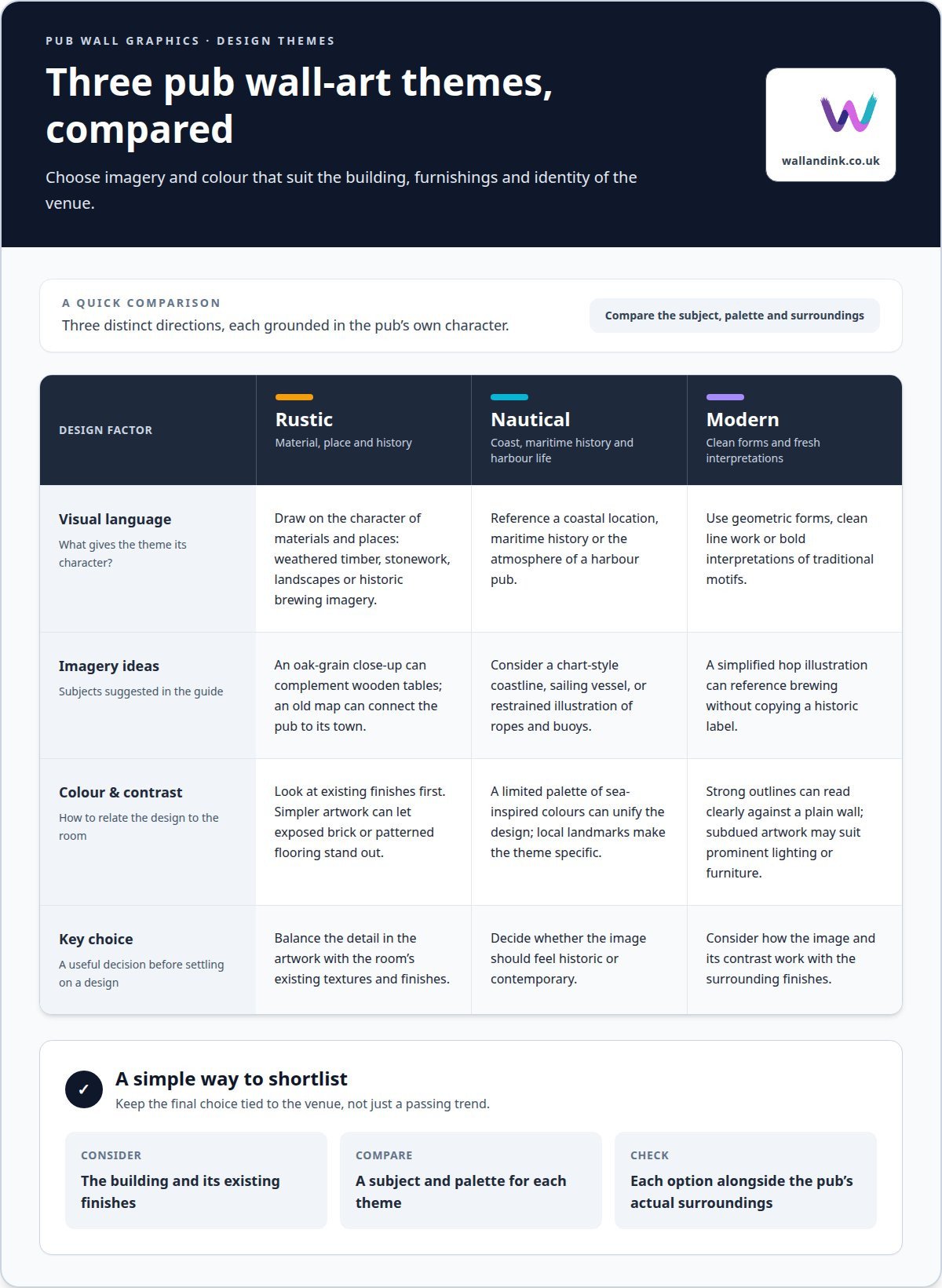
Rustic designs draw on the character of materials and places, such as weathered timber, stonework, local landscapes or historic brewing imagery. An oak-grain close-up can complement wooden tables, while an old map can connect the pub to its town. Start by looking at the existing finishes. Highly detailed imagery may compete with exposed brick or patterned flooring, so simpler artwork can let those features stand out.
Nautical pub wall graphics
Nautical artwork can reference a coastal location, maritime history or the atmosphere of a harbour pub. Options include a chart-style coastline, a sailing vessel or a restrained illustration of ropes and buoys. Decide whether the image should feel historic or contemporary. A limited palette of sea-inspired colours can unify the design, while recognisable local landmarks make the theme specific to the venue.
Modern pub wall graphics
Modern pub graphics can use geometric forms, clean line work or bold interpretations of traditional motifs. A simplified hop illustration, for example, can reference brewing without copying a historic label. Consider how the image and its contrast work with surrounding finishes. Strong outlines can read clearly against a plain wall; a more subdued design may suit a room with prominent lighting or furniture.
To compare the three approaches, shortlist a subject and palette for each, then view them alongside the pub’s actual finishes. Keep the final choice tied to the venue’s identity, not just a passing trend. For a coordinated hospitality interior, explore wall graphics for hospitality spaces as one way to bring the selected theme onto a wall.
Commercial mural material properties
Before choosing an application for a pub mural, consider the wall surface, location and cleaning needs. A direct-to-wall mural can carry a continuous image across a feature wall; vinyl lettering suits concise text, such as a house name or drinks list. Wallpaper offers a repeating pattern or full-wall finish, but seams and alignment affect the final appearance. Each method has its own preparation and installation requirements.
Murals allow space for detailed artwork and a single visual composition, but the wall needs to suit the application. Vinyl lettering can display short messages, though it isn’t the same as an illustrated mural. Wallpaper can cover a broad area with a consistent pattern, but matching edges and working around corners takes care. Compare the design with the wall’s texture, condition and architectural features.
Fire safety rules are relevant to wall coverings in pubs. Consider the material and its location as part of the premises’ fire-safety assessment. Don’t assume every finish is suitable for every wall.
Before applying vinyl graphics, clean the wall and remove dust, grease and loose paint. Repair cracks or holes, then let the surface dry fully. Check that it’s smooth and stable, since uneven areas can affect adhesion and make neat positioning harder. Test the layout around sockets, doorframes and existing signs before application.
Cleaning depends on the material and its care instructions. Start with a soft, dry cloth to remove loose dust. For marks, use a damp cloth only if the product guidance allows it. Avoid abrasive pads or strong cleaning products unless the manufacturer specifically permits them. Plan maintenance around the graphic’s position: a wall beside a serving area may need more frequent attention than one in a quiet snug.
Record the chosen finish, wall condition and care guidance with the project details. Staff can then refer to these when cleaning, helping preserve the mural’s appearance without using unsuitable products.
What affects the price of custom pub wall graphics?
The price depends on the project and is provided after a quote request. The main factors are the wall’s dimensions and condition, the artwork, the application method and the preparation required. A single feature wall with a supplied design has different requirements from a multi-wall scheme with bespoke artwork and uneven surfaces.
Measure the area, then note doors, windows, alcoves and fixed fittings. These details affect how the artwork is sized, positioned and finished around edges. A mural on an uninterrupted wall has a simpler layout than one that must align across separate sections or avoid a prominent fireplace.
Wall condition matters too. Cracks, loose paint, textured finishes or previous repairs can change the preparation needed before printing. A clean, even surface offers a different starting point from a wall needing repairs. Include clear photographs and measurements when describing the space, so the project scope reflects the actual site.
- Artwork: original design work, supplied files and the level of detail required.
- Dimensions: the area covered, plus cut-outs and separate wall sections.
- Surface: texture, existing finishes and any preparation needed.
- Installation: access to the wall and the practical layout of the pub.
Design complexity can affect production planning. A simple graphic with a limited palette differs from a detailed local scene, bespoke illustration or composition with fine lettering. Final dimensions matter too: scaling a design can change how small details reproduce and where the focal point sits.
To compare project options, define the wall, artwork and desired finish before requesting a quote. Decide, for example, whether the design will cover one bar wall or continue into a seating area. This makes the scope clearer and helps identify which choices affect the price.
For a quote based on your pub’s wall, design and preparation needs, request a custom wall graphics quote.
Wall & Ink: Direct-to-Wall Printing
Wall & Ink creates commercial wall murals for pubs using Direct-to-Wall Printing. UV printers apply artwork directly to the wall, creating a custom feature without traditional wallpaper or vinyl decals. The process can turn a selected wall into a focal point, whether the brief calls for a local scene, a brand-led design or imagery that supports the pub’s interior theme.
Wall & Ink’s service includes bespoke design consultation, digital visualisations and professional on-site installation. These steps shape the concept around the wall and show how the design will look in the space before installation. It’s a practical next step when you have a venue, surface and visual direction in mind and want a mural designed for that setting.
To discuss a mural for your pub, contact Wall & Ink.
Turn your pub’s character into a wall design
A distinctive wall can become part of how guests recognise and remember your venue. Before settling on a design, bring together what makes the pub its own: its name, local connections, interior character and the atmosphere you want to create. This gives the artwork a clear purpose rather than making it an isolated decorative feature.
Use that direction to shape a practical project brief. Identify the wall, note its surface condition and gather any reference images or brand artwork you want considered. These details help turn your idea into bar and pub interior wall graphics designed for the setting and the people who use it.
Wall & Ink’s Direct-to-Wall Printing and Commercial Wall Murals provide a route from a considered concept to a professionally installed feature. For a design that reflects your pub, contact Wall & Ink about your pub. A clear brief is a strong starting point for creating a space that feels unmistakably yours.
Frequently Asked Questions
What types of wall graphics work well in bars and pubs?
Illustrated murals, branded artwork and location-specific graphics can all suit a pub. A brewery might feature a stylised hop illustration, while a neighbourhood bar could display a map or landmark meaningful to its customers. Match bar and pub interior wall graphics to the wall’s role: a large composition can define a room, while concise lettering can highlight a specific area.
What materials are best for pub interior wall graphics?
The right option depends on the wall and how the graphic will be used. Direct-to-Wall Printing uses UV-cured ink to apply artwork to surfaces including plaster, brick, concrete, painted walls, wood and tile. The inks are fade-resistant, but the wall’s finish and condition still matter. Textured brick, for example, presents a different surface from smooth painted plaster.
How do you design wall graphics to suit a bar or pub brand?
Start with the pub’s existing identity, including its logo, menu typography and established colour palette. Then choose an image style that supports those elements, such as a restrained illustrated ingredient motif for a craft-beer bar. Check legibility from the entrance and nearby seating. Keep essential brand wording clear, and avoid placing fine text where furniture or fittings might obscure it.
How are wall graphics installed on painted, brick, or tiled walls?
Direct-to-wall printing applies the image to the wall surface rather than attaching a printed sheet. Wall & Ink’s technology prints on painted walls, brick and tile, as well as other suitable surfaces. The wall is assessed, the graphic’s position planned and the area prepared for application. Surface condition and texture influence how the design is positioned and reproduced.
How durable are wall graphics in busy pubs, kitchens, and washrooms?
Wall & Ink’s UV-cured prints are resistant to fading, light surface scratches and moisture, but they aren’t waterproof. That distinction matters near sinks, splash zones or washroom fixtures, where direct water exposure may occur. Indoor prints also have a 12-month warranty covering ink fading, peeling or material defects under normal indoor conditions. Use the care guidance for cleaning and routine maintenance.