
An outside wall can do more than mark the edge of a garden. To decorate an outside wall, choose art made to withstand the elements, or use an outdoor mirror to reflect natural light and make the space feel larger. A professional can shape the design around the wall’s material, the setting and the effect you want.
A blank wall can feel stark, but the right treatment can connect it to the rest of your outdoor space. This guide explains how to choose weather-resistant art and subjects for different settings, from a quiet garden corner to a shared commercial space. You’ll also find practical ideas for combining wall art with plants and other features, plus key points to consider when planning a lasting finish. The aim is a considered result that suits the wall and its surroundings.
Key Takeaways
- Match bold paint colours to the wall material and prepare the surface for a clean, cohesive finish.
- Choose outdoor art designed to withstand the elements, and consider how mirrors can affect light and the feel of the space.
- Select a subject that suits the setting, from a calm garden feature to a more distinctive commercial mural.
- Plan greenery and wall decoration together, and explore direct-to-wall printing when you want a design created for the space.
How can a professional decorate your outside wall?
Start by assessing the wall’s material, condition and exposure. Before painting a garden wall, prepare the surface and use exterior paint suited to its material. Bold colours can turn a plain boundary into a backdrop for planting or seating. Deep green can sit comfortably beside foliage, while warm terracotta can complement brick and timber. Choose a finish that suits the surface as well as the colour scheme.
Metal garden art adds texture and creates a focal point. Position a piece in relation to a gate, planter or outdoor dining area. For a gallery wall, group several artworks with consistent spacing and a shared colour or subject. Before fixing anything, consider its weight, the wall’s condition and its exposure. Drilling into an outside wall can damage masonry or hidden services, so assess the substrate and fixing points first.
Lighting can keep a wall feature visible after daylight fades. Position outdoor lights to highlight metalwork, textured brick or a printed design without creating glare in neighbouring windows. Plan wiring routes and suitable fixing locations, too. For a boundary wall, discuss the proposed colour, artwork and lighting with affected neighbours before work begins. Local controls vary, so whether permission or another approval applies depends on the property and planned alteration.
There’s no single cost for painting or decorating an outside wall. The price depends on the wall’s size and condition, access, preparation, chosen finish and design, and is given after a quote request. To protect a wall from damp, frost and weather damage, a professional assesses its condition first, addresses surface problems and selects materials suited to its substrate and exposure. Decorative coatings won’t resolve an underlying moisture problem, so the cause needs attention before finishing.
2. Decorating with weather-resistant art
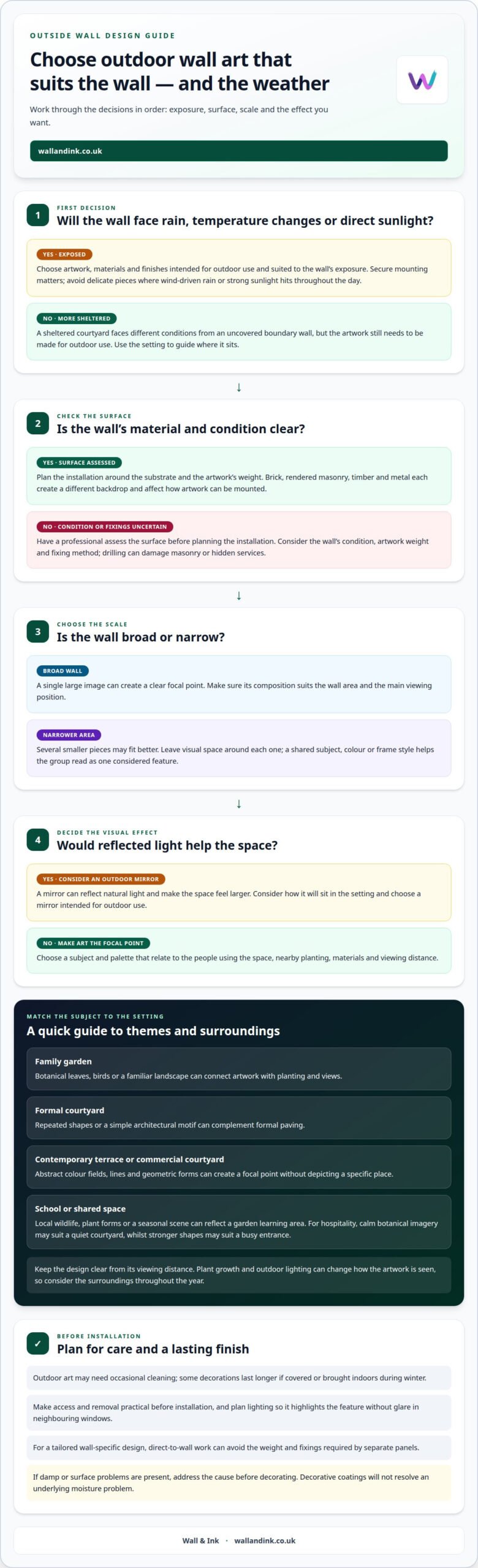
Outdoor artwork needs to withstand rain, temperature changes and direct sunlight. A design made for indoors may fade, warp or deteriorate outside. Choose materials and finishes intended for outdoor use, suited to the wall’s exposure. A sheltered courtyard and an uncovered boundary wall face different conditions, which affect both the artwork and where to place it.
Start with the wall itself. Brick, rendered masonry, timber and metal each create a different backdrop, and their condition affects how artwork can be mounted. A professional assesses the surface before planning the installation, then considers the artwork’s weight and fixing method. On an exposed wall, secure mounting matters as much as appearance. Avoid placing a delicate piece where wind-driven rain or strong sunlight hits it throughout the day.
Scale shapes the result, too. A single large image can give a broad wall a clear focal point, while several smaller pieces may suit a narrower area. In a garden seating space, choose a subject and palette that relate to nearby planting or furniture. In a courtyard, a reflective or bright design can lift a shaded corner. Leave enough visual space around each piece to avoid a crowded arrangement.
Plan maintenance as part of the design. Outdoor art may need occasional cleaning, and some decorations last longer if covered or brought indoors during winter. Make access and removal practical before installation. For a gallery arrangement, create cohesion through a shared subject, colour or frame style. This helps separate pieces read as one considered feature rather than unrelated additions.
A wall-specific design can also avoid the weight and fixings required by separate panels. For a tailored concept, explore planning a custom outdoor wall design around the surface, setting and intended visual effect.
3. Wall art subjects
Choose a subject that suits the setting and the people who use the space. For a family garden, botanical leaves, birds or a familiar landscape can connect artwork with planting and views. A courtyard with formal paving may suit repeated shapes or a simple architectural motif. Consider the viewing distance, too. A mural beside a dining area is seen close up, while a boundary feature may be viewed from across the garden.
Natural subjects create a clear link to the outdoors. Ferns, grasses and tree silhouettes can echo existing greenery without copying every plant. A coastal scene may work beside pale stone or blue planting, while woodland imagery can complement a shaded seating area. Choose colours that relate to nearby materials, such as brick, timber, stone or painted fencing. This helps the image feel integrated rather than unrelated to its surroundings.
Abstract artwork can suit a contemporary terrace or commercial courtyard. Broad colour fields, lines and geometric forms create a focal point without depicting a specific place. Keep the composition in proportion to the wall: a small, intricate image can disappear on a broad surface, while a large, high-contrast motif may dominate a narrow passage. A professional can adapt the layout to the available wall area and the main viewing position.
In schools and shared spaces, subjects can reflect the setting’s purpose. A garden learning area might feature local wildlife, plant forms or a seasonal scene. In hospitality, a design can reinforce the atmosphere, with calm botanical imagery for a quiet courtyard or stronger shapes for a busy entrance. Make sure the subject is clear from the distance people will view it. A strong focal image and controlled detail help prevent visual clutter.
Before finalising a concept, consider how the surroundings change. Planting may grow across the artwork’s edges, and outdoor lighting can alter how colours look after dusk. A clear silhouette can retain its impact against busy foliage, while finer details suit a more open backdrop. These choices help the finished design relate to the space throughout the year.
What are the best professional ways to decorate an exterior wall in the UK?
A professional can make a boundary wall feel integrated with the garden, rather than treating it as a separate surface. Terracotta pots fixed at staggered heights create a practical display for trailing plants. Arranged in a deliberate pattern, they add colour and soften hard masonry. Select plants suited to the wall’s light and the space available, then leave room for growth and straightforward maintenance.
Climbers can bring greenery across a wall, but unchecked growth may damage its structure over time. A professional considers the plant’s growth habit and how it will be managed before incorporating it into the design. For a lower-maintenance living-wall effect, staggered terracotta pots with trailing plants offer a controlled alternative. The arrangement can be planned around a doorway, seating area or existing garden feature.
Raised beds can help organise the space and give you more control over garden design and soil. Positioning a bed beneath a decorated wall connects the planting with the vertical surface. For example, grasses or herbs can frame a simple wall feature without obscuring it. Keep the planting’s height and spread in proportion to the artwork, so the wall remains visible as plants mature.
A solar-powered water feature can add movement beside a boundary wall without needing wiring or an outdoor socket. Position it to complement the planting, while keeping access clear. Coordinate the wall treatment, pots and garden elements as one layout, considering the surface, sightlines and maintenance together. This joined-up plan helps prevent features from crowding a compact garden.
For a design planned around your property’s exterior, discuss an outdoor wall design that works with its surface and surroundings.
Wall & Ink
Wall & Ink helps turn an exterior wall idea into a design suited to its setting. Bespoke design consultations and digital visualisations help you consider the composition before installation, including how the subject relates to the wall, nearby planting and the space’s purpose. Professional input is useful when a blank surface needs a considered feature or a design must suit a home, commercial setting or school.
Direct-to-wall printing applies artwork straight to the wall, creating an alternative to separate panels or mounted pieces. Wall & Ink provides Exterior Wall Printing, as well as Commercial Wall Murals, Residential Wall Art and School and Educational Murals. The right design depends on the wall, its audience and the visual effect you want. Share the wall’s setting and your preferred subject to start shaping a concept.
Contact Wall & Ink to discuss your outside wall project.
Plan a wall feature that feels right for your space
Before commissioning a design, decide what you want the wall to do. It might create a focal point from the patio, add character to an entrance or give a garden seating area a stronger sense of place. That purpose can guide your choice of subject, scale and colour, helping the finished work connect with how you use the space.
Consider the view from nearby doors and windows, as well as the wall’s surroundings. A design seen close up may benefit from finer detail, while a feature viewed across a garden needs a clear overall composition. Sharing the wall’s location, surface and intended effect gives the design process useful direction. The result can be developed for its specific setting rather than chosen in isolation.
If you’re ready to explore ideas for your property, contact Wall & Ink about your wall. A considered starting point can turn an overlooked surface into a feature that belongs in your outdoor space.
Frequently Asked Questions
How can a professional decorate your outside wall?
Wall & Ink creates wall-specific designs and prints them directly onto exterior surfaces. Direct-to-wall printing can be used on materials including brick, concrete, plaster and painted walls, depending on the surface and design. To get started, identify the wall’s material, note its main features and decide where people will view it from. These details help shape a design that fits the setting.
How can a professional dress up a bare exterior wall?
A tailored printed design can turn a bare wall into a focal feature. Compose the artwork around fixed details such as a gate, downpipe or outdoor light, rather than treating the wall as an empty rectangle. For example, a flowing botanical design could lead the eye towards a garden entrance. A digital visualisation helps you see how the composition relates to the space.
What are the best outdoor wall decoration ideas for a small garden?
In a small garden, one well-positioned wall feature can add interest without taking up floor space. A narrow vertical design can draw the eye upwards beside a seating nook, while a simple image at the end of a path can create a clear focal point. Keep the composition legible from the main viewpoint and leave room around doors, gates and essential access routes.