
A brighter office doesn’t require a full refit. These quick office refresh ideas can make your space feel more inviting: make better use of daylight, adjust the lighting and decor, introduce colour or add plants. Start with changes that suit the room and the way you work.
If your workspace feels dull or unsettled, start with what’s already there. Moving a desk, changing a lamp or clearing a wall can alter the feel of the room without turning it into a major project.
Try these straightforward ways to work with daylight, layer lighting, add colour and bring in greenery. Each idea can work in a home office or shared workspace, helping you create a brighter, calmer space that suits your needs.
Key Takeaways
- Reposition your desk to make better use of daylight, then adjust lamps to suit different tasks.
- Use a few considered details, such as a rug or wall hanging, to add warmth without crowding the workspace.
- Choose colours to set the room’s mood, and use artwork or accessories when repainting isn’t practical.
- Introduce greenery for a natural touch, or consider a custom wall mural for a more lasting visual change.
1. Making better use of natural light
Start with the window. In a home office, place your desk nearby to make better use of natural light. If your screen catches glare, turn the desk perpendicular to the window rather than facing it directly. You’ll still have daylight in view, with fewer reflections on the screen. Keep window coverings easy to adjust as the light changes during the day.
Improve the lighting you already have before replacing fixtures. Try different bulbs in the ceiling light or desk lamp, and check how the room looks at darker times of day. A compact desk lamp provides focused light for reading or writing without taking up much space. Position it beside your screen to light paperwork without shining into your eyes or onto the display. Move it if shadows fall across your work.
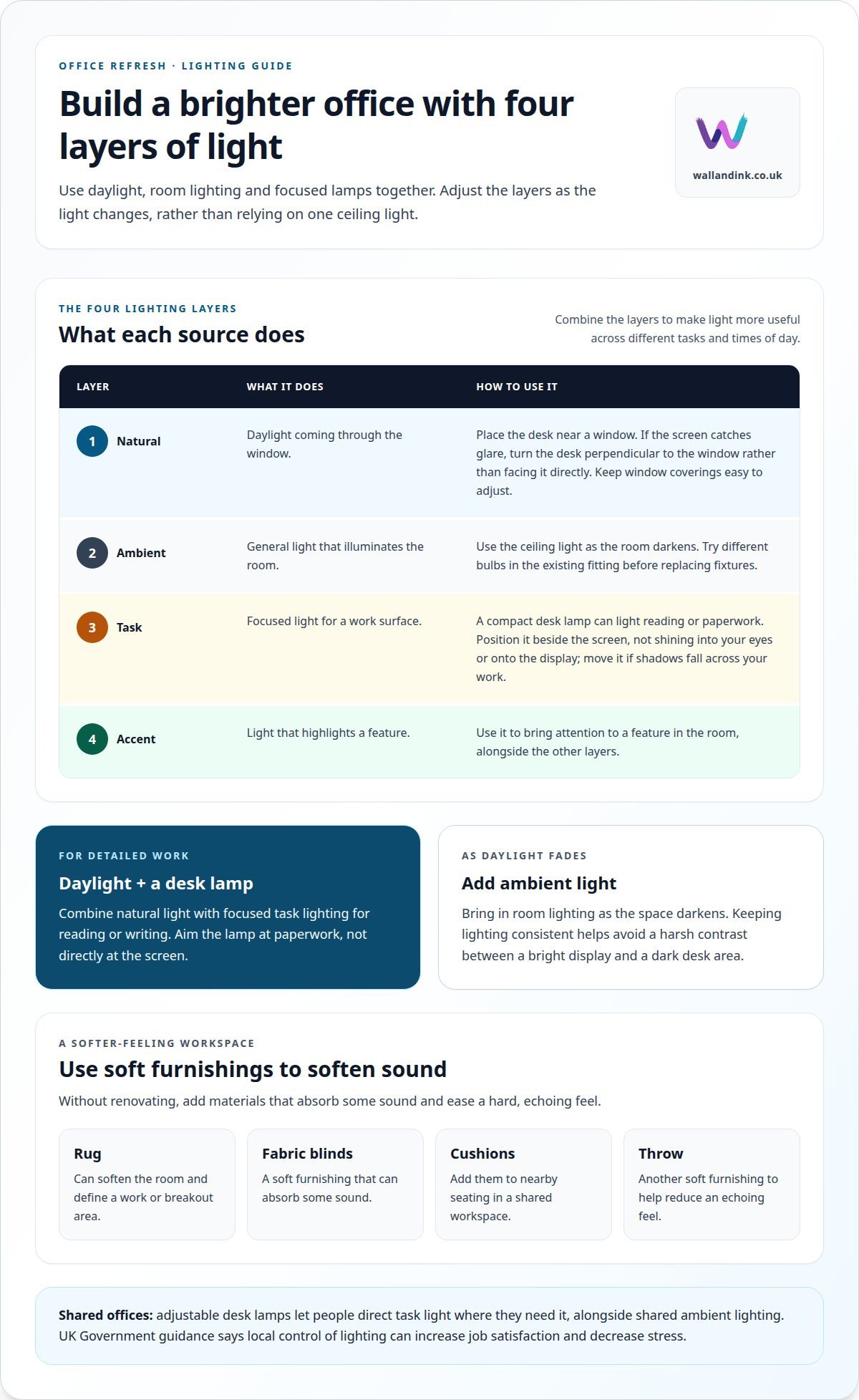
Build a layered lighting scheme with four sources: natural, ambient, task and accent lighting. Natural light comes through the window; ambient light illuminates the room; task lighting focuses on a work surface; and accent lighting highlights a feature. Adjust the layers as daylight changes. For detailed work, combine daylight with a desk lamp, then add ambient lighting as the room darkens. This gives you more control than relying on one ceiling light.
Improve office acoustics without renovating by adding soft furnishings that absorb some sound. A rug, fabric blinds, cushions or a throw can soften a room’s hard, echoing feel. In a shared workspace, place a rug beneath a breakout area and add cushions to nearby seating.
In open-plan offices, local control can make lighting more responsive to different tasks. According to UK Government, giving workers local control of lighting can increase job satisfaction and decrease stress. Use adjustable desk lamps alongside shared ambient lighting, so people can direct task light where they need it without changing the whole room. A simple layout change, such as moving a desk closer to a window, can also make the workspace feel brighter.
2. Adding lamps, clocks, wall hangings and cushions
Choose accessories for a purpose rather than simply filling empty surfaces. A compact lamp beside a reading chair creates a useful pool of light, while a wall clock keeps time visible without using desk space. Hang a framed print above a filing cabinet or opposite the desk to add colour within your usual sightline. Cushions can add texture to meeting-room chairs and make the seating area feel more considered.
A rug can define a work or waiting area, especially in an open-plan room. Choose one large enough to sit beneath the main furniture grouping, rather than leaving a small island in the middle of the floor. A patterned rug adds colour; a plain, textured one defines the area without competing with wall art. Try a rug from another room first to see how its colour and scale work in the office.
For a quick reception refresh, clear the welcome desk, add a visible clock and place a lamp beside the seating area. A framed artwork or vase of fresh flowers can give visitors a clear focal point.
Plants add a natural touch to shelves, window ledges or a reception desk. Choose a pot that suits the surface and keep leaves clear of paperwork, screens and visitor routes. Fresh flowers add colour in a small space; replacing them regularly keeps the display looking considered. To coordinate the artwork, pick one colour from a print and repeat it in a cushion, pen pot or plant pot. Grouping these details gives the workspace a deliberate finish, rather than scattering objects across every surface. In a shared office, repeat the same accent colour in the breakout and meeting areas for visual continuity.
A home-office rug can add warmth, colour and texture, soften sound and protect floors from rolling chairs. Try one from another room before buying; refresh a vase with fresh flowers every other week.
3. Using colour to refresh an office
Start with the room’s main surfaces, then add smaller accents. Pale blue or gentle green can create a calmer interior, while a colourful pinboard or box file adds contrast without changing the whole room. In a compact office, lighter wall colours can help the space feel more open. Keep desks and shelves organised so colour doesn’t compete with paperwork and everyday clutter.
There’s no single average cost for a small office refresh in the UK. The total depends on the room’s condition, the materials and furniture you can reuse, and whether decorating or other work is included. For a defined project, the cost depends on its scope and is provided after a quote request. Paint, lighting, flooring, furniture and labour all affect the total.
Colour can help create the atmosphere you want. Blue is associated with problem-solving and focus, green with optimism and resilience, and orange with warmth and energy. Scottish Government guidance notes that light blue or gentle green surfaces can improve eye comfort, while white desks and counters may reflect light. For a calmer scheme, pair pale blue or green with neutral furniture rather than using strong colours throughout.
For comfortable work, keep room lighting consistent and aim a task lamp at paperwork, not directly at your screen. Avoid a harsh contrast between a bright display and a dark desk area. If repainting isn’t practical, add colour with a rug, curtains or artwork. Choose lighting you can adjust for close work and quieter tasks.
Refresh sustainably by keeping serviceable furniture and giving existing items a new role. Reuse a frame for a print, cover box files with leftover wallpaper or gift wrap, and bring accessories together around one accent colour. Before buying anything, rearrange what you already own and identify what’s missing. This helps limit unnecessary purchases and makes the office feel more cohesive.
4. Plants and biophilic design
Plants bring natural detail to an office without changing its layout. In a home office, place a small pot near the desk or create a layered display on shelves. Keep leaves clear of screens, paperwork and walkways. A plant in your usual field of view adds a point of interest during desk work, while a floor plant can soften an empty corner.
Match plants to the available light and the care you can provide. Snake plants and ZZ plants are low-effort options for office environments. Pothos can trail from a shelf, while succulents create a compact display on a cabinet. Check how much natural light reaches each spot before choosing a plant. A shaded corner and a bright windowsill suit different plants.
Keep the arrangement practical. Choose a stable pot that fits the surface, and place it where it won’t obstruct a desk lamp or opening window. If a large plant would crowd a small workspace, use a single pot on a shelf instead. In a shared office, group plants in a breakout area rather than putting pots on every desk. This creates a defined green feature and keeps work surfaces clear.
Biophilic design can also use natural shapes, colours and imagery. Pair a leafy plant with a framed landscape or botanical print for a coordinated display. In a meeting room, one larger green feature can anchor the space without filling every corner. Keep nearby shelves simple so natural forms remain visible and the room feels organised.
For a larger-scale natural focal point, explore a nature-inspired office wall mural. A considered wall design can extend the greenery visually where floor space is limited, while live plants provide texture at desk level. Together, these details add a natural character without crowding the workspace.
Wall & Ink
Wall & Ink can help when accessories and plants aren’t enough to give an office the visual identity you want. Direct-to-wall printing creates bespoke artwork on a wall, while commercial wall murals can bring colour, a natural theme or a focal point to a shared workspace. For a home office, residential wall art offers another way to make the room feel personal.
A mural can suit a reception area, meeting room or blank wall that needs a more considered finish. Its design can complement your chosen colours and atmosphere without adding furniture or using desk space. Wall & Ink also creates school and educational murals for learning environments.
If a custom wall design feels like the right next step for your workspace, contact Wall & Ink to discuss your project.
Give your workspace a clear direction
Use these quick office refresh ideas as a starting point, then decide what you want your space to communicate. A calm home office, welcoming reception area and focused meeting room each call for a different visual approach. Choosing one clear direction helps new details feel intentional rather than disconnected.
If a blank wall still feels unfinished, consider turning it into a lasting feature. Wall & Ink offers direct-to-wall printing, commercial wall murals and residential wall art for professional and home workspaces. A design can reinforce the atmosphere you’re creating, complement existing colours and provide a focal point without adding furniture to the floor.
You don’t need to change everything at once. Identify the wall or workspace that would benefit most, then take the next step when you’re ready. Contact Wall & Ink about your refresh to discuss a wall design for your space. A considered change can help your office feel more like a place you want to work.
Bring quick office refresh ideas to life with Wall & Ink
Wall & Ink offers direct-to-wall printing and commercial wall murals for offices. If your refresh includes adding artwork or graphics to a wall, these services are a natural next step.
Consider Wall & Ink when you’re ready to turn a chosen look into a wall feature. Its services also include exterior wall printing, residential wall art, school and educational murals, and retail and hospitality graphics.
Frequently Asked Questions
What are quick, low-cost office refresh ideas?
Some of the most practical quick office refresh ideas make use of what’s already in the room. Clear a work surface, group loose cables, and arrange books or stationery neatly. You could also update your computer’s virtual desktop, reposition a chair for a different view or swap accessories between rooms. These small changes refresh the space without new purchases.
How can you refresh an office in one day?
Choose one area and make changes in a clear sequence. First, remove items that don’t belong and wipe down the desk. Next, rearrange existing furniture, organise supplies, and adjust the screen and chair for comfortable work. Finish by updating one visual detail, such as a framed photograph or desktop background. Keeping the scope focused makes it easier to complete the refresh in a day.