
A long corridor doesn’t have to feel like a passage you simply move through. Decorating a long corridor works best when colour, wall details and focal points are planned together: a consistent wall colour can lead the eye along it, while an accent at the far end can draw attention away from its length. Artwork and mirrors add interest and can help the space feel brighter and more balanced.
If your hallway feels narrow, bare or disconnected from the rooms around it, you don’t need to fill every wall. Keep the palette connected to adjoining rooms, then use pilasters to break up long stretches and choose artwork or mirrors carefully. This guide explains how to combine these elements, where to place them and how to create a considered finish without making the corridor feel crowded.
Key Takeaways
- Use a connected colour palette to guide the eye, then add a contrasting feature to shift attention towards a chosen focal point.
- Layer hallway lighting for a softer, more balanced effect, and consider how far wall lights project into a narrow route.
- Use pilasters to divide an uninterrupted wall into more measured sections without relying on decoration alone.
- Place artwork and mirrors to create visual pauses, reflect light and add depth along the corridor.
1. Using colour to change the perceived length of a corridor
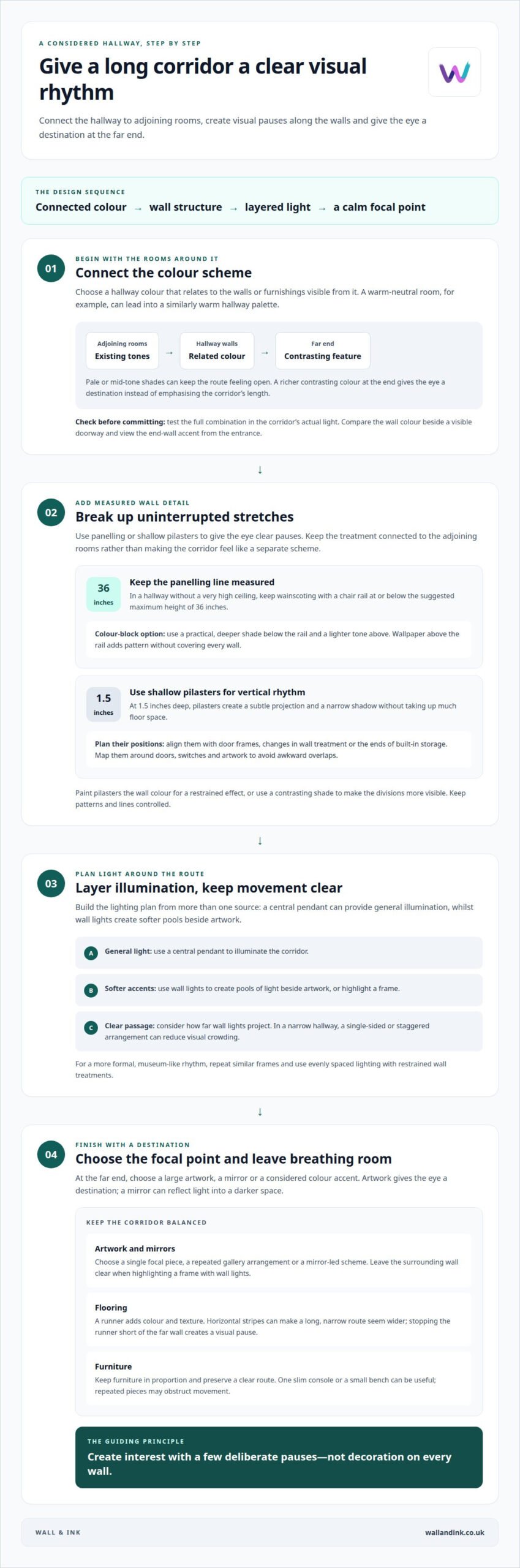
To make a long, narrow corridor look wider, avoid strong colour changes running along the walls. Use a calm, consistent wall colour, then introduce a contrasting shade at the far end. This gives the eye a destination instead of emphasising the passage’s length. Decorating a long corridor is about guiding the eye, not simply choosing the palest paint.
Start by looking at the rooms visible from the hallway. Choose a colour that relates to their walls or furnishings, so the transition feels deliberate. For example, if the living room beyond the entrance has warm neutrals, a similarly warm hallway colour can connect the spaces. Pale or mid-tone shades can keep the route feeling open, whilst a richer colour at the end creates a focal point.
Painting both long walls the same colour creates an uninterrupted line towards the far end, which can emphasise the corridor’s length. Balance this with a contrasting door, artwork or painted section at the end. Wallpaper can also alter the effect: a pattern with visual lines can make the hallway feel cosier. Choose a design that works with the adjoining rooms rather than treating the corridor as a separate scheme.
Wall panelling adds structure and divides a plain surface into defined sections. In a hallway without a very high ceiling, keep wainscoting with a chair rail at or below the suggested maximum height of 36 inches. For a simpler colour-blocked finish, paint below the rail in a practical, deeper shade and above it in a lighter tone. Wallpaper above the rail can add pattern without covering every wall, while painted lower sections suit a busy hallway or one used by small children.
Test the full combination in the corridor’s actual light before committing. Compare the wall colour beside a visible doorway, then check how the end-wall accent looks from the entrance. A controlled palette, a defined feature and a measured panelling line give the hallway a deliberate, elegant finish.
2. How should I decorate a long hallway?
In the UK, hallway decorating costs depend on the size, surface preparation and finishes, and whether flooring or lighting is included. For budget-friendly interest, repaint the existing walls, reposition artwork you already own or add a runner rather than changing every surface.
Build a lighting plan from more than one source. A central pendant can provide general illumination, while wall lights create softer pools of light beside artwork. Choose sculptural sconces for their shape as well as their light, and keep their projection clear of the walking route. In a narrow hallway, a single-sided or staggered arrangement can reduce visual crowding.
For a grand, museum-like interior, establish a clear rhythm. Repeat similar frames, keep the wall treatment restrained and use evenly spaced lighting to guide the eye. A striking pendant can also break up the view down the corridor, making its length less dominant. Keep the combination controlled: competing patterns can make the space feel busy rather than considered.
Choose flooring to suit the level of foot traffic. A runner adds colour and texture, while horizontal stripes can make a long, narrow route seem wider. Stop the runner short of the far wall to create a visual pause. Choose hallway flooring that is practical for the level of foot traffic and suits the style of your home.
Keep furniture in proportion and preserve a clear route. One slim console or a small bench can be useful, but repeated pieces may obstruct movement. At the end of the hallway, use a large artwork, a mirror or a considered colour accent as a focal point. A mirror can reflect light into a darker space; artwork gives the eye a destination. Use wall lights to highlight a frame, then leave the surrounding wall clear. This adds interest without making the corridor feel cluttered.
3. Using pilasters to break up a long wall
A long, uninterrupted wall can make a hallway feel like a passage rather than part of the home. Shallow pilasters create vertical divisions without taking up much floor space. At 1.5 inches deep, they add a subtle projection and cast a narrow shadow that gives a plain wall more definition.
Plan the position around existing features. Align pilasters with door frames, changes in wall treatment or the ends of built-in storage. This makes each section feel intentional instead of placing decorative columns at arbitrary points. In a hallway leading towards a living room, for example, a pilaster beside the doorway can frame the transition and make the entrance feel more welcoming.
Choose a finish that supports the architecture. Painting pilasters the same colour as the wall keeps the effect restrained, whilst a contrasting shade makes each division more visible. A narrow painted band between pilasters can add another layer, but avoid too many competing lines. The aim is to give the eye clear pauses along the corridor.
Wallpaper works well within the sections created by pilasters. A restrained pattern can add texture to each panel without covering the entire length of the hallway. For a more formal finish, combine wallpaper above a dado rail with painted panelling below. Keep the pattern and paint connected to the adjoining rooms, so the corridor feels part of the same interior scheme.
Wall treatments can make practical features look considered, too. Add a shallow shelf or discreet storage between pilasters if there is enough clearance. Keep the surface uncluttered, with only a few useful objects, so it doesn’t obstruct the route. In a narrower hallway, leave the wall clear and use the divisions purely for visual structure.
Before adding pilasters, map their positions in relation to doors, switches and artwork. This simple planning step helps avoid awkward overlaps and keeps the rhythm consistent. Combined with measured panelling or carefully placed wallpaper, pilasters break up a long expanse while preserving a clean, welcoming entrance.
4. Choosing artwork and mirrors
In a narrow corridor, artwork and mirrors should create a clear rhythm without making the route feel tighter. Start by choosing one approach: a single focal piece, a repeated gallery arrangement or a mirror-led scheme. For example, matching frames spaced evenly along one wall create a composed display. Repeating the same frame finish helps the pieces read as one arrangement rather than separate interruptions.
A gallery wall can work on both sides of a hallway when the frames match and the spacing is consistent. Keep the images connected by colour, subject or frame style, then align them at a shared height. If the corridor has several doors, position frames between doorways rather than letting their edges collide with architraves. This creates visual order around existing architectural features.
Use a mirror where it reflects something worth seeing. A view into a bright room can bring that light into a darker stretch; a reflection of a blank wall adds less visual depth. At the end of a hallway, a large mirror can suggest an opening and give the eye a destination. Angle and position it to capture an attractive glimpse through the house, rather than a direct reflection of clutter.
Scale matters. One large artwork can anchor a long wall, whilst a sequence of smaller pieces breaks it into measured sections. In a narrow passage, choose shallow frames and avoid projecting shelves that reduce clearance. A mirror with a simple outline can balance more detailed artwork without adding another competing pattern.
Before fixing anything, arrange paper templates on the wall and view them from both ends. This makes it easier to adjust spacing around switches, doorways and existing lights. Then consider how the display will look in daylight and under the hallway’s evening lighting. A carefully placed mirror can brighten a dark section; artwork can add colour and give the route its own character.
For a tailored visual feature, explore bespoke corridor artwork as an alternative to a collection of separate frames.
Wall & Ink
Wall & Ink can help turn a corridor design into a coordinated wall feature when paint, framed pieces or a mirror-led scheme won’t achieve the scale or continuity you want. Direct-to-Wall Printing creates artwork directly on the wall, while Residential Wall Art and Commercial Wall Murals can provide a tailored focal point for home or business interiors. The right approach depends on the wall, the surrounding colours and the effect you want the corridor to have.
Consider this option when you want artwork designed to work with the full length of the space, rather than adding separate decorative elements. A planned wall feature can complement your chosen palette and give the corridor a clear visual destination.
Contact Wall & Ink to discuss a wall-art direction for your corridor.
Give your corridor a clear design direction
Before choosing a final finish, decide what you want the corridor to do for your home. It might create a calm transition between rooms, make a confident first impression or carry a stronger visual identity of its own. That decision gives each design choice a clear purpose, from the scale of a wall feature to the level of contrast. Decorating a long corridor isn’t about filling every surface. It’s about making the route feel intentional from the entrance to its destination.
Take a moment to consider the view from both ends. Which detail should catch your eye first? What should the space feel like as you move through it? Clear answers help you create a scheme that belongs with the rest of your home, rather than decorating the corridor in isolation.
If you’re ready to develop a distinctive wall-art idea for your space, contact Wall & Ink. A considered direction can turn a simple route into a welcome part of your home.
Frequently Asked Questions
How should I decorate a long hallway?
Give the hallway a clear purpose and keep its everyday route unobstructed. If coats and shoes collect near the entrance, use a compact, wall-mounted arrangement rather than adding deep furniture along the length. In a home with several doorways, treat the section between each opening as a separate visual zone. This makes the scheme easier to plan and helps practical details feel integrated.
What paint colours work best in a long hallway?
Choose a colour that suits the corridor’s natural light and the rooms it connects. In a north-facing hallway, a warm neutral can counter a cool cast; a sunnier space may suit a cooler shade. Paint a sample beside the main doorway and near the far end, then compare it in daylight and evening light. The same colour can look different along the route.
How should you arrange lighting in a long corridor?
Arrange fittings to illuminate the route from entrance to end without directing glare into people’s eyes. Check the view from each doorway before settling on positions, especially where a fitting sits opposite a mirror or glossy surface. If the hallway has separate lighting controls, use them to adjust the entrance and far end independently. This makes the space easier to use at different times.
Which hallway mirrors, artwork and wall decorations work well in a long corridor?
Select pieces that suit the corridor’s width and existing features. A narrow wall may suit one tall print or a slim mirror, while a wider stretch can accommodate a larger composition. Avoid placing delicate objects where doors, bags or passing traffic could knock them. For a unified display, choose artwork with a shared subject or colour, then leave clear wall space around the arrangement.