
Art can support recovery from workplace stress in two practical ways: making time for a creative activity, such as painting or colouring during a lunch break, and shaping workplace spaces to feel more considered and restorative. Both can offer a pause and help people switch off, but neither replaces action on the pressures causing stress.
It’s understandable to look for ways to step back from work, especially when demands follow you beyond the working day. This article explains how art to reduce workplace stress can support personal recovery, why managers’ wellbeing and organisational health matter, and how employers can introduce creative wellbeing ideas without treating them as substitutes for clear priorities, support and manageable workloads.
Key Takeaways
- Use a creative activity as a pause from work, while also addressing the pressures that make switching off difficult.
- Managers can support wellbeing by making workload, priorities and staff support regular topics of conversation.
- Creative activities and art therapy are not the same; understand the difference before deciding what kind of support is appropriate.
- Involve staff early when planning a workplace creative programme, and begin with a small number of priorities.
1. Recovery time and switching off from work
Work-related stress can build when demands conflict, workloads feel unmanageable, or people have little control over decisions. Poor working conditions and unclear expectations can add pressure. The Health and Safety Executive defines stress as an adverse reaction to excessive pressures or other types of demand. Stress outside work can compound this: caring responsibilities, financial concerns or relationship difficulties may leave less energy for recovery.
Recovery needs practical boundaries, not just good intentions. Set realistic goals at the start of the day, identify what can wait, and agree priorities with a manager when deadlines compete. A clear end-of-day routine can help: write down unfinished tasks, note the next action, then stop checking work messages at home. Short breaks during the working day also create space to reset. Painting or colouring at lunch is one simple option; a walk can shift attention away from work.
Work-life balance affects physical and mental health. Long hours, heavy workloads and too little time with family or friends can contribute to burnout. Some pressure may feel motivating, but persistent anxiety, poor concentration or disrupted sleep are signs to take concerns seriously. Creative activities may support emotional recovery, but they cannot fix excessive demands or replace changes to workloads and working conditions.
A workplace art activity is an optional creative pause, such as drawing or colouring. Art therapy is a structured therapeutic approach, not simply an art session at work. Employers can make activities accessible by offering different materials and formats, and allowing quiet participation without requiring artistic skill or public sharing. Check that the space and tools suit people with different physical or sensory needs.
The main limitation is that art cannot resolve the causes of work-related stress on its own. It should not pressure staff to disclose personal feelings or replace action on workloads, appropriate support or professional help when stress affects daily life.
2. Manager wellbeing and organisational impacts
Managers face pressure from their own workloads and responsibilities, as well as from supporting staff. Regular one-to-one meetings can make workload, priorities and wellbeing practical topics, rather than issues to discuss only in a crisis. Agree realistic deadlines and clarify expectations when competing tasks create pressure. These steps help identify organisational problems that an individual creative activity cannot resolve.
Conflict and unacceptable behaviour need active management. Bullying or unresolved disputes can add to work-related stress, so managers should address concerns promptly and explain next steps. A private conversation with a trusted colleague or manager can help someone describe what is happening and consider useful support. An employee assistance programme may also offer support, depending on the services available through work.
UK employers have a legal duty to protect workers from work-related stress by assessing risks and acting on them, according to the UK Government. This means considering workplace pressures and taking practical action where risks are identified. Managers need support, too. Regular conversations about their workloads can help prevent responsibility for staff wellbeing becoming another unmanaged pressure.
Exercise can support stress management by giving people a physical break from work and another focus for their thoughts. A walk between meetings is one practical option. The American Psychological Association says meditation and deep breathing can also help relieve stress. These approaches can complement workplace action, but they don’t replace it.
Augmented reality can place digital images over a view of a real space. In a workplace, it may help teams preview a visual environment before making design decisions. Treat it as a way to explore an idea, not as evidence that stress will fall. For any creative initiative, invite staff to say what feels helpful, make participation optional, and review whether the activity suits their needs. Clear feedback can help managers develop a more considered approach to wellbeing.
4. What does research say about art therapy and workplace stress?
Research about art and workplace stress needs careful interpretation. A team colouring session, a personal painting break and art therapy are different activities. Taking part in a creative task does not, by itself, mean someone has received therapy or that workplace stress has been treated. Keep the activity, its purpose and any claimed outcome distinct.
Painting or colouring during a lunch break may give someone a practical way to express difficult feelings. The NHS recommends taking short breaks during the working day to manage the effects of stress. The American Psychological Association identifies meditation, deep breathing and mindfulness as approaches that can help relieve stress. These recommendations concern breaks and other techniques, not proof that workplace art therapy treats stress.
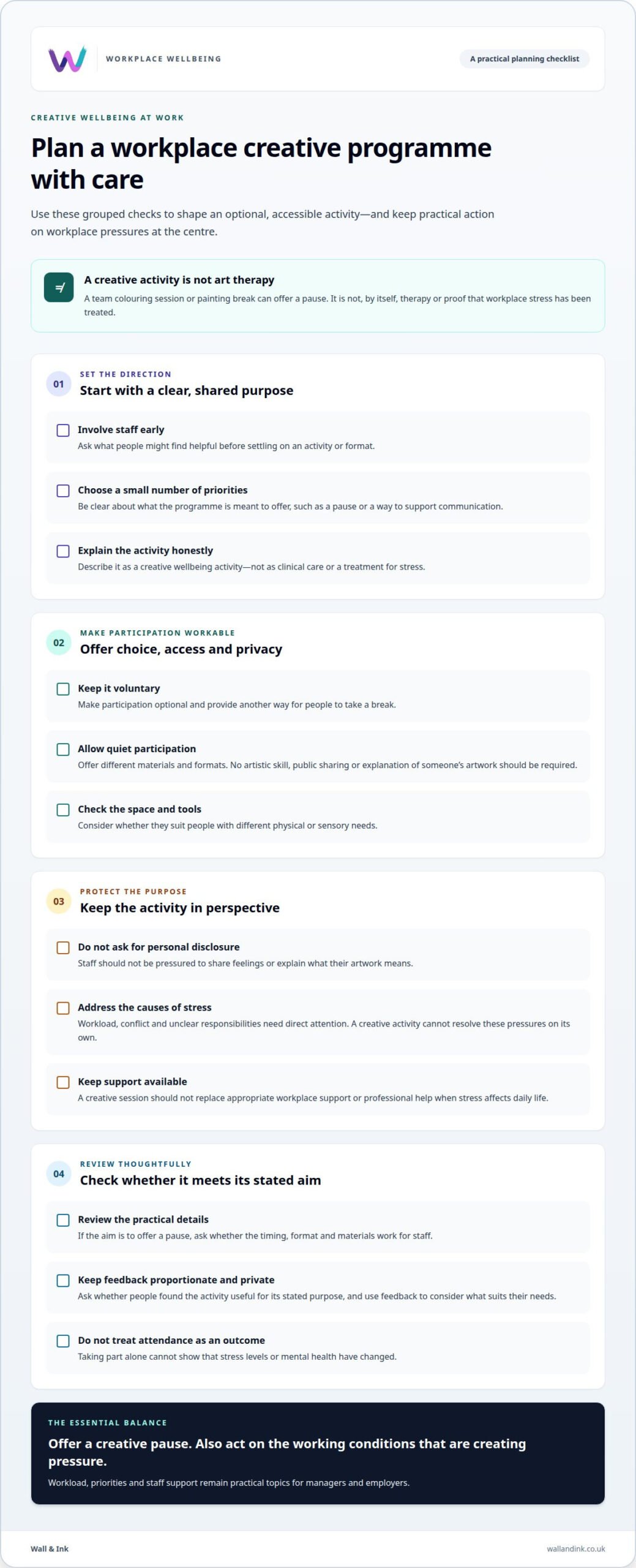
For employers, that distinction matters. An optional creative session can be offered as a wellbeing activity, without presenting it as clinical care. Avoid asking staff to explain their artwork or disclose personal experiences. Instead, explain the session’s purpose, make participation voluntary and provide another way to take a break. These steps protect choice and prevent a creative activity becoming a test of staff wellbeing.
Evaluate the programme against its stated aim. If the aim is to offer a pause, ask whether the timing, format and materials work for staff. If the aim is to improve communication, ask whether people found the activity useful for that purpose. Keep feedback proportionate and private. Attendance alone cannot show that stress levels or mental health have changed.
Art can sit alongside practical action on workplace pressures, not replace it. If workload, conflict or unclear responsibilities are driving stress, managers need to address those conditions directly. Avoid claims that art therapy prevents burnout unless supported by relevant evidence. For individuals whose stress affects daily life, the NHS advises speaking to a GP or contacting NHS talking therapies.
4. How can employers set up a workplace art or creative wellbeing programme?
Involve staff early, before choosing an activity or changing a space. Ask what would make participation comfortable, including preferred formats and practical barriers. A short discussion can reveal whether people favour quiet individual activities, shared creative sessions or visual changes to their surroundings. This input helps shape a programme around actual needs.
Set a clear purpose. For example, an employer might offer a creative break to provide a pause during the working day, rather than claim it treats stress. If a whole-team action plan feels daunting, identify a few priority areas for improvement first. Staff can then respond to a defined proposal instead of being asked to solve every workplace concern at once.
Choose a format that supports access and choice. Offer different materials and ways to take part, such as drawing, colouring or simply observing. Make participation voluntary, and avoid asking people to explain their work or share personal experiences. Consider the room, noise, lighting and equipment so the activity is practical for people with different needs.
Plan the session around working patterns and workloads. A creative activity should not add pressure, interrupt essential responsibilities or imply that staff must give up breaks. Explain what will happen, how long the session will run and who can join. Keep the invitation clear and let people decline without explanation.
Review the programme against its purpose. Ask participants whether the format was accessible and useful, then use their feedback to adjust the next session. Keep feedback focused on the activity, not private disclosures or clinical outcomes. For a visual approach to a shared workplace, explore options for a creative workplace environment as part of the planning process.
The guidance recommends involving staff as early as possible when considering workplace changes. Keep the conversation open while the programme is being shaped, rather than presenting a finished plan for approval. Invite views on possible activities, spaces and ways to participate, and make it easy for staff to raise concerns or suggest alternatives. Where preferences differ, consider offering more than one approach. Returning to staff before making changes can help ensure the final arrangement reflects the input gathered.
Wall & Ink
Wall & Ink helps organisations bring considered artwork into shared spaces through Direct-to-Wall Printing and Commercial Wall Murals. A bespoke mural can give a staff room, meeting area or reception a visual identity shaped around the people who use it. It can support a more considered workplace environment, but it isn’t a treatment for stress or a substitute for addressing workloads and other workplace pressures.
For employers planning a creative wellbeing programme, wall art is one environmental element to consider alongside staff input, accessible activities and practical support. Wall & Ink offers bespoke design consultations and digital visualisations to help organisations shape an artwork concept for their space before installation.
To discuss artwork for your workplace, contact Wall & Ink.
Make the workplace environment part of the plan
Creative wellbeing works best alongside practical changes to working conditions. A considered visual environment can be one part of a wider approach to art to reduce workplace stress, without suggesting artwork alone can resolve workplace pressure. Keep staff needs and the purpose of each space central to design decisions.
For organisations considering a visual scheme, think about how the workplace is used and what atmosphere it should support. A staff room may need a different feel from a busy shared area. Matching the design to the setting gives the environment a clear purpose within a wider wellbeing plan.
Contact Wall & Ink to explore workplace art and discuss what could suit your setting. A thoughtful design decision can help create a workplace environment that reflects the culture you want to build.