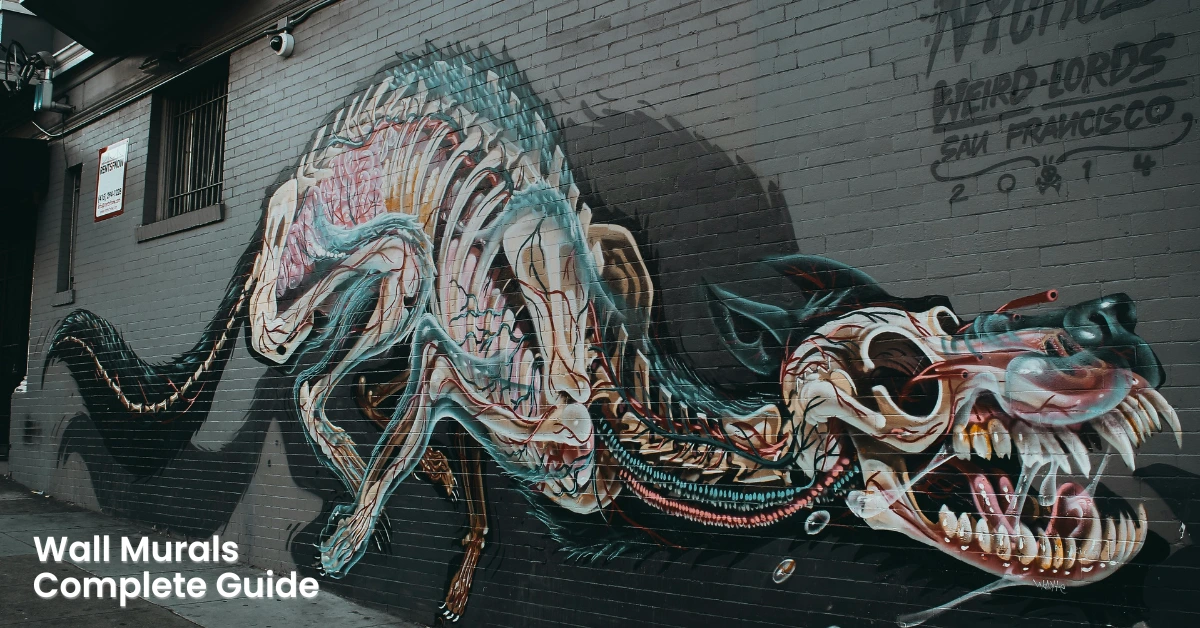
Wall murals have become a significant element in modern interior design, offering a way to transform spaces with large-scale visual impact. Unlike traditional wall coverings that rely on repeating patterns, a wall mural acts as a singular piece of art that spans an entire wall or a specific section of a room.
This guide provides an in-depth look at what wall murals are, how they differ from wallpaper, the production process, and their applications in both residential and commercial environments.
What Are Wall Murals?
At its core, a wall mural is a piece of artwork applied directly to a wall. While historically these were painted by hand—dating back to prehistoric cave paintings and frescoes—modern wall murals are typically large-format digital prints. They are designed to cover a specific area, often an entire wall, creating a focal point that changes the atmosphere of a room.
Today’s wall murals for walls are high-resolution images printed on various substrates, such as vinyl, paper, or fabric. They allow for an immense range of artistic expression, from realistic landscapes and city skylines to abstract art and custom graphics.
Wall Murals vs. Wallpaper: What Is the Difference?
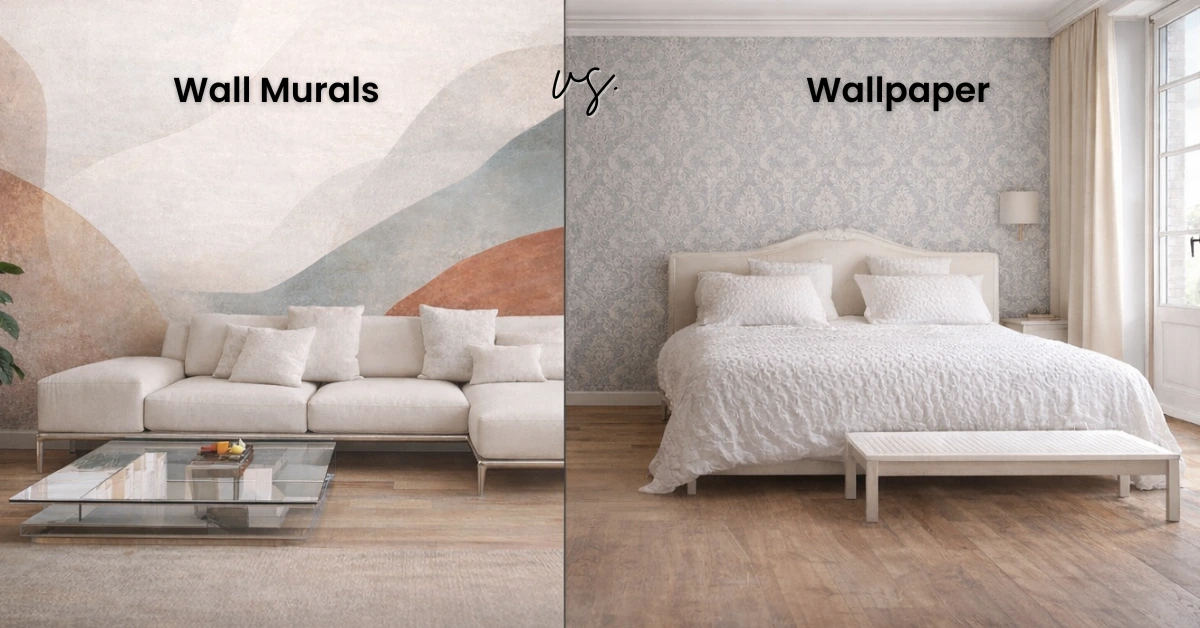
While they are often grouped together in interior design discussions, there are distinct differences between a wall mural and standard wallpaper.
- Design Continuity: Wallpaper typically features a repeating pattern that can be matched seamlessly across multiple rolls to cover a room of any size. In contrast, wall mural design is a single, non-repeating image. The design is scaled specifically to fit the dimensions of the wall it will cover.
- Application: Wallpaper is often used on all four walls of a room to create a uniform backdrop. Wall murals are generally applied to a single “feature wall” to serve as a statement piece.
- Customization: While wallpaper comes in pre-set rolls, custom wall murals can be tailored to exact wall measurements and specific image requirements.
Types of Wall Murals
The market for wall art murals has expanded significantly, offering various materials and installation methods to suit different needs.
1. Peel and Stick (Self-Adhesive)
These are printed on self-adhesive vinyl or fabric. They function like large stickers and are popular because they are often removable and repositionable. This makes them an excellent choice for renters or temporary installations.
2. Paste-the-Wall (Non-Woven)
Similar to traditional wallpaper, these require adhesive paste for installation. They are generally more durable and have a premium, matte finish that reduces glare. They are ideal for permanent installations in high-traffic areas.
3. Pre-Pasted
These murals come with a dry adhesive on the back that is activated by water. This is a traditional method that sits between peel-and-stick and paste-the-wall in terms of installation complexity.
4. Vinyl Wall Murals
Heavy-duty vinyl murals are extremely durable and washable. These are often used in commercial settings like hospitals, restaurants, and offices where the wall needs to withstand wear and tear.
How Wall Murals Are Made: The Printing Process
The creation of modern decorative wall murals relies on advanced large-format digital printing technology.
- Image Selection & Sizing: A high-resolution digital image is selected. The file must have a high enough pixel count (DPI) to remain sharp when blown up to wall size.
- Paneling: Because most printers cannot print a 10-foot wide image in one pass, the image is digitally sliced into vertical panels (strips). These panels are numbered so they can be installed in the correct order to reconstruct the full image.
- Printing: The panels are printed using large-format printers. These machines use various ink technologies, such as UV-curable, Latex, or Eco-Solvent inks. These inks are chosen for their color vibrancy, durability, and low chemical emissions (low VOCs).
- Finishing: The printed material is cut to size. Some mural wall designs receive a laminate coating to protect against UV fading and scratches.
Wall Mural Installation Overview
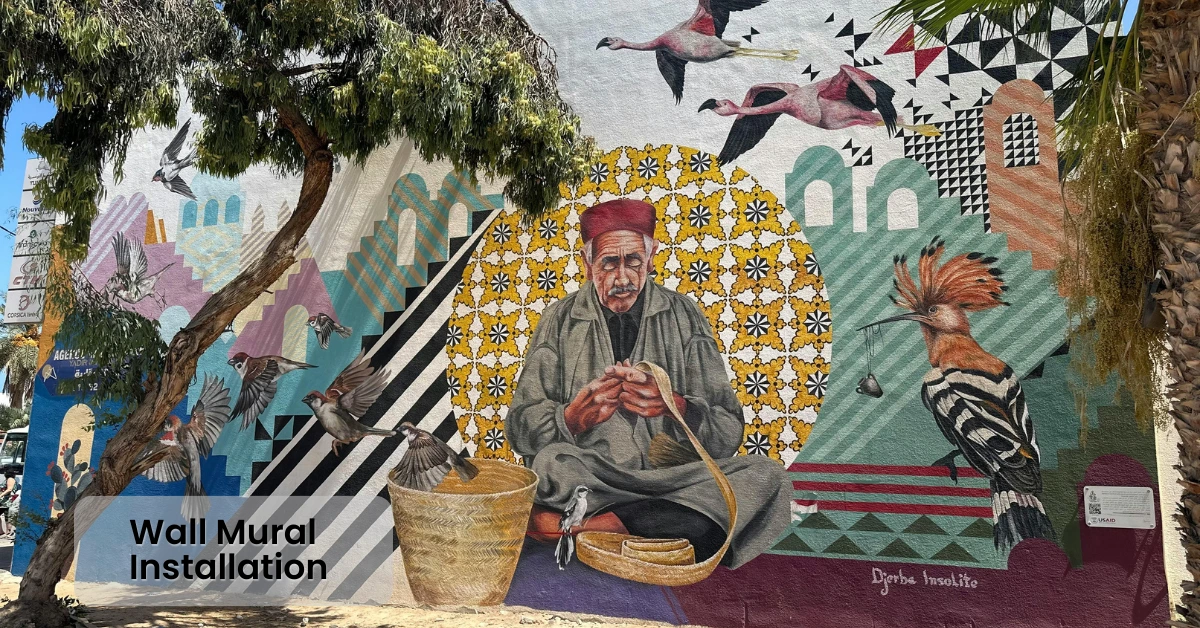
Installing wall murals for home or office requires patience and preparation. While professional installation is common for large commercial projects, many residential murals are designed for DIY application.
- Surface Preparation: The wall must be smooth, clean, and dry. Any holes should be filled, and textured walls may need sanding.
- Layout: Installers typically start from a specific corner or the center, depending on the mural type. A plumb line (a vertical straight line) is drawn to ensure the first panel is perfectly straight.
- Application: The panels are applied one by one. For printed wall murals that come in strips, it is crucial to align the image perfectly at the seams.
- Smoothing: A squeegee or smoothing tool is used to push out air bubbles and ensure strong adhesion to the wall.
- Trimming: Once all panels are up, excess material at the ceiling and baseboard is trimmed away with a sharp blade.
Benefits of Wall Murals in Interior Design
Integrating wall murals for interior design offers several functional and aesthetic advantages.
- Visual Depth: Large scale wall murals, such as landscapes or cityscapes, can create an optical illusion that makes a small room feel larger and more open.
- Personality and Theme: They instantly establish a theme. A forest scene creates tranquility, while geometric shapes suggest modernity.
- Cost-Effective Impact: Compared to buying multiple pieces of framed art to cover a large wall, a mural can be a more cost-effective way to decorate a large surface area.
- Durability: High-quality vinyl or laminated murals are resistant to scratches and can be wiped clean, making them practical for busy environments.
Wall Mural Ideas for Home and Office Spaces
The versatility of digital printing means there are endless wall mural ideas suitable for different environments.
Residential Spaces
- Wall Murals for Living Room: Popular choices include scenic landscapes, misty forests, or textured designs like faux brick or concrete. These provide a sophisticated backdrop for sofas and entertainment units.
- Wall Murals for Bedroom: Calming imagery is preferred here. Cloudscapes, floral patterns, and soft watercolors help create a relaxing sanctuary.
- Kids’ Rooms: Educational maps, space themes, and animal illustrations are common choices that add vibrancy to play areas.
Commercial Spaces
- Wall Murals for Office: Companies often use murals to reinforce branding or boost morale. Motivational quotes, abstract maps, or city skylines are frequent choices for conference rooms and lobbies.
- Retail and Hospitality: Restaurants and stores use artistic wall murals to create “Instagrammable” moments for customers, enhancing the overall brand experience.
Modern and Artistic Wall Mural Design Trends
Current trends in wall mural art focus on bringing nature indoors and embracing bold artistic statements.
- Biophilic Design: There is a strong trend toward greenery and botanical prints. Lush jungles, oversized leaves, and floral bouquets connect indoor spaces with nature.
- Maximalism: Moving away from minimalism, some designs feature bold colors, complex patterns, and large-scale art that demands attention.
- Texture Effects: High-resolution photography allows for realistic “trompe l’oeil” (trick of the eye) effects. Murals that look like weathered wood, marble, or industrial concrete are very popular for adding texture without the renovation costs.
- Watercolor and Ombré: Soft, bleeding colors and gradient fades are trending for their ability to add color without overwhelming a space.
Where Can Wall Murals Be Used?
While most commonly seen in living rooms and bedrooms, the application of wall murals extends further:
- Ceilings: Often called the “fifth wall,” ceilings are increasingly being decorated with sky or floral murals.
- Bathrooms: With moisture-resistant materials, murals can add spa-like vibes to bathrooms (typically kept away from direct shower spray).
- Hallways and Stairwells: These transitional spaces are excellent candidates for panoramic murals that guide the eye through the home.
Frequently Asked Questions (FAQ)
What are wall murals?
Wall murals are large-scale artworks applied directly to a wall. Unlike wallpaper which features repeating patterns, a mural is a single, continuous image composed of multiple panels.
What is the difference between wall murals and wallpaper?
The main difference is the design format. Wallpaper uses a repetitive pattern sold in rolls, whereas wall murals feature a specific, non-repeating image scaled to fit a specific wall size.
Are wall murals suitable for all walls?
Murals work best on smooth, flat surfaces. Walls with heavy texture (like popcorn or heavy orange peel) may prevent the adhesive from sticking properly or distort the image.
How long do wall murals last?
The lifespan depends on the material and environment. High-quality vinyl or non-woven murals can last 10 to 15 years or more if properly cared for and kept out of direct, harsh sunlight.
Can wall murals be customized?
Yes. Custom wall murals are very common. Users can often upload their own photos or artwork, provided the image resolution is high enough for large-format printing.
Are wall murals easy to install?
Many modern murals, specifically peel-and-stick types, are designed for DIY installation. However, large or complex installations, particularly those using paste, may require professional assistance to ensure perfect alignment.
Do wall murals damage walls?
Peel-and-stick murals are generally designed to be removable without damaging paint, provided the paint was fully cured before installation. Paste-based murals are more permanent and may require steaming or scraping to remove, which can affect the underlying drywall.
Where can wall murals be used?
They can be used in almost any indoor space, including living rooms, bedrooms, offices, retail stores, and hospitals. Moisture-resistant options are available for kitchens and bathrooms.
Are wall murals removable?
Yes, most are removable. Self-adhesive types peel off easily. Paste-the-wall types are often “strippable,” meaning they can be removed in large sheets, though some residue cleaning may be required.
How do you clean wall murals?
Most vinyl and non-woven murals can be cleaned with a damp cloth or sponge and warm water. Abrasive cleaners and scrubbing pads should be avoided to prevent damaging the print.
