
What if the detail guests remember most isn’t a statement piece, but a visual cue that makes your venue feel welcoming and easy to navigate? Creating a memorable guest experience with decor means more than choosing attractive colours or eye-catching features. Each choice should support a specific moment, from arrival to settling in.
It can be difficult to know which design decisions will matter to guests, or how to balance visual impact with comfort and practical needs. This guide shows you how to plan decor around the guest journey, create a coherent first impression and express your venue’s identity without losing sight of how each space is used.
You’ll explore how colour, layout and considered details can support comfort and orientation, and how bespoke wall graphics can provide a distinctive visual anchor. Direct-to-wall printing brings a tailored mural onto a physical wall, while a digital visualisation lets you review how the design could look in the space before printing. The aim is decor with a clear purpose as well as visual impact.
Key Takeaways
- Start creating a memorable guest experience with decor by identifying what guests need at each point in their visit.
- Plan colour, lighting, imagery and layout as a coordinated system, with each choice serving a clear purpose.
- Compare movable accessories, applied graphics and direct-to-wall printing by their role, scale, permanence and upkeep.
- Use a practical planning process to separate essential guest needs from optional visual enhancements.
- Consider how a bespoke wall mural could reinforce your venue’s identity as part of a wider design direction.
How creating a memorable guest experience with decor begins at arrival
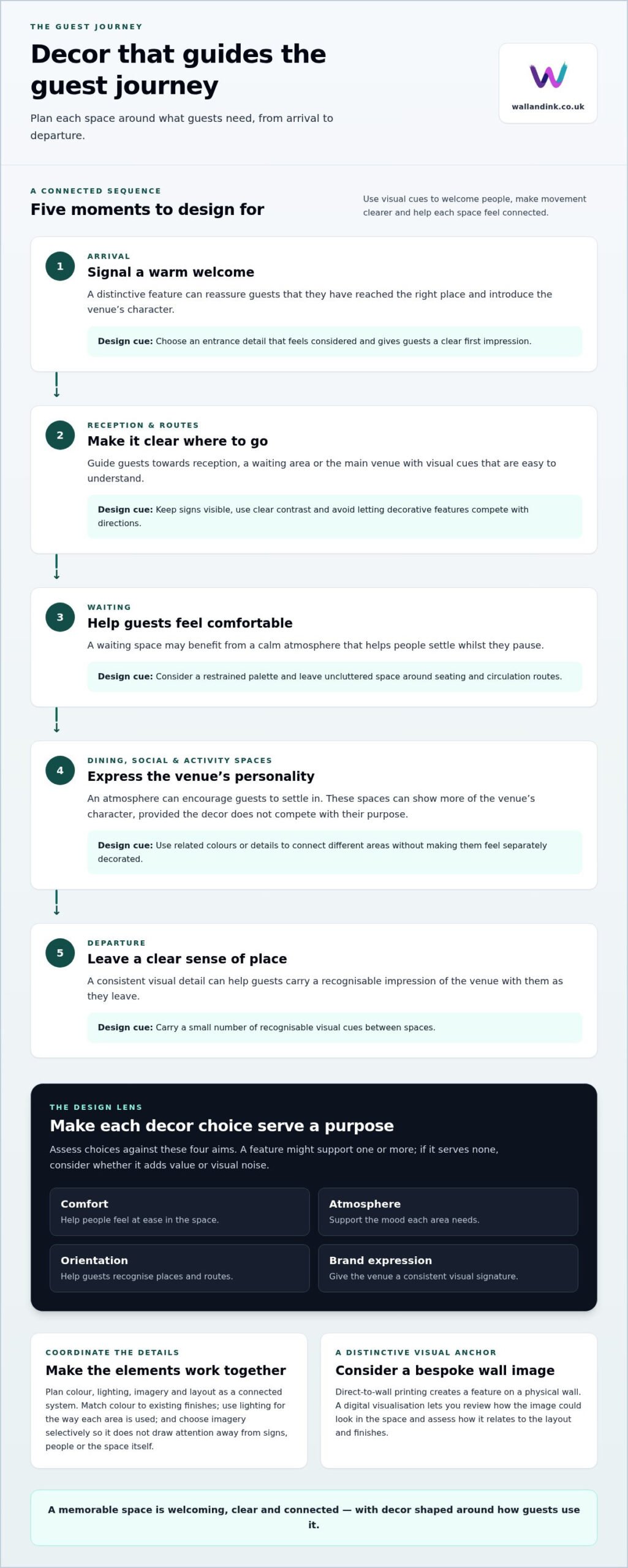
Guests experience a venue as a sequence, not a collection of decorated rooms. From the entrance to the point of departure, each space can help them feel welcome, understand where to go and recognise the venue’s character. Guest-experience-led decor makes each part of a visit feel welcoming, clear and connected.
First impressions set an initial expectation, but decor alone doesn’t determine guest satisfaction. Service, comfort and how well the venue functions all contribute. Design has a practical role: make key moments feel considered and reduce uncertainty where guests need direction or reassurance. Hotel design offers a useful overview of how planning and development shape a hospitality space.
Which moments in the guest journey should decor support?
Map the journey from arrival to departure, then note what guests need at each point. At the entrance, a distinctive feature can signal that they’ve reached the right place. Clear visual cues can then guide them towards reception, a waiting area or the main venue. A waiting space may need to feel comfortable and calm, whilst a dining or social area may benefit from an atmosphere that encourages guests to settle in.
Separate essential touchpoints from opportunities for extra visual impact. Reception and routes between spaces should be easy to understand. A lounge, dining room or activity area can express more of the venue’s personality, provided the decor doesn’t compete with its purpose. Consider departure too: a consistent visual detail can leave guests with a clear sense of place as they leave.
How can decor make a venue feel welcoming and distinctive?
Begin with the atmosphere you want guests to experience, then use colour, imagery and materials to express it consistently. A venue aiming for a calm, grounded feel might use a restrained palette and natural-looking imagery. A lively social space may call for stronger colour and more prominent visual cues. There’s no universal formula. Choose details that suit the venue and the experience you want to create.
Carry a small number of recognisable cues between spaces so the entrance, reception and main areas feel connected rather than separately decorated. For example, a bespoke wall image at the entrance could introduce a visual theme that continues through the waiting area in related colours or details. Direct-to-wall printing can create a distinctive feature on a physical wall, while a digital visualisation helps you assess how the image will sit within its surroundings.
Novelty can attract attention, but it can’t replace comfort or clarity. Memorable design works best when it helps guests understand the space, feel at ease and recognise what makes the venue distinct.
Choose decor elements that improve comfort, atmosphere and orientation
Decor works hardest when it meets a guest need as well as supporting the venue’s identity. Assess each choice against four aims: comfort, atmosphere, orientation and brand expression. A feature might make a waiting area feel calmer, help guests recognise a particular zone or give the venue a consistent visual signature. If it serves none of these purposes, consider whether it adds value or simply adds visual noise.
Purposeful decor connects how a space looks with how visitors need to feel and move through it. That principle keeps colour, lighting, imagery and layout working together, rather than treating them as separate finishing touches. It’s central to creating a memorable guest experience with decor that feels considered and works in practice.
How do colour, lighting and imagery affect the atmosphere?
Start with the mood each space needs to support, then assess colour against existing finishes such as flooring, furniture and wall surfaces. A muted palette can create a quieter impression, whilst a well-placed accent colour can help identify reception or distinguish one area from another. Keep colours visually related across the venue, even where spaces serve different functions.
Lighting should also respond to how each area is used. Reception needs clear visibility, while a dining or social space may call for a softer feel. Combining general lighting with focused lighting can help a space serve different needs without relying on one uniform effect. Imagery can add identity, whether it reflects the venue’s story or a sense of place. Use it selectively, as competing images can draw attention away from signs, people or the space itself.
How can decor support comfort and wayfinding?
Keep routes and important information easy to identify. Signs need clear contrast and a visible position. Decorative features shouldn’t obscure them or draw attention away from key directions. A distinctive wall image, change of colour or material detail can act as a landmark, helping guests recognise where they are without filling the venue with competing focal points.
Balance is practical. Leave uncluttered areas around entrances, circulation routes and seating so guests can move, pause and talk comfortably. Place a striking feature where it can be seen without obstructing movement or making the space feel crowded. A bespoke mural can bring imagery into the design, and a digital visualisation can help you assess how it relates to the layout and finishes. Explore bespoke wall mural design as one way to connect visual identity with the physical space.
Compare decor approaches by their role in the guest experience
Different decor formats solve different problems. Movable accessories can add warmth or be rearranged as a venue’s needs change. Applied graphics can introduce visual cues or brand elements on selected surfaces. Direct-to-wall printing makes the wall itself a bespoke visual feature. Choose based on the guest need, the space and how prominent or changeable the detail should be. No single approach suits every venue.
| Approach | Purpose and visual scale | Permanence and maintenance | Suitable role in the space |
|---|---|---|---|
| Movable accessories | Smaller details that add comfort, colour or atmosphere. | Can be rearranged or replaced; upkeep depends on the item and how it’s used. | Seating areas, tables and spaces where styling needs flexibility. |
| Applied graphics | Surface-level imagery or visual cues, from modest details to more noticeable features. | Fixed in place rather than moved like an accessory; maintenance depends on the material and location. | Areas that need a brand cue, directional prompt or defined visual zone. |
| Direct-to-wall printing | Bespoke digital imagery printed directly onto a physical wall, often used as a larger visual anchor. | Part of the wall’s visual design; care depends on the wall surface and setting. | Blank or prominent walls where a venue wants to express its identity or atmosphere. |
Use this comparison as a planning guide, not a measure of quality. Consider how guests will use each space, what they need to notice and how much visual prominence the area can accommodate. Accessories may add enough character to a flexible lounge. A wall feature may be more effective where a large, empty surface interrupts the visual flow or where guests need a clear landmark.
When do smaller decor details make the most sense?
Choose furnishings and accessories when you want to layer colour, texture or comfort without changing the room’s overall structure. They’re useful in areas that need to adapt, including spaces used for different activities or seasonal arrangements. Keep each item proportionate: an attractive arrangement shouldn’t obstruct circulation, reduce usable seating or interfere with the venue’s functions.
When might a wall feature create a stronger visual anchor?
A wall image can connect a blank surface to the venue’s story or give guests a recognisable point within a larger space. Direct-to-wall printing applies bespoke digital imagery to the wall itself. Scale and placement matter: the feature should be legible from the distance guests are likely to view it, while fitting around nearby seating, routes and activities. Digital visualisations help you assess the image in context before on-site printing.
For creating a memorable guest experience with decor, combine approaches only when each has a defined role. Small details can make a space feel considered; a fixed visual feature can make it recognisable. Together, they should support the experience rather than compete for attention.
Plan guest-focused decor with a practical step-by-step process
A clear plan prevents attractive ideas from taking priority over how a venue needs to function. Start with the guest and the space, then develop the visual direction. This keeps creating a memorable guest experience with decor focused on practical outcomes, not decoration for its own sake.
How do you turn guest needs into a clear design brief?
Build the brief around who visits, what they do and where the experience could work better. A hotel might need guests to recognise reception quickly; a restaurant might want its entrance to establish the atmosphere before diners reach their table. Record the existing visual identity, key messages, intended mood and practical constraints, such as routes that must remain clear.
Separate essential needs from optional enhancements. Clear access, legible information and suitable space for guests to wait are functional priorities. A feature image or extra decorative detail may add character, but it shouldn’t undermine those basics. Keep the brief focused on a small number of outcomes so the design has direction.
How can you review a decor concept before installation?
Use this five-step process to move from need to implementation:
- Define guest needs: Identify who uses the venue and what should feel clearer, easier or more welcoming.
- Map touchpoints: Note where guests arrive, pause, gather and move, then identify the purpose of decor at each point.
- Set a design direction: Choose an atmosphere and visual approach that fits the venue’s identity and intended guest experience.
- Preview the concept: Review a digital visualisation to assess a bespoke wall design’s scale, placement, colour and relationship to surrounding features.
- Implement against the brief: Check the planned design against the original guest needs before moving into on-site work.
A digital visualisation makes a design easier to assess in context than an isolated image. Review it from viewpoints guests are likely to have, including the entrance and the routes they use. Does the feature feel proportionate from a distance? Does it compete with signs, furniture or nearby activity? Use your answers to refine the concept before it’s printed on the wall.
Define the need, map the journey, set the direction, preview the design, then implement. This order keeps essential functions in view while giving visual enhancements a clear role. To plan a bespoke wall feature for a hospitality venue, explore bespoke wall printing for commercial spaces.
Use bespoke wall printing to create a memorable hospitality space
A bespoke mural can give a hospitality space a clear visual feature, but it works best as part of a wider guest-experience plan. First decide what the space needs: a stronger sense of identity, a distinct atmosphere or a focal point guests can recognise. Then choose a wall that supports that purpose without distracting from signs, routes, seating or activity around it.
What can bespoke wall imagery contribute to a venue?
Custom imagery can express a venue’s story, visual identity or intended mood. An image at the entrance might introduce the venue’s character, whilst imagery in a dining area could reinforce the atmosphere guests experience there. Content and placement should feel connected to the space, not added simply to fill a blank wall.
Consider how guests will see the feature as they arrive, move through the venue or settle into an area. A mural should work with sightlines and surrounding finishes, while leaving movement through the space clear. Its scale needs to suit both the wall and the guest’s viewpoint. A visual anchor should contribute to the experience without overwhelming the room.
What does the Wall & Ink project process involve?
Wall & Ink begins with a bespoke design consultation to shape the visual direction around the venue and its aims. The proposed artwork is then presented as a digital visualisation, so you can consider how its imagery, scale and position relate to the intended setting before it reaches the wall.
Once the design direction is agreed, direct-to-wall UV printing applies the bespoke digital imagery to the physical wall surface. Professional on-site installation brings the planned concept into the venue. This process connects the design decision to its real setting, helping keep the feature aligned with the original guest-experience brief.
Creating a memorable guest experience with decor doesn’t require every surface to become a focal point. A considered mural can provide one recognisable moment within a coherent venue, supporting its identity and atmosphere while keeping practical needs in view. To explore how a wall feature could fit your space, discover bespoke wall printing.
Make every design choice work harder for your guests
Creating a memorable guest experience with decor starts with the journey: help guests feel welcome on arrival, comfortable as they use the space and confident about where to go. Choose colours, lighting and imagery for a clear purpose, then compare flexible details with fixed features according to the needs of each area.
A bespoke wall mural can add a distinctive visual anchor when it supports the venue’s identity and fits naturally within the wider design. Wall & Ink’s process includes a design consultation and digital visualisation to help you review the concept in context. Direct-to-wall UV printing then applies the imagery to the physical wall surface, with professional on-site installation for hospitality spaces across the UK.
If a wall feature could help express your venue’s character, explore bespoke wall printing for your hospitality space. A clear brief and considered design choices are a practical place to begin shaping a guest experience that feels welcoming, coherent and distinctly yours.
Frequently Asked Questions
How can decor create a memorable guest experience?
Decor creates a memorable guest experience when it makes a visit feel welcoming, clear and connected from arrival to departure. Creating a memorable guest experience with decor means matching visual choices to real guest needs, rather than decorating for appearance alone. Use a recognisable feature to establish the venue’s character, clear visual cues to support orientation and comfortable, uncluttered spaces for waiting, dining or socialising.
What decor makes guests feel welcome in a hospitality venue?
Guests tend to feel welcome when the space is comfortable, easy to understand and consistent with the venue’s character. Choose colours and imagery that suit the intended atmosphere, provide clear routes to reception or key areas, and make waiting spaces feel considered. Lighting should support the activity taking place, whilst furnishings and decorative details should leave enough room to move, sit and talk comfortably.
Can wall art improve the guest experience?
Wall art can contribute to the guest experience by giving a space character, expressing the venue’s identity or creating a visual landmark. Its value depends on how well it fits the setting. Consider what guests see as they arrive or settle into a room, and check that the image complements the interior rather than competing with signs, movement or conversation. A feature should support the space, not overwhelm it.
How do I choose decor for a hotel, restaurant or visitor venue?
Start by identifying who uses the venue, what they do and where the experience needs improvement. Map key moments such as arrival, waiting, dining and departure. Then set priorities: functional needs, including clear routes and readable information, come before optional visual enhancements. Choose a design direction that reflects the venue’s identity, and assess how colour, lighting, imagery and layout will work together in each space.
What is the difference between a wall mural and other decorative wall treatments?
A wall mural is an image-led feature designed for a wall, often at a scale that gives a room a focal point or reinforces its identity. Other decorative wall treatments may use colour, texture or smaller visual details to change a surface’s appearance. Direct-to-wall printing applies bespoke digital imagery to the wall itself. The best approach depends on the desired visual scale, purpose and relationship to the existing interior.
How can decor support wayfinding as well as atmosphere?
Use decor to create visual landmarks, but keep practical directions clear. A consistent colour or recognisable image can help guests distinguish areas, whilst signs should remain easy to spot and read. Position focal features where they support orientation without obstructing routes or drawing attention away from essential information. This lets the venue express its character while helping visitors understand where they are and where they need to go.
Can direct-to-wall printing be used for bespoke hospitality graphics?
Yes. Wall & Ink uses UV printers to apply bespoke digital imagery directly to physical wall surfaces for commercial spaces, including hospitality environments. The project process includes a design consultation, a digital visualisation to show the proposed artwork in its setting, and professional on-site installation. This gives venues a way to plan a wall feature around their identity, atmosphere and guest journey before the image is printed.