
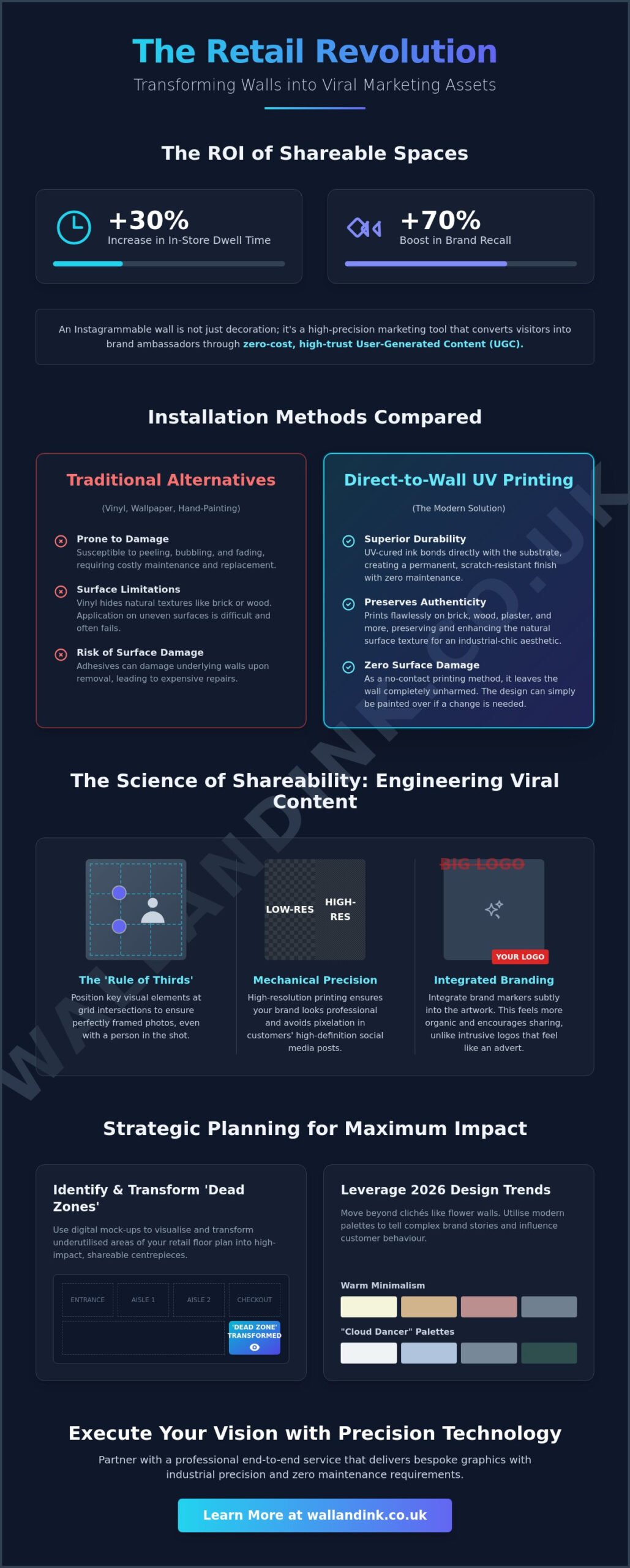
Research indicates that well-designed branded environments increase in-store dwell time by 30% and boost brand recall by 70%. Pragmatic retailers recognise that creating an instagrammable wall for a shop is no longer a decorative luxury; it’s a high-precision marketing requirement. Many businesses face the frustration of stagnant social media engagement and the high cost of traditional decor that quickly looks dated. It’s difficult to justify investment when there’s a persistent fear of damaging surfaces with legacy materials like vinyl or wallpaper.
This guide demonstrates how to transform your retail space into a viral marketing asset using advanced direct-to-wall printing technology. You’ll learn how to achieve a professional-grade aesthetic that requires zero maintenance and offers superior durability compared to traditional alternatives. We’ll examine the strategic integration of 2026 design trends, such as warm minimalism and “Cloud Dancer” palettes, whilst explaining the technical precision that ensures your brand remains visible and relevant in a competitive market.
Key Takeaways
- Learn how to leverage user-generated content as high-trust, zero-cost advertising by designating specific zones for customer photography.
- Master the technical ‘Rule of Thirds’ when creating an instagrammable wall for a shop to ensure every smartphone capture is perfectly framed and high-definition.
- Discover why UV digital wall printing provides the mechanical superiority and durability required to eliminate common issues like peeling or bubbling.
- Identify underutilised ‘dead zones’ within your retail floor plan and use digital mock-ups to visualise high-impact murals before the execution phase.
- Understand the value of a professional end-to-end service that delivers bespoke graphics with industrial precision and zero maintenance requirements.
Beyond Aesthetics: Why an Instagrammable Wall is a Retail Marketing Necessity
In 2026, retail success depends on the physical space’s ability to exist simultaneously in the digital world. An ‘Instagrammable wall’ isn’t merely a decorative feature; it’s a high-precision, dedicated zone engineered specifically to facilitate customer photography. By creating an instagrammable wall for a shop, retailers transform static surfaces into active marketing channels. This architectural integration moves beyond the superficial, establishing a permanent brand statement that invites interaction through superior visual clarity and industrial-grade execution.
These spaces leverage fundamental visual marketing principles to convert visitors into brand ambassadors. When a customer shares a photograph of your shop’s interior, they provide User-Generated Content (UGC). This is high-trust, zero-cost advertising that carries significantly more weight than traditional paid campaigns. Whilst temporary ‘pop-up’ aesthetics were once popular, the 2026 market demands professional-grade, durable installations that reflect a brand’s long-term stability and commitment to quality.
The ROI of Shareable Spaces
For UK retailers, social tags function as digital word-of-mouth. A single post from a customer can reach thousands of potential visitors, effectively lowering your customer acquisition cost without ongoing media spend. Analysis of branded environments suggests that well-executed centrepieces can increase in-store dwell time by 20-30%. This extended engagement strengthens the emotional connection between the consumer and the brand, leading to improved brand recall by up to 70%. Unlike temporary vinyls that eventually bubble or peel, permanent Direct-to-Wall Printing ensures the ROI remains consistent over years of heavy footfall.
Defining Your Brand’s Visual Signature
Savvy consumers are moving away from decorative clichés. Flower walls and basic neon signs have lost their impact amongst audiences seeking authenticity and industrial precision. Retailers now utilise bespoke commercial wall murals to tell complex brand stories. Colour psychology plays a critical role in this process. Specific palettes influence customer behaviour; for instance, serene whites can encourage a relaxed browsing pace whilst retro earth tones evoke nostalgia and trust. By choosing advanced printing technology over traditional methods, businesses maintain a professional appearance that aligns with their specific technical standards and aesthetic goals.
The Science of Shareability: Elements that Drive Customer Engagement
Shareability isn’t accidental; it’s engineered. When creating an instagrammable wall for a shop, you must account for the specific optics of a smartphone lens. Successful designs utilise the ‘Rule of Thirds’ by positioning primary focal points at the intersections of a 3×3 grid. This alignment ensures that when a customer frames a selfie, the most impactful elements of the mural aren’t obscured by their head or shoulders. It’s a technical approach to composition that guarantees every captured image is balanced and aesthetically pleasing.
Resolution is equally critical for brand integrity. Low-definition graphics result in pixelated backgrounds that look unprofessional in high-resolution social media posts. Direct-to-wall printing technology achieves a level of precision that traditional methods cannot match, rendering intricate details with mechanical superiority. This clarity is vital when incorporating subtle branding. Rather than using large, intrusive logos that make a photo feel like an inorganic advert, retailers should integrate brand markers into the artwork itself. This approach aligns with effective social media marketing strategies, where organic, high-trust content drives better engagement than overt promotion.
The substrate also dictates the emotional impact of the space. Printing directly onto raw materials like brick, reclaimed wood, or textured plaster creates an ‘industrial chic’ aesthetic that feels authentic rather than manufactured. Unlike vinyl decals that sit on top of a surface and hide its character, UV ink bonds with the substrate. This preserves the natural texture whilst delivering vibrant, durable colour. If you are looking to revitalise a specific surface, choosing commercial wall murals that respect the architectural integrity of your building is a pragmatic decision.
Lighting: The Make-or-Break Factor
Lighting determines whether a mural is photographable or frustrating. Glossy finishes often cause harsh glare when hit by a camera flash, rendering the background unrecognisable. We utilise matte UV ink finishes to eliminate this issue, ensuring the art remains visible under any lighting conditions. Retailers should prioritise natural light where possible, but if indoor spotlights are necessary, ‘cool’ or neutral tones are preferred over ‘warm’ yellow lights to ensure accurate skin-tone reproduction in customer selfies. Position light sources to illuminate the wall evenly, avoiding deep shadows that might fall across a customer’s face.
Composition and Interactive Elements
Interactive art encourages customers to pose as part of the scene, turning a static wall into an experience. To achieve this, focal points should be positioned at eye-level for the average adult, typically between 150cm and 170cm from the floor. This height ensures easy framing without the need for awkward camera angles. You can further simplify the process by using floor graphics to lead customers to the ‘perfect shot’ location. These subtle cues reduce friction and increase the likelihood of a customer taking and sharing a photo, directly boosting your shop’s digital visibility.
Comparing Installation Methods: Why Direct-to-Wall Printing Trumps Traditional Alternatives
Decision-makers often struggle with selecting the right medium when creating an instagrammable wall for a shop. Legacy options such as vinyl decals frequently fail in retail environments; they’re prone to peeling, bubbling, and an unmistakable ‘plastic’ sheen that cheapens the brand aesthetic. Traditional wallpaper presents similar challenges, including visible seams that disrupt complex graphics and limited customisation for bespoke brand assets. Whilst hand-painted murals offer a certain charm, they come with high costs, long lead times, and the risk of human error in fine detail.
Modern retail strategy is shifting away from these temporary fixes. As brands move toward more integrated community-building experiences, the physical environment must reflect a permanent, high-quality standard. Direct-to-wall UV printing has emerged as the industrial solution to these common decor failures, providing a level of precision and cleanliness that was previously unattainable when creating an instagrammable wall for a shop. This technology bonds ink directly to the substrate, ensuring the art feels like a permanent part of the building’s fabric rather than a superficial addition.
Durability in High-Traffic Retail Zones
Direct-to-wall printing is the only method that offers true scratch resistance and UV stability in bright retail environments. Intensive shop lighting often causes traditional pigments to fade within months; however, UV-cured inks remain vibrant for 5 to 10 years. This longevity contrasts sharply with the 1 to 2-year lifespan typical of vinyl applications. For busy shops, cleanability is a technical necessity. The ink handles the occasional smudge or fingerprint with ease, allowing staff to maintain a pristine appearance amongst shoppers without the need for specialised chemicals or delicate handling.
The ‘No-Hassle’ Installation Process
Speed and cleanliness are the primary advantages of this modern application method. A 20-square-meter mural can be completed in just 4 to 8 hours, significantly reducing business disruption compared to the days or weeks required for hand-painting. There’s no dust, no toxic fumes, and no mess. This versatility extends to the substrate itself. The technology prints directly onto glass, brick, or uneven plaster without the need for primers or adhesive layers. It’s a precise, efficient, and predictable process designed for retailers who value high-quality results without the traditional inconveniences of site preparation and cleanup.
Strategic Planning: Choosing the Right Location and Design for Your Shop
Successful execution requires a methodical planning phase. Retailers often make the mistake of selecting a wall based on convenience rather than data. When creating an instagrammable wall for a shop, the process must begin with a pragmatic evaluation of your floor plan and lighting conditions. This structured approach ensures the final mural functions as a high-performance marketing asset rather than just an aesthetic addition.
Follow this five-step strategic framework to ensure optimal results:
- Step 1: Traffic Flow Analysis – Identify ‘dead zones’ or low-engagement areas within your store. Revitalising these underutilised spaces with high-impact art maximises the utility of your total square footage.
- Step 2: Digital Visualisation – Utilise high-fidelity mock-ups to see the mural in situ before the printing process begins. This step eliminates guesswork and allows for precise adjustments to scale and positioning.
- Step 3: Lighting Audit – Monitor how light hits the chosen surface at various times of the trading day. Identifying potential glare or deep shadows early prevents photographic failures during peak hours.
- Step 4: Design Finalisation – Ensure all colours match your existing brand palette exactly. Our precision technology guarantees colour accuracy that legacy methods often fail to achieve.
- Step 5: Professional Consultation – Verify the substrate and surface condition. A technical assessment ensures the wall is structurally sound and ready for direct-to-wall ink application.
Optimal Placement for Maximum Exposure
Placement determines the volume of content generated by your visitors. An ‘Entrance Hook’ creates an immediate first impression, demanding a photograph as soon as the customer enters the shop. Alternatively, a ‘Queue Distraction’ involves placing shareable walls near the tills. This reduces the perceived wait time by giving customers a reason to engage with their smartphones whilst standing in line. It’s essential to ensure the designated ‘selfie station’ does not block aisles or impede the natural flow of shoppers. Congestion creates friction, which can negatively impact the overall customer experience and brand perception.
Bespoke Design vs. Stock Imagery
Generic stock patterns rarely drive social engagement in 2026. Savvy consumers recognise repeated imagery and are less likely to share content that feels mass-produced. Unique, custom art is shared more frequently because it offers a one-of-a-kind visual asset that customers cannot find elsewhere. Collaborating with digital artists allows you to integrate your brand story directly into the mural fabric. You should also include social handles and hashtags naturally within the design. This ensures that every shared photo contains a direct link back to your digital presence. For businesses ready to start their transformation, our team provides expert commercial wall murals tailored to your specific retail strategy.
Executing Your Vision with Wall & Ink’s Precision Technology
Transforming a retail environment requires a partner who understands both the aesthetic and technical requirements of high-traffic spaces. Wall & Ink specialises in the industrial application of bespoke graphics, providing a sophisticated alternative to the decorative clichés that often clutter modern shops. By creating an instagrammable wall for a shop through our specialized UV printing process, you ensure your brand’s visual identity is rendered with mechanical precision. Our end-to-end service manages every detail from the initial design phase to the final execution, allowing pragmatic decision-makers to focus on their core operations whilst we handle the technical complexities of the installation.
Sustainability is a critical metric in 2026, with approximately 78% of consumers prioritising eco-conscious choices in decor and art. Our direct-to-wall method aligns with these values by eliminating the waste associated with traditional wallpaper and the synthetic adhesives found in vinyl decals. Because the ink bonds directly to the substrate, there’s no risk of peeling or bubbling over time. This process is remarkably clean; we eliminate the dust, toxic fumes, and general mess typical of shop renovations. You receive a high-resolution, permanent visual asset that remains pristine without the need for ongoing maintenance or frequent replacements.
Our Technical Advantage
The superiority of our process lies in the high-resolution UV ink that bonds instantly to any surface material. Whether your shop features brick, glass, or uneven plaster, our technology captures every intricate detail of your digital artwork with 100% colour accuracy. These finishes are specifically engineered to be fade-resistant and scratch-proof, ensuring they withstand the rigours of a busy retail centre. This level of durability is a technical necessity for brands that require a consistent, professional appearance across years of heavy customer interaction.
Start Your Transformation
Our consultation process is designed to be straightforward and logical. We assist you in selecting the optimal location based on traffic flow and lighting audits, ensuring your investment delivers maximum marketing value. Before we arrive on-site, you’ll review digital mock-ups that show your exact design in situ, providing total transparency and confidence in the final result. If you’re ready to move beyond temporary decor and invest in a permanent, high-precision marketing tool, we’re ready to deliver. Book a consultation with Wall & Ink today to revolutionise your retail space and secure your brand’s place in the digital and physical landscape.
Future-Proofing Your Retail Space for 2026
Pragmatic retailers recognise that social media visibility is now a measurable business asset. By creating an instagrammable wall for a shop using high-precision technology, you move beyond temporary trends and invest in a durable marketing tool. This guide has detailed the strategic necessity of traffic flow analysis and the mechanical superiority of direct-to-wall printing over legacy alternatives like vinyl or wallpaper. Our advanced UV printing technology ensures a high-resolution finish that resists fading even in the busiest shopping centres. We provide bespoke digital visualisations to ensure every detail of your brand story is captured perfectly before execution. With our nationwide UK service, we deliver professional results without the mess, fumes, or disruption of traditional renovations. It’s time to turn your static surfaces into active brand ambassadors that drive both footfall and digital engagement. Transform your shop with a bespoke wall mural – Contact Wall & Ink. We look forward to helping you revitalise your retail environment with industrial precision and expert care.
Frequently Asked Questions
How long does it take to print an Instagrammable wall in a shop?
A standard 20-square-metre project typically takes between four and eight hours to complete. This efficiency is a core advantage of UV digital wall printing technology over traditional methods. Unlike hand-painted murals that require days of onsite work, our process ensures minimal business disruption. You can often schedule the installation for a single morning or afternoon without closing your shop to the public.
Can you print on any shop surface, including brick or glass?
Our technology bonds ink directly to a wide variety of substrates, including textured brick, smooth glass, wood, and uneven plaster. No primers or special adhesives are required for most surfaces. This versatility allows retailers to utilise existing architectural features rather than hiding them behind layers of vinyl. The mechanical precision of the printer ensures the design follows the natural contours of the material for an integrated, professional finish.
Is the wall printing process messy or disruptive to my customers?
The direct-to-wall printing process is exceptionally clean and produces no dust, fumes, or liquid waste. There is no need for protective floor coverings or extensive site preparation beyond ensuring the surface is clean. Because the UV ink cures instantly under the print head, there’s no drying time or lingering chemical odours. This allows for a seamless transition back to normal trading immediately after the print is finished.
How durable is the print in a high-traffic retail environment?
UV-cured prints are engineered for high-traffic environments and typically last between five and ten years without fading. The ink is scratch-resistant and remains stable under intensive retail lighting, which often causes traditional pigments or vinyl decals to degrade. When creating an instagrammable wall for a shop, this durability ensures your marketing asset maintains its high-definition clarity despite frequent customer interaction and regular cleaning.
Do I need to provide the artwork, or can you design it for me?
We offer an end-to-end service that includes both bespoke design and professional installation. You can provide your own high-resolution digital artwork, or our team can collaborate with you to develop a custom visual strategy. This flexibility ensures that the final mural aligns perfectly with your brand identity and the specific technical requirements of the retail space. We utilise digital mock-ups to verify the design before printing begins.
How much does a custom wall mural cost for a business?
Costs for commercial wall murals are typically calculated based on the total square meterage and the complexity of the design. Factors such as the surface substrate and the location of the project also influence the final investment. We recommend requesting a specific quote to get an accurate figure for your retail space. This transparent approach ensures you receive a pricing structure tailored to your specific project requirements without hidden consultation fees.
Can the print be removed if I decide to change the shop’s branding?
The print is a permanent decor solution but can be easily removed by painting over the surface with two coats of standard emulsion. This is a significant advantage over vinyl decals, which can leave behind sticky residue or damage the underlying plaster during removal. If your branding evolves, you can simply refresh the wall and prepare it for a new high-precision print, ensuring your shop’s aesthetic remains current and relevant.
What kind of lighting is best for a wall I want people to photograph?
Neutral or ‘cool’ lighting is best for creating an instagrammable wall for a shop as it ensures accurate skin-tone reproduction in customer selfies. Our matte UV ink finish is specifically designed to eliminate camera flash glare, a common problem with glossy vinyl. You should position light sources to illuminate the mural evenly from the front, avoiding harsh overhead spotlights that create deep shadows on the customer’s face or the artwork.