
The traditional choice for office decor might actually be the greatest risk to your brand’s professional image. When evaluating wall printing vs wallpaper for business, many decision-makers lean towards familiar vinyl rolls, yet these legacy materials often fail under the pressures of a high-traffic environment. You’ve likely noticed the signs of a poor investment: peeling edges in busy corridors, visible seams breaking up corporate logos, or the disruption of closing a workspace for a messy installation. It’s frustrating to pay for a premium aesthetic only to see it degrade before the year is out.
We’ll show you why advanced UV technology is now the industrial-grade standard for durable, high-impact commercial branding. This article explains how direct-to-wall printing provides a permanent, high-resolution solution that integrates with your building’s fabric without the typical downtime. You’ll learn the technical differences between these methods, from surface adaptability to long-term maintenance, ensuring your next interior project delivers a lasting return on investment.
Key Takeaways
- Learn why UV-cured inks provide a permanent, industrial-grade finish that lasts over 12 years without the peeling or fading common to traditional materials.
- Understand the critical differences in wall printing vs wallpaper for business, specifically how mechanical precision eliminates visible seams and adhesive failures.
- Discover the benefits of a zero-disruption installation process that allows your commercial space to remain fully operational whilst your graphics are applied.
- Explore the hygiene advantages of direct-to-wall applications, which support standard cleaning detergents and meet high-traffic commercial requirements.
- Find out how bespoke digital visualisation ensures your brand’s story is perfectly integrated into the building fabric before the printing process begins.
What is Direct-to-Wall Printing for Business?
Direct-to-wall printing represents a significant shift from decorative arts to industrial engineering. It is a high-precision mechanical process that applies digital graphics directly onto a vertical substrate using UV-cured inks. Unlike traditional methods, this technology removes the need for adhesive media. There is no paper backing to bubble and no vinyl film to stretch. Instead, the ink becomes part of the wall itself. This level of industrial precision allows corporate decision-makers to achieve branding results that were previously impossible with legacy materials.
When comparing wall printing vs wallpaper for business, the most striking difference is the lack of physical constraints. Whilst the history and types of wallpaper reveal a long-standing reliance on pre-printed rolls and chemical pastes, modern wall printing operates as a specialised inkjet system moving on a vertical track. This allows for application on diverse substrates amongst commercial environments, including textured brick, polished glass, smooth plaster, and natural wood. It’s a versatile solution that adapts to the building fabric rather than requiring the building to adapt to the material.
How UV Ink Technology Works
The process relies on advanced ultraviolet lamps integrated into the print head. As the machine applies the ink, these lamps cure the liquid instantly, transforming it into a hardened, durable solid. This instant curing creates a smudge-proof finish that’s ready for high-traffic contact immediately after application. Because the inks are cured by light rather than evaporation, they don’t release the strong odours or volatile organic compounds (VOCs) associated with traditional solvents. This makes the technology ideal for sensitive environments such as healthcare centres or occupied offices where air quality is a priority.
The End of Seams and Peeling
Traditional wall coverings inevitably suffer from structural failure points. Wallpaper requires joins between rolls, which often become visible as the building settles or humidity fluctuates. Vinyl decals frequently experience edge-peeling in busy corridors where equipment or pedestrians brush against the surface. Direct-to-wall printing eliminates these risks by applying a continuous layer of ink without any physical edges to catch or lift. Seamless application is now the corporate standard because it removes the visual clutter of overlaps and the maintenance burden of re-gluing lifting corners.
Technical Superiority: Why UV Printing Outperforms Vinyl and Wallpaper
Choosing between wall printing vs wallpaper for business often comes down to technical resilience. Traditional vinyl wall coverings act as a vapour barrier. This traps moisture behind the material, which frequently leads to structural damp or mould in older UK buildings. Direct-to-wall printing avoids this failure point. Because the ink is applied without a continuous plastic film, the substrate retains its natural breathability. This is a critical advantage for maintaining the integrity of plaster walls in professional environments. Adhering to professional interior design standards requires selecting materials that meet these technical demands whilst maintaining aesthetic integrity.
Hygiene is another area where mechanical application excels. Printed walls are fully washable and can be cleaned with standard detergents without the risk of lifting edges or water ingress. Maintenance is simplified further when a rebrand is required. There is no need for the laborious process of steaming or scraping away old adhesive. You simply paint over the existing mural. This efficiency makes it a superior choice for pragmatic decision-makers who value long-term operational ease. For a technical assessment of your specific site, our team provides national UK coverage for commercial wall murals.
Durability in High-Traffic Environments
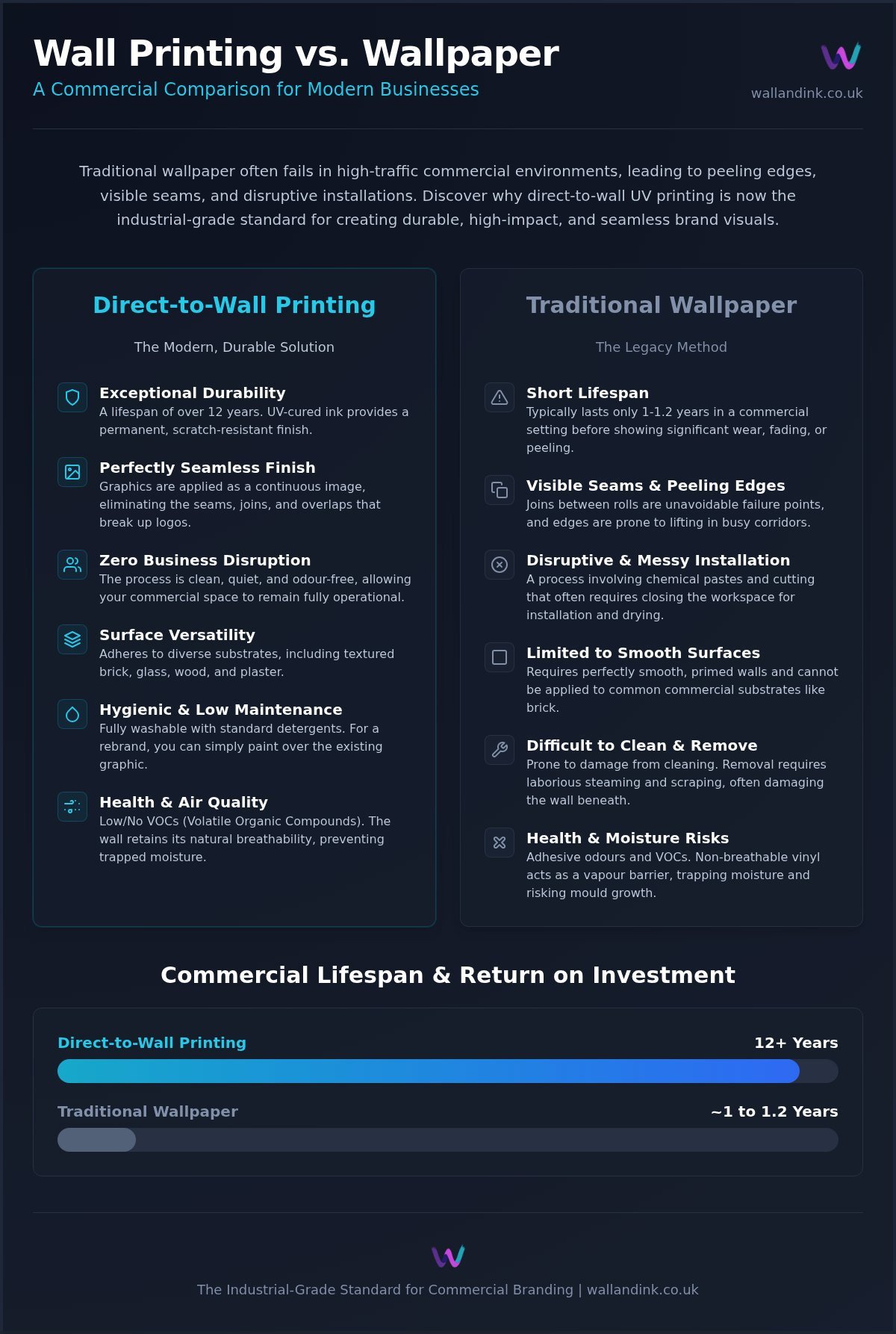
UV-cured ink offers exceptional scratch resistance in busy office corridors, lobbies, and hospitality settings. The mechanical bond between the ink and the substrate ensures the graphic remains intact even when subjected to daily wear from pedestrians or equipment. Unlike traditional hand-painted murals that may flake, or wallpaper that fades, UV ink is stable. It does not degrade or lose vibrancy under harsh fluorescent office lighting. This stability allows for a lifespan of typically 12+ years for interior surfaces, far outlasting the 1 to 1.2 years often seen with standard commercial wallpapers before they require repair.
Substrate Versatility: Printing on Any Surface
The precision of the printing hardware allows for application on almost any surface found amongst modern commercial interiors. The machine handles uneven textures like exposed brick or concrete without losing photographic resolution. It maintains sharp lines on non-porous materials including glass, steel, and wood. The technology adapts to the texture of the wall rather than masking it. This creates a bespoke finish that feels like a natural part of the building fabric rather than a temporary addition. Whether you are branding a smooth boardroom wall or a textured industrial foyer, the result is consistently high-resolution.
Commercial Applications: Brand Storytelling and Functional Graphics
Direct-to-wall printing is a strategic tool for corporate communication. Modern environments utilise this technology to display large-scale timelines and company history walls that span entire corridors. Unlike traditional media, which often relies on repeating patterns, direct application allows for unique, non-repeating data across hundreds of square metres. This level of bespoke detail is a primary differentiator when evaluating wall printing vs wallpaper for business. It allows the building fabric to serve as a high-resolution canvas for complex brand storytelling that remains sharp and legible at any distance.
High-resolution “Pixel Walls” are increasingly popular in breakout areas and lounges. These installations use photographic art to transform clinical office spaces into engaging, restorative environments. Current digitally printed wallcovering trends suggest that customisation and production speed are driving this shift towards direct-to-surface methods. Beyond aesthetics, environmental graphics influence employee behaviour and morale by creating a sense of shared purpose. We also apply signage and wayfinding directly onto surfaces like brick or concrete. This ensures directions are permanent and integrated into the architecture rather than being stuck on as temporary decals that eventually peel.
Educational and Healthcare Environments
Nurseries and primary schools require the highest safety standards for interior finishes. The UV-cured inks used in our process are odourless and non-toxic, which makes them safe for immediate use in occupied classrooms. University corridors benefit from interactive “Learning Walls” that display complex diagrams, periodic tables, or historic maps. These prints withstand the constant contact and mechanical wear of high-traffic student areas without the degradation seen with traditional paper or vinyl. The ink bonds to the plaster, providing a durable surface that supports the hygiene requirements of healthcare centres.
Retail and Hospitality Branding
Operational speed is the priority for retail units and hospitality venues. Our process allows for rapid installation whilst the business remains open to the public. Restaurants and cafes use this method to create “Instagrammable” feature walls that drive social media engagement and brand recognition. We also extend these services to exterior wall printing. This allows shop facades and industrial units to be enhanced with weather-resistant graphics that bond directly to the substrate. It’s a permanent branding solution that eliminates the need for expensive external signage frames or frequent vinyl replacements.
The Business Case: Calculating ROI and Maintenance
Pragmatic financial planning for commercial interiors requires a shift from looking at initial capital expenditure to evaluating the total cost of ownership. When analysing wall printing vs wallpaper for business, the primary return on investment comes from the extended lifecycle of the installation. Traditional commercial wallpapers in high-traffic sectors often require repair or replacement within 1 to 1.2 years due to mechanical damage or adhesive failure. In contrast, UV-printed murals are an industrial-grade solution with a documented interior lifespan of 12+ years. This longevity effectively eliminates the frequent re-decoration cycles that drain facilities management budgets.
Bespoke digital graphics also serve as a high-value asset that increases the perceived value of a commercial space. A high-resolution, permanent installation signals a level of corporate stability and attention to detail that temporary vinyl decals cannot match. By choosing a permanent branding solution that integrates with the building fabric, businesses avoid the recurring costs of patching peeling edges or re-printing faded panels. To begin your project with a specialist partner, you can request a consultation for direct-to-wall printing today.
Zero-Disruption Installation
The hidden cost of traditional interior work is the loss of operational hours. Conventional wallpapering involves a multi-stage process of stripping, priming, and pasting that often requires rooms or entire departments to be vacated. Our mechanical printing process provides a zero-disruption alternative. There is no paste to dry, no off-cuts to clear, and no dust generated during the application. Because the UV ink cures instantly and is odourless, your business can remain fully operational whilst the work is carried out. This speed of execution ensures that large-scale corporate murals are completed in a fraction of the time required for manual installation methods.
Long-Term Asset Protection
Maintenance requirements for UV-printed surfaces are minimal, which directly reduces long-term facility management costs. The hardened ink surface is resistant to fading even when exposed to a decade of harsh fluorescent office lighting or direct sunlight. Unlike hand-painted murals that might flake or pigment-based prints that lose vibrancy, the chemical bond of UV ink remains stable. Cleaning is straightforward; the surfaces support standard detergents, allowing for the easy removal of scuffs or marks amongst busy corridors. This durability ensures your brand environment remains in peak condition without the need for specialist cleaning products or frequent professional touch-ups.
Implementing Your Vision: The Wall & Ink Professional Process
Our workflow begins with a comprehensive technical consultation and surface assessment. For UK businesses, this phase is critical to ensure the chosen substrate amongst your facility-whether it’s raw brick, polished glass, or standard plaster-is suitable for mechanical application. We evaluate the physical environment to determine the optimal hardware configuration. This methodical approach contrasts sharply with the “one-size-fits-all” nature of purchasing rolls of vinyl. When comparing wall printing vs wallpaper for business, the planning phase is where industrial precision first takes hold. We don’t just look at the wall; we analyse the building fabric to guarantee a permanent bond.
Once the technical specifications are confirmed, we move into a structured design programme. This ensures every pixel aligns with your corporate identity and the physical dimensions of the space. Every project concludes with a rigorous quality check and a formal handover. This final stage ensures the installation meets our high-stakes professional standards and your specific operational requirements. We operate as a reliable partner, moving through a well-defined service journey that respects your time and your premises.
Bespoke Design and Digital Visualisation
We don’t just print images; we engineer them for your specific environment. Our design team adapts client logos, corporate photography, and complex graphics into high-resolution formats that maintain clarity at massive scales. A key differentiator in our process is the provision of digital mock-ups. We superimpose the intended art onto photos of the actual room, allowing you to assess scale and colour balance before a single drop of ink is applied. This eliminates the guesswork associated with traditional swatches. It ensures the final result integrates perfectly with your existing interior architecture and lighting conditions. We focus on the physical reality of the trade, ensuring that the aesthetic outcome matches the digital promise.
Professional On-Site Execution
The execution phase involves the technical setup of our specialised UV printer on its vertical tracking system. This hardware moves with mechanical precision, applying ink in a single, continuous process that eliminates the human error inherent in manual wallpapering. The system is designed to handle uneven or textured substrates with extreme accuracy, maintaining a consistent distance from the wall to preserve resolution. Because the process is entirely mechanical, we achieve a level of detail and sharpness that traditional methods can’t replicate. Our technicians manage the entire setup, ensuring the workspace remains clean and the installation is completed within the agreed timeframe.
Enquire about your bespoke business mural today
Future-Proofing Your Corporate Interior
The choice between wall printing vs wallpaper for business is a decision between temporary cover-ups and permanent industrial engineering. UV-cured ink provides instant durability. It protects your investment for over a decade. By removing the risks of peeling edges and visible seams, you ensure your brand remains sharp. High-traffic corridors no longer pose a threat to your professional image. This mechanical precision allows your building fabric to become a high-resolution canvas without the mess or operational downtime of legacy methods.
Our national UK service utilises professional industrial installers. They handle every technical detail, from initial surface assessment to final execution. We provide bespoke digital mock-ups for every project. This allows you to visualise the exact scale and colour balance before any work begins. It’s time to replace disruptive re-decoration cycles with a modern, seamless branding solution. Book a design consultation for your business mural and discover how we can transform your workspace with precision. We look forward to engineering a bespoke solution that perfectly integrates with your professional environment.
Frequently Asked Questions
How long does a direct-to-wall print last in a commercial office?
Direct-to-wall prints typically last for 12 years or more when applied to interior surfaces. This durability is due to the advanced UV ink technology which creates a permanent bond with the substrate. Unlike the debate of wall printing vs wallpaper for business where wallpaper often peels within a year, our mechanical application remains stable. It resists fading under harsh office lighting and doesn’t suffer from the adhesive failures common in traditional commercial wall coverings.
Can you print on textured surfaces like brick or breezeblock?
Yes, our technology is designed to print directly onto textured substrates including brick, breezeblock, and concrete. The vertical tracking system maintains a precise distance from the wall to ensure high-resolution results even on uneven surfaces. We also work with wood, plaster, and glass. This flexibility allows businesses to integrate branding into the building’s natural architecture rather than covering it up with temporary vinyl or paper media that might not adhere correctly.
Is the wall printing process messy or disruptive to our staff?
The installation is designed for zero disruption to your workplace operations. Because the UV-cured ink dries instantly under ultraviolet lamps, there is no wet paint or lingering chemical odour. We don’t use messy pastes, and there are no off-cuts or dust generated during the process. Your staff can continue their work whilst the printing is in progress, making it a significantly cleaner alternative to traditional re-decoration or wallpapering projects.
What happens if we need to change our branding or move offices?
If your branding evolves or you vacate the premises, the mural can simply be painted over with standard emulsion. There is no need for the laborious steaming or scraping required to remove traditional wallpaper or vinyl adhesives. This ease of removal reduces your long-term maintenance costs and simplifies the re-decoration cycle. It allows you to update your corporate environment frequently without the structural damage often caused by removing heavy-duty commercial wall coverings.
Is the ink used in wall printing safe for healthcare or school environments?
Our UV inks are entirely safe for sensitive environments such as nurseries, schools, and healthcare centres. They are odourless and don’t release volatile organic compounds (VOCs) during or after the application. This makes them ideal for occupied spaces where air quality is a priority. The hardened surface is also easy to clean with standard detergents, supporting the stringent hygiene standards required in professional educational and medical facilities across the United Kingdom.
Can you print on glass or metal surfaces in a modern retail unit?
Yes, we specialise in printing on non-porous materials including glass, steel, and polished metal. This is a common requirement for modern retail units and hospitality venues looking for a bespoke aesthetic. The mechanical precision of our printer ensures sharp lines and vibrant colours on these surfaces without the risk of the graphic lifting or bubbling. It provides a permanent, high-resolution branding solution that integrates seamlessly with contemporary architectural materials like shop facades and internal partitions.
How high is the resolution of a direct-to-wall print?
We achieve high-resolution results that maintain photographic clarity even at a large scale. Our mechanical process applies ink with industrial precision, creating what we call “Pixel Walls” that are sharp and legible from any distance. This level of detail is essential for corporate timelines, complex diagrams, or high-end artistic murals. When evaluating wall printing vs wallpaper for business, our digital application eliminates the visible seams and pattern repeats that often degrade the visual quality of traditional wallpaper.
Do I need to prepare my wall in a special way before you arrive?
Most standard wall surfaces require minimal preparation beyond being clean, dry, and free from significant structural defects. We conduct a thorough surface assessment and digital visualisation phase before the project begins to confirm suitability. You don’t need to apply specialised primers or adhesives as you’d for wallpaper. Our team handles the technical setup on-site, ensuring the vertical tracking system is correctly configured for your specific wall type and room layout.