
The most seamless wall finish may not be the right choice for a short event. With event venue wall printing, the key decision is whether you need a removable graphic or a feature printed directly onto the wall that is intended to remain.
If your campaign has a fixed end date, consider what should happen to the wall afterwards, how much time installation will take and what the venue permits. Direct-to-wall UV printing creates a custom feature without a separate graphic layer, but it may not suit a brief event where the display must be removed.
This guide compares the two approaches so you can match the format to your campaign lifespan, wall surface and venue requirements. It also covers what to check before requesting a quote, including surface suitability, preparation, access and installation timing. For venues considering a directly printed mural, a design consultation and digital visualisation can help your team review the proposed artwork in the space before printing begins.
Key Takeaways
- Match event venue wall printing to the campaign lifespan: a wall-printed feature and a graphic intended for later removal serve different needs.
- Check the wall surface, removal requirements and venue approval before choosing a display approach.
- Assess wall dimensions, sightlines, lighting and nearby furniture so the artwork works effectively in the space.
- Discuss venue access, working space and the event build schedule early to plan installation with fewer surprises.
- For a bespoke feature printed directly onto a suitable wall, Wall & Ink’s consultation and digital visualisation can help you review the design before on-site printing.
What does event venue wall printing involve, and when is it suitable?
Event venue wall printing uses a specialist printer to apply artwork directly onto a suitable wall. It can create a custom feature for a branded backdrop, arrival area or presentation space without attaching a separate printed layer. The right format depends on how long the display should remain, whether the venue approves the work and whether the wall and installation plan are suitable.
What is direct-to-wall printing for an event?
With direct-to-wall printing, a digital design is printed onto the wall itself using UV printing. This differs from a graphic produced on another material and then applied or mounted onto the surface. For example, a company logo or photograph could be adapted into a feature behind a presentation stage or used to establish a visual identity in an arrival area.
The result is a bespoke wall feature, but its appearance and performance depend on the specific wall and project. Before proceeding, ask the provider to confirm surface suitability, preparation requirements and expected print performance. A digital visualisation can also help the team review how the proposed artwork may look in the venue before printing begins.
When do temporary event graphics make more sense?
For a brief activation or a campaign that changes regularly, removability may matter more than a directly printed feature. Temporary graphics are generally designed to be taken down after use, while direct-to-wall printing is better considered for a feature intended to remain. A wall decal, for example, is a separate graphic attached to a surface rather than artwork printed directly onto the wall.
Before choosing, clarify what should happen when the event ends. Ask the venue whether it permits the proposed format, then confirm with the selected provider how removal is expected to work and whether it could affect the surface. Don’t assume a graphic is suitable simply because it is described as temporary.
As a practical guide, consider:
- Event lifespan: Is the display needed for one activation, a run of events or ongoing venue branding?
- Wall condition: Has the specific surface been assessed for the proposed printing or graphic format?
- Venue approval: Are there restrictions on printing, attachments or removal?
- Installation plan: Can the work be scheduled around venue access and event preparations?
Choose event venue wall printing when a custom wall feature suits the campaign’s lifespan and the venue’s requirements. If the display must come down or change after a short event, discuss a removable format with the venue and its chosen provider instead.
Direct-to-wall printing or temporary graphics: which event format fits?
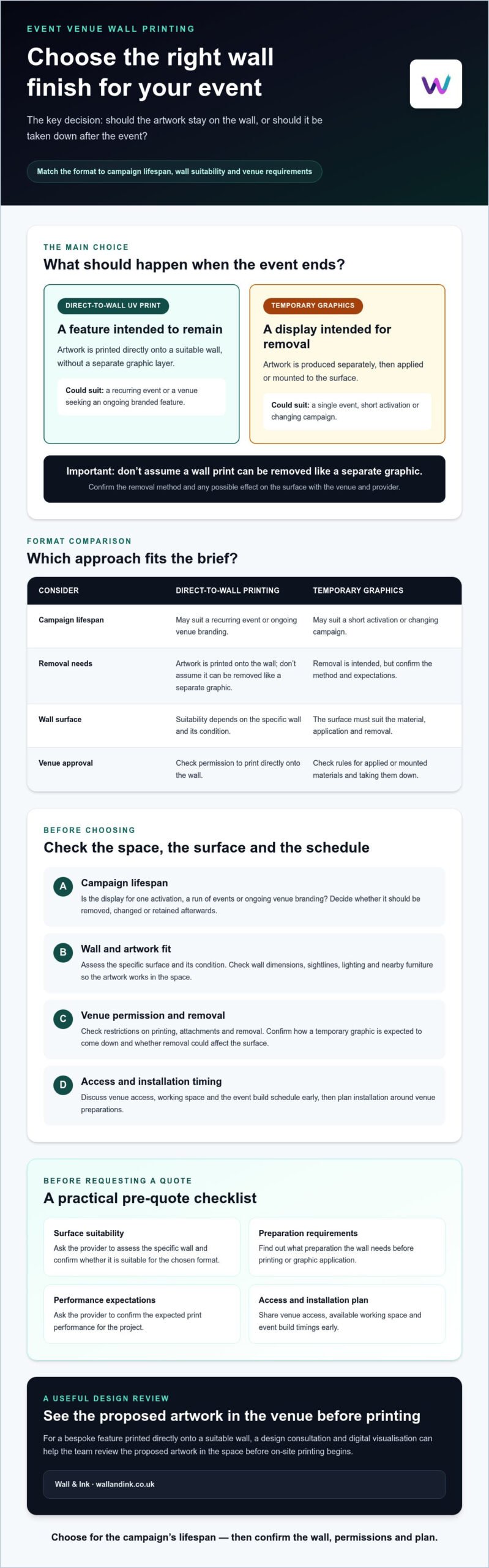
The main difference is what happens after the event. Direct-to-wall printing puts the artwork onto the wall itself. Temporary graphics are produced separately and then applied or mounted, with removal intended as part of their use. Neither format suits every venue. The decision depends on the campaign lifespan, wall, permissions and removal plan.
| Factor | Direct-to-wall printing | Temporary graphics |
|---|---|---|
| Campaign lifespan | May suit a recurring event or a venue seeking an ongoing branded feature. | May suit a single event, short activation or changing campaign. |
| Removal needs | Artwork is printed on the wall, so don’t assume it can be removed like a separate graphic. | Intended for later removal, but confirm the method and expectations with the venue and provider. |
| Wall surface | Suitability depends on the specific wall and its condition. | The surface must also be appropriate for the chosen material and its application or removal. |
| Venue approval | Check permission for printing directly onto the wall. | Check whether the venue allows applied or mounted materials and how they must be taken down. |
How event duration changes the graphics decision
For a one-off event, an organiser may prioritise a format that can be taken down afterwards. For a recurring exhibition or a venue that wants its branded environment to remain in place, a bespoke mural may be more appropriate. Ask the venue whether the artwork should be removed, changed or retained once the event ends. Settle that point before choosing a format, not during the event build.
Visuals also help set the atmosphere and shape how attendees experience a space. Graphic design for events can influence that impression, so consider how the display supports the event’s purpose as well as its lifespan.
How wall surface and venue rules affect the choice
Surface condition and texture can affect whether direct printing or an applied graphic is suitable. Access matters too: the provider may need to assess the wall and the space available to carry out the work. Don’t rely on a general claim that a format works on every substrate. Ask for project-specific confirmation of suitability, preparation needs and expected performance.
Check venue permissions before commissioning anything. Confirm any restrictions on direct printing, applied materials or removal, and agree who is responsible for taking temporary graphics down. If the venue is considering a lasting feature, explore direct-to-wall mural printing as an option, subject to a review of the wall and project requirements.
What should you assess before choosing event venue wall printing?
Start with the purpose of the display, not the artwork. Is the wall meant to welcome guests, frame a speaker, support a product launch or carry the event’s identity throughout the venue? Define the audience and the message they should take away. This gives the design a clear purpose and helps you judge whether the proposed location is right.
Next, assess the space from an attendee’s point of view. Record the wall’s width and height, then note typical viewing angles and distances. Doors, furniture, stage equipment and queues may obscure parts of the design. Lighting can also affect how colours and detail appear. The University of British Columbia’s experiential design principles offer a useful reminder to treat environmental graphics as part of the experience, not simply decoration.
Which design details should an event brief include?
Give the prospective provider enough information to assess both the artwork and the wall. Include the event purpose, intended audience, wall dimensions, location and preferred visual direction. Share relevant logos, photographs and other brand assets, and confirm you have permission to use them. Add photographs of the wall and surrounding area, noting visible texture, condition, obstructions and access constraints.
Ask to review a digital visualisation showing the proposed composition in the venue. Check that key text and logos remain visible from the main approach and aren’t hidden by furniture or event equipment. Agree who will approve the artwork and what must be settled before printing starts.
How can you assess a provider’s proposal?
Look beyond a polished design preview. A useful proposal should explain the process, how the surface will be assessed, what preparation may be required and what on-site access or working space is needed. Ask how the design will be reviewed, how changes are handled and when final approval is required. Confirm project-specific suitability and expected print performance rather than relying on general claims about wall types.
Compare proposals against the practical requirements as well as visual appeal. Use this checklist:
- Design fit: Does the visual plan support the event objective and suit the wall location?
- Surface assessment: Has the provider considered the actual wall’s condition and texture?
- Installation needs: Are access, working space and coordination requirements clearly described?
- Approval process: Is it clear how you’ll review the mock-up and sign off the artwork?
For event venue wall printing, a clear brief helps providers assess the project and gives your team a sound basis for comparing proposals. Choose the plan that fits the space and installation requirements, not just the image that looks strongest on screen.
How do you plan event wall printing around access and installation?
A well-planned installation starts with the venue, not the print date. For event venue wall printing, the provider needs enough information to assess the wall, understand how the site operates and agree when the work can take place. Access, working space and the event build schedule can all affect the plan, so raise them before confirming arrangements.
What information should you send before requesting a proposal?
Prepare a practical project brief. Include wall measurements, clear photographs, details of the visible surface and your planned event dates. Explain whether the artwork is intended for the event only or should remain afterwards. Include access arrangements, permitted working hours and any venue restrictions on equipment or site activity.
These details help the provider identify questions that need resolving before the project is scheduled. Ask what preparation the wall and surrounding area may require, and confirm surface suitability for the specific site rather than relying on a general assumption.
How should artwork approval and installation be coordinated?
Name one contact to gather design feedback and coordinate venue decisions. Review the digital visualisation with the relevant stakeholders, check that the artwork is correct and approve the final design before arranging printing. Confirm arrival, access and handover arrangements with both the venue and provider. Timing and site requirements depend on the project, so agree them directly.
Use this sequence to keep decisions clear:
- 1. Check venue requirements: Confirm permission for wall work, access conditions and any restrictions that could affect installation.
- 2. Send project details: Share measurements, photographs, surface information, event dates and the planned lifespan of the artwork.
- 3. Confirm the site plan: Discuss working space, access arrangements and how installation fits around the event build schedule.
- 4. Review the artwork: Check the digital visualisation, provide consolidated feedback and approve the final design before printing is scheduled.
- 5. Reconfirm logistics: Agree the installation timing, arrival arrangements and handover with the venue and provider.
Don’t assume that a convenient gap in the event schedule will be suitable. Confirm the installation window with the provider, along with any preparation needed before work begins and what the venue expects once it is complete. Record the agreed arrangements so the venue team, organiser and print provider are working to the same plan.
If your venue is considering a bespoke wall feature, discuss your direct-to-wall printing project with Wall & Ink and share the site details for review.
When is Wall & Ink a fit for event venue wall printing?
Wall & Ink may suit an event venue seeking bespoke artwork printed directly onto a suitable wall, rather than a display intended to be taken down after a short campaign. Its commercial wall mural service includes design consultation, digital visualisation and professional on-site UV printing. Start by establishing whether this approach fits the venue, wall and intended lifespan of the artwork.
What can Wall & Ink support for an event venue?
A custom commercial mural can give an event space a distinctive wall feature, with artwork developed around the venue’s purpose and the organisation’s identity. Client logos or photographs can inform the design, subject to the materials being suitable for the proposed artwork. A design consultation helps shape the brief, while a digital mock-up lets the team review how the proposed design may appear in the space before printing.
This visual review helps the organiser and venue team consider the composition and context before on-site work is arranged. Wall suitability, preparation requirements and expected print performance still need to be confirmed for the specific project.
Wall & Ink focuses on artwork printed directly onto walls, not removable event graphics. If your campaign requires a display that must be removed or changed afterwards, discuss a suitable format with another provider and confirm the removal expectations with the venue.
What are the next steps for a suitable project?
Prepare the details that will help assess the project: venue photographs, wall measurements, surface information, event dates and the purpose of the display. Include access arrangements and any known site restrictions. These details help the provider understand the setting and identify what needs checking before the project can proceed.
During the project discussion, ask direct questions about:
- Surface suitability: Is the specific wall appropriate for direct-to-wall UV printing, and what preparation may be needed?
- Artwork approval: How will the design consultation and digital visualisation work, and who needs to approve the final artwork?
- Site logistics: What access, working space and installation timing should be coordinated with the venue?
- Project expectations: Is the artwork intended to remain, and what print performance should you expect on this surface?
Share your venue details and objectives to start a practical discussion about fit, design and installation requirements. For a custom feature printed directly onto a suitable wall, discuss an event wall printing project with Wall & Ink.
Choose the right format for your venue
The best event venue wall printing approach depends on how long the display needs to stay in place, what the venue permits and whether the wall is suitable. Temporary graphics may fit a short campaign that needs removing; direct-to-wall printing may suit a venue seeking a bespoke feature to retain. Confirm surface suitability, installation access and removal expectations before committing.
For a directly printed mural, Wall & Ink offers bespoke design consultation and digital visualisations to help you review the proposed artwork in context. Professional on-site UV printing is available across the United Kingdom, subject to the project and wall being suitable.
Share your venue photographs, wall measurements, event objectives and schedule to start a practical discussion about the design and site requirements. Discuss an event wall printing project with Wall & Ink.
Frequently Asked Questions
Can you print directly onto an event venue wall?
Yes, a specialist UV printer can print artwork directly onto a suitable event venue wall. Unlike a graphic applied as a separate layer, the image is printed onto the wall itself. Suitability depends on the specific surface, its condition and any preparation required. Confirm venue permission and access arrangements before booking. A design consultation and digital visualisation can help you review bespoke artwork, including adaptations of your logo or photographs, in the space.
Are temporary wall graphics better than direct-to-wall printing for events?
Temporary graphics may be a better fit if the display is for a brief event, needs to be removed afterwards or will change between campaigns. Direct-to-wall printing may suit a venue seeking a custom feature that can remain beyond one event. Neither format is automatically right for every wall. Check the campaign lifespan, venue rules, surface suitability and removal expectations with the venue and provider before choosing.
Can event wall printing be removed after the event?
Direct-to-wall printing isn’t a separate graphic designed to be peeled off after an event. Don’t assume it can be removed without further work or without affecting the wall. If the display must come down, discuss that requirement with the venue and printing provider before selecting a format. Ask what removal would involve, what condition the wall should be left in and whether a different, removable graphic format is more appropriate.
What surfaces are suitable for event venue wall printing?
Suitability depends on the specific wall, so there isn’t a single surface answer that applies to every venue. Condition, texture, coatings and preparation needs can affect whether direct printing is appropriate. Share clear photographs and surface details with the provider, then ask them to confirm suitability and expected print performance for that wall. A project-specific assessment is more useful than relying on a general claim that a particular type of surface will work.
How do I prepare a venue for wall printing?
Start by securing venue approval and agreeing the installation schedule with the provider. Share photographs, measurements and details of the wall so preparation requirements can be confirmed for the specific surface. Ask what needs to happen in the surrounding area, including whether furniture or equipment must be moved and what working space is required. Confirm access, permitted working times and handover arrangements early, then coordinate them with the event build schedule.
What should I include in an event wall printing brief?
Include the wall’s measurements, location, clear photographs and known surface details. Explain the event’s purpose, intended audience, planned dates and whether the artwork should be temporary or remain afterwards. Share relevant logos, photographs or other brand assets, and confirm you have permission to use them. Note venue access arrangements and restrictions, then identify who will review the digital visualisation and approve the final artwork. This gives the provider a clearer basis for assessing the project.