
Exterior wall murals can transform a plain façade into a focal point, but the right design needs to suit the wall, its surroundings and how people will see it. Planning the surface, artwork and exposure together helps turn an appealing image into a practical project.
Direct-to-wall vertical printing creates high-resolution, seamless murals on the wall itself, rather than attaching a separate mural product. Before choosing a design, consider the wall’s material and condition, the artwork’s intended scale and what the finish will be exposed to outdoors.
This guide explains how to assess a wall, adapt inspiration images into a site-ready design and prepare for printing. It also covers outdoor exposure, permissions and the details that help define a project scope. A design visualisation lets you review the artwork in its intended setting before printing begins.
Key Takeaways
- Understand how artwork printed directly onto a wall differs from a hung mural or retail wall covering.
- Learn what direct-to-wall printing involves and why moisture resistance does not mean a print is waterproof.
- See how wall material, viewing distance and surroundings can shape an exterior mural design.
- Prepare useful project details, including wall dimensions, condition, access and intended use.
- Use a design visualisation to review the artwork in its intended setting before printing.
Exterior wall murals: what are the options for an outdoor wall?
An exterior wall mural is large-scale artwork created for an outdoor wall or building façade. It can bring colour to a plain surface, help people find their way around a site, tell a story or communicate a brand. One important choice is how the artwork relates to the wall: it can be printed directly onto the surface or supplied as a separate product to hang in front of it.
These formats have different installation requirements. The wall’s surface, position and intended use all help determine which approach suits the project. Considering those details early helps you choose a format for practical reasons as well as appearance.
Direct-to-wall printing and hanging murals are different formats
Direct-to-wall printing applies artwork to the wall surface itself. A vertical printer moves across the surface to create the image on the substrate. A hung mural, by contrast, is a separate textile or similar material mounted in front of the wall. It remains a distinct layer rather than becoming artwork printed onto the building surface.
This difference affects the relationship between the artwork and the wall. With direct printing, the surface becomes part of the finished result. The choice should reflect the site, the project brief and the condition of the wall.
What can an exterior mural do for a space?
A mural can give a large, plain exterior wall a clear focal point. In a public or shared space, artwork can also support wayfinding or tell a story through imagery and colour. Consider how people will approach and view the wall, as well as what surrounds it.
For businesses, bespoke artwork can express a brand outdoors without relying only on a logo or promotional message. At home, it can bring a personal design to an exterior surface. Schools and community spaces can use a mural to create a shared visual feature or support a theme.
Start by choosing the mural’s main purpose. Is it meant to draw attention, help visitors orient themselves, reflect a brand identity or add character to a residential or community setting? A clear objective guides decisions about scale, imagery and detail. Artwork viewed from a distance, for example, may need simpler shapes and stronger contrast than a design people will see close up.
Direct printing is also different from retail wall coverings, which are separate products applied to a wall. The choice is not simply between a bespoke image and a ready-made pattern. It is also about how the artwork should relate to the surface and setting.
Outdoor artwork needs to be planned with its future care in mind. The Conservation and restoration of outdoor murals page outlines specialist considerations involved in preserving murals. It is a useful reminder to think about the real-world setting, rather than treating the artwork as an image in isolation.
Once the format and purpose are clear, assess the wall and the conditions around it. These practical details help shape a design that works on the chosen surface.
How direct-to-wall exterior murals work, and what outdoor exposure means
Direct-to-wall printing turns a digital design into artwork applied to the wall itself. A vertical printer moves across the surface, placing the image in a planned layout rather than attaching a separate sheet or fabric mural. The artwork is prepared to suit the wall’s dimensions, creating a seamless mural.
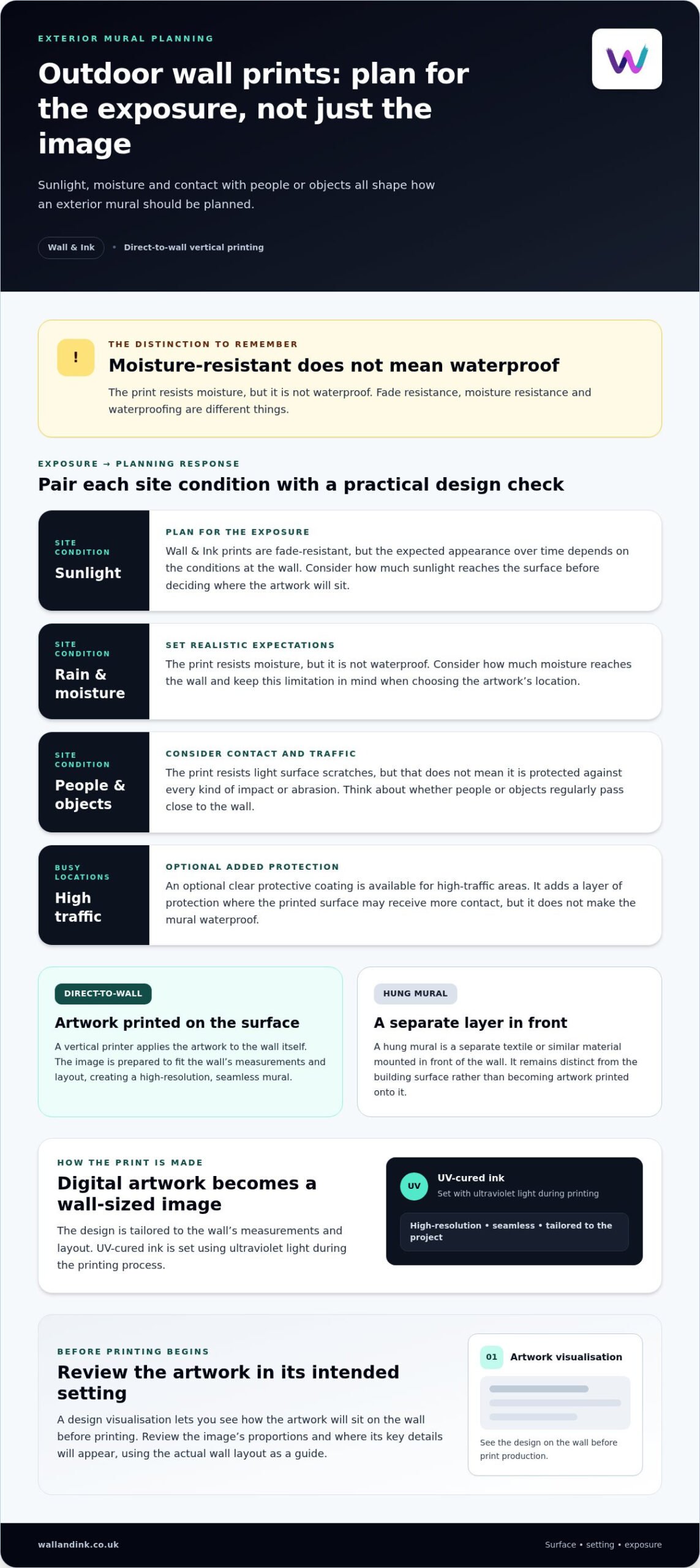
Outdoor conditions matter when planning a wall print. Sunlight, rain, moisture and contact with people or objects all affect what the surface is exposed to. It is important to distinguish between fade resistance, moisture resistance and waterproofing, as these are not the same thing.
From digital artwork to a printed wall
First, the artwork is prepared to fit the wall’s measurements and layout. Consider the image’s proportions and where its key details will sit, rather than enlarging it without reference to the site. A vertical printer then applies the design directly to the wall, so the image does not need to be assembled from separate hanging panels.
UV-cured ink is set using ultraviolet light during the printing process. Wall & Ink uses direct-to-wall vertical printing to create high-resolution, seamless murals, with the artwork tailored to the project.
How to think about weather, moisture and protection
Wall & Ink offers indoor and outdoor wall printing, and its prints are fade-resistant. However, fade resistance does not mean waterproofing, and the expected appearance over time depends on the conditions at the wall. Consider the specific exposure before deciding where to place the artwork.
The print resists moisture, but it is not waterproof. It also resists light surface scratches, which does not mean it is protected against every kind of impact or abrasion. This distinction matters when deciding where the artwork will sit and how people or objects may come into contact with it.
An optional clear protective coating is available for high-traffic areas. It adds a layer of protection where the printed surface may receive more contact, but it does not make the mural waterproof. Treat it as an additional option, not a substitute for considering the wall’s exposure.
Before settling on a design, consider how much sunlight and moisture reach the wall and whether people or objects regularly pass close to it. These conditions help set realistic expectations and inform decisions about placement and protection. A visualisation can also help you review how the artwork will sit on the wall before printing begins.
Explore bespoke exterior wall printing to develop artwork around the surface and setting. Understanding the finish and its limits helps you plan for outdoor use without mistaking moisture resistance for waterproofing.
Choosing an exterior mural design for the wall, surface and setting
A strong design starts with the site, not just an inspiration image. Wall dimensions, viewing distance, surrounding architecture and the mural’s purpose all affect how artwork should be adapted. Fine detail may be hard to see from a distance, while small text can become difficult to read when scaled across a façade.
Review the wall’s condition, the artwork’s scale and the viewing distance together before settling on a design. This connects the image to the place it will occupy and helps identify changes to make before printing is planned.
Match artwork scale and contrast to the wall
Think about where people will see the mural from and how quickly they will pass it. Designs viewed from a distance often benefit from clear shapes, strong contrast and fewer fine details. Closer viewing can reveal more intricate elements. If the artwork includes text, consider its size and position across the full wall so it remains legible from the intended viewing distance.
Look at the building’s lines, nearby colours and natural sightlines. Doors, windows and architectural features can affect where key parts of the artwork should sit. A digital visualisation shows the proposed design in its intended setting, making it easier to review scale, placement and colour relationships before the project moves forward.
Consider the substrate and its condition
WALL&INK prints on plaster, brick, concrete, painted walls, wood, tile, glass and most painted surfaces. The material and texture can affect the project plan and its complexity. The condition matters too: an uneven or damaged wall needs different consideration from a smooth, sound one. A material being suitable for printing does not mean every wall made from it is suitable in every condition.
Share useful site information from the outset. Provide clear photographs of the whole wall, along with close-ups showing its texture or visible defects. Include the wall’s height and width, and note features such as windows, doors or changes in surface. This makes it easier to relate the proposed artwork to the actual printable area.
Use this checklist to prepare the design brief:
- Viewing distance: note the main places from which people will see the wall.
- Wall dimensions: record the printable area, including openings and prominent features.
- Surface and condition: identify the material and describe any visible unevenness or damage.
- Purpose and surroundings: explain what the mural should communicate and how it should sit within the setting.
For exterior wall murals, the image, substrate and setting need to be considered as one project. WALL&INK’s design visualisation helps you review the artwork in context, while wall photographs and measurements provide a practical starting point. This turns general inspiration into a brief based on the real surface and space.
Preparing for exterior wall printing: site details, design and project scope
A clear brief turns an idea into a practical print plan. For exterior wall murals, start with the wall itself: its size, surface, condition and access all affect how the artwork can be prepared and printed. Set out the project in stages so you can review the design and scope before work proceeds.
- Document the wall. Record its approximate height and width, surface material, visible condition and access details. Take clear photographs of the full wall and any features that affect the printable area.
- Define the brief. Explain the mural’s purpose, intended audience and preferred visual direction. Share a reference image, logo or existing artwork if relevant.
- Review the visualisation. Use the digital mock-up to assess how the proposed design fits the wall and its surroundings.
- Agree the scope. Confirm the design, surface considerations and work included in the project proposal before proceeding.
What to include in an exterior mural brief
Describe the wall’s approximate dimensions, surface type and visible condition, and explain who is expected to see the artwork. Note access constraints, such as restricted space in front of the wall, so the site conditions are part of the initial project picture.
If you have a preferred image, logo or reference artwork, include it with the brief. It provides a starting point, but may need adapting to suit the wall’s proportions and layout. The aim is to make the artwork work on the actual surface, rather than simply enlarge an image without considering the site.
Reviewing the visualisation and agreeing the project
A digital visualisation shows the proposed artwork in context. Review its placement, scale and relationship to the wall’s features, then request any changes before agreeing the scope. This gives you a practical view of the design in its intended setting and helps align expectations before printing.
Project pricing depends on the print area and surface complexity. Standard wall printing starts from £120 per m² for smooth, light-coloured walls without a base coat. Printing on dark or textured surfaces starts from £150 per m² and includes a white base layer. A £300 minimum job fee applies to all wall printing projects. WALL&INK provides transparent pricing with no hidden costs, so you can consider the project details alongside the proposed work.
Before requesting a proposal, bring together the wall dimensions, surface type and condition, access information, intended use and any design references. These details help shape a plan around the site rather than a generic image. Every WALL&INK booking includes a free consultation and design visualisation, giving you a structured opportunity to discuss the brief and review the proposed artwork.
Arrange a free consultation and design visualisation to start planning your exterior wall printing project.
How WALL&INK delivers bespoke exterior wall murals across the UK
Once you have considered the wall, design and outdoor setting, WALL&INK’s direct-to-wall printing service provides a route from brief to finished mural. WALL&INK delivers bespoke exterior wall murals across the UK, planning the artwork around the site before printing it directly onto the wall with vertical printing technology.
What the WALL&INK service includes
Every booking includes a free consultation and design visualisation. The consultation helps establish the project requirements, while the visualisation lets you review the proposed artwork in its intended setting before printing. Your image or design can be adapted to the wall’s dimensions and layout as part of planning the mural.
WALL&INK uses odourless, quick-drying, UV-cured inks that are safe for indoor use. These properties describe the inks and their use indoors. For an exterior project, keep the print’s stated limitations in view: it resists moisture and light surface scratches, but it is not waterproof.
Taking the next step with a mural project
A useful starting brief includes the wall’s dimensions, substrate and visible condition, along with any access considerations. Add the mural’s purpose and what you want the artwork to communicate. If you have a preferred image, logo or reference design, share it to give the team a clearer starting point for the visualisation.
The proposed scope is shaped by the wall, artwork and surface complexity. WALL&INK provides transparent pricing with no hidden costs. The company also offers a 12-month warranty covering ink fading, peeling or material defects under normal indoor conditions. The warranty applies under those stated indoor conditions.
- Wall details: dimensions, surface type, condition and access.
- Design direction: intended use, audience and any image or reference artwork.
- Project scope: the visualisation, proposed print area and agreed work.
Providing these details helps move from an initial idea to a site-specific proposal. The consultation and visualisation give you a chance to discuss the design and see how it may sit on the wall before the print is produced.
Plan your exterior wall mural with WALL&INK by sharing your wall dimensions, substrate details and design objectives.
Turn your wall into a clear project brief
Before choosing the final image, decide what you want the wall to do for the people who see it. A mural can be a distinctive feature, a source of information or part of a wider visual identity. Trying to give it several competing roles can make the design less clear. Set one main objective, then use it to guide the decisions that follow.
That objective gives your exterior wall murals a practical measure of success. Consider what should stand out first, what viewers need to understand and how the artwork should sit within the building’s surroundings. A focused brief makes it easier to assess design options against a real purpose, rather than choosing an image on appearance alone.
Bring together the wall details and the outcome you are aiming for, then develop them into a project plan with WALL&INK. Plan your exterior wall mural with WALL&INK and move from an initial idea towards a considered design for your space.
Frequently Asked Questions
Can you print an exterior mural directly onto a brick wall?
Yes. WALL&INK can print directly onto brick. The wall’s condition and texture affect the project plan, so provide photographs showing both the full wall and close-up surface detail. Include dimensions and any visible damage in your brief. This helps the team assess the substrate and prepare artwork for the available space.
Are direct-to-wall exterior murals waterproof?
No. Direct-to-wall exterior murals resist moisture and light surface scratches, but they are not waterproof. Moisture resistance should not be treated as protection against prolonged water exposure. An optional clear protective coating is available for high-traffic areas, but it does not make the print waterproof. Consider the wall’s exposure and use when setting expectations for the finished artwork.
How much does an exterior wall mural cost?
Wall printing starts from £120 per m² for smooth, light-coloured walls without a base coat. Printing on dark or textured surfaces starts from £150 per m² and includes a white base layer. A £300 minimum job fee applies to all wall printing projects. The final proposal depends on the print area and surface complexity, so wall measurements and clear surface photographs help define the scope.
What happens if the wall surface is textured or uneven?
Textured walls can be considered for printing, but the degree and type of texture affect the project plan. A dark or textured surface may require a white base layer beneath the design. If the wall is uneven or damaged, include close-up photographs so its condition can be assessed as part of the brief. The proposed artwork and scope can then be planned around the actual substrate.
Do I need permission to commission an exterior wall mural?
It depends on the building, location and purpose of the artwork. In England, purely artistic exterior painting is usually permitted development, but a mural that functions as an advertisement may need Advertisement Consent. Listed buildings and properties in conservation areas can have additional requirements. Planning rules differ across the UK, so check the relevant local planning authority’s current guidance before commissioning work, particularly for commercial artwork or a protected building.
Can WALL&INK turn my logo or photograph into an exterior mural?
Yes. WALL&INK can adapt a client logo or photograph into artwork prepared for direct-to-wall printing. Share the original image and explain how it will be used, who needs to recognise it and which details must remain prominent. The wall’s dimensions and layout also inform the design. A digital visualisation lets you review the proposed artwork in context before printing.
How long does exterior wall printing take to complete?
Completion time depends on the project scope, including the wall’s dimensions, surface complexity and artwork preparation. A larger print area or a more involved design may require a different plan from a simpler wall. The project also includes agreeing the brief and reviewing the visualisation before printing. Share the wall details and design objectives to help shape a realistic project plan.