
Could artwork that looks vivid on day one be the wrong choice for a sunny room? Choosing fade-resistant wall art involves more than colour and appearance. Sunlight can gradually dull printed colours, and no print is completely immune to fading.
It makes sense to look for a finish that will retain its colour, but a “fade-resistant” label doesn’t tell the whole story. The ink, substrate, protective finish and amount of light the artwork receives all affect how it holds up over time.
This guide compares common wall-art materials and printing methods, from conventional prints to direct-to-wall printing, so you can assess what may suit your space. You’ll also find practical questions to ask about inks, coatings, testing and care before commissioning artwork. For a bespoke project, digital visualisations can help you see how a design may look on the intended wall before it’s printed.
Key Takeaways
- Look beyond the “fade-resistant” label. Check what evidence applies to the specific materials, printing process and display conditions.
- Compare framed prints, wall coverings and direct-to-wall printing by their application, surface requirements and care instructions.
- Ask a provider about the artwork’s intended setting, supporting evidence and maintenance requirements before agreeing to a project.
- Check the room and wall before choosing a method. Surface condition and compatibility matter for direct-to-wall printing.
- For bespoke wall art, agree a clear project plan and use a digital visualisation to review the design on its intended wall.
What Makes Wall Art Fade-Resistant? Understand the Factors Before You Buy
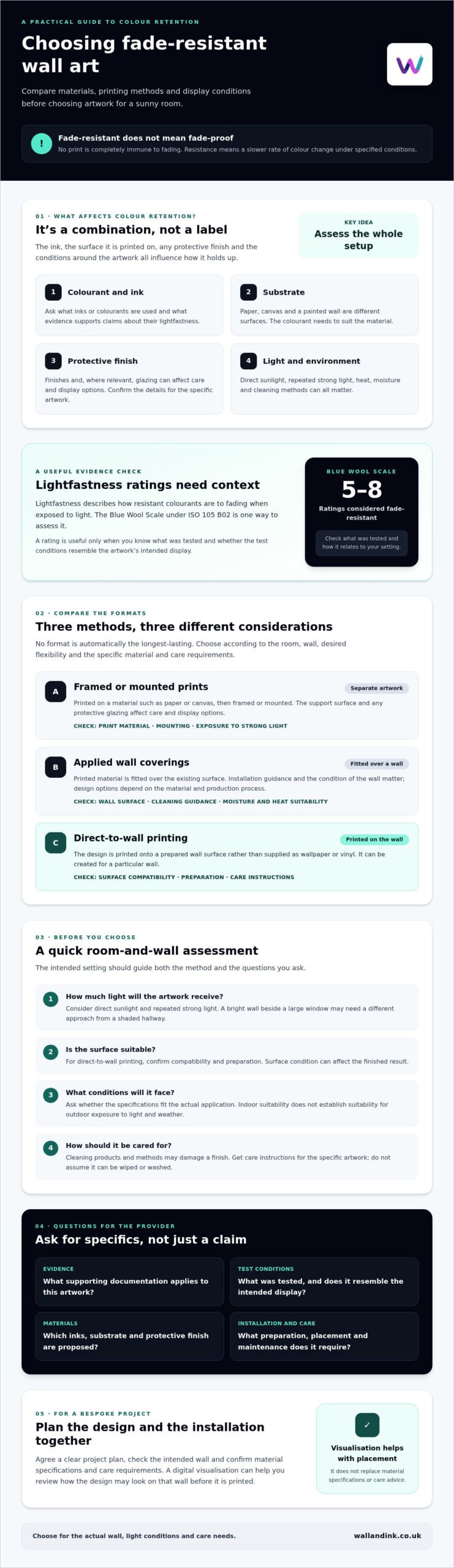
Fade-resistant wall art is made with materials and a printing process intended to slow colour change under specified conditions. It isn’t a promise that the image will keep its original appearance indefinitely. Colour retention depends on the colourants, the material they’re printed on, the amount of light the artwork receives and the conditions around it.
Lightfastness describes how resistant colourants are to fading when exposed to light. The Lightfastness reference explains how exposure, including ultraviolet radiation, can affect colour. For printing inks, the Blue Wool Scale under ISO 105 B02 is one way to assess lightfastness. Ratings from 5 to 8 are considered fade-resistant. A rating is useful only if you know what was tested and whether those conditions resemble the artwork’s intended display.
The substrate matters as well. Paper, canvas and a painted wall each provide a different surface, and the ink or other colourant needs to suit it. Print quality alone doesn’t establish how an image will perform once installed. Nor does indoor suitability prove that a product is suitable for outdoor use. Exterior artwork faces a different combination of light and weather exposure, so ask for specifications relevant to the actual application.
Does fade-resistant mean fade-proof?
No. Resistance means a slower rate of colour change, not immunity to every source of fading. A claim without context leaves important questions unanswered: was the artwork tested under particular light conditions, and are those conditions relevant to an indoor wall or an exposed exterior surface? Ask the provider for supporting documentation and care guidance, not just a label. Any claims should relate to the proposed artwork and its intended setting.
What can cause wall art to lose colour?
Prolonged direct sunlight is a clear risk, and other strong or repeated light exposure can also contribute to gradual change. The room makes a difference: a bright wall beside a large window may need a different approach from a shaded hallway. Heat and moisture can affect some materials or installations, while cleaning products and methods may damage a finish. Confirm care instructions for the specific artwork instead of assuming it can be wiped or washed.
Not every visible problem is fading. Light exposure can change colour, while unsuitable materials or poor print quality may affect the image itself. For a directly printed wall, surface condition and preparation also affect the finished result. Keep these factors separate when assessing performance, and ask what preparation is needed before printing. A visualisation can help you assess the placement of a bespoke design, but it doesn’t replace material specifications or care advice.
Compare Wall-Art Printing Methods for Better Colour Retention
The right method depends on the room, the wall and whether you want artwork that can be moved or a design integrated with the surface. No format is automatically the longest-lasting. Colour retention depends on the specific materials, print process, light exposure and care requirements. Compare details for the artwork you’re considering rather than choosing by method name alone.
- Framed or mounted prints: Artwork is printed on a separate material, such as paper or canvas, then framed or mounted. The support surface and any protective glazing affect care and display options. Check how the piece is mounted and whether its position exposes it to strong light.
- Applied wall coverings: Printed material is fitted over a wall, so the existing surface and the covering’s installation guidance matter. Design options depend on the material and production process. Ask how to clean it and whether moisture or heat could affect its performance in the intended room.
- Direct-to-wall printing: Artwork is printed onto a prepared wall surface, rather than supplied as wallpaper or vinyl. The design can be created for a particular wall, but confirm surface compatibility, preparation and care instructions for the project.
Comparison takeaway: Choose the method that suits the room’s conditions, the wall and your need for flexibility. Then check the material specifications and care guidance for that particular installation.
Printed panels and other removable artwork
A framed print or mounted panel can be practical if you rent, expect to change the display or want to move the artwork between rooms. Its performance depends on the print material and the manufacturer’s instructions, so check what the image is printed on and how it should be cared for. Placement still matters: don’t assume a frame or mount will protect artwork from strong light. The Northeast Document Conservation Center offers practical guidance on how to protect art from light damage.
Direct-to-wall printing as a bespoke option
With direct-to-wall printing, a UV printer applies custom artwork to a prepared wall. This avoids a separate framed print or applied covering, but it doesn’t make the image immune to fading. Ask which surfaces are suitable, how the wall should be prepared and what care guidance applies. For bespoke work, a digital visualisation can help you review the design in its intended space before printing. If you’re considering bespoke direct-to-wall printing, confirm the proposed substrate and preparation plan with the provider.
How to Assess Fade-Resistance Claims Before Commissioning Wall Art
A useful claim explains what was tested, which materials were involved and where the artwork is intended to be used. “Fade-resistant” on its own doesn’t show whether the evidence applies to your project. Since no wall-art method is immune to fading, look for information that helps you judge how the proposed artwork may perform in its actual setting.
Use this checklist before agreeing to a design or installation:
- Materials and process: Ask what the artwork will be printed on and which printing process will be used. For direct-to-wall printing, confirm the proposed surface and its preparation requirements.
- Relevant evidence: Request supporting specifications or test information. Check that it relates to the proposed materials and process, not just a similar product.
- Intended environment: Confirm whether the information covers indoor or outdoor use. Evidence for one environment shouldn’t automatically be treated as evidence for the other.
- Care guidance: Ask for written instructions on cleaning, light exposure and any other conditions relevant to the artwork.
Questions to ask a wall-art provider
Ask specific questions: “Which materials and print process are proposed for this wall?” “How will you assess whether the surface is suitable, and what preparation will it need?” “Can you provide written care instructions and evidence for any durability claims?” Clear answers make it easier to compare proposals on practical details. If a provider gives a lifespan figure or guarantee, ask what conditions and evidence support it before relying on that claim.
Match the artwork to the room
Describe the wall’s conditions accurately. Does direct sunlight reach it? Does the room have changing levels of moisture or heat? Is it a busy space where the artwork may need regular cleaning? These details help identify which materials and care instructions are relevant. They also inform the artwork’s size, colours and position, so the design suits both the wall and the viewing conditions.
Colour samples can help you judge how a palette looks, but they don’t prove how well it will retain colour over time. A digital visualisation can show how a bespoke design may fit the room and wall, but it isn’t a durability test. Use each as a design tool, then assess performance separately through specifications that match the proposed artwork, surface and environment.
Be cautious of broad assurances such as “fade-proof” or precise lifespan claims without clear supporting information. Ask the provider to explain the limits of the claim in writing. A transparent answer should help you understand what is known, what care is required and whether the evidence reflects your intended use. That’s a more reliable basis for choosing fade-resistant wall art than a label alone.
Prepare the Wall and Placement to Help Preserve Artwork
A suitable print method is only part of the plan. Before work begins, assess the room, check the wall and agree how the finished artwork should be cared for. This can identify practical issues early, without assuming every surface or position will suit every project.
- Assess the room: Note where strong sunlight falls, whether heat sources are nearby and how the space is normally used.
- Inspect the wall: Share details about the surface and its condition with the provider. Ask whether it needs preparation and how its suitability will be assessed.
- Confirm the plan: Agree on the proposed materials, surface requirements and any preparation before printing or installation.
- Keep the care guidance: Follow the instructions supplied for the artwork and retain them for future maintenance.
Check wall suitability before installation
Direct-to-wall printing applies artwork to the wall itself, so the substrate and its condition need to be assessed for the specific project. Plaster is one example of a surface that may need checks; other wall types also need to be reviewed for compatibility. Don’t assume a surface is printable based on its appearance alone. Ask the provider what they’ve assessed and what preparation, if any, is required. Avoid applying universal preparation advice, as the right approach depends on the wall and proposed process.
Plan placement and ongoing care
Discuss placement during design planning. A wall that receives strong sunlight, sits near a heat source or is in a busy room may call for different choices from a more sheltered position. Consider how the space is used, including whether the artwork may need regular cleaning. These details can inform the design and care plan, but they can’t guarantee a particular colour-retention outcome.
Before work starts, record the agreed materials, wall requirements, preparation plan and maintenance guidance. Keep any project specifications with the installation details. This makes it easier to follow the right care instructions and refer back to the agreed surface or materials if the artwork needs attention or a future design update.
For a bespoke project, digital visualisation can help you review how the artwork will sit on the intended wall before printing. It supports design decisions, while surface assessment and written specifications address practical requirements. To discuss direct-to-wall printing for your space, share details about the wall and room conditions with the provider.
Choose Bespoke Fade-Resistant Wall Art with a Clear Project Plan
Make the decision in sequence: define where the artwork will go, confirm the wall is suitable, compare printing methods, review evidence for the proposed materials and setting, then agree on care requirements. This gives you a practical basis for choosing fade-resistant wall art without relying on broad labels or assuming any method prevents fading.
Bespoke direct-to-wall printing may suit a space where artwork needs to be designed for a particular wall, rather than selected as a standard-sized print. It can be considered for homes, workplaces, schools, retail spaces and hospitality settings. The image is printed onto the wall itself, not installed as wallpaper or vinyl. Suitability depends on the project, so confirm the surface and preparation requirements before choosing this method.
When direct-to-wall printing may be worth considering
A wall-specific design can take account of the room’s layout, dimensions and intended use. Before commissioning, discuss what the surface is made of, its condition and where the artwork will sit. For exterior projects, check that the proposed materials and supporting information apply to outdoor exposure. Indoor and outdoor requirements aren’t interchangeable, and UV printing shouldn’t be treated as a guarantee against fading.
Wall & Ink’s project process can include a design consultation, digital visualisation and professional on-site printing. These are planning and delivery steps, not durability guarantees. A visualisation helps you review the composition in context. Ask separately for written specifications and care guidance that match the chosen materials and setting.
What to prepare for an initial project discussion
Useful information helps the provider assess the design and the practical requirements of the wall. Before getting in touch, gather:
- Wall dimensions and details of the surface, including its condition and any known finishes.
- Photographs showing the proposed wall and its surrounding space.
- Reference imagery or design ideas, along with the intended use of the room.
- Placement details, including whether strong sunlight reaches the wall or heat and moisture may be relevant.
- Any cleaning or maintenance requirements for the space.
This information supports a clearer discussion about the artwork, surface suitability, preparation and care. It also helps identify which claims or specifications to request before agreeing to the project.
If direct-to-wall printing seems suitable for your space, you can discuss a bespoke wall-printing project with Wall & Ink. Share your wall details, reference imagery and placement conditions to help shape an informed project plan.
Plan a Wall-Art Project with Confidence
Choosing fade-resistant wall art starts with the conditions it will face, not just the finish label. Match the printing method and materials to the room and wall, then ask for specifications and care guidance relevant to your project. No method can promise immunity from fading, but clear information helps you make a considered choice.
For artwork designed around a particular wall, direct-to-wall printing is one option to explore. Wall & Ink offers bespoke design consultations, digital visualisations and professional on-site printing directly onto wall surfaces across the UK. These steps help shape the project and assess how the design fits its intended space. Confirm surface suitability and performance details with the provider.
Ready to explore an artwork concept for your home, workplace or other space? Discuss a bespoke wall-printing project with Wall & Ink. Bring your wall details, design ideas and placement conditions to start a clear, practical conversation.
Frequently Asked Questions
Does fade-resistant wall art fade over time?
Yes, it can. “Fade-resistant” means artwork is designed or specified to resist colour change under stated conditions, not that fading is impossible. The result depends on light exposure, materials, printing process and installation environment. Before commissioning, ask for evidence and care instructions that apply to the exact artwork and setting. Treat an unqualified lifespan promise or broad label cautiously unless the provider explains the conditions behind it.
What type of wall art is most resistant to fading?
There isn’t one format that can be called the most resistant in every situation without comparable evidence. Performance depends on the materials, printing process, wall surface and display conditions. Compare specifications for the options you’re considering, and check whether the information applies to indoor or outdoor use. Also consider where the artwork will be displayed and what maintenance the provider recommends for that format.
Does sunlight make wall art fade?
Prolonged exposure to strong light can contribute to colour change in some artwork, although the effect varies with the materials and conditions. Consider how sunlight reaches the wall when choosing a position, and ask the provider what performance information applies to the proposed artwork. General advice about light exposure isn’t the same as testing for a specific print. No printing method should be assumed to prevent fading entirely.
Is UV-printed wall art fade-resistant?
Not necessarily. “UV-printed” describes a printing process, but the term alone doesn’t specify lightfastness or guarantee colour retention. Ask about the inks, surface, intended environment and any supporting evidence for the particular project. For direct-to-wall artwork, the provider should also assess the wall’s suitability and preparation requirements. Request care guidance in writing so you know how to look after the finished surface.
Can you print fade-resistant artwork directly onto a wall?
Direct-to-wall printing can create bespoke artwork on a wall, but suitability depends on the surface, project and product specifications. Wall & Ink uses UV printers to print directly onto physical wall surfaces. Before commissioning, discuss the wall’s condition, its light exposure and any preparation needed. Ask for relevant performance details and care instructions too. The printing method doesn’t make artwork immune to fading, so consider the full installation environment.
How can I help stop wall art from fading?
No single step can guarantee that artwork will never fade. Consider placing it away from prolonged strong sunlight, check that the wall suits the chosen print process and follow the care instructions for the specific materials. Don’t assume general cleaning advice applies to every finish. Keep the provider’s product, installation and maintenance details together so you can follow the right guidance if the artwork needs cleaning or attention later.
Is direct-to-wall printing better than wallpaper for custom wall art?
They suit different project needs, so one isn’t universally better. Direct-to-wall printing applies custom artwork to the wall itself, while wallpaper is a separate covering. Compare the wall’s suitability, design requirements, installation preferences and whether you may want to change the display later. Wall & Ink provides direct-to-wall printing, not traditional wallpaper installation. Assess which format fits your project, then confirm surface requirements and care guidance before deciding.