
The strongest garden wall art ideas start with the wall, not the artwork. A bold design that suits a long brick boundary may overwhelm a small courtyard, whilst a subtle feature can disappear against a large surface. If a blank or unattractive wall feels difficult to improve, match the idea to the garden’s proportions, the wall’s exposure and the way you use the space.
Choosing a format can feel uncertain, too. Metalwork, planted features and printed murals each create a different effect, and outdoor conditions matter as much as appearance. A bespoke direct-to-wall mural can create a seamless feature on surfaces including brick, concrete, plaster, painted walls, wood, tile and glass. Prints resist moisture, but they are not waterproof, so consider how exposed the wall is before choosing a design.
This guide explores practical garden wall art ideas and explains how scale, placement, surface and conditions shape the result. Compare suitable formats, find an art direction that works with your planting and outdoor setting, and use design visualisation to preview a mural in its intended space before moving from inspiration to a finished feature.
Key Takeaways
- Use garden wall art ideas as a starting point, then narrow them to designs that complement your planting and outdoor setting.
- Compare botanical, abstract, geometric and illustrative styles by their visual effect and viewing distance.
- Match the format to the wall material, its exposure and the look you want to create.
- Use a placement checklist to assess dimensions, viewpoint, natural light and nearby features before settling on a composition.
- See how direct-to-wall printing and design visualisation can help shape a bespoke mural for your chosen space.
Garden wall art ideas: find a feature that suits your outdoor space
A blank boundary can make a garden feel unfinished, but covering it with the first attractive design you find may create a new problem: the wall competes with the planting or looks out of scale. The most useful garden wall art ideas are adaptable. Start with the wall’s position, the garden’s character and the view you want to improve, then choose a feature that feels connected to its surroundings.
There are several directions to explore:
- A mural can introduce a complete scene, from a quiet landscape to an illustrative design.
- Botanical imagery can echo the leaves, flowers or colours already growing nearby.
- Geometric designs add clear shapes and structure to a simple outdoor setting.
- Sculptural accents, such as metalwork or other mounted objects, add depth and cast changing shadows.
A garden wall feature is art chosen for its setting and viewing distance, not simply for how it looks in isolation. That principle helps translate online inspiration into a design that works on your actual wall. A compact pattern may suit a narrow passage, whilst a wider composition can hold attention across a larger boundary. Consider whether people will see it close up as they walk past or mainly from a patio or window.
Which garden wall art styles can change the feel of a space?
Botanical imagery can soften a hard surface, particularly when its forms relate to nearby foliage. Abstract patterns introduce colour and movement without depicting a specific subject. Architectural motifs, such as repeated arches or linear shapes, can strengthen a formal garden’s sense of order. Choose restrained colours and a lighter composition if established planting should remain prominent. Bolder artwork works best as the focal point, with the surrounding wall and garden providing visual breathing space.
Let the garden guide the artwork. A space with clipped hedges, regular paving and symmetrical beds may suit a measured geometric or architectural design. A relaxed, densely planted border can support looser botanical forms or an organic abstract pattern. These are starting points, not rules. The aim is to create a deliberate relationship between the wall and what sits in front of it.
How can a garden wall become a natural focal point?
Find the view before choosing the composition. Look from the house, patio and main seating area, and note where the wall naturally enters your line of sight. Greenery, furniture and paving can frame the feature, but check that branches or tall planters will not obscure important details. If the artwork is visually strong, keep nearby ornaments and competing colours simple. This gives the wall room to register as a feature rather than one element in a crowded display.
Finally, consider how the design will meet the wall’s edges and surrounding features. A composition centred above a bench may feel purposeful, whilst one placed beside a doorway could draw the eye through the garden. Use those real sightlines to select a direction that belongs in the space, rather than reproducing an inspiration image without adapting it.
Choose garden wall art by style, scale and viewing distance
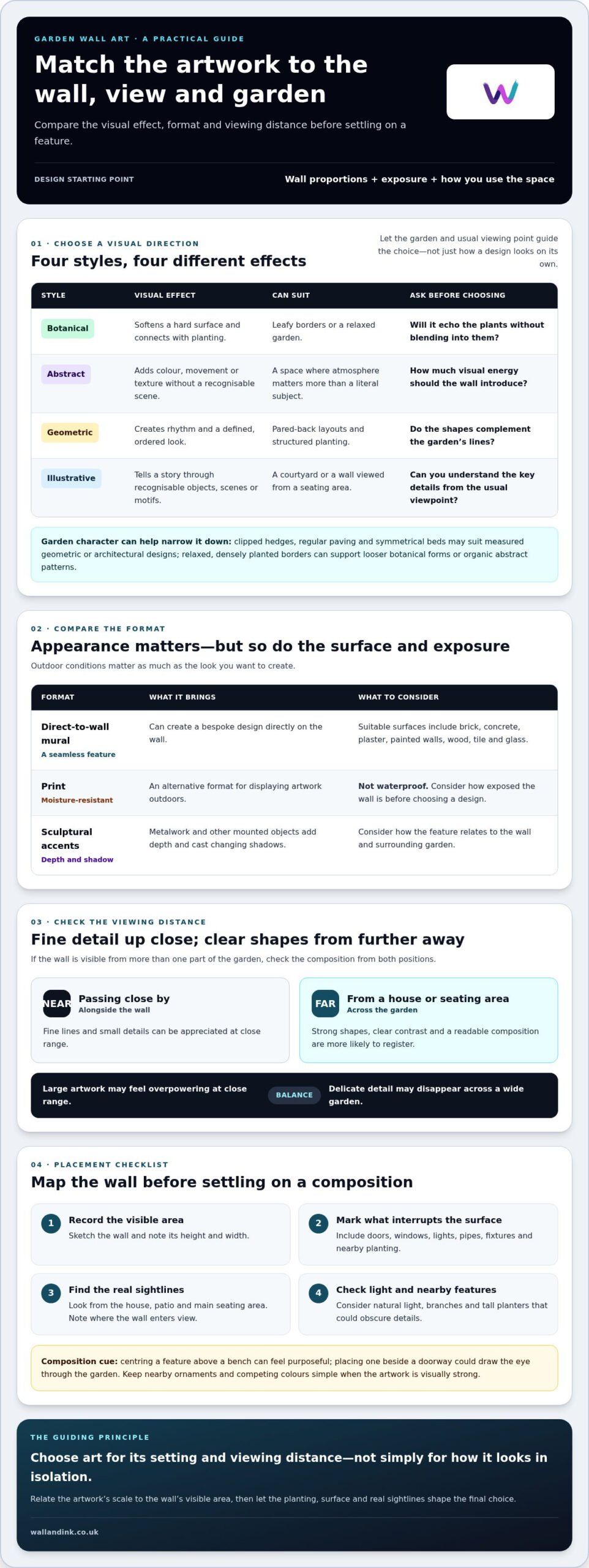
A style that looks appealing on its own may not suit the size of your wall or the distance from which you’ll see it. Compare the visual direction with the garden’s layout before settling on a design. This makes garden wall art ideas easier to assess than relying on inspiration images alone.
Use this guide to narrow the options:
Botanical | Softens a hard surface and connects with planting | Suits leafy borders or a relaxed garden | Will the imagery echo the plants without blending into them?
Abstract | Adds colour, movement or texture without depicting a recognisable scene | Works where you want atmosphere rather than a literal subject | How much visual energy should the wall introduce?
Geometric | Creates rhythm and a defined, ordered look | Fits pared-back layouts and structured planting | Do the shapes complement the garden’s lines?
Illustrative | Tells a story through recognisable objects, scenes or motifs | Can personalise a courtyard or a wall viewed from a seating area | Can the key details be understood from the usual viewpoint?
Viewing distance changes what works. A person passing close to the wall can appreciate fine lines and small details. From a house or seating area further away, strong shapes, clear contrast and a readable composition are more likely to register. Check the design from both positions if the wall is visible from more than one part of the garden.
Artwork scale should relate to the wall’s visible area and the distance from which it’s normally viewed. A large design can feel overpowering at close range, whilst delicate detail may disappear across a wide garden.
What artwork scale works on a small or large garden wall?
Sketch the wall and note its height and width, then mark doors, windows, lights, pipes, fixtures and nearby planting. These details define the area available for artwork. On a broad, uninterrupted wall, a small isolated motif can look disconnected. On a compact wall, generous blank space around a simple design helps the surface feel considered rather than crowded.
How should colour and composition relate to planting?
Colours that complement surrounding foliage can help a design settle into the garden. Deliberate contrast, such as a pale image against dark greenery, makes the feature stand out. Account for seasonal changes: a border that is lush in summer may look sparse in winter, changing the artwork’s backdrop. Give the composition one clear focal point, so plants frame the art instead of competing with several equally prominent details.
Once the style and proportions are clear, a bespoke mural can bring the chosen composition together across a suitable wall. Direct-to-wall printed murals can be planned around the wall’s dimensions and intended viewpoint, helping connect the design to the real space.
Outdoor garden wall art: compare formats and understand exposure limits
Outdoor garden wall art ideas need to account for more than appearance. A painted design, a mounted object and a direct-to-wall print create different effects and involve different planning considerations. The right format depends on the wall material, how exposed it is to rain and sunlight, and whether you want a flat image or a feature with physical depth.
- Painted artwork can give a wall a hand-finished, integrated appearance. The design is planned around the wall itself, including its shape and any features that interrupt the surface.
- Mounted decorative objects add texture and dimension. Consider how their placement relates to the wall’s structure and whether shadows or protruding forms suit the space.
- Direct-to-wall printing creates a high-resolution, seamless mural, making it suitable for a continuous image or a design with connected elements. The wall’s material and exposure should inform the design and print approach.
There isn’t one format that suits every garden. A flat mural can make a broad, plain surface feel intentional, whilst sculptural objects may provide more visual depth on a smaller area. A painted feature can sit closely within the character of an existing wall. Compare the intended visual effect with the practical conditions before settling on a format.
What should you consider about rain, moisture and sunlight?
Note how directly the wall receives rain and strong sunlight, and whether nearby structures provide shelter. Wall & Ink prints resist moisture, but they are not waterproof. The inks are fade-resistant, but that is not a promise of a specific outdoor lifespan. An optional clear protective coating is available for high-traffic areas; it should not be treated as waterproofing.
These distinctions matter. Moisture resistance does not mean a print is waterproof, and fade resistance does not remove the need to consider sunlight exposure. Include the wall’s conditions in your design planning rather than assuming that every surface faces the same demands.
Which wall surfaces can support a printed garden feature?
Direct-to-wall printing is available for materials including brick, concrete, plaster, painted walls, wood, tile and glass. The substrate is part of the design decision: its material, colour and visible texture all affect how the finished feature relates to its setting. Identify the wall surface early so it can inform the composition and print approach.
A surface list is a useful starting point, not a reason to overlook the actual wall. Two garden boundaries may use the same material yet differ in exposure, position and appearance. Think about the intended image alongside these conditions. A seamless mural can create a coherent focal feature, while a design that acknowledges the wall’s existing character may feel more integrated. Planning the format this way helps you weigh visual impact against the practical limits of an outdoor setting.
Plan garden wall art with a practical placement and design checklist
A clear plan helps turn an appealing concept into a feature that works on the actual wall. Use this four-step checklist to assess the setting, decide what the artwork should achieve and test the composition before committing.
- Observe the wall. Note its surface material, visible boundaries and dimensions. Mark doors, windows, lights, pipes, planting and other features that interrupt the surface. Check how natural light changes across the area during the times you usually use the garden.
- Choose a viewpoint. Look from the garden entrance, the main seating area and inside the house. Identify which view matters most, then decide where the artwork’s key detail or focal point should sit. A design seen mainly from the patio may need a different composition from one viewed as you enter the garden.
- Define the mood. Decide whether the feature should feel calm, lively, structured or expressive. Consider the colours and textures already present in the paving, furniture and planting. This gives the artwork a clear purpose and helps avoid adding visual clutter.
- Test the composition. Make a digital preview using a photograph or visual reference of the wall. Compare different sizes and placements, then review how each option looks alongside nearby features and from the main viewing distance.
How do you assess the wall and its main viewing angle?
Stand at the garden entrance, in the seating area and inside the house, then note which positions offer a clear view. Record the wall’s material and visible edges, along with objects that overlap or break up the composition. The most common viewing angle should guide the artwork’s focal point: a detail placed where it is obscured by a planter may be lost from the seat where you spend most of your time.
Also check whether the wall is easy to see in different light. Strong shadows or changing brightness can affect how colours and details appear. This is not about predicting every condition. It is a practical way to choose a composition that remains legible in the setting you have.
How can you test a garden wall art idea before installation?
A digital visualisation lets you judge scale and position in context, rather than relying on an image viewed on its own. Use the same wall photograph or visual reference to compare alternatives, such as a centred composition against one aligned with a doorway. Review colour against the surrounding planting, and check that the main forms read from your usual viewing distance.
WALL&INK includes free design visualisation and a free consultation with every booking, giving you a way to preview a mural concept in its intended space. If you’re developing a printed feature, plan a bespoke garden wall mural around the wall and the view you’ve prioritised.
Turn a garden wall art idea into a bespoke printed mural
A saved image or favourite motif can be the starting point, but a garden mural needs to work with the dimensions and character of the wall it will occupy. Direct-to-wall vertical printing turns a selected concept into a high-resolution, seamless mural, helping create one continuous feature rather than a collection of separate decorative pieces.
The design can be developed around the visual direction you’ve chosen, whether that’s botanical imagery, an abstract composition or a more illustrative scene. Think about which elements matter most and where they should sit in the composition. A strong focal detail may need to be visible from the patio, whilst a pattern intended to be appreciated close up can use finer elements. The aim is to adapt the idea to the setting, not simply enlarge an image without considering its proportions.
How does a bespoke mural take shape from an initial idea?
Begin with the concept and the wall it’s intended for. WALL&INK includes a free consultation and free design visualisation with every booking, giving you a way to review the proposed mural in context. Seeing the concept against the intended space helps you consider its scale, placement and relationship with the surrounding garden before moving ahead. It turns an abstract idea into something easier to assess.
Use the visualisation to consider the whole composition. Is the focal point in the right place? Do the main forms read clearly from your usual viewpoint? Does the artwork feel balanced against the visible wall area? These checks help refine the design direction and keep the finished feature connected to the space.
When is direct-to-wall printing worth considering for a garden?
It’s an option when you want a seamless artwork that makes a suitable wall the centre of attention. WALL&INK provides interior and exterior wall printing, but indoor and outdoor conditions aren’t interchangeable. The inks are UV-cured, odourless and quick-drying. They’re also fade-resistant, but that doesn’t establish a specific outdoor lifespan. Prints resist moisture, but they aren’t waterproof.
The 12-month warranty covers ink fading, peeling or material defects under normal indoor conditions only. It doesn’t apply to exterior conditions. Keeping that distinction clear helps set realistic expectations when planning a garden feature, where the wall’s exposure forms part of the decision.
If a continuous mural suits your wall and the effect you want, the included visualisation offers a practical way to review the design in place. It connects the original inspiration to a considered composition, with scale and setting in view before the mural is produced.
Explore bespoke wall printing to take your garden wall concept towards a tailored design.
Give your garden wall a clear design purpose
The best garden wall art ideas do more than fill an empty surface. They help set the tone for the space, whether you want a calmer backdrop for a quiet corner or a distinctive feature that gives the garden more character. Before moving forward, choose the feeling you want the wall to create and let that intention guide the final design decisions.
A strong concept doesn’t need to transform every part of the garden. One considered feature can give the space a fresh point of interest and make an overlooked wall feel intentional. The next step is to see how a bespoke design could work in your setting. WALL&INK’s free consultation and design visualisation can help you develop and preview that direction.
Explore bespoke wall printing and take your chosen idea towards a feature designed for your space. Your garden wall can become a purposeful part of the setting, not just a boundary.
Frequently Asked Questions
Can garden wall art be printed directly onto a wall?
Yes. Direct-to-wall printing can create a seamless mural on a suitable wall surface, including brick, concrete, plaster, painted walls, wood, tile and glass. The design can be developed for the intended space, with a free consultation and design visualisation included with every booking. For an outdoor wall, factor in its exposure: prints resist moisture but aren’t waterproof, so this option shouldn’t be treated as suitable for every location.
Is outdoor wall art waterproof?
No, not all outdoor wall art is waterproof, and moisture resistance doesn’t mean waterproof performance. WALL&INK prints resist moisture but aren’t waterproof. For example, a wall that receives direct rain has different exposure from one beneath a sheltered overhang. Don’t assume that a coating or a particular ink property makes a finished mural waterproof. Consider how exposed the wall is when choosing a format and planning the feature.
What colours make a small garden feel larger?
Lighter colours and a restrained composition can help a small garden feel more open. For garden wall art ideas, consider a pale design that relates to the paving or boundary, rather than adding several competing colours. A single focal point can draw the eye towards the wall and suggest depth. Check the palette from the house as well as the garden, since that may be the view you see most often.
How can plants be combined with garden wall art?
Treat the plants and artwork as parts of one composition. Leave enough visible wall for the design to read, and position foliage so it frames rather than hides the main feature. For instance, climbing growth can soften an edge, whilst a plant placed directly across a key detail may obscure it. Consider seasonal changes too: the same artwork can look different beside bare branches in winter and fuller foliage in summer.
Can garden wall art go on a brick wall?
Yes. Brick is one of the surfaces WALL&INK lists for direct-to-wall printing. Its colour, texture and visible boundaries should inform how the design sits on the wall. For example, a compact image may suit a section between a doorway and a corner, whilst a continuous composition could use a wider area. A digital visualisation can help you assess the mural in context, while the wall’s exposure and appearance should also inform the design.
How do I choose the right size for garden wall art?
Measure the visible wall area, then note boundaries, fixtures and planting that may affect the available space. Judge the proposed size from the place you’ll usually see it, such as a patio or garden entrance. A small motif can feel detached on a broad wall; a design that fills a compact surface may feel crowded. Leave room around the artwork where needed, and check that important details remain clear from your usual viewpoint.
Does outdoor wall art need a protective coating?
That depends on the wall’s location and intended use. WALL&INK offers an optional clear protective coating for high-traffic areas, but it doesn’t make a print waterproof. The stated limitation remains: prints resist moisture but aren’t waterproof. Consider whether people or objects regularly pass close to the feature, as well as how directly the wall receives rain. These details help you plan the artwork and coating without assuming they remove exposure limits.