
What should graphics for interior glass walls achieve without making a space feel closed off? The answer depends on how people use the room. You may want to add privacy, support wayfinding, reinforce a brand or simply bring visual interest to a plain partition. The application method matters too: direct printing places the image on the glass, while applied film is fitted to its surface. Each option creates a different result.
This guide compares the approaches and explains what to consider when planning the surface, layout and level of screening. You’ll also find practical ways to prepare a design brief. Wall & Ink prints directly onto glass, and every booking includes a consultation and design visualisation so you can see how a proposed graphic could look in your interior before production. Use the following sections to clarify what you need from the design and prepare for a productive discussion.
Key Takeaways
- Set the glass wall’s main purpose first, whether it’s privacy, branding, wayfinding or visual interest.
- Compare direct printing with applied graphics by considering the artwork, coverage and visual effect your space needs.
- Assess how graphics for interior glass walls will affect privacy, natural light and the overall openness of the room.
- Build a practical design brief around the space, its users, the glass layout and the level of screening required.
- WALL&INK prints directly onto glass, with consultation and design visualisation included with every booking.
Graphics for interior glass walls: what should they achieve?
Interior glass-wall graphics are images, patterns or markings printed or applied to glazed partitions. They can reinforce a brand, help people find their way, provide visual screening or add interest to plain glass. These aims can overlap, but they don’t always call for the same design. Understanding the properties of glass helps set expectations: the result depends on the artwork, its position and how much of the surface it covers.
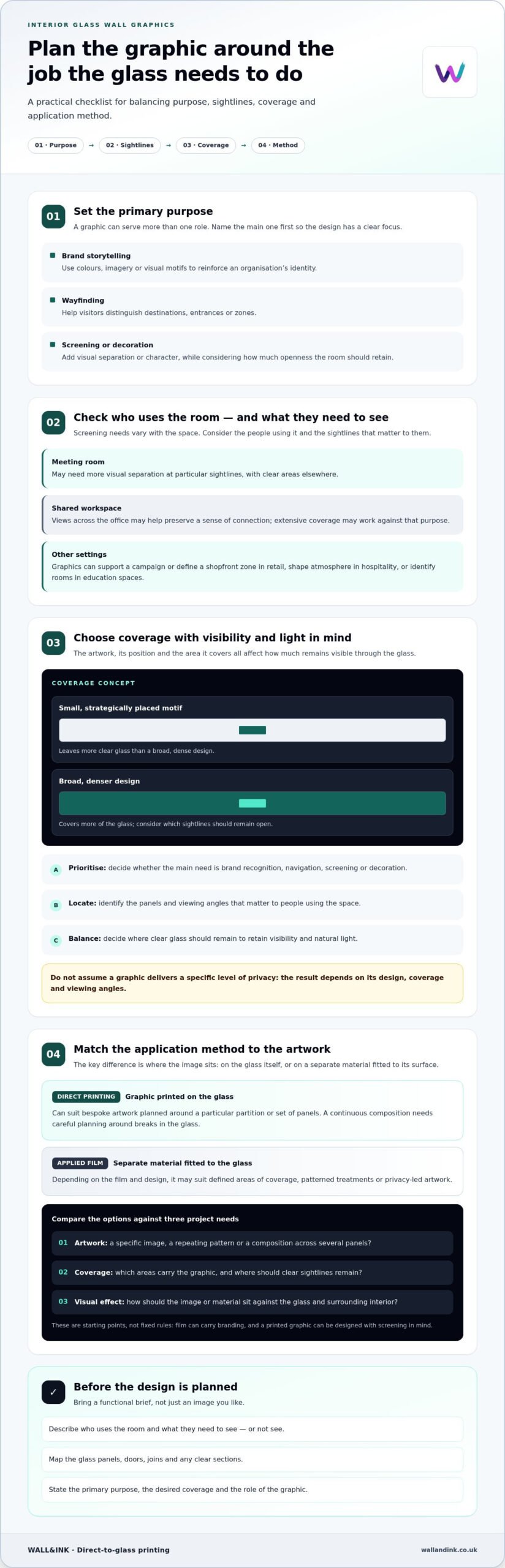
Choose the graphic according to the job the glass must do. Start with the room’s purpose and users, then rank the priorities. This reduces the risk of a striking design obscuring a useful sightline, or a privacy-led treatment making a shared space feel more closed than intended.
Which jobs can interior glass graphics do?
Brand storytelling uses colours, imagery or visual motifs to reinforce an organisation’s identity. Wayfinding has a more direct task: helping visitors distinguish destinations, entrances or zones. Decorative treatment adds character without necessarily communicating a message. A graphic can serve more than one purpose, but identify the primary one in the brief so the artwork has a clear focus.
Screening needs vary by room. A meeting room may need more visual separation than a shared workspace, where people may benefit from views across the office. In retail, graphics can support a campaign or define a shopfront zone. In hospitality, they can contribute to the atmosphere or help distinguish dining areas. In education spaces, they can identify rooms or create a more engaging setting for pupils and staff.
How do privacy, visibility and light interact?
Coverage and artwork affect how much of the space remains visible through a glazed partition. A small, strategically placed motif leaves more clear glass than a broad, dense design. Fine lines, open patterns and carefully positioned bands can add visual interest while preserving more sightlines, although the result depends on the composition and viewing angles.
Open-plan spaces often need a different balance from private rooms. In a shared area, preserving views can support a sense of connection, so extensive coverage may work against the layout’s purpose. A meeting room may call for stronger screening at particular sightlines, while still benefiting from clear areas elsewhere. Don’t assume a graphic will deliver a specific level of privacy without considering its design and coverage.
- Prioritise: decide whether the main need is brand recognition, navigation, screening or decoration.
- Locate: identify which glass panels and viewing angles matter to people using the space.
- Balance: decide where clear glass should remain to retain visibility and natural light.
These decisions make the brief more useful than choosing an image on appearance alone. Describe who uses the room, what they need to see or not see, and the role the graphic should play. That gives the design a functional basis as well as a visual one.
How direct printing and applied glass graphics differ
The main difference is where the image sits. Direct-to-glass printing places the graphic on the glass itself. Applied film or vinyl is a separate material fitted to the glass surface. Both approaches can carry artwork or create screening, but they meet the surface differently. That distinction affects how you plan coverage, panel joins and the finished visual effect.
The application method changes how a graphic meets the glass, so choose one that suits the artwork, coverage and purpose. For graphics for interior glass walls, start with the result you need, then consider how each method could work across the actual panels. Resources from the National Glass Association on architectural glass can also help frame questions about glass in building design.
What happens when a graphic is printed directly onto glass?
With direct printing, the image is printed on the glass surface rather than supplied as a separate film. This suits bespoke artwork planned around a particular partition or set of panels. For example, a graphic could carry a visual theme across adjoining glazed areas, with the layout designed around panel edges, doors and clear sections.
The design still needs to work with the space. A continuous composition needs careful planning around breaks in the glass, while a small, localised image may be easier to position as an individual feature. Neither layout is automatically right for every space. The aim is to make the artwork feel intentional on the glass, rather than added as an afterthought.
When might an applied film be the better comparison?
Applied film is a separate option: the graphic is carried on material placed onto the glass, rather than printed directly onto it. Depending on the film and design, it may suit defined areas of coverage, patterned treatments or privacy-led artwork. Direct printing is an option when the brief centres on bespoke imagery printed on the glass itself.
These are starting points, not fixed rules. Film can carry branding, and a printed graphic can be designed with screening in mind. The choice depends on the desired appearance, the artwork, how much glass should remain clear and the arrangement of the panels. Don’t assume either method is inherently more private or better suited to every surface.
- Artwork: consider whether the design is a specific image, a repeating pattern or a composition across several panels.
- Coverage: decide which areas should carry the graphic and where clear sightlines should remain.
- Visual effect: consider how the image or material will sit against the glass and the surrounding interior.
Before settling on an approach, map the glass panels and mark doors, joins and areas where visibility matters. Then review the proposed design at its intended scale. This makes it easier to judge whether the composition reads as one coordinated feature or a series of separate elements. If direct printing is on your shortlist, explore WALL&INK’s direct-to-glass printing for a bespoke design planned around your space.
Compare glass-wall graphic options against your project needs
A useful comparison starts with what the glass needs to do, not with a favourite image or material. Direct printing and applied graphics describe different ways of putting a design on glass; neither guarantees a particular level of privacy or visual impact. The artwork, its scale, coverage and position all affect the result. Use the guide below to narrow down the options, then assess the proposed layout against the actual glass panels.
| Decision point | Direct printing | Applied film or vinyl |
|---|---|---|
| How it meets the glass | The graphic is printed directly onto the glass surface. | The graphic is carried on a separate material applied to the glass. |
| Artwork | Can suit bespoke imagery planned around a panel or a wider visual narrative. | Can carry branding, patterns or screening designs, depending on the material and artwork selected. |
| Coverage and openness | Coverage and clear areas depend on the printed design and its placement. | Coverage and clear areas depend on the design and how the applied material is arranged. |
| Design continuity | A composition can be planned across adjacent panels, with joins and doors considered in the layout. | Panel breaks and material edges need to be considered when planning the artwork. |
| Privacy and branding | Either can be a design priority, but the outcome depends on the specific graphic and coverage. | Either can be a design priority, but the outcome depends on the specific graphic and coverage. |
The table distinguishes application methods from effects that depend on design. For graphics for interior glass walls, privacy, brand visibility and openness are not fixed properties of a method. A small brand mark may leave most sightlines clear; a larger image or denser coverage can change how the space feels. Assess the full composition at its intended scale, rather than judging a sample motif in isolation.
Which approach best fits branding and large-format artwork?
Both approaches can support a prominent brand graphic or visual narrative. Consider whether the message should sit on one pane or continue across several. Direct printing can be planned as a high-resolution, seamless mural, while applied graphics can also be designed for multiple panels. In either case, account for door positions, glass joins and viewing angles so key parts of the artwork aren’t interrupted.
Which approach suits screening and visual openness?
Begin by marking where screening is needed and where people should retain a view through the partition. A meeting room and an open shared area may call for different coverage, even within the same workplace. Review a visualisation that shows the glass layout and surrounding space. This helps you judge whether the balance of screening, branding and clear glass matches the brief.
Decision rule: define the required function first, then assess which application method and design best serve it. Review the artwork across every pane before finalising coverage and placement.
How to brief graphics for interior glass walls
A clear brief turns a general idea into a design you can assess against the room’s purpose. For graphics for interior glass walls, describe who uses the space, what the graphic should achieve and how the glass is arranged. A brand-led meeting room, for example, may need a different balance of imagery and screening from a shared area where sightlines matter.
Work through these steps before settling on artwork or coverage:
- Define the main need. State whether the priority is branding, wayfinding, screening or visual interest. If there are several aims, rank them so the design has a clear lead purpose.
- Describe the users and room. Note who will use the space and how. Include the room’s function, such as meetings, collaboration, retail, hospitality or education, and explain how people move through it.
- Map the glass layout. Record each panel’s dimensions and position, including joins, doors and nearby architectural features. Note where clear sightlines matter and which areas need more visual screening.
- Gather design material. Provide relevant logos, approved photographs, brand colours and visual references. Explain what you like about each reference, such as its composition, tone or use of open space. These assets can guide bespoke artwork without requiring a direct copy.
- Review the visualisation. Assess the proposed graphic in context before finalising the brief. Check scale, placement, coverage and how the design reads across the glass from the viewpoints people actually use.
What information should the design brief include?
Keep the brief practical. Combine the room’s use and intended audience with the primary goal, panel measurements and any details that affect the composition. Attach brand assets and visual references, then identify where the artwork should begin and end. This gives the design discussion clear parameters and keeps the graphic connected to both the space and the organisation.
Why review a visualisation before production?
A visualisation helps you assess the design at its intended scale, rather than relying on a logo file or reference image alone. Compare it with the actual room, panel arrangement and important sightlines. Look for awkward breaks at joins or doors, and consider whether the balance of graphic and clear glass suits the brief. WALL&INK includes consultation and design visualisation with every booking.
Use the review to identify any adjustments needed to the artwork, position or coverage. A considered brief makes those decisions easier to discuss before the design is finalised. To shape your project requirements with the team, discuss your glass-wall graphic.
How WALL&INK delivers direct-to-glass printing
WALL&INK uses direct-to-wall vertical printing to produce graphics on compatible surfaces, including glass. Unlike applied glass graphics, the image is printed directly onto the surface rather than supplied on a separate film. This approach suits bespoke artwork planned for the size and arrangement of a glazed partition, including high-resolution mural designs.
Every booking includes a design consultation and free visualisation. These steps help connect the artwork to the room’s function, the glass layout and the desired balance of graphic and clear areas. The UV-cured inks are odourless, quick-drying and suitable for indoor use, including schools and healthcare settings.
What to expect from the design and printing service
Design development can be shaped around your brief and supplied material, such as a logo or photograph. The visualisation shows how a proposed graphic may appear in the space, helping you assess its scale, placement and relationship to the panels before production. It’s a practical way to review the design in context, rather than judging the artwork as a standalone image.
Direct printing is one option alongside applied film. The right choice depends on your purpose, artwork and coverage needs. Use the consultation to describe those priorities and discuss how a printed design could work across the glass.
What are the stated care and durability limits?
Printed graphics resist light surface scratches and moisture, but they’re not waterproof. An optional clear protective coating is available for high-traffic areas. These limits matter when choosing where the graphic will sit and how the surface will be used. Match the design and finish to the conditions of the interior rather than assuming every printed surface suits every level of contact.
A 12-month warranty covers ink fading, peeling or material defects under normal indoor conditions. The warranty has a defined scope; it isn’t a promise that graphics are suitable for every environment or use. For indoor applications, the odourless, quick-drying UV-cured inks provide a suitable option, with durability information stated alongside the design service.
Before proceeding, have your panel layout, measurements, intended use and brand assets ready for the design discussion. Review the visualisation for scale, placement and the amount of glass left clear. This gives the proposed graphic a practical test against the space it needs to serve.
Explore custom wall printing and take the next step towards a glass graphic shaped around your project.
Turn your glass into a considered part of the space
Before commissioning graphics for interior glass walls, consider how the design will work as the room changes throughout the day. Visitors may approach from one side, colleagues may need to see across a shared area, and the same partition may serve different purposes at different times. A useful brief accounts for these real-use conditions, not just how the artwork looks in a design file.
Choose the priority that matters most, then make deliberate decisions about imagery, placement and clear areas. This gives the graphic a clear purpose and helps it feel integrated with the interior, rather than added simply to fill glass. If your requirements are still taking shape, start with the room’s users and the experience you want the space to support. Those details provide a practical basis for the design conversation.
WALL&INK’s direct-to-wall printing service can turn a considered brief into artwork for glass. Explore WALL&INK direct-to-wall printing and take the next step towards a graphic designed for your space.
Frequently Asked Questions
Can graphics be printed directly onto interior glass walls?
Yes. WALL&INK prints directly onto glass as part of its direct-to-wall printing service. Start by outlining how the room is used, which glass panels are involved and what the artwork needs to achieve. For example, a graphic beside a reception area may need to work for visitors approaching from different directions. Consultation and design visualisation are included with every booking, so you can review the proposed image in its intended setting.
Do graphics for interior glass walls provide privacy?
They can be designed with screening in mind, but privacy depends on the artwork, its coverage and the glass layout. A meeting room may need screening at particular sightlines, while a corridor or open workspace may need more visibility. Include how people use the room and where they look from in your brief. Review the visualisation from relevant viewpoints rather than assuming the graphic will provide complete privacy.
Can glass-wall graphics include a company logo or photograph?
Yes. WALL&INK’s bespoke design service can adapt a company logo or photograph into wall-ready artwork. Share the source material and explain the intended scale and position, such as a logo near a meeting-room entrance or an image spanning a larger glass area. Brand references can also guide the design’s colour and visual style. The proposed artwork can then be reviewed in relation to the room and glass layout.
Are printed graphics for interior glass walls waterproof?
No. WALL&INK’s prints resist moisture but aren’t waterproof, so moisture resistance shouldn’t be treated as suitability for every wet environment. The stated finish also resists light surface scratches. An optional clear protective coating is available for high-traffic areas. Describe the intended setting and level of use in your project brief so the graphic and its placement can be considered against the actual conditions.
Are WALL&INK graphics suitable for schools and healthcare interiors?
Yes. WALL&INK’s odourless, quick-drying, UV-cured inks are suitable for indoor use, including schools and healthcare settings. This describes indoor-use suitability, not a specific certification or regulatory approval. In your brief, explain the room’s purpose, who uses it and what the graphic should do. For instance, artwork for a learning space may need a different tone and placement from a design for a staff area.
What should I provide for a glass-wall graphic visualisation?
Provide the graphic’s purpose, the room’s use, available glass-panel dimensions and relevant brand assets or photographs. Note where doors and panel joins sit, along with sightlines that should remain clear or be screened. These details help the proposed design relate to the actual space, rather than being assessed as a standalone image. WALL&INK includes consultation and design visualisation with every booking, giving you a basis for reviewing the concept in context.