
The most striking mural isn’t necessarily the right one for a hotel. It also needs to suit the wall, the way guests use the space and the practical demands of the project. Hotel wall mural printing can create a strong visual feature, but choosing between direct-to-wall printing and an applied wallcovering involves more than style.
A consistent look across the hotel can work alongside practical choices for busy areas. The right approach depends on the wall surface and setting, as well as the experience you want guests to have. A lobby feature wall, corridor and guest room may each call for different design and planning decisions.
This guide compares direct-to-wall printing with wallpaper and vinyl, and explains what to assess in different hotel spaces. It also covers how design consultation and digital visualisation can help align artwork with your interiors and brand before installation. From assessing the wall to approving the finished design, the aim is to make each decision clearer and help you plan a mural project with confidence.
Key Takeaways
- Assess each space by its purpose, wall surface and guest activity, not appearance alone.
- Compare direct-to-wall UV printing with applied wallpaper and vinyl by considering design continuity and future refurbishment needs.
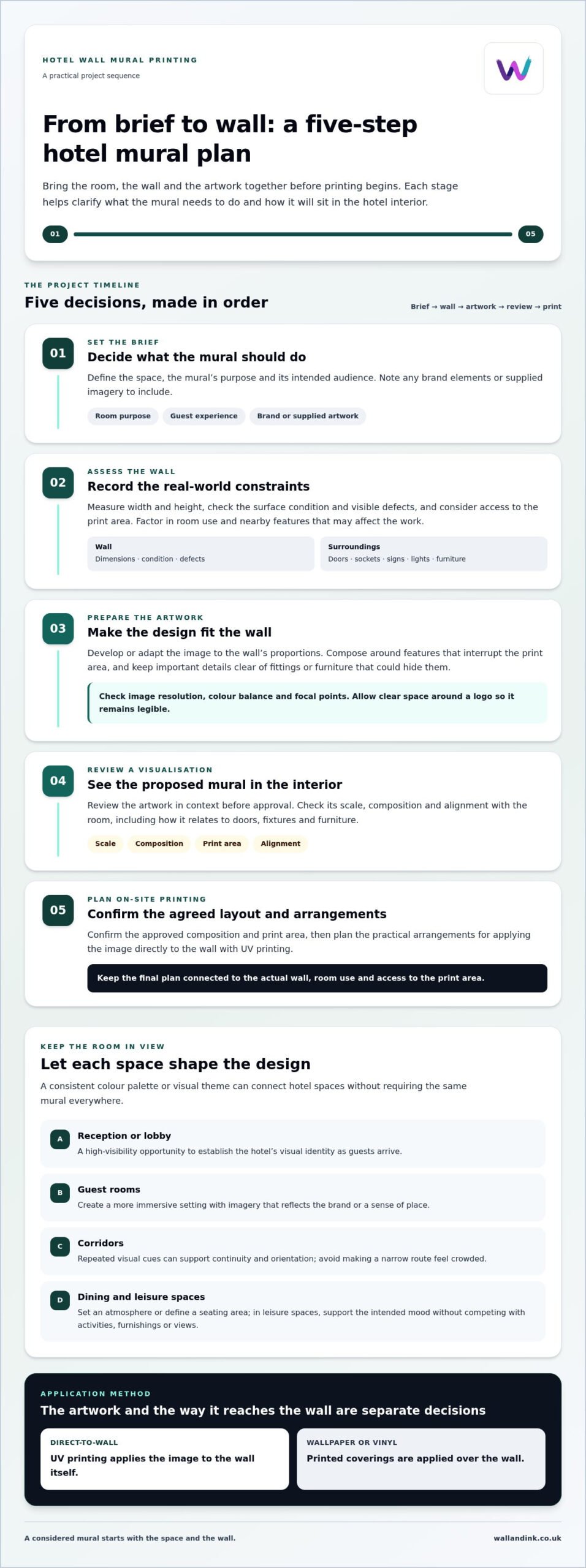
- Plan in stages: define the brief, assess the wall, develop artwork, review a visualisation and arrange on-site printing.
- Agree the artwork and print area early, accounting for room use, staff needs, access and refurbishment timing.
- Choose a joined-up process that connects design consultation and visualisation with the wall dimensions and professional installation.
Hotel wall mural printing: what it can do for a hospitality interior
A hotel mural is more than a large image on a wall. It can shape how a space feels, express the hotel’s identity and help guests recognise where they are. Start with the room’s purpose, then match the design and application method to it.
Hotel wall mural printing creates a large-scale design for a hospitality interior. Direct-to-wall printing applies the image to the wall itself, whilst wallpaper and vinyl murals are printed coverings applied over it. These are different ways to deliver a visual design, not different types of artwork. The history of wall coverings, including modern wallpaper printing techniques, helps explain how applied coverings can carry custom imagery too.
Which hotel spaces benefit most from a bespoke wall mural?
Consider each room separately. A reception or lobby wall is a high-visibility opportunity to establish the hotel’s visual identity as guests arrive. A guest-room mural can create a more immersive setting, with imagery that reflects the brand or a sense of place. In corridors, repeated visual cues can create continuity and help guests orient themselves, provided the design doesn’t make a narrow route feel crowded.
Dining spaces can use a mural to set an atmosphere or define a seating area. In leisure spaces, artwork can support the intended mood without competing with activities, furnishings or views. The same design doesn’t need to appear everywhere: a consistent colour palette or visual theme can connect spaces whilst allowing each room to serve its own purpose.
What should a hotel mural achieve beyond decoration?
Set a clear objective before developing the artwork. Is the mural meant to create a welcoming first impression, reinforce the brand, add visual interest or help guests identify a shared space? A statement image shapes the room’s character. A graphic intended to guide or inform guests has a functional role, so its message and placement need to be easy to read.
Make scale, contrast and position reflect how people use the space. Guests view a reception mural from a distance, whilst artwork beside a dining table or in a guest room may be seen close up. Large forms can read clearly across a lobby; detailed imagery may suit a quieter viewing point. Keep routes, signs and important room features in mind, and avoid placing key design details where furniture or fittings will obscure them.
With hotel wall mural printing, the image and application method are separate decisions. Defining the room’s purpose first gives the design a practical brief and makes it easier to judge which approach fits the wall and guest experience.
How hotel wall mural printing works, from wall assessment to visualisation
A successful project starts before the printer reaches the wall. The brief, physical surface and artwork all need to work together. A clear sequence helps the hotel team review decisions early and plan around the actual room, rather than relying on an image viewed in isolation.
- 1. Set the brief. Define the space, the mural’s purpose, the intended audience and any brand elements or supplied imagery to include.
- 2. Assess the wall. Record its dimensions and condition, then consider access to the print area, nearby fixtures and the room’s use.
- 3. Prepare the artwork. Develop or adapt the design to the wall’s proportions, accounting for details that could interrupt the image.
- 4. Review a visualisation. Check how the artwork sits within the interior before approving the composition and print area.
- 5. Plan on-site printing. Confirm the agreed layout and practical arrangements for applying the image directly to the wall with UV printing.
Large-format digital methods make it possible to translate a design into a wall-scale image. For background on the latest digital technology used in interior decor, see this overview from Large Format Review.
What is assessed before printing directly onto a hotel wall?
Assessment is specific to the project. It considers the wall’s width and height, visible defects, surface condition and the space needed to work around the print area. Doors, sockets, signs, lights, furniture and architectural features can all affect where the image begins and ends, or how it needs to be composed.
Don’t assume a surface is suitable based on appearance alone. The actual wall and its condition inform the project plan, including any preparation requirements. Access matters too: the room’s layout and surrounding features can affect how the print area is approached and how the artwork is positioned.
How do artwork preparation and digital visualisation reduce uncertainty?
Supplied logos, photography or bespoke artwork can be considered as part of the design process. A digital visualisation places the proposed mural within the hotel interior, giving stakeholders a practical way to review its scale, composition and alignment before printing.
Review image resolution, colour balance, focal points and how the design relates to doors, fittings and furniture. A logo may need clear space to remain legible; a focal image may need repositioning to avoid being partly hidden. Wall & Ink’s hotel mural design and installation service connects design consultation and visualisation with professional on-site printing.
Direct-to-Wall, Wallpaper or Vinyl: Comparing Options
These methods apply a mural in different ways. Direct-to-wall UV printing places the image on the wall itself. Wallpaper and vinyl are separate coverings applied over the wall. The right choice depends on the brief, existing surface and refurbishment plans, not on a universal ranking of methods.
| Consideration | Direct-to-wall UV printing | Wallpaper mural | Vinyl graphic |
|---|---|---|---|
| Application | Artwork is printed directly onto the wall. | A printed wallcovering is applied to the wall. | A printed vinyl covering is applied to the wall. |
| Wall preparation | Depends on the wall’s condition and suitability for printing. | Depends on the wall and the requirements of the chosen covering. | Depends on the wall and the requirements of the chosen graphic. |
| Design continuity | The image is placed on the wall surface; doors, fittings and other features still affect layout. | Panel layout and joins may inform how the image is arranged. | Format and layout inform how the graphic sits across the wall. |
| Future refurbishment | Consider how the printed wall will fit into the planned refurbishment. | Consider how the applied covering fits the refurbishment plan. | Consider how the applied graphic fits the refurbishment plan. |
How does direct-to-wall UV printing differ from wallpaper murals?
Direct printing makes the wall the print surface; wallpaper adds a separate layer. That distinction can affect planning, but it doesn’t make one approach suitable for every hotel wall. The wall’s condition, the design and the refurbishment plan all matter. Assess the actual surface and establish any preparation needs rather than relying on general assumptions about compatibility.
When should a hotel compare direct printing with vinyl graphics?
Start with the artwork’s scale and role. A full-wall composition, a smaller brand graphic and a visual feature within a defined area may call for different application decisions. Consider the wall layout, the design’s proportions and how long the treatment is intended to remain part of the interior. Don’t assume performance from the method alone: claims about durability, cleaning, removal or fire performance need evidence for the specific product and system being considered.
Use the comparison to shape the project brief, then assess the actual wall and refurbishment context. Choose the application method that fits the surface and intended use, and support any performance requirements with relevant product-specific documentation.
Planning hotel wall mural printing around guests, staff and refurbishment
A mural project needs to fit the hotel’s operation as well as its design. Agreeing the brief, artwork and print area early gives decision-makers a shared reference point and can reduce late layout changes. It also helps staff plan access and coordinate the work with other activity in the space.
What should the project brief include before printing?
Keep the brief practical. Record the mural’s purpose, intended audience, room, wall dimensions and required brand elements. Identify who will review the digital visualisation and who approves the final artwork. A clear approval route helps avoid conflicting feedback late in planning.
- Room use: Note whether the area is a guest room, reception, corridor or dining space, and how it functions during the day.
- Wall and layout: Record the print area, access restrictions, doors, sockets, fixtures and other features that may affect the composition.
- People and approvals: Identify decision-makers, relevant hotel teams and the person responsible for signing off the artwork.
- Related work: Note any refurbishment or maintenance planned in the same space, so the mural can be coordinated with it.
Before approval, compare the visualisation with the intended print area and the room’s real dimensions. Resolve issues such as an important design detail falling behind a fitting, or artwork competing with existing signs. Agreeing the composition at this stage helps keep later project decisions aligned.
How can hotels minimise disruption during on-site work?
Plan access around room occupancy, staff movement and the space’s normal function. A reception area, for example, may need a different access plan from a guest room. Consider how staff and guests will move around the work area, and agree how relevant teams will be informed of the arrangements.
Coordinate on-site printing with other scheduled refurbishment activities, including work that could affect access to the wall or room. Keep the plan specific to the project rather than assuming a standard working window or completion time. Clear communication helps the hotel manage expectations and prepare teams for the agreed arrangements.
Wall & Ink’s hotel mural project service connects planning with professional on-site installation.
Choosing a hotel wall mural partner and taking the next step
A hotel mural partner should connect design decisions to the physical wall and the practical needs of the space. A joined-up process helps the artwork reflect the hotel’s identity whilst accounting for real dimensions, surface condition and on-site installation requirements.
What should a hotel expect from a complete mural service?
Look for a clear route from the initial conversation to the finished wall. Design consultation establishes the project objectives and how the mural should relate to the interior. Wall assessment informs the print area and planning, whilst digital visualisation lets stakeholders review the proposed composition in context before approving the artwork. Professional on-site installation then brings the agreed design to the wall.
Use these points as a practical checklist:
- Design consultation: Does the project brief account for the hotel’s brand, the room’s function and the intended guest experience?
- Wall assessment: Are the actual dimensions, condition, access and surrounding features considered in planning?
- Digital visualisation: Can stakeholders review scale, composition and placement within the interior before approval?
- On-site installation: Does the process connect the approved artwork with professional printing at the hotel?
Bespoke artwork can incorporate brand elements or respond to the character of a particular space. A reception design may need to make a different impression from one intended for a guest room or shared area. A visualisation helps the team judge that fit before installation.
How does Wall & Ink support hotel wall mural projects?
Wall & Ink is a UK-wide specialist in commercial murals and direct-to-wall printing for hospitality interiors. UV printers apply artwork directly to physical wall surfaces, supported by design consultation, digital visualisations and professional on-site installation. The service links the creative brief with the dimensions and condition of the hotel wall, keeping design and practical planning aligned.
To start a discussion, share the space you have in mind, what the mural needs to achieve and any relevant project requirements. This gives the conversation a clear focus, whether you’re planning a feature wall or considering artwork across several hotel areas.
Discuss your hotel mural project with Wall & Ink.
Plan a mural that works for your hotel
The right mural decision starts with the space, not just the image. Match the application method to the wall and project brief, then consider how guests and staff use the area. A clear design process, wall assessment and digital visualisation connect the intended look with real dimensions and practical installation needs.
With hotel wall mural printing, direct-to-wall UV printing places bespoke artwork directly onto a wall. Wall & Ink brings together design consultation, digital visualisations and professional on-site installation for commercial hotel murals across the UK. This joined-up approach takes a project from initial ideas to a considered design for the interior.
Share your space, objectives and project requirements to begin planning. Discuss your hotel wall mural project with Wall & Ink and take the next step towards a mural that fits your hotel.
Frequently Asked Questions
What is hotel wall mural printing?
Hotel wall mural printing creates a large-scale design for a hospitality interior, either by printing directly onto the wall or by applying a printed wallcovering. The artwork can add atmosphere, express a hotel’s brand or provide visual cues that help guests recognise different spaces. With direct-to-wall printing, UV printers place the image on the physical wall surface. The method and design should suit the project brief and the wall itself.
Can you print a mural directly onto a hotel wall?
Yes. Direct-to-wall UV printing applies artwork directly to a hotel wall, rather than printing it on a separate covering. The wall’s condition, dimensions, access and surrounding features inform the assessment and layout. Suitability is project-specific, so the surface should be reviewed before planning the print. Wall & Ink provides direct-to-wall printing for commercial murals, supported by design consultation, digital visualisations and professional on-site installation.
Is direct-to-wall printing better than hotel wallpaper?
Neither method is automatically better for every hotel project. Direct-to-wall printing places the image on the wall, whilst wallpaper is a separate applied covering. Compare how each approach suits the wall condition, design, layout and refurbishment plans. Also consider any project-specific requirements for cleaning, durability or fire performance. These comparisons need relevant evidence for the particular product or system, rather than assumptions based on the application method alone.
Which hotel areas work best for wall murals?
The best location depends on what the mural needs to achieve. Reception and lobby walls can establish the hotel’s visual identity on arrival. Guest rooms can offer a more immersive, brand-aligned setting, whilst corridors may use consistent visual cues to support orientation. Dining and leisure spaces can use artwork to shape atmosphere or define an area. Consider viewing distance, room function, signs and fixtures when choosing the wall and design scale.
How do you prepare a hotel wall for mural printing?
Start by recording the print area’s dimensions and noting visible defects, surface condition and access around the wall. Include doors, sockets, signs, furniture and architectural details, as these can affect both the artwork and installation plan. Preparation requirements depend on the specific wall, so don’t assume every surface is suitable or needs the same treatment. A project-specific assessment helps establish what the wall requires before printing is planned.
Can a hotel wall mural use bespoke branding or artwork?
Yes. A bespoke mural can be developed around hotel branding, supplied logos, photography or other artwork, with the design adapted to the wall’s dimensions and the room’s purpose. Digital visualisation lets stakeholders review the composition in the interior before approval. Check that important details remain visible around doors and fixtures, and review image resolution, colour balance and focal points. This connects the artwork to the hotel’s identity and guest experience.
How can hotels plan mural installation without disrupting guests?
Plan access around occupancy, staff movement and the space’s usual function. Identify who needs to approve the artwork, agree the print area early, and coordinate the work with any refurbishment or maintenance in the same space. Share the agreed arrangements with relevant hotel teams so they can plan around access needs. The working plan should reflect the specific project and avoid assuming a standard installation window or completion time.