
Whilst global office utilisation reached 53 per cent in 2026, a vast number of these workspaces still suffer from a sterile atmosphere that actively drains employee creativity. You probably agree that a blank wall is a wasted opportunity for cultural connection, especially for a workforce that now prioritises well-being and work-life balance. The difficulty lies in determining exactly how to decorate a large office wall without resorting to peeling vinyl decals or the logistical nightmare of hanging oversized frames. Traditional methods often fail to scale to architectural proportions, leaving your workspace looking cluttered or unfinished.
This strategic guide will show you how to leverage modern direct-to-wall printing to create permanent, high-impact murals that integrate your brand identity directly into the building’s substrate. We will examine the technical advantages of direct application, the fire safety regulations you must consider, and how biophilic design can boost productivity by 6 per cent through precise, large-scale imagery. You’ll discover a durable, low-maintenance solution that replaces white-wall syndrome with professional, expert-led design.
Key Takeaways
- Understand the “scale problem” in commercial design and why architectural-grade printing is required to fill vast surfaces effectively.
- Learn how to decorate a large office wall by utilising UV-cured ink technology that avoids the maintenance hassles of peeling vinyl and traditional wallpaper.
- Integrate biophilic design and brand storytelling to turn underutilised walls into strategic assets that support staff well-being and corporate culture.
- Evaluate wall substrates from plaster to brick to ensure technical compatibility and optimal light interaction for high-resolution commercial murals.
- Future-proof your workspace with durable, scratch-resistant finishes that allow for efficient updates whilst avoiding the waste of legacy redecoration methods.
The Challenge of Scale: Why Large Office Walls Require a Strategic Approach
Modern commercial architecture often creates vast, cavernous spaces that leave decision-makers wondering exactly how to decorate a large office wall without making the environment feel cluttered. This is what we define as the “Scale Problem.” In an expansive boardroom or a high-ceilinged lobby, standard decorative elements lose their impact. They become visual afterthoughts rather than intentional design choices that support the room’s function.
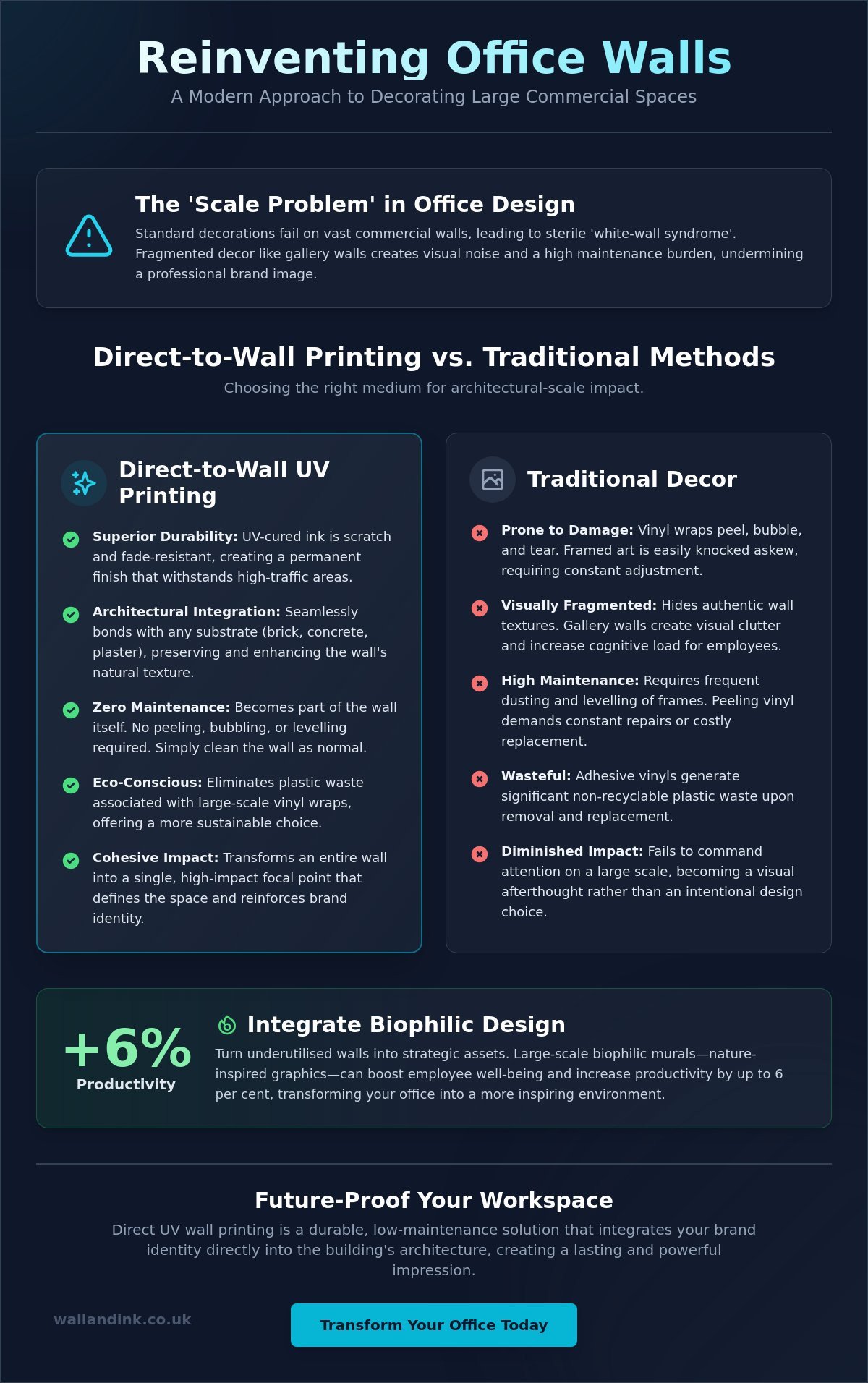
Traditional 24×36-inch prints, whilst suitable for residential settings, fail to command attention on a structural scale. When you place a small frame on a thirty-foot wall, the surrounding negative space overwhelms the subject matter. This creates a disjointed aesthetic that reinforces “white-wall syndrome,” a sterile environment that can negatively affect employee well-being. A strategic approach requires a Focal Point Strategy, where the wall is treated as a primary architectural feature rather than a background surface.
The Problem with Fragmented Decor
Many organisations attempt to fill space by grouping multiple small frames together, often referred to as a gallery wall. In a professional setting, this frequently backfires by creating unnecessary visual noise and increasing cognitive load. Multiple frames force the eye to jump between disparate points, which can feel chaotic rather than curated. There is also a significant maintenance burden to consider. Every hung item requires regular levelling, dusting, and cleaning. In high-traffic office zones, these items are frequently knocked askew, which undermines a professional image and dilutes your cohesive brand message.
Thinking Architecturally: The Wall as a Canvas
Solving the scale problem requires shifting your perspective from “hanging art” to “surface transformation.” This means treating the wall as an integral part of the building’s structure. By applying graphics directly to the substrate, you eliminate the physical borders of frames and glass. It’s a method that moves beyond simple decoration into the realm of architectural branding.
Historical mural techniques have long been used to define public and private spaces, but modern direct-to-wall printing allows for a level of industrial precision that was previously impossible. Large-scale graphics don’t just fill space; they define zones within an open-plan office. A massive biophilic mural can signify a quiet focus area, whilst a bold brand narrative printed across a corridor can reinforce company culture. This architectural approach ensures that your decor is as durable and permanent as the wall itself.
Selecting the Medium: Direct-to-Wall Printing vs. Traditional Decor
Choosing the right medium is the most critical technical decision when determining how to decorate a large office wall. Whilst traditional framed art or heavy installations have their place, they rarely meet the demands of a high-traffic commercial environment. Decision-makers are instead turning to surface-integrated solutions like direct-to-wall UV printing, which offers a level of durability and precision that legacy methods cannot match.
The technical superiority of UV ink lies in the curing process. Unlike solvent-based inks that dry through evaporation, UV inks are instantly hardened by ultraviolet light during application. This results in a finish that is exceptionally resistant to scratches and fading, even in offices with significant natural light. This process also ensures that the natural texture of the substrate remains visible. Whether your wall is made of industrial concrete, exposed brick, or standard plaster, the ink follows every contour, maintaining the building’s original architectural character.
UV Printing vs. Vinyl Wraps
Vinyl wraps and decals are essentially large plastic films held in place by adhesives. In busy office corridors, these materials frequently fail. Constant contact from staff or equipment leads to edge-peeling, whilst temperature changes cause unsightly bubbling. Direct-to-wall printing removes these risks entirely because it lacks a physical profile or adhesive layer. There is simply nothing to peel or tear. For those looking for sustainable commercial wall murals, direct printing is also the more responsible choice, as it eliminates the plastic waste associated with large-scale vinyl production.
The Wallpaper Pitfall: Why Modern Offices are Moving Away
Traditional wallpaper is often ill-suited for the vast dimensions of modern workspaces. On a large scale, visible seams and pattern-matching errors become glaringly obvious, undermining the professional atmosphere. The removal process is equally problematic; it is a labour-intensive task that often damages the underlying plaster. Direct-to-wall printing offers a “zero-profile” finish that integrates seamlessly with the wall. When the time comes for a brand refresh, you don’t need to scrape or steam. You simply paint over the existing design, making it the most efficient way to manage how to decorate a large office wall over the long term.
Conceptual Themes: From Brand Narrative to Biophilic Murals
A strategic approach to workspace design moves beyond mere decoration to intentional storytelling. When considering how to decorate a large office wall, you must decide whether the surface will reinforce corporate values, improve mental focus, or define a collaborative zone. Generic artwork fails to communicate specific company culture. Instead, modern direct-to-wall printing allows for high-impact commercial wall murals that translate complex brand narratives into permanent architectural features.
Research indicates that 51 per cent of companies have increased their investment in employer branding. This shift reflects the understanding that the physical office is a vital tool for attracting and retaining talent. By integrating mission statements or historical timelines directly into the substrate, you turn a passive surface into an active brand asset. Digital visualisations now allow decision-makers to test these concepts in a virtual environment before any ink is applied, ensuring the final execution aligns perfectly with the architectural layout.
Branding Beyond the Logo
Effective branding doesn’t mean repeating a logo across every surface. It involves the sophisticated use of brand colours and motifs to create a cohesive atmosphere. You can utilise subtle geometric patterns to energise collaborative spaces or create “Instagrammable” focal points that serve as backdrops for recruitment videos and client visits. This balance between corporate identity and aesthetic appeal ensures the workspace feels professional without being overbearing.
Biophilic Design and Mental Wellbeing
The integration of nature-inspired elements is no longer a trend; it’s a productivity requirement. Employees in workplaces with biophilic elements report 15 per cent higher well-being and are 6 per cent more productive. Since 72 per cent of employees experience moderate to high stress at work, according to 2026 data, using high-resolution landscape murals can provide a necessary psychological reprieve.
For windowless office centres, these murals create a sense of depth and openness that traditional paint cannot achieve. Choosing the right greenery patterns, such as forest canopies or botanical illustrations, mimics the calming effect of the outdoors. This technical application of biophilic design directly addresses the need for a human-centric workspace and provides a clear answer for those wondering how to decorate a large office wall for maximum impact.
Technical Logistics: Preparation and Execution for High-Impact Walls
Execution is where design vision meets architectural reality. When planning how to decorate a large office wall, the technical success of the project depends on a rigorous assessment of the substrate and the surrounding environment. Unlike traditional redecoration, which often involves significant mess and disruption, direct-to-wall printing is a precise, industrial process. It requires a methodical approach to ensure the final mural integrates perfectly with existing structural fixtures.
Measuring for a large-scale installation involves more than just calculating square metreage. You must account for every socket, light switch, and skirting board. In a professional workspace, these functional elements cannot be moved; therefore, the design must be mapped around them with millimetre precision. Lighting also plays a critical role. Large office walls often sit opposite expansive windows or under high-intensity LED arrays. To avoid distracting glare, we utilise matte UV inks that diffuse light. This ensures the mural remains legible and impactful from every angle in the room, regardless of the time of day.
Surface Preparation and Substrate Compatibility
A primary advantage of direct UV printing is its versatility across diverse materials including plaster, brick, wood, and concrete. Substrate compatibility for UV ink technology is defined by the ink’s ability to bond instantly with the surface, regardless of its porosity or texture. Whilst bare brick or concrete might pose a challenge for vinyl, UV ink excels on these surfaces by following the natural grain. Before printing begins, the wall must be cleaned to remove dust and oils. In some cases, a specialised primer is applied to ensure maximum adhesion and colour vibrancy. This process is inherently clean, producing no dust or chemical odours during application.
Digital Visualisation: The Risk-Free Design Process
One of the most significant failures in traditional decor is the “scale shock” that occurs when a design looks different on a wall than it did on a computer screen. We eliminate this risk through digital visualisation. By creating high-fidelity mock-ups, you can see exactly how the design sits in situ before a single drop of ink is applied. This allows for precise adjustments to colour balance and scale based on the specific dimensions of your workspace. It creates a collaborative feedback loop that ensures the final result matches the initial strategic intent. For a seamless transformation of your workspace, you can enquire about direct-to-wall printing services to review your specific site requirements.
Future-Proofing Your Workspace with Direct UV Wall Printing
The final stage in determining how to decorate a large office wall is ensuring the chosen solution survives the rigours of a modern commercial environment. With global office utilisation reaching 53 per cent in 2026, corridors and common areas are subject to more physical contact than ever before. Direct-to-wall UV printing offers a durability factor that legacy redecoration methods cannot match. These prints are permanent, scratch-resistant, and designed to withstand the daily traffic of a busy professional hub.
Updates are straightforward. When your brand evolves or your mission statement changes, you don’t need to engage in the messy removal of vinyl or wallpaper. You simply repaint the surface and apply a new design. This eliminates the “legacy waste” associated with traditional redecoration. Additionally, the hygiene advantage is significant. Because the ink bonds directly to the substrate, the wall remains a “wipe-clean” surface. This is essential for modern offices where cleanliness and maintenance efficiency are non-negotiable requirements.
Long-Term Value vs. Initial Cost
Pragmatic decision-makers look beyond the initial invoice to calculate the true ROI of their decor. Traditional framed art involves recurring costs for cleaning, levelling, and eventual replacement due to damage. Vinyl decals often require re-application within 24 months as edges begin to peel. A direct-to-surface mural is a one-time investment that removes these hidden maintenance burdens. It also serves as a strategic tool for employee retention; since work-life balance is now the primary factor for 83 per cent of employees, a high-quality, inspiring environment is a critical component of your employer branding.
The Wall & Ink Professional Standard
Choosing a partner for your project requires a focus on technical expertise. Before you proceed, use this checklist to evaluate a UK-based printing specialist:
- Do they provide high-fidelity digital mock-ups to confirm scale?
- Does their equipment use industrial-grade UV ink for scratch resistance?
- Can they demonstrate experience with your specific substrate, such as brick or concrete?
- Are they aware of fire safety coverage limits for decorative materials in commercial buildings?
At Wall & Ink, we provide an end-to-end service that moves from bespoke design to technical execution with industrial precision. We understand the physical reality of the trade and the importance of delivering a clean, hassle-free installation. To see how we can transform your workspace, Enquire about our commercial wall printing services and start your strategic redecoration today.
Optimise Your Architectural Space with Direct-to-Surface Precision
Transitioning from a sterile workspace to a high-impact brand asset requires a fundamental shift in how you view structural surfaces. You’ve seen that the primary challenge of how to decorate a large office wall isn’t just about filling space; it’s about selecting a medium that scales without adding maintenance burdens or visual clutter. By prioritising direct-to-wall UV printing over legacy vinyl or wallpaper, you ensure a permanent, scratch-resistant finish that respects the building’s original substrate.
This strategic approach replaces “white-wall syndrome” with durable biophilic designs and brand narratives that actively support employee well-being. Our process eliminates common industry failures like edge-peeling and bubbling, providing a “zero-profile” result that is as professional as your organisation. With our specialised focus on commercial interiors across the UK, we provide the technical expertise needed for flawless execution on any surface type.
Transform your large office wall with a bespoke mural from Wall & Ink. Our advanced UV ink technology and bespoke digital visualisations ensure your project moves from initial concept to industrial-grade reality with complete transparency. It’s time to turn your vast office surfaces into your most powerful cultural assets.
Frequently Asked Questions
Can you print on any type of office wall surface?
Yes, our technology is compatible with almost any vertical substrate found in modern commercial buildings. This includes standard plasterboard, exposed brick, concrete, and timber panels. The UV ink technology is designed to bond with both porous and non-porous materials. Because the ink follows the wall’s natural contours, it preserves the architectural character of the building whilst delivering sharp, high-resolution imagery that traditional methods cannot replicate.
How long does it take to print a large office mural?
Installation time varies based on the scale and complexity of the artwork. A typical 8×6 ft branding wall is usually completed within 3 to 5 hours. Because the ink cures instantly under ultraviolet light, there is no drying time required. This means the space is ready for immediate use, allowing you to transform your environment with minimal impact on staff productivity or office schedules.
Is direct-to-wall printing permanent or can it be removed?
The print is permanent and highly durable, resisting scratches and fading for years. Unlike vinyl, it won’t peel or bubble at the edges. If your branding evolves, you don’t need a labour-intensive removal process. You simply apply two coats of standard wall paint to return the surface to a blank state. This makes it an efficient, future-proof solution for managing long-term redecoration costs in high-traffic commercial areas.
How do I choose the right image resolution for a massive wall?
High-resolution source files are essential for large-scale clarity. We recommend images with a minimum of 300 DPI at the intended print size; however, vector graphics are the superior choice for logos and patterns. These files allow for infinite scaling without pixellation. Our digital visualisation process helps you confirm the resolution before printing, which is a critical step in determining how to decorate a large office wall with professional precision.
Does the wall printing process create dust or chemical smells in the office?
No, the process is entirely dust-free and produces no volatile organic compound (VOC) emissions. Unlike traditional painting or wallpapering, there are no strong chemical odours or messy adhesives involved. The equipment operates quietly and cleanly, meaning your team can continue working in the same room whilst the mural is being applied. This lack of disruption is a primary reason why direct-to-wall printing is preferred for professional and educational settings.
Can you print company logos and specific brand colours accurately?
We achieve exceptional colour fidelity through precise digital ink management. The system can reproduce specific brand colours and intricate logo details with industrial accuracy. By using high-quality UV inks, we ensure that your corporate identity is represented exactly as intended across any substrate. This consistency is vital for maintaining a professional brand narrative and ensuring that your workspace reflects your company’s high standards and attention to detail.
What is the maximum height and width for a wall print?
The width of a print is virtually unlimited because the machine operates on a modular rail system. For vertical height, the standard limit is approximately 4 metres in a single pass; however, larger designs can be tiled for taller architectural features. This flexibility is a key advantage when planning how to decorate a large office wall in expansive lobbies, stairwells, or high-ceilinged boardrooms that traditional framed art simply cannot fill.
How do I clean a wall that has been printed on directly?
Maintaining the mural is straightforward and requires no specialist equipment. The UV-cured ink creates a hard, durable surface that is moisture-resistant and scratch-proof. You can wipe the wall with a soft, damp cloth and a mild, non-abrasive detergent to remove dust or scuffs. This hygiene advantage makes direct-to-wall murals ideal for high-traffic zones like corridors and breakout areas, where traditional wallpaper or paint would quickly show signs of wear.