
Applying a standard topcoat directly onto fresh plaster is the fastest way to ensure your renovation fails within the first six months. You’ve likely spent days waiting for that dark grey surface to turn a uniform pale pink, and the temptation to skip straight to the final colour is high. It’s frustrating to watch a pristine wall lose its integrity because of a rushed schedule, especially when you’ve invested in a professional skim.
This guide will show you exactly how to paint new plaster using a technical, multi-stage process that eliminates the risk of bubbling or flaking. You’ll master the science of the mist coat and understand why a 70/30 paint-to-water ratio is the industry standard for creating a permanent bond with the substrate. We provide the precision needed to move from raw construction to a high-end finish without the traditional mess of wallpaper or failed DIY attempts.
We’ll break down the essential drying timelines, the chemistry of plaster suction, and the specific preparation steps required for high-resolution wall printing or mural application. By the end of this article, you’ll have the expert knowledge to achieve a seamless, durable surface that stands up to the highest professional standards.
Key Takeaways
- Understand the chemical transition of fresh gypsum and why patience is the critical first step to preventing moisture-related paint failure.
- Master the technical application of a diluted mist coat, the essential process for how to paint new plaster to ensure a durable, professional bond.
- Identify why traditional “one-coat” paints and PVA sealants fail on bare surfaces and how to avoid common pitfalls like flaking and peeling.
- Learn the professional preparation methods for removing nibs and splashes to create a seamless, high-quality substrate for any residential or commercial space.
- Discover how a perfectly primed wall serves as the ideal foundation for advanced direct-to-wall UV printing and bespoke architectural features.
Understanding Fresh Plaster: Why You Cannot Rush the Process
Freshly applied plaster is a living substrate. It isn’t just a surface; it’s a chemical reaction in progress. Knowing how to paint new plaster starts with respecting this curing phase. When wet gypsum is applied, it undergoes a transition from a malleable paste to a stable, inert decorating surface. This process involves the evaporation of significant volumes of water. If you interrupt this cycle by applying paint too early, you risk total finish failure.
The primary challenge lies in the material’s high porosity. Plaster is naturally thirsty. It “sucks” moisture from standard emulsion paint at an accelerated rate. This rapid suction prevents the paint from forming a proper mechanical bond with the surface. Instead of a durable film, you’re left with a brittle layer that is prone to cracking or “flashing,” where patches of the wall appear duller than others. Using a Plaster building material correctly requires understanding that the surface must be fully breathable during the initial weeks.
Sealing moisture inside the wall is a recipe for long-term damage. Trapped water often leads to efflorescence, which is the migration of salts to the surface of the wall. This appears as a white, powdery crust that pushes the paint away from the substrate. In severe cases, trapped moisture causes bubbling or “blistering,” requiring the entire section to be scraped back and replastered. It’s a costly mistake that simple patience avoids.
How Long Does New Plaster Take to Dry?
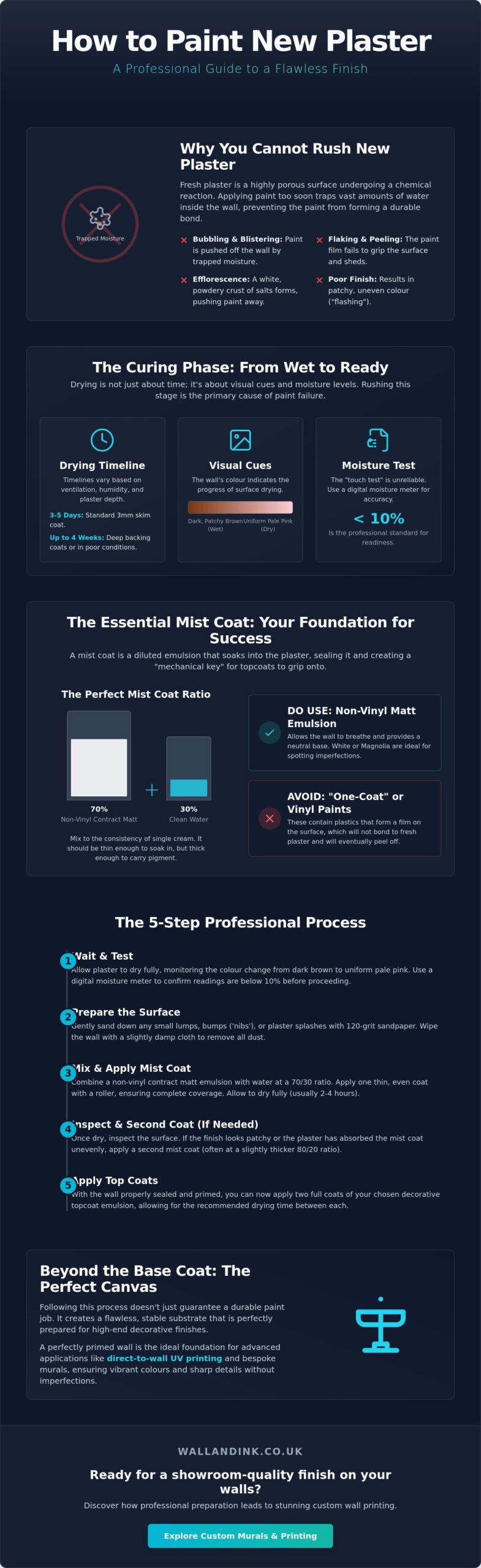
Drying times aren’t fixed. They depend on humidity, ventilation, and the specific type of plaster used. A standard 3mm skim coat typically requires 3 to 5 days to dry in a room with consistent airflow. However, full backing coats used in heavy renovations can take up to 4 weeks to reach a stable state. You should monitor the visual cues. The wall will move from a dark, patchy brown to a uniform pale pink. Don’t be fooled by the surface colour; deep-set moisture often remains even when the face looks dry.
Testing for Moisture Readiness
The “touch test” is a common but unreliable method. While a wall might feel dry to the palm, the internal moisture levels could still be high enough to ruin your finish. Professional decorators use a digital moisture meter to ensure readings are below 10% before they consider how to paint new plaster surfaces. Focus your testing on corners, chimney breasts, and skirting lines. These areas lack the airflow of central wall sections and are always the last to cure.
The Essential Mist Coat: Sealing Your Walls Correctly
Bare plaster is a high-suction substrate. It acts like a sponge, pulling moisture out of anything applied to its surface. If you apply standard retail paint directly from the tin, the plaster sucks the water out of the paint before it can bond. This creates a brittle layer that will eventually crack and peel. Understanding how to paint new plaster begins with the mist coat; a diluted emulsion layer that penetrates deep into the pores to create a mechanical “key” for future coats.
Professional decorators avoid “one-coat” or high-vinyl paints for this initial stage. These products contain plastic resins designed to sit on the surface. On fresh plaster, these resins form a thin film that fails to grip, leading to “shelling” where the paint strips off in large sheets. By using a watered-down mixture, you ensure the pigments travel into the plaster itself rather than resting on top. For a visual breakdown of this technique, this illustrated guide to painting fresh plaster demonstrates the physical application required for a professional seal.
The Perfect Mist Coat Ratio
Precision is vital when mixing your seal. A standard ratio is 70% paint to 30% water, though highly polished plaster may require an 80/20 mix. The consistency should resemble single cream or milk. It needs to be thin enough to soak in, but thick enough to carry the pigment. Professionals always use a non-vinyl contract matt in white or magnolia. These light colours provide a neutral base that makes it easier to spot imperfections in the plaster finish before the final decorative layers are applied.
- 70/30 Mix: Best for standard multi-finish plaster.
- 80/20 Mix: Ideal for denser, over-polished surfaces.
- Application: Use a medium-pile roller to ensure even penetration without over-saturating the board.
Paint Chemistry: Breathability Matters
The choice of paint is a matter of building health, not just aesthetics. Contract emulsion is the industry standard because it lacks the vinyl resins found in “wipeable” or “durable” retail paints. New plaster can take up to 6 months to fully dry out even after it looks pink on the surface. A breathable contract matt allows moisture to escape through the paint film.
If you seal the wall with a vinyl-based paint too early, you trap moisture within the structure. This often results in efflorescence, where white salts push through the paint, or even internal damp issues. Using a breathable base layer ensures the building settles correctly. Once this stable, breathable foundation is established, you can move away from traditional decorating. For those seeking a high-resolution, permanent finish, our direct-to-wall printing technology offers a modern alternative that requires no wallpaper and leaves no mess.
Step-by-Step: How to Paint New Plaster Like a Pro
Precision starts with a clean substrate. Before you pick up a brush, you must clear the surface of “nibs”—those small, sharp protrusions of dried plaster left behind by the trowel. Use a 3-inch steel filling knife to flick these away. Any splashes on the skirting boards or frames should be removed with a damp cloth immediately. New plaster is exceptionally porous, so you must protect your flooring with heavy-duty 1200-grade lining paper or waterproof drop cloths. Mist coats are thin and prone to splashing; standard cotton sheets won’t stop the liquid from seeping through to the carpet.
When learning how to paint new plaster, the first coat is the most critical. Whilst a roller is faster, a large 4-inch masonry brush is often the professional choice for the initial mist coat. The mechanical action of the bristles works the diluted paint deep into the plaster’s pores, creating a superior mechanical bond. A roller tends to sit on the surface, which can lead to the paint peeling away in sheets later. Expect a mess. Because the paint is diluted with up to 20% water, it will drip. Work from the top down and keep a damp sponge nearby to catch runs before they harden.
The Application Process
Start by cutting in around the edges of the wall. Use a thin mix for this to avoid “picture framing,” a common defect where the edges appear thicker or darker than the rest of the wall. Once the perimeter is secure, switch to a medium-pile synthetic roller for the large central areas. This pile depth holds enough paint to cover the surface without leaving heavy texture marks. Work quickly. You need to maintain a “wet edge” to ensure the sections blend seamlessly. If the paint dries mid-wall, you’ll see visible lap marks that are impossible to hide with topcoats.
Post-Mist Coat Inspection
Allow the mist coat to dry for at least 24 hours. Once dry, inspect the wall for “suction spots.” These are areas where the plaster has absorbed the paint faster than others, resulting in a patchy, matte appearance. If the wall still looks exceptionally “thirsty” or uneven, apply a second mist coat. For an industrial-grade finish, lightly sand the entire surface with 180-grit sandpaper between coats. This removes any raised grain or trapped dust particles. At Wall & Ink, we value this level of preparation because it ensures a smooth, durable finish. No wallpaper, no mess—just a perfect canvas for your final colour or direct-to-wall print.
Common Pitfalls and How to Avoid Them
Achieving a professional finish requires more than just a steady hand. It demands an understanding of the chemical transitions occurring within the wall. When you are learning how to paint new plaster, avoiding these industrial-scale errors will save you from stripping back the entire surface and starting again. Precision at the preparation stage ensures the durability of the final coat.
Why PVA is the Enemy of Paint
One of the most persistent myths in the trade is using PVA glue to seal a wall. PVA creates a non-porous, plastic-like skin across the plaster. Whilst this might seem like an effective seal, it prevents the paint from gripping the substrate. Water-based emulsions cannot penetrate this film, leading to paint that sits on the surface rather than bonding with it. If you’ve already applied PVA, you’ll need to sand the wall back to the bare plaster or apply a specialist sealer like Zinsser Gardz to restore a paintable surface.
Dealing with Efflorescence
New plaster often develops white, powdery deposits known as efflorescence. These are natural salts migrating to the surface as the moisture evaporates. You must never paint over these crystals. Doing so will cause the paint to lift and flake within weeks. To manage this, follow these steps:
- Wait for the wall to dry completely until the salts stop appearing.
- Use a dry, stiff nylon brush to sweep the deposits away.
- Avoid using water to clean the salts, as this reintroduces moisture and restarts the cycle.
Moisture and Ventilation Management
Painting over damp patches is a guaranteed recipe for failure. A standard plaster wall can hold several litres of water, and trapping that moisture behind a layer of paint leads to “blown” plaster or bubbling. Look for a uniform light pink or grey colour across the entire surface before you begin. Inadequate ventilation is often the culprit behind slow drying times. Many decorators mistakenly close windows to keep the room warm, but stagnant air traps humidity. Open windows to allow a cross-flow of air, which aids the natural curing process far more effectively than a radiator.
The Danger of High-Tack Tape
Using the wrong masking tape can ruin hours of work. High-tack tapes are designed for cured surfaces and will easily rip fresh paint or the delicate top layer of new plaster away when removed. Always opt for a low-tack “Washi” style tape. Remove the tape whilst the paint is still slightly tacky, typically within 24 hours of application, to ensure a clean, sharp line without substrate damage.
If you want to bypass the risks of traditional decorating and achieve a high-resolution finish without the wait, explore our direct-to-wall printing services for a modern, mess-free solution.
Beyond the Base Coat: Preparing for Custom Murals and Printing
Once you have mastered how to paint new plaster, you are left with a clean, uniform surface. It’s a functional finish, but it often lacks the visual impact required for modern commercial or high-end residential spaces. Transitioning from a plain wall to a bespoke architectural feature requires a move away from traditional rollers. A perfectly primed and mist-coated plaster wall serves as the ultimate substrate for UV printing technology. This stable, flat surface ensures that ink bonds at a molecular level, creating a finish that is as durable as the wall itself.
Wall & Ink specialises in converting these fresh surfaces into high-resolution artworks. Our process bypasses the limitations of manual decorating. We use industrial-grade equipment to apply designs directly onto your prepared plaster. It’s a pragmatic choice for decision-makers who value efficiency. There is no need for the multi-day drying times associated with complex hand-painted murals. Instead, we provide a clean, rapid installation that respects the integrity of your new plasterwork.
Direct-to-Wall Printing on New Plaster
The technical success of a wall print depends on the quality of your base. After learning how to paint new plaster with a proper mist coat, you’ve created the ideal “tooth” for UV ink. We require a flat, matt emulsion finish as the foundation. Our direct-to-wall printers then utilise a five-colour CMYK+W process to deliver resolutions up to 2880 dpi. This level of precision is impossible to achieve with a brush or stencil. Whether it’s a detailed corporate timeline in a London office or a vibrant educational graphic in a primary school, the result is sharp, scratch-resistant, and instantly dry.
The Modern Finish: Why Wallpaper is Outdated
Traditional wallpaper is increasingly viewed as an outdated solution for modern interiors. It’s susceptible to peeling at the seams and can trap moisture against fresh plaster, leading to mould or adhesive failure. Vinyl wraps often bubble or lift in high-traffic corridors. Direct-to-wall printing eliminates these vulnerabilities. Because the ink is applied directly to the substrate, there are no edges to fray and no toxic glues to worry about. It’s a seamless, long-term investment that maintains its clarity for years without maintenance.
- Durability: UV-cured inks are resistant to fading and physical abrasions.
- Precision: Digital alignment ensures perfect scaling of every design.
- Hygiene: No seams or overlaps where dust and bacteria can accumulate.
If you want to move beyond basic emulsion, it’s time to consider a more advanced approach. No wallpaper, no mess. You can transform your fresh plaster with a bespoke mural from Wall & Ink to achieve a professional, high-impact finish that matches the quality of your new build or renovation.
Transform Your Prepared Walls Into a High-Resolution Feature
Mastering how to paint new plaster requires a disciplined approach to drying times and the technical application of a mist coat. By allowing the substrate to cure fully and sealing it correctly, you eliminate the risk of peeling or uneven absorption. These foundational steps ensure your surface is stable, durable, and ready for a high-quality finish that lasts for years. Proper preparation is the only way to guarantee the integrity of your final decor.
Once your walls are primed, you don’t have to settle for standard emulsion or the limitations of traditional decor. Wall & Ink provides a modern solution through advanced UV printing technology. We deliver high-resolution designs with industrial precision, printing directly onto your plaster surface. Our process ensures a seamless result without the durability issues of vinyl or the frustration of peeling wallpaper edges. It’s a professional approach for those who value efficiency and technical excellence.
We provide no-mess installation across the UK with transparent pricing starting from £120/m². Discover the “No Wallpaper, No Mess” solution for your new walls and upgrade your space with a professional, direct-to-wall finish. Your flawless plaster is the perfect foundation for a modern visual impact.
Frequently Asked Questions
How long must I wait before painting new plaster?
You must wait until the plaster is completely dry, which typically takes between 4 weeks and 6 months depending on the depth of the plaster and the ambient humidity. A standard skim coat might dry in 3 to 5 days, but painting too early traps moisture and causes the finish to fail. The surface must change from a dark, wet brown to a uniform, pale pink colour across the entire wall before you begin the process of how to paint new plaster.
Can I use normal paint for a mist coat?
You can use standard matt emulsion for a mist coat, provided you thin it with water to a 70/30 or 80/20 ratio. This allows the porous plaster to absorb the paint, creating a mechanical bond. Never use silk or vinyl-based paints for this initial step; they create a non-breathable film that sits on the surface rather than penetrating the substrate, which leads to future flaking and peeling.
What happens if I don’t use a mist coat on new plaster?
Skipping a mist coat results in poor adhesion, causing the topcoat to sit on the surface like a thin plastic film. Because fresh plaster is highly absorbent, it sucks the moisture out of undiluted paint within seconds, preventing a proper bond. This often leads to the paint peeling off in large sheets once it dries or when you attempt to apply a second coat over the top.
Is one mist coat enough for fresh walls?
One properly applied mist coat is usually sufficient for fresh walls to seal the surface effectively. The goal is to satisfy the plaster’s thirst so that subsequent layers of full-strength emulsion sit evenly. If the wall remains patchy or retains a high level of suction after the first pass, a second thinned coat may be necessary to ensure a uniform substrate for the final finish.
Can I use a roller to apply a mist coat?
You can use a roller to apply a mist coat, though the thin consistency of the paint makes it prone to splashing and dripping. Use a medium-pile roller and work steadily to avoid creating a mess on the floor. Many professionals prefer this method for speed, but you must ensure the paint is worked into the surface thoroughly to achieve the necessary penetration for how to paint new plaster successfully.
Why is my paint peeling off the new plaster?
Paint typically peels because the plaster was still damp or a mist coat wasn’t used to seal the porous surface. If the moisture content is above 5% when you paint, the trapped water will eventually push the paint away from the wall. This failure creates a non-breathable barrier, leading to “efflorescence” where salts push through the surface and destroy the aesthetic finish.
Do I need to sand the plaster before I start painting?
You should lightly sand the walls with 120-grit sandpaper to remove small imperfections or “nibs” left by the trowel. This isn’t about smoothing the whole surface, but rather ensuring a clean, flat substrate for the paint to grip. Avoid heavy sanding, as this can damage the polished finish of a professional plaster job and create unnecessary dust in the room.
Can you print a mural directly onto fresh plaster?
Our direct-to-wall printing technology can apply high-resolution murals onto plaster once it has fully dried and been sealed with a mist coat. This modern solution eliminates the need for wallpaper or vinyl, providing a seamless finish that’s durable and precise. Because our process uses UV-curable inks, the result is an industrial-grade mural that integrates perfectly with the wall’s texture without traditional mess, with pricing starting from £120/m².