
A refined room doesn’t need an elaborate finish on every wall. For luxury wall finishes without the cost of treating an entire space, focus on one feature wall and balance its texture and colour with simpler surrounding surfaces. The result can feel considered without making every wall a focal point.
Choosing a finish is about more than appearance. The surface, lighting, room use and ongoing care all affect how well it works in your home or business. Compare options, consider how textures and colours will work together, and weigh maintenance before you commit.
Bespoke wall treatments can create a distinctive look, while direct-to-wall printed designs offer an alternative to traditional decorative finishes. The aim is a clear, well-planned result that suits the space and your budget.
Key Takeaways
- Choose a focal wall and a finish suited to the room’s light, use and existing surfaces for a more considered look.
- Compare decorative finishes by installation demands and upkeep, not appearance alone, to make a more informed choice.
- Combine textures and colours selectively, and factor in the room’s conditions when planning long-term care.
- For a bespoke visual feature, consider whether direct-to-wall printing can deliver the design you want on the surface itself.
1. Choosing finishes, textures and colours
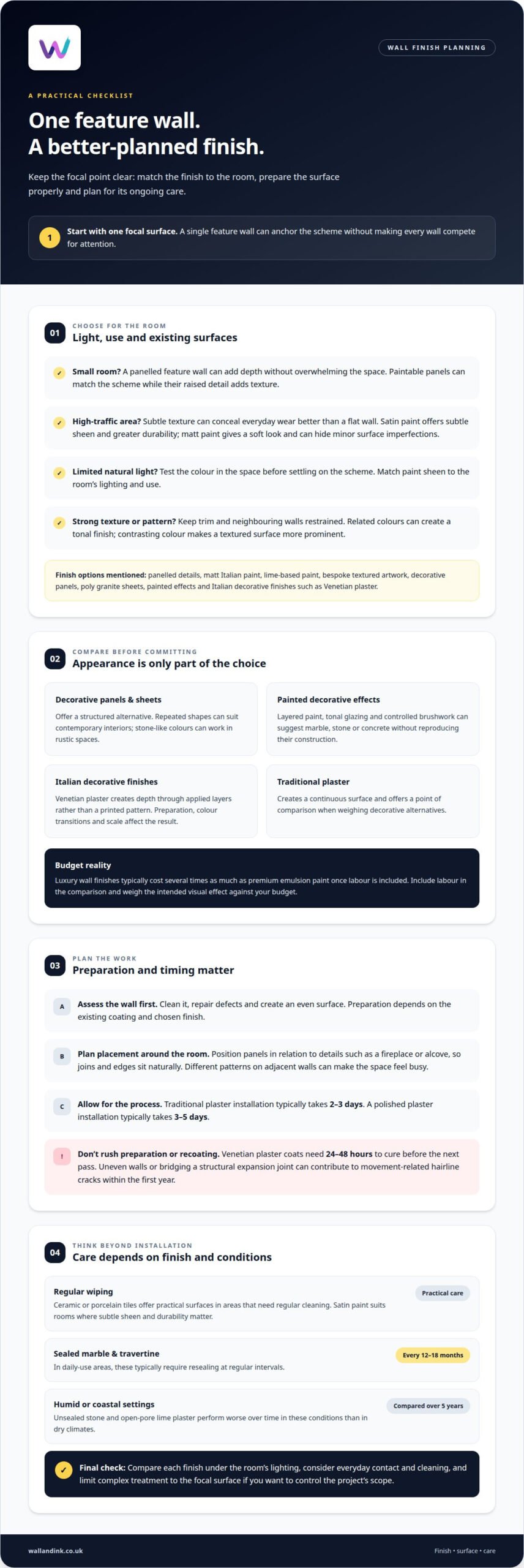
Start with the room’s light, existing surfaces and main use. In a small room, a panelled feature wall can add depth without overwhelming the space. Paintable panels can match the surrounding scheme, while their raised detail introduces texture. A single panelled wall can anchor an interior design scheme without making every surface compete for attention.
Which professional paint techniques create a high-end finish on a budget? A controlled, textured application of matt Italian paint can add subtle movement and depth without relying on a high-gloss effect. A painter can build a tonal finish with related colours and measured brush or roller work, keeping adjacent walls simpler. This makes the feature surface the main detail.
Matt paint creates a soft, elegant look and can hide minor surface imperfections. Satin paint offers a subtle sheen and greater durability, making it a practical option for living rooms and bedrooms. In a hallway or other high-traffic area, subtle texture can conceal everyday wear better than a flat wall. Match the sheen to the room’s lighting and use.
Colour affects how texture reads. A warm neutral on a textured wall, for example, can define its relief, while a contrasting colour makes the surface more prominent. Keep the trim and neighbouring walls restrained if the feature finish has pronounced pattern or depth. In a room with limited natural light, test the colour in the space before settling on the scheme.
Lime-based paints offer a breathable, moisture-resistant option and are described as eco-friendly and low in VOCs. Their understated surface character can suit a heritage-inspired interior, while painted panels create a more structured finish. Bespoke textured artwork offers another focal point: use it to introduce a motif or layered detail, then repeat a colour elsewhere to connect the design. These choices can create luxury wall finishes without the cost of covering every wall in a complex treatment.
2. Comparing decorative and traditional wall finishes
Affordable alternatives to marble, Venetian plaster and silk wallpaper include decorative panels, poly granite sheets and professionally painted effects. They can suggest the colour, pattern or surface character of premium materials without reproducing their construction. A painted marble effect, for example, adds veining to a feature wall, while a stone-inspired panel creates a defined surface. Choose based on the visual result and the room’s practical needs.
A professional can create marble, stone or concrete effects with layered paint, tonal glazing and carefully controlled brushwork. Fine brushwork can form marble-like veins; changes in tone can suggest concrete’s varied surface. Italian decorative finishes, including Venetian plaster, create depth through applied layers rather than a printed pattern. The result depends on surface preparation, colour transitions and the scale of the effect, particularly across broad feature walls.
Decorative panels and poly granite sheets provide a more structured alternative. Their repeated shapes can suit contemporary luxury interiors, while stone-like colours can work in rustic spaces. Plan their placement around existing details, such as a fireplace or alcove, so joins and edges sit naturally within the design. One feature area keeps the focus clear; different patterns on adjacent walls can make the space feel busy.
Traditional plaster creates a continuous surface, but installation typically takes 2-3 days. Decorative panels, painted finishes and Italian effects each have different preparation and application demands. Compare the finish under the room’s lighting, then consider how its surface will handle everyday contact and cleaning. A smooth, painted concrete effect may suit a quiet sitting room, while a textured panel can add definition behind a reception desk. For a considered feature-wall plan, visualise a bespoke wall design before settling on the final look.
Traditional plaster can provide a continuous surface, offering a point of comparison when weighing it against decorative alternatives. Include labour in any comparison, since it affects the overall cost.
Luxury wall finishes typically cost several times as much as premium emulsion paint once labour is included. Compare the intended visual effect with your budget before choosing a finish, rather than letting material appearance alone decide.
3. Mixing finishes and long-term maintenance
A premium feature wall works best when its finish relates to the rest of the room. In a contemporary living room, Venetian plaster can sit alongside painted walls and timber details. Labour, preparation and finish complexity affect the project total, so limiting the treatment to one focal surface can control its scope.
For durability and straightforward cleaning, ceramic or porcelain tiles offer practical surfaces in areas that need regular wiping. Satin paint also suits rooms where a subtle sheen and durability matter. Venetian plaster needs finish-specific care, while sealed marble and travertine in daily-use areas typically require resealing every twelve to eighteen months. In coastal or humid settings, unsealed stone and open-pore lime plaster perform worse over five years than in dry climates.
For a luxury-look finish, professionals select materials and tools to suit the substrate. These can include filler, primer, paint, masking materials, brushes and application trowels. Before applying paint, wallpaper or plaster, the installer assesses and cleans the wall, repairs defects and creates an even surface. Preparation depends on the existing coating and chosen finish.
Common risks include applying decorative plaster over an uneven wall or bridging a structural expansion joint. Movement beneath plaster or microcement can cause hairline cracks within the first year. Venetian plaster coats also need 24 to 48 hours to cure before the next pass. Rushing preparation or recoating can affect the finish and its durability.
A suitable UK professional explains how the substrate, finish and room conditions shape the method, upkeep and project scope. For example, a polished plaster installation typically takes 3-5 days. A clear process accounts for wall preparation, curing time, movement joints and maintenance. This helps you compare a premium finish with simpler alternatives on more than appearance alone.
Marble wall cladding is typically installed in slabs 15mm to 18mm thick. A Venetian plaster feature wall is claimed to increase a property’s perceived luxury and value by up to 20%. Ignoring substrate movement joints where plaster or microcement crosses a structural expansion joint can lead to hairline cracks within the first year.
4. Bespoke luxury wall finishes
A bespoke finish starts with one clear focal point, such as a living-room feature wall behind a sofa. The design can respond to the room’s proportions, lighting and existing materials. A professional can develop a tailored colour and pattern scheme, then show how its scale relates to the wall. This keeps the finish deliberate rather than making every surface compete.
Venetian plaster creates a layered, polished effect, but the wall needs close preparation. The surface beneath it should be flat within a few millimetres. A Venetian plaster feature wall typically takes 2-4 days to install. That makes the finish more suited to a planned focal area than a quick room refresh, especially where preparation or curing affects the schedule.
Panelling is another way to add bespoke depth. Homeowners might place it behind a bed or television, then coordinate its colour with painted walls. Timber and veneer panels need to acclimatise in the finished, climate-controlled room for seven to ten days before installation. This helps the material adjust to the room before fitting and supports a considered finish.
Room conditions matter as much as appearance. Bathrooms and other moisture-prone spaces need finishes suited to damp conditions. Open-pore lime plaster and unsealed natural stone perform worse over five years in coastal or high-humidity regions than in dry climates. Match the material to the room’s moisture exposure and maintenance needs, not just its visual effect.
A bespoke result doesn’t require a complex treatment across every wall. Combine one detailed surface with quieter surrounding finishes, then repeat a colour or material elsewhere for cohesion. A textured bed-wall treatment, for example, can connect with a timber bedside detail. First define the focal area, then choose a finish that suits its substrate, setting and intended upkeep.
Wall & Ink
Wall & Ink can turn a considered wall scheme into a bespoke visual feature with Direct-to-Wall Printing. It’s an option when you want a tailored image or graphic rather than a material-led finish such as plaster or panelling. Plan the design around the room’s colours, proportions and intended use to create a defined focal point without treating every wall.
For a home, Residential Wall Art can bring a personal design into a living space. Commercial Wall Murals and School and Educational Murals provide tailored options for shared environments, where a wall can support the character or purpose of the space. Choose an approach that suits the image, wall and setting.
Planning a bespoke wall feature? Contact Wall & Ink to discuss your space and design.
Turn your wall concept into a clear plan
First decide what the wall should do for the space. It might introduce colour, establish a focal point or carry a bespoke image that reflects the room’s purpose. Settle on the effect, then consider how a custom design can work with the surfaces and furnishings already in place. This keeps the brief focused and helps you judge whether luxury wall finishes without the cost of an extensive treatment are the right direction.
For a tailored visual approach, Wall & Ink offers Direct-to-Wall Printing, Residential Wall Art and Commercial Wall Murals. These options bring bespoke designs to walls in homes and shared environments, with the artwork planned around the setting.
Bring your ideas and the space you have in mind to the next conversation. Discuss your ideas with Wall & Ink and take the first step towards a wall design that feels considered and personal.
Frequently Asked Questions
How much do premium wall finishes and budget alternatives cost per square metre in the UK?
Costs per square metre vary by finish, wall condition, preparation and labour. Venetian plaster and polished plaster generally require more specialist application than painted effects or decorative panels. A smaller feature area can reduce material and labour, while uneven surfaces or repairs can add preparation. Compare the full scope, including surface treatment and maintenance, rather than material cost alone.