
What if the best playroom wall is the one that makes play easier to organise? The strongest playroom wall decoration ideas do more than add colour. They help children recognise where to read, create and play, without making the room feel busy.
Choosing a direction can be difficult when themes, colours and products all compete for attention. A design that feels perfect now may seem less suitable as your child’s interests change. Start with how the room is used, then choose wall details that support those activities and leave room to adapt.
This guide explores 20 practical ideas, from learning and drawing walls to imaginative murals, displays and useful storage. You’ll find ways to define activity areas, choose a considered colour scheme and compare flexible options with a more lasting feature. Each idea balances imagination with everyday use, helping you create a playroom that feels personal, purposeful and manageable.
Key Takeaways
- Choose playroom wall decoration ideas around the activities the room needs to support, from reading to making.
- Explore distinct ways to add imagination, learning and personal expression without crowding the walls.
- Compare feature areas, framed displays, removable options and murals to find the right balance of impact and flexibility.
- Plan placement around wall dimensions, furniture, doors, windows and storage before settling on a composition.
- Use a digital visualisation to assess the scale and placement of bespoke wall art before it is printed.
Playroom wall decoration ideas start with how the room is used
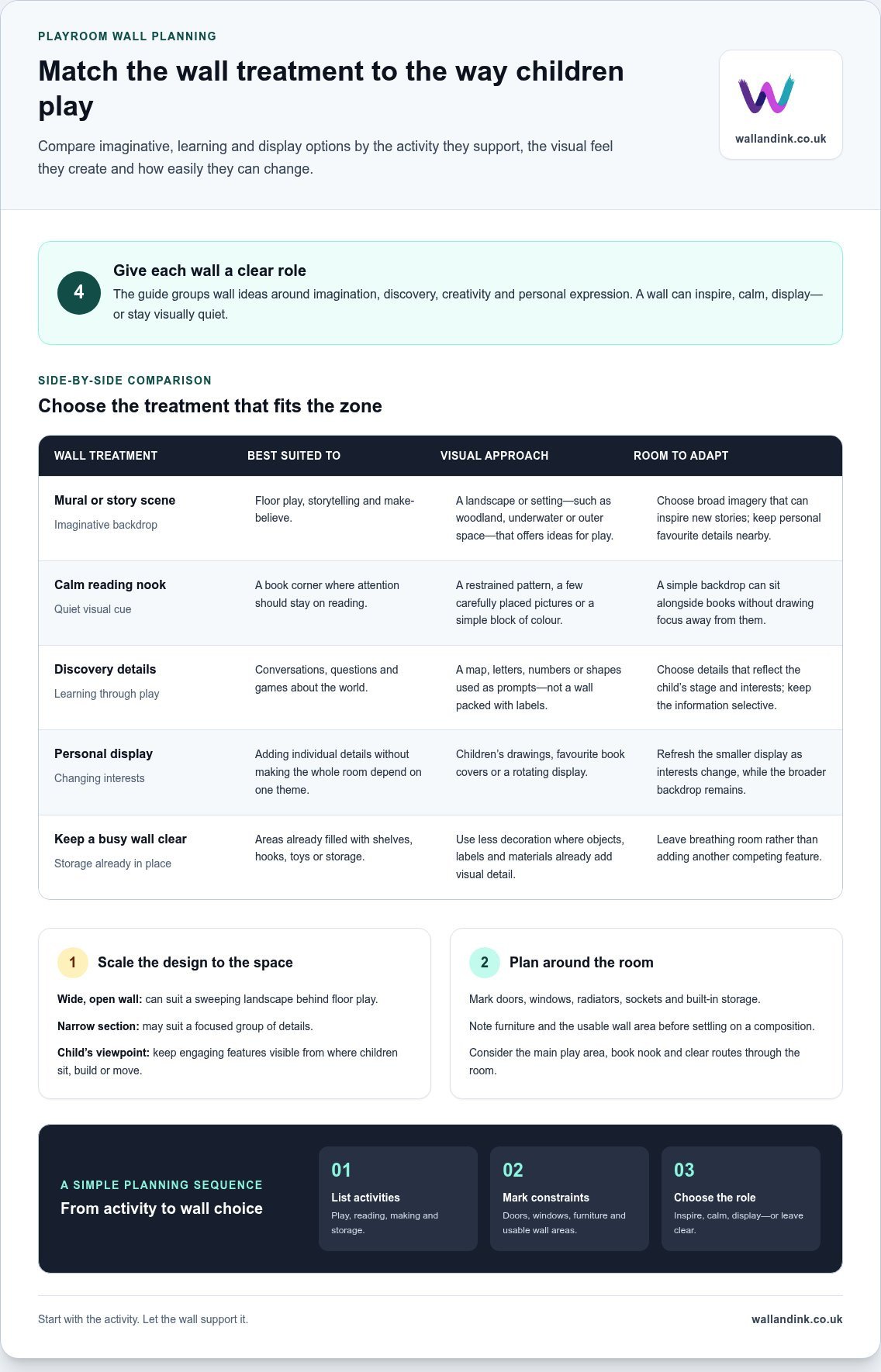
A practical wall scheme doesn’t need to be complicated to feel personal. Start with the room’s routines rather than choosing a theme or buying decorations first. Notice where children build, read, draw and reach for toys. These activities show which walls can support play and which are better left visually quiet.
A playroom wall zone is an area shaped by the activity it supports and the visual cue that helps a child recognise it. One wall might spark storytelling during floor play; another can offer a calm backdrop for books. This approach reflects the principles of playwork, which focus on creating spaces where children can direct their own play.
Before settling on playroom wall decoration ideas, note fixed features such as doors, windows, radiators, sockets and built-in storage. Sketch the usable wall space and mark natural focal points, including the wall visible from the main play area or the space beside a book nook. This quick survey helps prevent artwork from competing with furniture or disappearing behind shelves.
Map the wall to the activity
Match each wall’s visual energy to what happens nearby. At floor level, a nature scene, outer-space setting or story-inspired landscape can give imaginative play a starting point. Keep key details within a child’s sightline instead of placing the most engaging features high above the play area.
A reading nook benefits from a different treatment. A restrained pattern, a few carefully placed pictures or a simple block of colour can distinguish the corner without drawing attention away from books. By contrast, a wall already filled with toy storage, hooks and shelves may need less decoration. Leave visual breathing room where objects, labels and activity materials already create plenty to look at.
Think about movement, too. A design beside a clear floor space can encourage play to spread out, while a busy image near a narrow route or doorway may make that part of the room feel crowded. Choose the wall that supports the activity, not simply the largest blank surface.
Choose a direction that can grow with the child
Broad themes are easier to adapt than designs built around one current favourite. Nature, space, animals and storytelling can suit changing ages and interests. Add smaller personal details without making the whole room depend on a single character or hobby. A child’s drawings, favourite book covers or a rotating display can provide those details.
Colour can keep the scheme coherent as those details change. Choose a flexible base palette, then use smaller accents for current interests. If a favourite shifts from dinosaurs to planets, for example, a neutral or nature-inspired backdrop can remain while the display is refreshed. This keeps the room personal without requiring a complete redesign.
- List the activities: note where play, reading, making and storage happen.
- Mark the constraints: sketch doors, windows, furniture and usable wall areas.
- Choose the visual role: decide whether each wall should inspire, calm, display or stay clear.
This simple plan turns a collection of possible decorations into a considered layout. It also makes the next decision easier: which kind of wall treatment suits each zone?
Playroom wall ideas for imagination, learning and making
Useful playroom wall decoration ideas do more than fill empty space. Think in four groups: imaginative backdrops, discovery prompts, creative workspaces and personal displays. Giving each wall a clear role helps children explore different interests without turning the room into a collection of competing decorations.
A wall image can support imaginative play by offering a setting, character or detail that children can build stories around. A forest could become a campsite, a hidden animal habitat or the start of a made-up adventure. The image is a prompt, not a fixed script.
Create an imaginative backdrop with a mural or scene
Choose a visual story that can be reinterpreted over time. A storybook landscape might suggest castles and journeys; an outer-space scene could prompt invented planets and missions. Underwater worlds invite exploration, while nature-inspired scenes can feature plants, weather or wildlife. The aim is to offer possibilities rather than dictate exactly how to play.
Scale the scene to the wall and the main play area. A wide, open wall behind a floor-based play space can take a sweeping landscape, while a narrower section may suit a focused group of details. Check where children will sit, build or move, and keep the most engaging parts visible from those positions. A crowded composition can compete with the toys and props children use to create their own stories.
Interests change, so look for imagery with room to grow. A broad underwater or woodland setting can remain relevant as a child invents new games, while smaller personal objects nearby reflect a current favourite.
Make learning and creativity part of the wall
Discovery-led details can encourage questions without making the playroom feel like a classroom. A map may lead to conversations about places and journeys; letters, numbers and shapes can become prompts for games rather than a lesson to complete. Keep information selective. A few clear details are easier to notice and talk about than a wall packed with labels.
Consider the child’s stage and interests when choosing what to show. Younger children may respond to bold shapes and recognisable images, while older children might enjoy a map, a simple diagram or a changing collection of questions to explore. Creating stimulating play environments also highlights the value of variety, choice and responsiveness in play spaces. A wall can contribute by offering an invitation without prescribing one outcome.
For making, set aside a defined area for drawings, collages or projects. A simple display rail or open section of wall lets work change as new pieces are completed. Children get a visible place for their ideas, and the display is less likely to spread across every available surface.
Personal expression can also come through small, changeable details: a favourite drawing, a name card or a rotating selection of creations. For a more tailored focal point, bespoke wall art can be developed for the room and printed directly onto the wall. Explore bespoke residential wall art as one way to shape a feature around a child’s interests and the space available.
Feature wall, gallery or mural: compare playroom decoration approaches
The right format depends on the visual impact you want, how often the room may change and how much clear wall space is available. A small display can add detail without taking over, while a wall-spanning design creates a stronger, more continuous focal point. Consider existing colours, furniture and changing interests before choosing.
Use this comparison to narrow the options. Refreshing a display usually means changing its contents; refreshing a larger treatment may mean reworking a whole section of wall.
| Approach | Visual impact | Flexibility | Space and refresh |
|---|---|---|---|
| Painted feature area | Moderate; colour defines a zone. | Moderate; accessories can change, but the colour is more fixed. | Works on a section of wall. Refreshing the colour means repainting that area. |
| Framed gallery | Builds impact through a group of images. | High; pictures can be rearranged or replaced. | Needs space for a clear grouping. Individual pieces are straightforward to update. |
| Removable display | Ranges from subtle to bold, depending on its size. | High; displayed items can be changed as interests develop. | Can use a compact section. Refresh by replacing or rearranging the display. |
| Custom wall mural | High; creates a cohesive scene across the wall. | Lower; the composition is designed as a more lasting feature. | Needs enough uninterrupted wall to read clearly. A new concept involves reworking the wall design. |
When a smaller display or feature area makes sense
Choose a framed gallery or compact painted area if the room already has strong colours, patterned furnishings or busy storage. A gallery can bring different subjects together through consistent frame colours, spacing or alignment. Leave room to add a child’s drawings or swap in new favourites over time.
A painted section can mark out a reading or making spot with colour alone. It defines the zone without adding more objects to the wall. Both approaches suit rooms where flexibility matters or a full scene might compete with the existing layout.
When a bespoke mural could bring the idea together
A bespoke mural can unite several visual elements in one scene, especially when a particular wall needs a clear focal point. The design can be developed around the available surface and the room’s purpose rather than chosen as a standard-sized image. Designing play spaces for learning is a useful reminder to consider how the environment supports activity, not just how it looks.
A digital visualisation helps you assess the composition and scale in the space before the design is printed. Direct-to-wall printing is one tailored route to a mural. If a cohesive feature suits your plan, explore bespoke wall mural design as a way to develop the idea for your wall.
Plan playroom wall decor around scale, colour and everyday routines
A wall design can look balanced on a screen but feel crowded once furniture and daily activity come into view. Before choosing between playroom wall decoration ideas, follow a simple sequence: measure the usable area, mark obstructions, test the design at the right scale, then review it in the room’s usual light and layout.
Check wall size, sightlines and furniture
Measure the section you can actually use, not just the full wall. Note doors, windows, radiators, sockets, shelves and storage, along with furniture that sits against it. A tall bookcase may hide much of a design; a low toy unit may cover details placed near the skirting board. Keep access to the room and storage clear.
Next, check the wall from the positions where it will be seen. Look from the floor, a reading seat and the main play area. An image designed for adults standing up may place its focal point above a child’s natural sightline. A quick sketch with furniture outlined can reveal this before you commit. For a more precise check, create a digital mock-up and compare the proposed design with the wall’s usable dimensions.
Balance colour, detail and room routines
Consider the whole room, not the artwork alone. Existing furniture, rugs, storage and toys all contribute colour and visual activity. If the focal image has fine detail or several strong colours, quieter tones and open wall space around it can help it read clearly. If the room is already restrained, a more colourful feature may provide useful contrast.
Daylight changes how colours appear. Review a colour sample or digital concept at different times of day, and consider how it looks beside the furnishings that will stay in the room. Think about the routine, too: a bold feature may suit a lively play area, while the wall near a quiet seat may benefit from less visual detail.
Plan for change without making the main design hard to maintain. A dedicated display space can hold new drawings and projects while the central composition stays in place. Keep the display within easy reach for children, with enough room to remove or rearrange work without covering key parts of the design. Consider how easily the area can be accessed for routine cleaning and touch-ups, and keep frequently used activity materials organised nearby.
- Measure: record the usable wall dimensions and obstructions.
- Test: sketch the layout or review a digital mock-up beside furniture.
- Review: check colour, sightlines and display space in the room’s normal setup.
For a wall-specific concept, Wall & Ink can develop bespoke artwork and provide a digital visualisation to help assess its scale and placement before printing. Explore bespoke playroom wall art as a next step towards a design shaped around your space.
Bring your playroom wall decoration idea to life with a considered design
A strong design starts with a clear purpose, not just a favourite picture. Define the activity the wall should support, choose an idea that suits your child, assess the usable wall area and refine the composition around the room. This decision path helps turn playroom wall decoration ideas into a feature that fits the space and everyday routines.
Before finalising the concept, bring the practical details together. Confirm which wall will carry the design, what children will see from their usual play positions and how the image will sit alongside furniture, storage and displays. A useful design feels connected to the room rather than applied as an afterthought.
Turn inspiration into a design for the actual room
Adapt the subject, colour and composition to both the child’s interests and the layout. A nature theme might become a detailed woodland scene on a broad, clear wall, or a simpler arrangement of leaves and animals where furniture limits the available space. Keep the wall’s role in view: it might prompt imaginative play, create a focal point or give a shared activity area a stronger identity.
A digital visualisation lets you review how a proposed design could appear in its intended setting. It helps you consider scale and placement before the artwork is printed, and refine the composition to suit the actual wall.
Understand the direct-to-wall printing process
Wall & Ink develops bespoke artwork for the space through a design consultation, then provides a digital visualisation of how the concept could look on the wall. The selected artwork is printed directly onto the physical wall surface using UV printers, with professional on-site installation as part of the service.
This creates a wall-specific feature without relying on a standard-sized picture to define the whole composition. The design can be tailored to the wall’s dimensions and the room’s purpose, keeping the finished image focused on the activity it is meant to support.
Use this final review before moving from idea to finished design:
- Activity: Is the wall intended to encourage play, support a quiet corner or give the room a focal point?
- Composition: Does the image fit the usable wall area and work with the room’s furniture and storage?
- Visual check: Does the digital visualisation show a clear, balanced design in its intended setting?
Once those decisions are in place, a favourite idea can become a considered feature made for the room. Explore bespoke wall art for your playroom.
Take the next step towards a playroom that feels like yours
Choose one wall and give it a clear purpose. It might invite imaginative play, make a favourite activity easier to recognise or provide a setting for a child’s changing interests. The best playroom wall decoration ideas are the ones that work in the actual room, not just in an inspiration image.
If you’re considering a bespoke feature, Wall & Ink develops artwork through a design consultation and digital visualisation, then prints it directly onto the wall using UV printers, with professional on-site installation. Seeing the proposed design in context helps you assess the composition before it becomes part of the room.
Explore bespoke wall art for your playroom and take the first step towards a wall that supports everyday play while reflecting your child’s personality. A clear idea and a well-planned design can make the room feel more considered while leaving room for change as your child grows.
Frequently Asked Questions
What are the best wall decoration ideas for a small playroom?
In a small playroom, make one wall do the visual work instead of decorating every surface. A single focal image, a narrow display above a low unit or a vertical arrangement can add interest without using floor space. Keep doorways and access to storage clear. Among playroom wall decoration ideas, the most effective choice is often one that leaves room for children, toys and activities to move around.
How can I decorate a playroom wall without making the room feel cluttered?
Limit the number of competing focal points. Choose one main feature, then keep nearby colours and smaller objects visually simple. For displays, use a defined boundary, such as a rail or a row of frames, rather than letting pictures spread across the wall. Rotate children’s drawings instead of showing every piece at once. This keeps the display personal while preserving clear space around it.
Which playroom wall ideas work for toddlers and older children?
Choose details that suit how your child engages with the room, and leave scope for their interests to develop. Toddlers may respond to clear shapes and recognisable images; older children might enjoy more detailed scenes, maps or prompts for storytelling. A broad subject can bridge different ages, while changeable artwork, books or small displays provide age-specific details without requiring a complete redesign.
Can a playroom mural be designed around my child’s interests?
Yes. A bespoke mural can reflect a child’s interests through its subject, palette and smaller visual details. To make the idea personal without tying the whole room to one short-lived favourite, combine a wider theme with a few chosen details, such as a much-loved animal or a reference to a favourite activity. Wall & Ink creates custom artwork for individual spaces, so the composition can be developed for the room.
What colours work well on playroom walls?
There’s no single colour scheme that suits every playroom. Soft blues and gentle greens can create a quieter impression, while warm ochre or terracotta accents can add energy. Consider the room’s natural light and the colours of furniture, rugs and storage before deciding. A small sample or digital preview can help you judge whether a shade feels balanced in the actual room, rather than relying on how it looks on a screen.
How do I choose the right size for playroom wall art?
Start with the space the artwork will occupy, then compare its proportions with nearby furniture. A small piece on a wide wall can look disconnected, while an oversized design may compete with shelves or windows. Cut paper to the proposed dimensions and temporarily position it on the wall to test the scale from different points in the room. Keep important details visible from where your child usually plays or sits.
Can children’s artwork be part of a playroom wall design?
Yes. Children’s own work can make the room feel individual and give them a visible place for their ideas. Set aside a display area that can be updated easily, and use a consistent layout to help different drawings feel connected. Rotate pieces by season, subject or recent project. Keeping this display separate from a more permanent focal design lets new work take centre stage without changing the whole wall.