
A striking mural can still be the wrong choice if it competes with the dining experience or does not suit the wall it is printed on. Successful restaurant wall mural printing starts with two practical questions: what atmosphere should the artwork create, and what conditions does the space need to accommodate?
Choosing artwork is only part of the decision. You will also want to compare direct-to-wall printing with applied options, check whether the surface is suitable and plan installation around restaurant operations. Thinking these points through early can help you make decisions that work for guests and staff as well as the design.
This guide explores mural ideas for different restaurant spaces and brand identities, from a dining-room feature wall to a quieter corner. It explains how direct-to-wall printing works, what to check about the wall and operating environment, and how digital visualisations can help you assess a design in context before printing. You will also find practical details to prepare for an initial discussion, including measurements, photographs and notes about access and nearby obstacles.
Key Takeaways
- Explore five mural directions and match the artwork to your restaurant’s identity, menu and intended guest experience.
- Understand how restaurant wall mural printing differs from wallpaper and vinyl, including the practical questions to consider before choosing.
- Prepare wall measurements, photographs, surface details and notes about nearby obstacles to make project planning more focused.
- Use digital visualisations to review how proposed artwork may sit within the restaurant before it is printed.
- See how Wall & Ink’s process moves from design discussion to visualisation and professional on-site printing.
Restaurant wall mural printing: what it is and where it can work
A mural is artwork created or displayed across a wall or ceiling, rather than as a separate, framed piece. The Mural overview traces the form across different techniques and settings. In a restaurant, direct-to-wall printing applies digital artwork to a prepared physical wall, making the wall itself the image surface.
That differs from framed art, which hangs on the wall as an individual object, and from wallpaper or vinyl graphics, which are printed onto a separate material and then applied. Each option has its own installation process and practical considerations. Restaurant wall mural printing can suit a venue looking for artwork designed around a particular wall, but the surface and the restaurant’s operating needs still need to be assessed.
A considered feature wall can establish the room’s atmosphere without competing with menus, table settings or conversation. A restrained image behind the host station might create a clear first impression, while a more detailed scene could give a private dining area its own character. Think about scale, colour and contrast alongside the interior palette, and check that the artwork will be visible from the places guests are likely to see it.
Which restaurant areas can benefit from a printed mural?
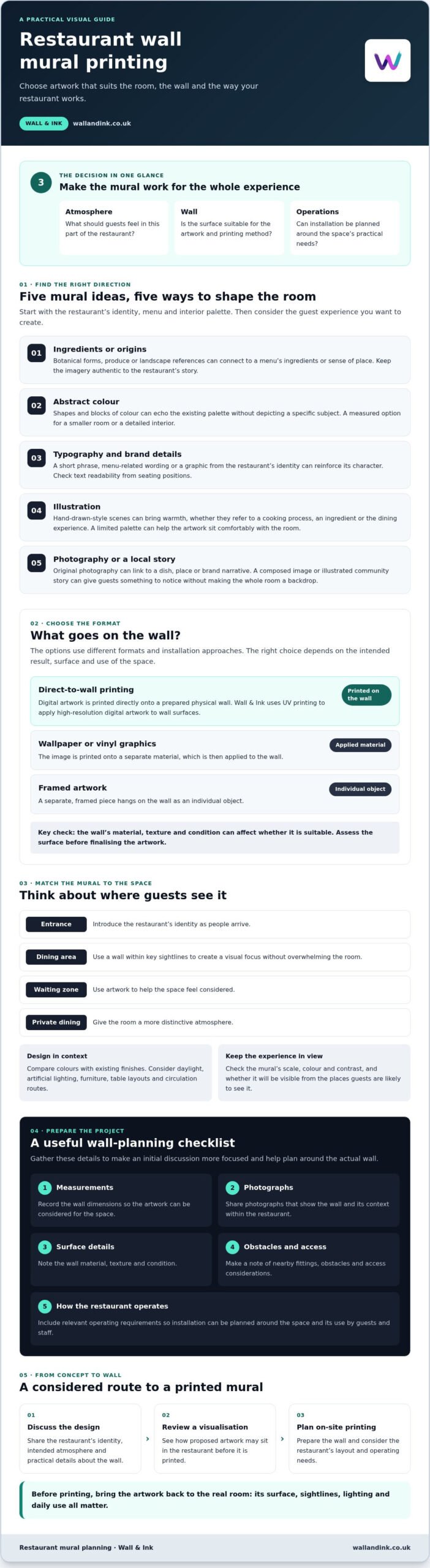
Start with the guest journey and the purpose of each space. An entrance mural can introduce the restaurant’s identity as people arrive. In the main dining area, a wall within key sightlines can add a visual focus without overwhelming the room. A waiting zone may benefit from artwork that makes the space feel considered, while a private dining room can support a more distinctive atmosphere. In every case, suitability depends on the wall, layout and operational requirements, not just the image.
What makes direct-to-wall printing different?
Wall & Ink uses UV printing to apply high-resolution digital artwork directly onto wall surfaces. Unlike wallpaper and vinyl, the image is not first printed onto a covering that is then applied to the wall. This changes the installation process, but does not make one method right for every restaurant. The choice depends on the intended result, the surface condition and how the space is used.
Preparation is part of the decision. Wall material, texture and condition can affect whether a surface is suitable, so assess the wall before finalising artwork. Consider nearby fittings and the room’s operating requirements too. A clear understanding of these details helps you plan a design for the actual wall and the way guests and staff move through the space.
Restaurant mural ideas: five directions to shape the atmosphere
A mural should feel connected to the restaurant, not like decoration added after the room is finished. Start with the venue’s identity, menu and interior palette. Then decide what guests should experience: a sense of place, a calmer setting or a strong visual focal point. These five directions offer different starting points, rather than a formula for every dining space.
Five mural directions for different restaurant identities
- Ingredients or origins: Botanical forms, produce or landscape references can suit a menu with a clear connection to particular ingredients or places. Keep the imagery authentic to the restaurant’s story.
- Abstract colour: Shapes and blocks of colour can echo the existing palette without depicting a specific subject. This can work well as a measured option for a smaller room or an interior that already has plenty of detail.
- Typography and brand details: A short phrase, menu-related wording or graphic drawn from the restaurant’s visual identity can reinforce its character. Check that any text remains readable from the seating positions.
- Illustration: Hand-drawn-style scenes can bring warmth and personality, whether they reference a cooking process, an ingredient or the dining experience. A limited palette can help the artwork sit comfortably alongside furniture and finishes.
- Photography or a local story: Original photography can create a direct link to a dish, place or brand narrative. A carefully composed image, or an illustrated interpretation of a community story, can give guests something to notice without turning the whole room into a backdrop.
How to choose artwork that works in the room
Review the proposed design in the context of the whole interior before settling on a concept. Compare its colours with existing finishes, and consider how daylight and artificial lighting affect their appearance. Furniture, table layouts and circulation routes matter too. A design that looks balanced on screen may feel crowded behind shelving, banquette seating or a service station.
Mark doors, switches, signs, fixtures and other likely obstructions on a wall plan. Keep important faces, text and focal details clear of those areas. In a busy interior, a restrained composition with open space can add visual interest without creating more competing detail. In a simpler room, stronger imagery may have more room to breathe.
A digital visualisation can show the proposed scale and placement against a photograph of the intended space before the artwork is printed. Wall & Ink can include visualisations as part of its mural service. Explore its commercial wall mural printing to see how a concept can be considered in context.
Wall printing, wallpaper or vinyl: comparing options
Restaurant wall mural printing, wallpaper and vinyl can all bring custom artwork into a dining space, but they apply it in different ways. Direct-to-wall printing places the image on the prepared wall. Wallpaper and vinyl use a separately produced covering applied to it. The right method depends on the wall and project brief.
When might direct-to-wall printing suit a restaurant?
Direct printing may suit a project where bespoke imagery needs to be composed for a particular wall, including its dimensions and fixed features. A specialist prints on site rather than attaching a separately produced covering. Because the installation process is different, assess the wall surface and site conditions before choosing this method.
What should the comparison help you decide?
Use the comparison to identify questions for the installer: what surface preparation is needed, how the artwork must be adapted, and what the installation involves. Custom artwork can be used with different application methods, so consider the image separately from how it will be put on the wall. Confirm cleaning and maintenance guidance for the chosen material and finish.
| Option | Substrate | Artwork format | Installation approach | Future changes |
|---|---|---|---|---|
| Direct-to-wall printing | The prepared physical wall. | Digital artwork adapted to the wall and its layout. | A printer applies the image directly on site; the wall and conditions need assessment. | Ask how a later design change would be handled on the specific wall. |
| Wallpaper | A wall receiving a separately printed covering. | Artwork produced for the wallpaper material and intended dimensions. | The covering is applied to the wall; confirm preparation and fitting requirements. | Check how removal or replacement may affect the wall and what preparation could follow. |
| Vinyl | A wall receiving a separately produced vinyl graphic or covering. | Artwork prepared for the selected vinyl and application area. | The vinyl is attached to the wall; ask about surface suitability and fitting conditions. | Ask how the material can be removed or updated and whether the wall needs attention afterwards. |
Before choosing, consider the wall’s condition, how much of it the artwork will cover and whether the design needs to work around doors, fittings or changes in wall plane. Request clear guidance on surface preparation and maintenance rather than assuming it will be the same for every method. A site assessment can help establish which approach fits the restaurant’s wall and operational requirements.
How to plan restaurant wall mural printing around your space
A clear brief helps turn a mural idea into a workable plan for the restaurant. Start with the purpose of the artwork, record the wall details, then review a visualisation and agree practical arrangements with the printing provider. Restaurant wall mural printing needs to fit the space and service routine, not just the design concept.
What should a restaurant include in its mural brief?
Begin with a short description of the venue, the customers you want to welcome and the atmosphere the mural should support. Note relevant brand cues, such as colours, typography or themes linked to the menu. Share existing artwork files or visual references, and check that they are suitable for use and of adequate quality for the intended scale.
Record the wall’s location and approximate dimensions. Take clear photographs from several angles, including the main guest sightlines. Note the visible surface condition and mark fixed fittings such as lights, sockets, signs, shelves and doors. These details help the design discussion account for the real wall rather than an idealised blank surface.
How can installation be coordinated with restaurant operations?
Discuss opening hours, site access and work-area coordination with the printing provider before agreeing an installation plan. Consider how staff and guests move through the space, what furniture or equipment may need to be moved, and how the work area can be made accessible. Confirm what surface preparation is needed and who is responsible for it.
Ask the provider to assess the surface and confirm any site-specific requirements before settling dates. The time and arrangements involved can depend on the wall, access and project details, so avoid assuming a fixed duration. Agree how the work will fit around restaurant operations, including any steps needed to prepare the area and return it to use.
Before printing, review the digital visualisation against the wall photographs and measurements. Check that the composition sits correctly around fixtures and that its scale feels appropriate from the dining area. Keep a simple project record with the brief, wall details, artwork references and agreed practical arrangements.
For a project discussion, share your restaurant mural brief with Wall & Ink, including wall measurements, photographs and any access considerations.
Wall & Ink: from mural concept to printed wall
A restaurant mural project can move from an initial design discussion to a digital visualisation and, where the project proceeds, professional on-site printing. Wall & Ink uses UV printing to apply bespoke artwork directly to wall surfaces. This process gives restaurant teams the opportunity to discuss the concept and consider its placement before the image is printed.
Every site is different. Wall suitability, artwork requirements, access and installation arrangements need to be considered for each project. A discussion about restaurant wall mural printing can establish what the wall and venue need before plans are finalised.
How design consultation and visualisation support decisions
Your brief can draw on existing artwork, brand assets, menu themes or references that express the restaurant’s identity. During a design discussion, these materials can help shape artwork for the intended wall rather than relying on a generic image. Share the atmosphere you want to create and note any elements that must be included or avoided.
A digital visualisation places the proposed design in context, helping you review its scale and position in the room. Check how it relates to nearby furniture, fittings and sightlines, and raise any adjustments before printing. A mock-up is a planning aid, not a guarantee of an exact colour match or final appearance on the wall.
What to share when enquiring about a restaurant mural
Useful information at the start helps keep the project discussion focused on design and practical fit. Prepare:
- Photographs of the wall, including views that show the surrounding room.
- Approximate wall dimensions and details of the surface condition or finish, if known.
- Artwork files, brand assets or visual references, with confirmation that you have permission to use them.
- The restaurant setting, intended atmosphere and any relevant menu or brand themes.
- Information about access, nearby fittings and preferred project timing.
These details help the team consider the artwork alongside the site. Discuss access and timing early, and ask what surface preparation may be required. The installation plan depends on the particular wall and site conditions, so confirm the practical arrangements directly rather than assuming a standard schedule.
Ready to explore a mural for your restaurant? Discuss a bespoke wall mural with Wall & Ink and share the details of your space and brief.
Turn your restaurant mural idea into a practical plan
A well-planned mural brings the restaurant’s identity into the room while working with the wall, layout and guest experience. The right application method depends on the surface and project brief, so consider the artwork and installation requirements together. A clear set of wall measurements, photographs and access details can make an initial project discussion more focused.
Wall & Ink uses UV printing to apply artwork directly to wall surfaces. Its service can include bespoke design consultation, digital visualisations to review scale and placement, and professional on-site installation. Wall & Ink serves clients nationally across the UK.
To explore restaurant wall mural printing for your venue, discuss a bespoke restaurant wall mural with Wall & Ink and share your ideas, wall details and preferred project timing. A considered brief is a practical first step towards artwork that feels at home in your space.
Frequently Asked Questions
What is restaurant wall mural printing?
Restaurant wall mural printing applies digital artwork directly to a wall using a printing system. Wall & Ink uses UV printers for this direct-to-wall service, rather than printing the image onto wallpaper or vinyl to be attached as a separate covering. The wall, artwork and site conditions need assessing before the project is planned. Surface condition and preparation can affect whether the proposed wall is suitable.
Can you print a custom design directly onto a restaurant wall?
Yes, custom artwork can be developed for a specific wall, subject to the design brief and an assessment of the surface and site. Wall & Ink offers bespoke design consultation and digital visualisations. You can share brand assets, photographs or visual references to inform the design. Before production, confirm that image files are suitable for the intended use and that you have the rights to use them.
Is direct-to-wall printing better than wallpaper for a restaurant?
Neither method is automatically the better choice for every restaurant. Direct-to-wall printing applies artwork to the wall, whilst wallpaper is a separate covering fitted to it. Compare the wall condition, design requirements, installation approach and plans for future changes. Ask a specialist what preparation each option requires, and confirm suitable care and maintenance guidance for the selected method and finish before making a decision.
What kind of wall is suitable for restaurant mural printing?
Suitability depends on the wall’s surface, condition and preparation, so it needs to be assessed for each project. Do not assume every painted, plastered or textured surface is suitable. Share clear photographs, approximate dimensions and any known finish details with the printing provider. Ask whether the wall needs preparation and whether a further site assessment is required before confirming the design or installation plan.
How do restaurants prepare for wall mural installation?
Start by identifying and measuring the wall, then photograph it with nearby fixtures and obstacles in view. Prepare a concise design brief or artwork references, and share what you know about the surface. Discuss site access, work-area clearance and timing with the provider before scheduling. Confirm what preparation is required and who will handle it. The installation arrangements should reflect the specific wall and restaurant operations.
Can a wall mural match a restaurant’s branding?
Yes, a bespoke mural can be planned around the restaurant’s brand colours, logo, imagery and intended atmosphere. Wall & Ink offers design consultation and digital visualisations to help review artwork in the space before printing. Provide suitable brand assets and discuss how they may translate at the intended scale. A visualisation supports decisions about composition and placement, but should not be treated as a guarantee of an exact colour match.
How do I choose a mural design for a restaurant?
Choose a design by starting with the restaurant’s identity, the guest experience you want to create and the wall’s position. Decide whether the artwork should be a focal point, connect with the menu or provide a quieter backdrop. Then consider scale, lighting, furniture and sightlines. A digital visualisation can help you review placement in context, while a focused brief gives the designer a practical starting point.