
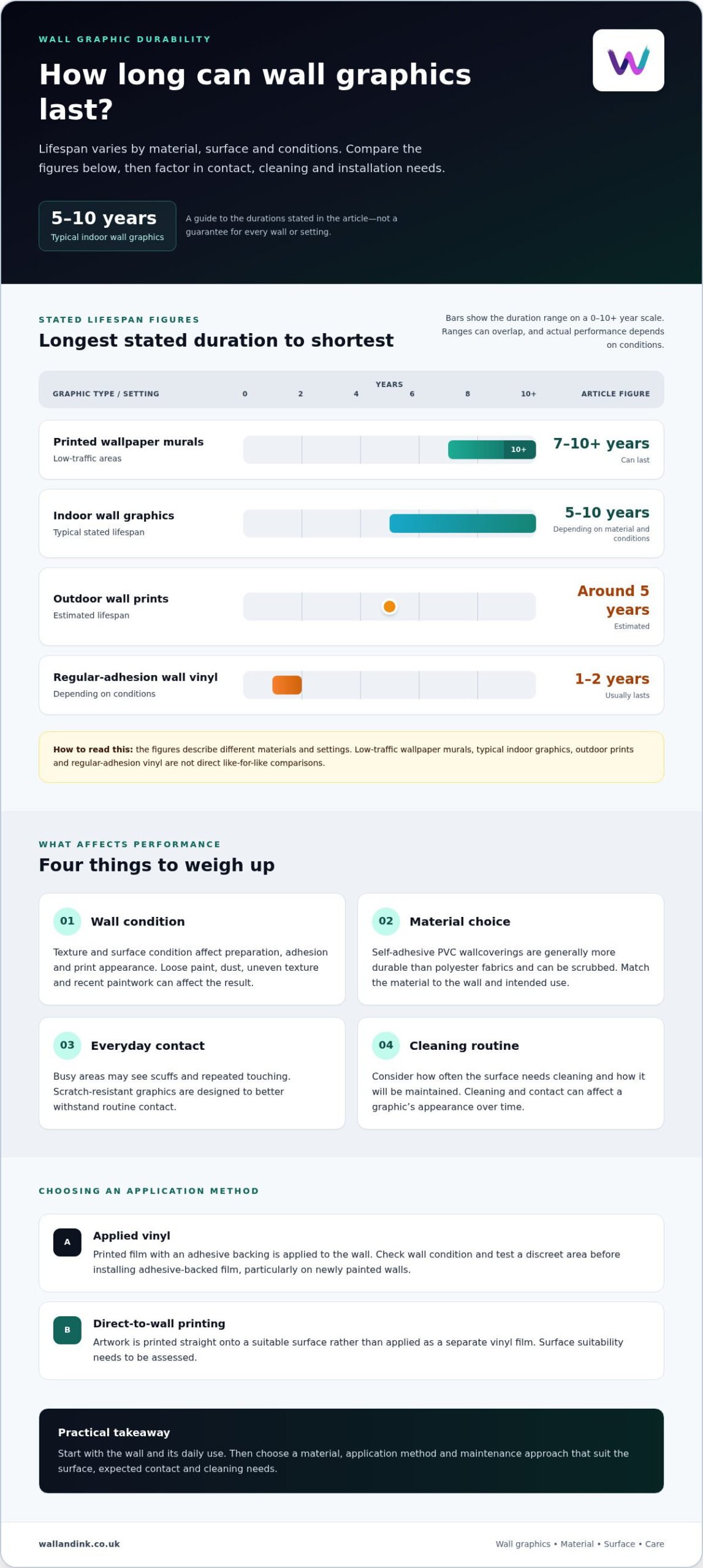
DIY installation is possible for smaller self-adhesive graphics, but direct-to-wall printing needs specialist equipment. Scratch-resistant wall graphics can stand up to scuffs and routine cleaning, while the right material and surface preparation help determine how well they perform. Indoor wall graphics typically last 5-10 years, depending on material and conditions.
It’s understandable to want scratch-resistant wall graphics that look sharp without turning installation into a drawn-out project. The best option depends on the wall, the amount of everyday contact and whether you need a temporary graphic or a durable feature.
This guide explains when a DIY approach makes sense, what affects durability and how to match materials to different surfaces and busy commercial spaces. You’ll also learn what professional direct-to-wall printing involves, so you can choose a practical option for your interior.
Key Takeaways
- Match the graphic method to the wall and the job: installation requirements differ between applied graphics and printing directly onto a surface.
- Choose materials around wall condition, expected contact and cleaning needs; surface preparation can affect adhesion.
- For busy commercial and educational spaces, consider how everyday scuffs and cleaning will affect the finish over time.
- Wall & Ink’s Direct-to-Wall Printing offers a route to custom murals where you want artwork printed directly onto an interior wall.
How long do printed wall graphics last?
Indoor wall graphics typically last 5-10 years, depending on material and conditions. Direct-to-wall printing, applied vinyl and wallpaper each suit different surfaces, traffic levels and maintenance needs.
In the UK, specialist suppliers create custom wall graphics using direct-to-wall printing, printed vinyl and printable wallcoverings. Compare the application method and material with the wall condition, expected contact and cleaning routine.
Wall Graphic Material Options
Printed vinyl is applied to the wall, while direct-to-wall printing puts the artwork straight onto a suitable surface. Regular-adhesion wall vinyl usually lasts a year or two, depending on conditions. Self-adhesive PVC wallcoverings are generally more durable than polyester fabrics and can be scrubbed. In schools, healthcare settings and other occupied spaces, consider cleaning needs and how installation will fit around daily use. With UV printing, ink cures as it is applied, rather than requiring a separate drying stage.
Wallcovering Materials and Finishes
Printable wallcoverings include non-woven material and self-adhesive polyester fabric, as well as PVC options. Avoid laminating non-woven wallcoverings and self-adhesive polyester fabric wallcoverings. Choose the finish for the intended setting, including how the printed surface will be cleaned and how much contact it will receive. Low-traffic printed wallpaper murals can last 7-10+ years. A printed image made using direct-to-wall printing can reach 4 metres high, while finished wall vinyl may have a size tolerance of up to 3 mm.
For indoor wall graphics, lifespan depends on the material, surface and conditions. Outdoor wall prints have an estimated lifespan of around 5 years. In busy areas, scuffs and repeated cleaning can affect a graphic’s appearance; scratch-resistant wall graphics are designed to better withstand everyday contact. Match the material to the space, then consider the artwork, installation method and maintenance before choosing a branded finish.
Material selection for different wall surfaces
Start with the substrate, not the artwork. Direct-to-wall printing can be used on plaster, painted walls, concrete, brick, wood, glass, tiles, plastics, paper, canvas and existing wallpaper, subject to assessment of each surface. A smooth, sound painted wall differs from textured brick; the surface affects adhesion, print appearance and preparation. Test a discreet area before installing adhesive-backed film, particularly on newly painted walls.
Removal depends on the adhesive, paint condition and wall surface. Peeling a graphic from weak paint or damaged plaster can lift the surface layer, so damage-free removal isn’t assured. Position the design away from vulnerable edges and consider how long it needs to last before choosing a permanent or removable material. Low-VOC paint formulations can also make graphic films adhere less reliably, so the paint and finish matter.
Vinyl wall wraps use printed film with an adhesive backing. Self-adhesive PVC wallcoverings are generally more durable than polyester fabrics and can be scrubbed. Vinyl and canvas are both printable, but they suit different finishes and installation methods. For tiled PVC wallcoverings, pay careful attention to the joins during installation. Avoid laminating non-woven or self-adhesive polyester fabric wallcoverings, which are not recommended for lamination.
For internal walls, compare the wall’s texture, the graphic’s position and how often the surface needs cleaning. Outdoor walls face different exposure, so material choice must suit the location. Wall graphic pricing depends on material, graphic size, surface preparation and installation; the cost is given after a quote request. For retail or hospitality spaces, matching the graphic material to the wall and cleaning routine helps avoid adhesion problems and premature wear.
Commercial and educational applications
In shops, offices and schools, wall graphics can display branded artwork, information or a striking visual feature. Plan the application around the wall’s position, surface and everyday use. A smooth painted wall can produce a different result from textured brick or concrete. The surface affects preparation and whether adhesive-backed vinyl or direct printing is suitable.
Large projects show how graphics can work across commercial interiors. The Mall project involved installing over 1,000 metres of vinyl graphics. That scale calls for clear artwork layouts and careful coordination across multiple wall sections. For a smaller retail space, a single feature wall may be enough to establish a focal point or reinforce brand colours without covering every surface.
Educational spaces can use imagery to make corridors, reception areas and learning spaces more engaging. At Coventry Children’s Hospital, a wall graphic featured hundreds of fish and sea creatures. The example shows how a visual theme can turn a plain wall into a recognisable scene. In schools, choose artwork and colours to suit the room’s purpose and the age of its users.
Busy settings need a practical material choice. Vinyl wall graphics can be applied to suitable surfaces, while direct printing avoids a separate film layer. Consider how often the wall will be touched, whether it needs regular cleaning and how textured the surface is. In occupied buildings, plan the work area and sequence so installation fits around normal use.
Before installation, assess the wall and test adhesion where film will be applied. Look for loose paint, dust, uneven texture and recent paintwork, all of which can affect the result. Check the graphic’s position, dimensions and joins against the available wall space. This preparation helps align the artwork with doors, corners and other features, reducing unnecessary trimming and misalignment.
Scratch- and scuff-resistant vinyl
For busy interiors, scratch resistance depends on the graphic’s surface layer and how it’s applied. The cured ink film used in direct-to-wall printing is scratch resistant and waterproof, so it can be wiped down or washed. That makes it a practical option for walls exposed to regular contact, such as corridors, reception areas and retail spaces. It isn’t the same construction as adhesive-backed vinyl, so compare the method as well as the artwork.
Printed vinyl has an adhesive backing that bonds the graphic to the wall. Its performance depends on both the film and the surface beneath it. For custom graphics, consider the format, location and cleaning routine before selecting a material. A graphic behind a counter faces different levels of contact from one beside a doorway.
Prepare the wall before installing adhesive-backed graphics: remove dust and surface dirt from painted wallboard, then test a small area for adhesion. New or changing low-VOC paint formulations can make graphic films adhere less reliably. A smooth, sound surface gives the adhesive more consistent contact than a rough or uneven one. Resolve peeling paint or loose material before application, since film cannot secure an unstable surface.
Scratch-resistant wall graphics suit settings where routine wiping and incidental contact matter. They’re not a substitute for selecting a suitable surface or preparing it properly. The key is to match the film or printing method to the wall, then consider how the space will be used and cleaned. Non-woven and self-adhesive polyester fabric wallcoverings shouldn’t be laminated, so choose the finish as part of the material decision.
For custom graphics in busy commercial interiors, explore commercial wall graphic options to find an approach suited to your surfaces and artwork.
Wall & Ink: Direct-to-Wall Printing
Wall & Ink provides Direct-to-Wall Printing for custom artwork applied directly to suitable surfaces. It’s a practical option when you want a continuous mural without a separate vinyl layer, or a tailored visual feature for a wall. Surface suitability matters, so the wall material and condition help determine the approach.
For commercial spaces, Commercial Wall Murals can create branded focal points, while School and Educational Murals can bring a visual theme into learning environments. Residential Wall Art offers another option for bespoke interior artwork. Wall & Ink uses UV printing technology, with ink cured as it is applied rather than through a separate drying stage.
If direct printing suits your wall and project, contact Wall & Ink to discuss the artwork and surface.
Plan a wall finish that works hard
When planning, consider what the wall needs to do as well as how it should look. A branded reception feature, clear visual wayfinding through a workplace and a calm residential focal point each call for a different design approach. That purpose helps shape the artwork, placement and finish for scratch-resistant wall graphics.
Wall & Ink offers Direct-to-Wall Printing, Commercial Wall Murals and Residential Wall Art. These services let you plan a wall treatment around the space and its intended use, rather than forcing the design into a standard format. Consider the wall’s location, surface and visual priorities before settling on a direction.
Ready to plan a custom wall graphic for your space? Contact Wall & Ink to discuss your project and take the next step with confidence.
Wall & Ink for Scratch-Resistant Wall Graphics
When you’re ready to plan wall graphics for a commercial, educational, residential, retail, hospitality or exterior space, Wall & Ink offers Direct-to-Wall Printing and a range of mural and graphics services.
Turn to Wall & Ink for Commercial Wall Murals, Residential Wall Art, School and Educational Murals, Retail and Hospitality Graphics or Exterior Wall Printing. Discuss your space and design priorities to plan a wall treatment that fits.
Frequently Asked Questions
Can I install wall graphics myself?
Yes, smaller self-adhesive graphics can be a DIY project if you can measure, align and apply the material carefully. Clean the wall, let it dry and test adhesion in a discreet spot before starting. Large graphics, uneven walls or designs that must align across several sections are harder to install accurately. Direct-to-wall printing uses specialist equipment and requires professional application.
How much do custom wall graphics cost?
The cost depends on the project. Key factors include the print area, artwork complexity and wall material. Dark or textured walls may need a white base layer, which affects the work involved. Bespoke artwork or adapting a logo also influences the design requirements. Share the dimensions and wall details to define the scope.
What are scratch-resistant wall graphics made from?
Wall graphics may use printed vinyl or direct-to-wall printing, which applies UV-cured ink onto the wall rather than a separate film. Vinyl options can differ in their cleaning and durability characteristics. The right material depends on the surface and how the space is used. For a branded reception area, consider whether a film layer or direct print better suits the wall.
Which wall graphic materials and finishes are most scratch-resistant?
For direct-to-wall printing, the cured ink film is scratch resistant and waterproof, allowing the wall to be wiped or washed. These options aren’t identical, so compare the application method, surface and cleaning demands. Scratch-resistant wall graphics can suit a busy doorway, while artwork in a quiet meeting room may face less contact.
Are these graphics suitable for homes, schools, hospitals and commercial spaces?
Yes. Wall graphics can suit homes, schools, healthcare settings, offices and retail spaces when the material and application match the wall. UV-cured inks are suitable for indoor use, including nurseries, schools and healthcare environments. Consider the room’s purpose, cleaning routine and wall condition. For example, a school corridor may need a finish that handles frequent contact, unlike residential wall art in a bedroom.
How do they compare with standard vinyl wall graphics?
“Scratch-resistant” describes resistance to surface marks, not a graphic format by itself. Direct-to-wall printing uses cured ink on the wall; vinyl graphics use printed film attached with adhesive. Performance depends on the material, wall and use. Direct printing may suit a smooth office wall where you want to avoid a separate film layer, while adhesive vinyl provides an applied finish.