
A wall graphic installation can be arranged across the UK, with surveying and fitting planned around the location, space and wall surface. A UK-wide wall graphic installation considers the project requirements at each site, from surface condition to the intended visual result.
It’s reasonable to want a clear plan before committing, particularly when a project involves several rooms, a textured wall or multiple locations. This guide explains how graphics are designed for different spaces and surfaces, what to consider when preparing a wall, and how surveying and installation can be organised across the UK. You’ll gain a practical understanding of the process, from assessing the surface to planning the on-site work, so you can establish what your project needs before moving ahead.
Key Takeaways
- Match the graphic and preparation method to the wall’s finish and condition for a more reliable result.
- Shape the design around the space, audience and purpose, rather than treating every wall the same.
- Understand how surveying and site planning help coordinate installation across locations in the UK.
- See when bespoke retail and hospitality graphics can help bring a commercial space’s visual identity onto its walls.
Choosing materials for different surfaces
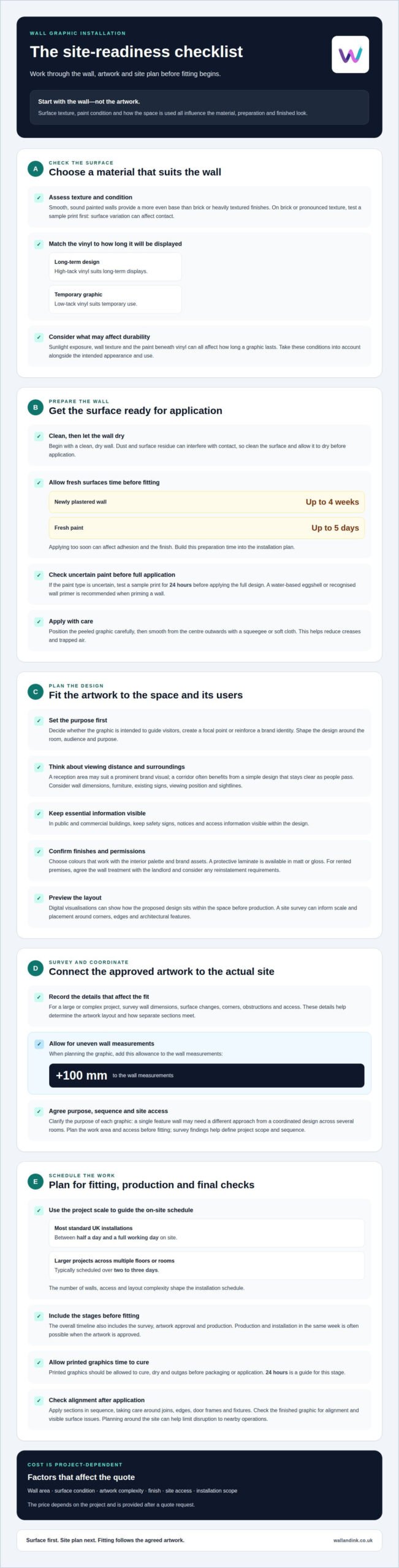
Start with the wall, not the artwork. Surface texture, paint condition and how the space is used all influence the printing approach and the finished look.
Wall Surface Suitability
Smooth, sound painted walls provide a more even base than brick or heavily textured finishes. A sample print should be tested before applying a graphic to brick or pronounced texture, where surface variation can affect contact. Material choice also depends on whether the design is intended for long-term display or temporary use. High-tack vinyl suits long-term designs, while low-tack vinyl suits temporary graphics.
For a retail interior, the site survey can identify uneven areas and help match the design format to the wall. Sunlight exposure, wall texture and the paint beneath vinyl can all affect how long a graphic lasts. These conditions matter alongside appearance when selecting a material.
Surface Preparation and Application
Preparation begins with a clean, dry wall. Dust and surface residue can interfere with contact, so the wall is cleaned and allowed to dry before application. The peeled graphic is positioned carefully, then smoothed from the centre outwards with a squeegee or soft cloth. This method helps reduce creases and trapped air as the graphic is applied.
Wall condition matters too. Newly plastered walls should dry for up to 4 weeks before a graphic is applied. Fresh paint should be left to dry for up to 5 days. Applying too soon can affect adhesion and the finish, so preparation time belongs in the installation plan.
Wall Surface and Paint Suitability
If the paint type is uncertain, test a sample print for 24 hours before full application. A water-based eggshell or recognised wall primer is recommended when priming a wall. These checks help assess how the surface responds before the full design is fitted.
Choose the printing approach with the wall’s condition, indoor or outdoor setting and expected use in mind. These factors help set realistic expectations for the finish and durability, and reduce the risk of planning artwork that does not suit the surface.
Designing around space, audience and objectives
A successful wall graphic starts with the space and the people who use it. Define its purpose, whether that is guiding visitors, creating a focal point or reinforcing a brand identity.
In public and commercial buildings, keep safety signs, notices and access information visible in the design. For rented premises, agree the wall treatment with the landlord and consider any requirements for reinstating the surface.
The price depends on the project and is provided after a quote request. Wall area, surface condition, artwork complexity, finish, site access and installation scope all affect the cost.
Design, Colours and Finishes
Match the artwork to the room’s purpose, viewing distance and audience. A reception area may suit a prominent brand visual, while a corridor often benefits from a simple design that remains clear as people pass. Bespoke artwork can be planned around wall dimensions, furniture and existing signs instead of forcing the same layout into every space.
Colour choices should work with the interior palette and brand assets. A protective laminate is available in matt or gloss, so the finish can be selected to suit the intended look. Digital visualisations help show how the proposed design sits within a space before production.
Professional Design and Installation
Preparing the artwork means bringing together the design, wall dimensions and intended viewing position. A site survey can inform the layout, including how corners, edges and architectural features affect the composition. This helps establish a suitable scale and placement for projects across the UK.
Professional design support can develop an idea into a production-ready visual, then coordinate printing and on-site application. For a retail environment, that might mean aligning a feature wall with nearby signage and customer sightlines. Explore bespoke wall graphic design as a practical next step for a project that needs a tailored layout.
Nationwide wall graphic surveying and installation
A survey connects the approved artwork to the actual wall, access conditions and installation plan. Across the UK, these checks help coordinate feature walls and multi-room projects before fitting begins.
Site Surveys and Consultation
For a large or complex project, the survey records wall dimensions, surface changes, corners, obstructions and access. These details help determine the artwork layout and how separate sections will meet. Measurements should allow for uneven wall heights and widths: add 100mm to the wall measurements when planning the graphic.
Use the consultation to clarify the purpose of each graphic. A single feature wall may need a different approach from a coordinated design across several rooms. Survey findings help determine the project scope and sequence.
Installation Process
Installation follows the agreed artwork and site plan. The wall is prepared, the graphic is positioned against the layout, and sections are applied in sequence. Careful alignment matters at joins, edges and around features such as door frames or fixtures.
Before fitting, the installation plan accounts for the work area and access to the wall. After application, the finished graphic is checked for alignment and visible surface issues. For a retail site, planning around the space can help limit disruption to nearby operations.
Survey, Production and Installation Timescales
Most standard wall graphic installations in the UK take between half a day and a full working day on site. Larger projects across multiple floors or rooms are typically scheduled over two to three days. The number of walls, access and layout complexity shape the installation schedule.
The full timeline also includes survey, artwork approval and production. Production and installation in the same week is often possible when artwork is approved. Printed graphics should be allowed to cure, dry and outgas before packaging or application; 24 hours is a guide for this stage. Survey and production timing depend on the project’s scope and approval sequence.
UK-wide wall graphic installation service
A UK-wide service can bring design, production and fitting together across different locations. The suitable approach depends on the wall, the space and what you want the graphic to achieve.
Types of Wall Graphics
Options include commercial wall murals, school and educational murals, and retail and hospitality graphics. Each can turn a wall into a branded feature, an educational visual or a large-scale interior image. Artwork and printing are planned around the surface and the purpose of the space.
For example, a mural can create a focal point in a reception area, while educational artwork can support a school environment. The location and audience guide the design, scale and installation plan.
Coverage, Quality and Warranties
For projects across the UK, coverage means coordinating surveying and installation at the relevant sites, not simply supplying printed graphics. Quality checks include reviewing approved artwork, matching its dimensions to the surveyed wall, and assessing alignment and finish after application.
Warranty terms should clearly identify what is covered, the applicable period and any exclusions. These details vary between services, so no warranty period or protection should be assumed. A clear project scope also sets out which locations, walls and installation tasks are included.
From Quote to Completion
To plan an installation, provide the project locations, approximate wall dimensions, surface details and intended use. This helps define the scope and inform the site survey. The artwork is then developed or prepared for approval before printing and fitting are scheduled against the agreed plan.
At completion, the installed graphic is reviewed for positioning and finish. For several sites, planning the sequence helps coordinate access and keep each location aligned with the approved artwork. Arrange a UK-wide wall graphic installation with a clear brief covering the spaces and desired result.
Wall & Ink: Retail and Hospitality Graphics
Wall & Ink creates retail and hospitality graphics for businesses bringing their visual identity into physical spaces. Direct-to-Wall Printing applies artwork directly to the wall, while Commercial Wall Murals can turn a feature wall into a distinctive part of a shop, restaurant or hotel interior.
Direct wall printing is a practical alternative when conventional decoration cannot deliver the scale or bespoke look your space needs. Wall & Ink supports each project with a free consultation and design visualisation, followed by professional on-site installation. Residential Wall Art is also available for home interiors.
For a retail or hospitality project, start with the location, wall details and design objective. Contact Wall & Ink to discuss your wall graphics and request a quote.
Turn your wall into a considered design feature
Start by deciding what the wall should do for the space. It might establish a distinct identity, create a focal point or bring a quieter area into the overall design. A clear objective gives the artwork a purpose beyond filling a surface.
Wall & Ink can translate that objective into a tailored visual through Direct-to-Wall Printing, Commercial Wall Murals or Residential Wall Art. The right direction depends on the room, the wall and the atmosphere you want to create. With UK-wide wall graphic installation, your project can progress from an initial idea to a finished design and planned fitting.
Bring together your intended result, location and any artwork or visual references you already have. These details provide a practical starting point for discussing the project and its requirements. Contact Wall & Ink about your project, and take the next step towards a wall designed for its space.
Wall & Ink for UK-wide wall graphic installation
Wall & Ink provides wall graphics for commercial, educational, retail, hospitality and residential spaces. Services include Direct-to-Wall Printing, Commercial Wall Murals, Residential Wall Art, School and Educational Murals, Retail and Hospitality Graphics, and Exterior Wall Printing.
When you’re ready to explore a wall graphic for your space, contact Wall & Ink to discuss the design and installation.
Frequently Asked Questions
Do you install wall graphics across the UK?
Yes. Wall & Ink provides wall printing and installation across the UK, for a single business interior or a project involving several locations. For a multi-site brief, include the locations, wall types and intended artwork so the scope and installation sequence can be planned for each site.
How long do wall graphics and decals last for?
Wall graphics are described as lasting around five years on average, although sunlight, wall texture and the paint beneath vinyl can affect their lifespan. This figure relates to wall graphics, not every type of decal, whose durability depends on its material and setting. Wall & Ink states a 12-month warranty for indoor prints, covering ink fading, peeling or material defects under normal indoor conditions.
What is the minimum order size for wall graphics?
A project can focus on one feature wall or cover several areas; its practical scope depends on the artwork and installation requirements. Wall & Ink applies a minimum job fee to wall printing projects, rather than defining the minimum solely by wall dimensions. A quote request can set out the intended design and surfaces so the project scope can be established.
Which UK companies offer nationwide wall graphic installation?
Wall & Ink provides wall printing and installation across the UK, including commercial and residential wall printing, and graphics for schools, retail and hospitality. For a nationwide project, start with a brief covering the locations, walls and desired visual outcome, especially if the same design needs to be coordinated across several premises.
What site surveys and wall preparation are needed before installation?
A site survey records wall dimensions, surface type, access and features that may affect the artwork, such as doors or fixed equipment. Before installation, the wall should be clean, dry and suitable for the chosen application. Wall & Ink prints directly onto plaster, brick, concrete, painted walls, wood, tile and glass, subject to the surface condition.
Which materials and finishes are best for interior and exterior wall graphics?
The suitable surface and finish depend on whether the graphic is indoors or outdoors, the wall material and the intended result. Wall & Ink prints directly onto plaster, brick, concrete, painted walls, wood, tile and glass, subject to the surface condition. An optional clear protective coating is available for high-traffic areas. Prints resist moisture but are not waterproof, so do not treat them as a waterproof surface.