
The best alternative to vinyl wall graphics may be to skip the applied graphic altogether. For a permanent mural, printing directly onto the wall avoids a separate vinyl layer; for a removable display, self-adhesive fabric can offer a softer-looking option. The right choice depends on the surface, how long the graphic needs to stay in place and how it will be used.
Vinyl is familiar and practical on suitable surfaces, but it isn’t the only way to create a clear, branded wall. This guide compares direct wall printing with fabric graphics and other wall-covering options, and explains how to choose for retail, museums and events. Surface condition and removal plans both affect the decision. You’ll come away with a clearer basis for choosing a finish that suits the space and the display’s lifespan.
Key Takeaways
- Match the graphic method to the wall, the display’s lifespan and how the space will be used.
- Compare direct-to-wall printing with applied materials to understand the differences in finish, seams and removal.
- Surface condition and preparation can affect how well a wall graphic performs.
- Project costs depend on practical details such as the wall area, design and chosen application method.
- Explore direct-to-wall printing when you want a bespoke mural without applying a separate graphic layer.
Choosing Wall Graphics – What are the best wall graphics to use?
For a permanent wall image, direct-to-wall printing creates the design on the surface itself, without a separate vinyl layer or wallpaper panel. Vinyl graphics use adhesive backing, whilst stickers suit smaller details such as directional labels. For a temporary display, removable graphic materials may be more practical. The best alternative to vinyl wall graphics depends on the wall, the display’s lifespan and the intended finish.
Yes. Commercial wall coverings need to meet the fire-safety and building requirements that apply to the premises. The relevant specification depends on the building and where the covering will be used, such as a retail shop, museum gallery or school. No single material suits every UK installation.
The printing method affects the finish. Vinyl is a printable film, often with a smooth surface; self-adhesive fabric has a woven texture and can look less plastic. Opaque fabric can help prevent the wall colour showing through. Direct-to-wall printing avoids a separate covering, but the wall’s condition and existing finish still affect the result. A sample design can help you assess colour and texture in the actual space.
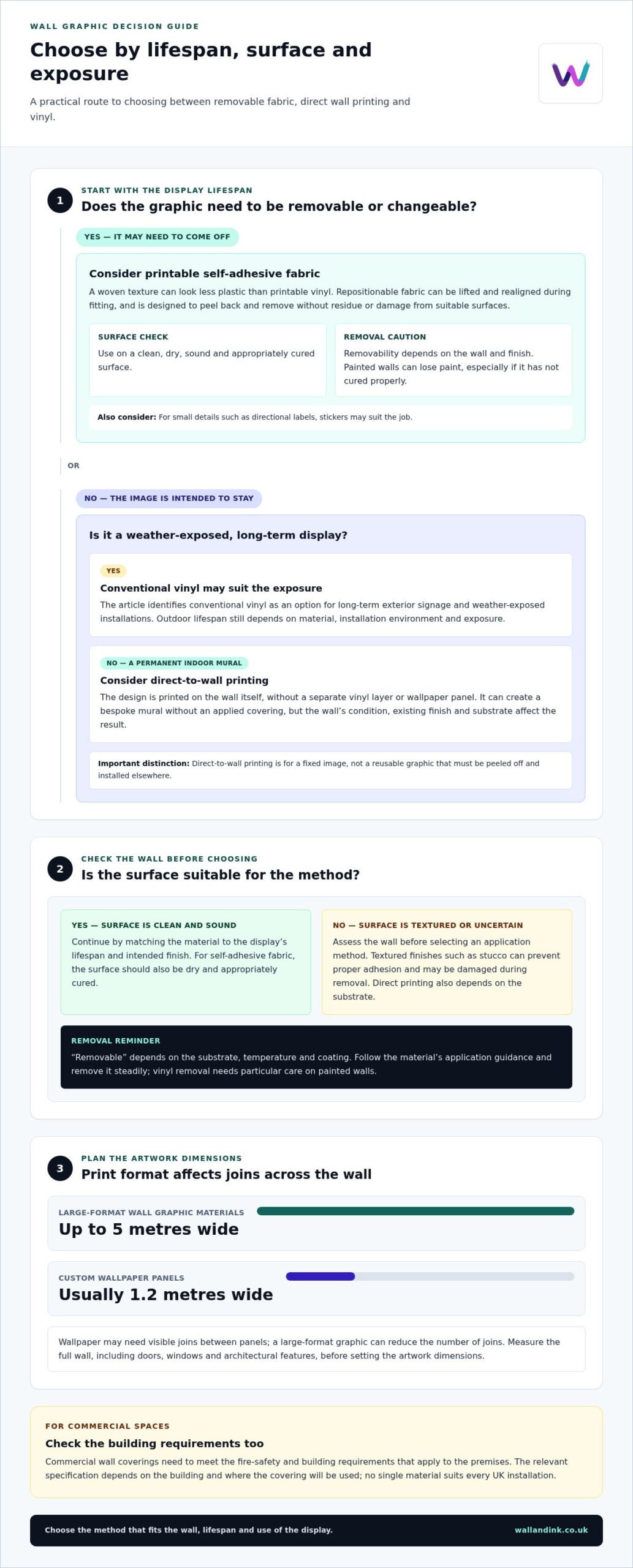
Size matters when planning artwork across a wall. Large-format printers can print wall graphic materials at widths of up to 5 metres, while custom wallpaper panels are usually printed in widths of 1.2 metres. Those formats affect how a design is divided: wallpaper may need visible joins between panels, while a large-format graphic can reduce the number of joins. Measure the full wall, including doors, windows and architectural features, before setting the artwork dimensions.
Start by checking the surface. Self-adhesive fabric graphics need a clean, dry, sound and appropriately cured surface. Vinyl decals usually suit smooth walls, although some vinyl can adhere to exposed brickwork. Textured finishes such as stucco can prevent proper adhesion and may be damaged during removal. Direct printing also depends on the substrate, so assess the wall before choosing an application method.
Indoor and outdoor lifespan depends on the material, installation environment and exposure. Sunlight, weather and abrasion affect exterior graphics differently from displays inside a museum or shop. Conventional vinyl can suit long-term exterior signage and weather-exposed installations. For indoor campaigns, consider how often the design will change and how the wall should look afterwards. A school, for example, may need a different finish from a temporary event display.
Decide in order: determine whether the graphic should be permanent or removable, assess the wall’s texture and condition, then select the material and print size. This helps align the image, application and lifespan with the space, whether you’re planning a full retail feature wall or smaller event graphics.
Vinyl seams, lifting edges and removal damage
Vinyl graphics rely on adhesive contact with the wall, so installation depends on alignment and surface condition. If a design spans several panels, the seams need to meet cleanly; even a slight mismatch can interrupt lettering or a continuous image. Edges may lift if the surface is unsuitable or the adhesive does not make consistent contact. Accurate measuring and careful positioning help create a smooth, clean finish.
Air bubbles can create raised spots and spoil a panel’s finish. During installation, smooth the material gradually from the centre towards the edges, pressing air out as you go. If a panel sits a few millimetres out of line, repositionable self-adhesive fabric can be lifted and realigned. This helps avoid forcing a misaligned edge into place and keeps adjoining panels straight.
How do you install and remove non-vinyl wall graphics without damaging walls? Apply printable self-adhesive fabric carefully to a clean, dry, sound and appropriately cured surface, smoothing it into place. Its repositionable construction is designed to be peeled back, realigned and removed without residue or damage from suitable surfaces.
Temporary displays benefit from materials designed for removal, but “removable” still depends on the wall and finish. Low-tack film performance varies with the substrate, temperature and coating. Painted walls need particular care: removal can pull paint away, especially if it has not cured properly. Follow the material’s application guidance and work steadily rather than pulling a large section away quickly.
For vinyl, avoid removal in hot weather and don’t use a hair dryer. Heat can make latex paint stretchy, allowing it to come away with the graphic. Instead, ease the vinyl away carefully and keep the pull controlled. Vinyl usually comes off without damaging the wall when recommended precautions are followed, but a suitable surface and careful removal remain essential.
Removability also shapes how organisations plan design changes. A shop can replace graphics for seasonal promotions or updated branding, such as a changed logo or slogan. Repositionable fabric allows adjustment during fitting; removable panels support planned display changes. For a fixed mural, direct-to-wall printing avoids vinyl seams and backing, but it isn’t suitable for a reusable graphic that must be peeled off and installed elsewhere.
Before choosing a material, consider the wall’s paint or coating, the display’s planned duration and whether the design will move or change. For a retail display, those decisions help balance a clean finish against straightforward replacement. A retail wall display can be planned around the surface and how the graphics will be used.
Vinyl compared with hand-painted murals and wallpaper
Each mural method suits a different setting, lifespan and approach to future design changes. Compare the finish, application and maintenance before choosing graphics for a shop, museum or care home.
Criteria for Evaluating Non-Vinyl Murals
First decide whether the image needs to be removable, reusable or permanent. Hand-painted murals become part of the wall, while custom printed wallpaper is semi-permanent and can be removed but not reused. Direct-to-wall printing puts the image on the wall without a separate covering. Compare the surface, intended lifespan, design detail and cleaning needs before deciding.
Consider how the setting shapes the artwork. A retail display may need to change with branding, whereas a museum mural could be designed for a longer-term exhibition. In UK care homes, dementia-friendly murals can depict familiar places, such as traditional shops. These designs aim to brighten care environments and help relieve stress among patients.
Painted, Wallpaper and Fabric Graphic Costs
There is no single cost for painted murals, wallpaper and fabric graphics. The total depends on the wall area, artwork, surface preparation, material and installation requirements. A bespoke painted scene and a printed design involve different production and application processes, so compare like-for-like project scopes rather than material names alone.
The project price depends on the wall dimensions, design complexity, surface condition, material and installation requirements. Request a quote based on these details for an estimate that reflects the work involved.
Vinyl graphics offer a removable option, while posters and paper decorations can be less durable. Vinyl can be designed for durability and cleaning, and replaced as a retail environment changes. Stickers work for smaller motifs or labels, but don’t provide the continuous wall finish of a full mural. Consider whether the image should cover the whole wall or mark a specific area.
Wallpaper provides a printed surface across the wall, with panels joined during application. Wallpaper provides a printed surface across the wall, but its care and durability depend on the product and installation. Fabric graphics offer another printed-material option, with a woven texture rather than the smooth appearance of typical film. Direct printing avoids an applied graphic layer, which can suit a permanent design where seams or removable backing aren’t wanted.
Choose by function, not just appearance. A care home may prioritise familiar imagery; a museum may need a defined exhibition backdrop; a shop may value changeable graphics. The right mural approach depends on the wall, its use and planned design changes.
Suitable wall surfaces and preparation
The wall’s condition affects adhesion, print quality and removal. Identify the surface type, coating and any texture. A painted retail feature wall, exposed brickwork and a glass partition all present different conditions. Vinyl decals usually need a smooth surface, although some self-adhesive vinyl can adhere to exposed brickwork. Textured finishes such as stucco can prevent reliable adhesion and may be damaged during removal.
Prepare the wall before applying self-adhesive fabric graphics. The surface should be clean, dry, sound and appropriately cured. Dust, loose paint and moisture can interfere with contact between the adhesive and wall. Inspect the whole display area, including corners and edges, rather than checking only the centre. A small change in surface condition can affect how a graphic sits across a larger wall.
Paint needs time to cure before vinyl is applied. The guidance in the research recommends allowing painted walls to cure for about one month, reducing the risk of paint lifting during removal. It also recommends vinyl graphics only on eggshell- or satin-finish painted walls. These details matter for an indoor campaign that will later be removed, because fresh paint and unsuitable finishes can affect the result.
Low-tack film is not a universal fix. Its performance varies by substrate, temperature and coating, so assess the actual wall rather than relying on the material label alone. A coated wall in a warm shop, for example, may behave differently from a painted surface in a cooler room. Check for flaking, uneven paint, contamination and visible texture before choosing an adhesive-backed option.
Direct-to-wall printing removes the adhesive layer, but the wall remains the print surface. Review the substrate, condition and finish before choosing this application. A clean, stable wall gives the design a consistent base; cracks, loose coatings or marked repairs can remain visible in the finished image. The wall’s suitability matters as much as the artwork itself.
Use a practical assessment sequence before selecting a method:
- Identify the substrate and coating, such as painted plaster or glass.
- Look for texture, loose paint, dampness, cracks and repaired areas.
- Match the application to the wall and the planned removal or display period.
- For fabric graphics, prepare a clean, dry, sound and appropriately cured surface.
Glass can take vinyl graphics, while a textured wall may make adhesive application unsuitable. For a permanent indoor feature, assess whether direct printing suits the wall’s condition. For a temporary display, prioritise the coating and removal requirements. These checks help you choose a method based on the surface, not appearance alone.
How much do painted murals, wallpaper and fabric wall graphics cost in the UK?
There isn’t one standard UK price for a painted mural, wallpaper or fabric graphic. Each uses different materials and installation methods, so compare complete project costs rather than material prices alone. A hand-painted design involves work directly on the wall; wallpaper and fabric graphics also involve printed material, preparation and fitting.
The price depends on the project and is provided after a quote request; key cost factors include wall area, design complexity, surface preparation, material and installation. A detailed image across a large wall has different requirements from a small, simple feature. Access and the condition of the wall also affect the preparation and work involved.
For a painted mural, consider both the artwork and the wall beneath it. A surface needing repair or preparation adds work before painting begins. The design matters too: detailed imagery requires a different level of execution from broad areas of colour. Ask for the scope to identify design, preparation and application separately, so the estimate reflects the actual room.
Printed wallpaper and fabric graphics involve material choices and fitting. Wallpaper is usually installed in panels, so the layout, pattern alignment and number of joins affect the finished result. Fabric graphics have their own material and application requirements. Compare the specified coverage, surface preparation and included installation, rather than treating a roll or panel price as the full project cost.
Plan for the display’s lifespan as well as its initial installation. An organisation modelling lifecycle costs can estimate mural change frequency over a period of 3-7 years. A retail space changing its campaign design regularly may face different replacement needs from a museum retaining a feature mural. The initial material cost alone won’t show the full cost of repeated design changes.
To compare options consistently, prepare the same information for each:
- Wall dimensions and the area the design should cover.
- Artwork requirements, including detail, colour and pattern alignment.
- Surface condition and any preparation needed before installation.
- Material, fitting scope and plans for removal or future replacement.
These details make estimates easier to compare and help identify what each approach includes. For a bespoke commercial mural, request a wall mural quote based on the wall, design and installation requirements.
Wall & Ink: Direct-to-Wall Printing
Wall & Ink creates custom murals with Direct-to-Wall Printing, applying artwork directly to the wall using advanced UV printers. This offers a vinyl-free option when you want a continuous image without a separate adhesive graphic layer. It suits commercial spaces, schools and homes where a designed wall feature is intended to remain in place.
Wall & Ink’s service includes bespoke design consultations, digital visualisations and professional on-site installation. These steps help you plan how the artwork will fit the wall and the space before printing begins. Choose Commercial Wall Murals, School and Educational Murals, or Residential Wall Art according to the setting and purpose.
For a permanent mural rather than a removable display, contact Wall & Ink to discuss your wall project.
Plan the wall around the experience you want to create
A wall graphic can do more than fill an empty surface. It can guide attention, establish a mood or make a space easier to recognise. Before choosing an alternative to vinyl wall graphics, decide what visitors should notice first and how the image should support the room’s purpose. That gives the design a clear role rather than making it decoration without direction.
Next, turn that intention into a practical brief. Note the wall area, audience, atmosphere you want to create and whether the visual should remain part of the space or change later. A clear brief helps align the artwork with the setting, from a retail feature to a residential room. It also gives the project a strong starting point for design and planning.
Ready to shape your wall into a purposeful feature? Discuss your wall graphics with Wall & Ink and take the next step towards a design that fits your space.
Wall & Ink: An Alternative to Vinyl Wall Graphics
Wall & Ink offers direct-to-wall printing as an alternative to vinyl wall graphics, with options for commercial wall murals, residential wall art, and retail and hospitality graphics.
Turn to Wall & Ink when you want a design printed directly onto a wall, or when your project is for a school, educational setting or exterior wall.
Frequently Asked Questions
Why move beyond conventional vinyl?
Choose another material when vinyl’s applied film, surface requirements or planned removal don’t suit the project. A permanent reception mural, for example, may work better printed directly onto the wall, whilst a temporary exhibition may call for a removable graphic. The decision isn’t about rejecting vinyl altogether. Vinyl can still suit specific applications, including long-term exterior signage, but the material should match the surface, setting and intended lifespan.
What are the best alternatives to vinyl wall graphics?
Direct-to-wall printing suits permanent designs, custom wallpaper creates a semi-permanent covered surface, and printable self-adhesive fabric provides a repositionable option. The best alternative to vinyl wall graphics depends on whether you prioritise a direct print, a removable display or a wall-wide finish. An exhibition that changes between installations, for example, has different needs from a feature wall designed to remain in a reception area.
How do painted wall murals compare with vinyl wall graphics?
Painted murals are applied directly to the wall and become part of its finish, whereas vinyl is a separate graphic layer that can be removable. That distinction affects future changes: repainting may be needed to alter a painted scene, whilst vinyl can be replaced on suitable surfaces. For a hand-painted school mural, consider whether the design should remain fixed or the wall may need updating later.
Are wallpaper murals a good alternative to vinyl wall graphics?
Wallpaper murals can work well when you want a printed design to cover a wall as a fitted surface. They’re semi-permanent: they can be removed, but not reused. That makes them a different choice from a display intended to move between locations. For a gallery backdrop, consider whether panel joins suit the artwork and whether the mural needs replacing after the exhibition.
What removable wall graphic options are available?
Printable self-adhesive fabric is one removable option for suitable surfaces. It can be peeled back and repositioned during fitting, which is useful if a display panel needs realigning. Removal plans still matter: the wall should be sound and appropriately prepared, and the material’s performance depends on the substrate. For a temporary shop display, consider whether you need to reposition it during installation or simply remove it afterwards.
Which wall graphic materials are eco-friendly and low-VOC?
PVC-free or fabric-based materials aren’t automatically environmentally preferable, and the material alone doesn’t establish low-VOC performance. Consider the full system: substrate, ink, print quantities, transport, intended use and disposal after removal. For indoor projects, review product-specific emissions information as well as the ink system. Wall & Ink describes its UV-cured inks as odourless and suitable for indoor use, but that doesn’t make every print material low-VOC.
What alternatives work best on textured, brick or uneven walls?
For textured or uneven surfaces, consider a method that doesn’t depend on adhesive contact across the wall. Vinyl decals generally need a smooth surface, although some vinyl can adhere to exposed brickwork. Direct-to-wall printing is another option: Wall & Ink can print on brick, plaster and concrete. The wall’s texture and condition still influence the application, so assess the substrate before choosing a method.
How durable are paint, wallpaper, fabric and magnetic wall graphics?
Durability depends on the material, installation and use. Correctly installed custom wallpaper murals are washable by hand and have scuff-resistant qualities; vinyl can be designed to be durable and cleanable. Painted murals are fixed to the wall, while fabric graphics are designed for repositioning and removal on suitable surfaces. Magnetic graphics depend on a compatible magnetic surface, so assess the substrate before treating them as a durable option.