
Traditional wall coverings are failing the standards of modern UK architecture. You’re likely tired of seeing peeling wallpaper in high-traffic areas or bubbling vinyl decals that ruin a professional aesthetic. These legacy methods often feel like a compromise, especially when you require a permanent, high-resolution finish that integrates perfectly with your building’s specific dimensions. For pragmatic decision-makers, the disruption and mess of lengthy hand-painting processes are no longer acceptable risks.
This guide demonstrates how advanced UV wall printing technology provides a durable, high-resolution solution applied directly to any surface, including brick and plaster. You’ll learn how this clean, zero-waste installation process eliminates traditional maintenance headaches whilst delivering a bespoke architectural fit. We will also examine the technical specifications and the factors that determine the wall printing cost uk for 2026. From commercial murals to educational graphics, discover why direct-to-wall application is the modern specialist’s choice for reliable, long-term surface design.
Key Takeaways
- Understand why the UK is shifting towards direct-to-wall printing as a superior alternative to traditional wallpaper, eliminating issues like peeling and bubbling in professional environments.
- Learn how UV-curable ink technology provides instant hardening and high-resolution durability on diverse substrates, including brick, plaster, and glass.
- Discover the importance of the digital visualisation stage, which allows you to see how a bespoke mural integrates with your architectural dimensions before any ink is applied.
- Evaluate the long-term investment by comparing the wall printing cost uk against the maintenance-heavy cycle of replacing damaged vinyl or hand-painted murals.
- Gain insights into the 10-year lifespan of interior UV prints and how they meet strict safety standards for high-traffic sectors like healthcare and education.
What is Direct-to-Wall Printing and Why is the UK Adopting It?
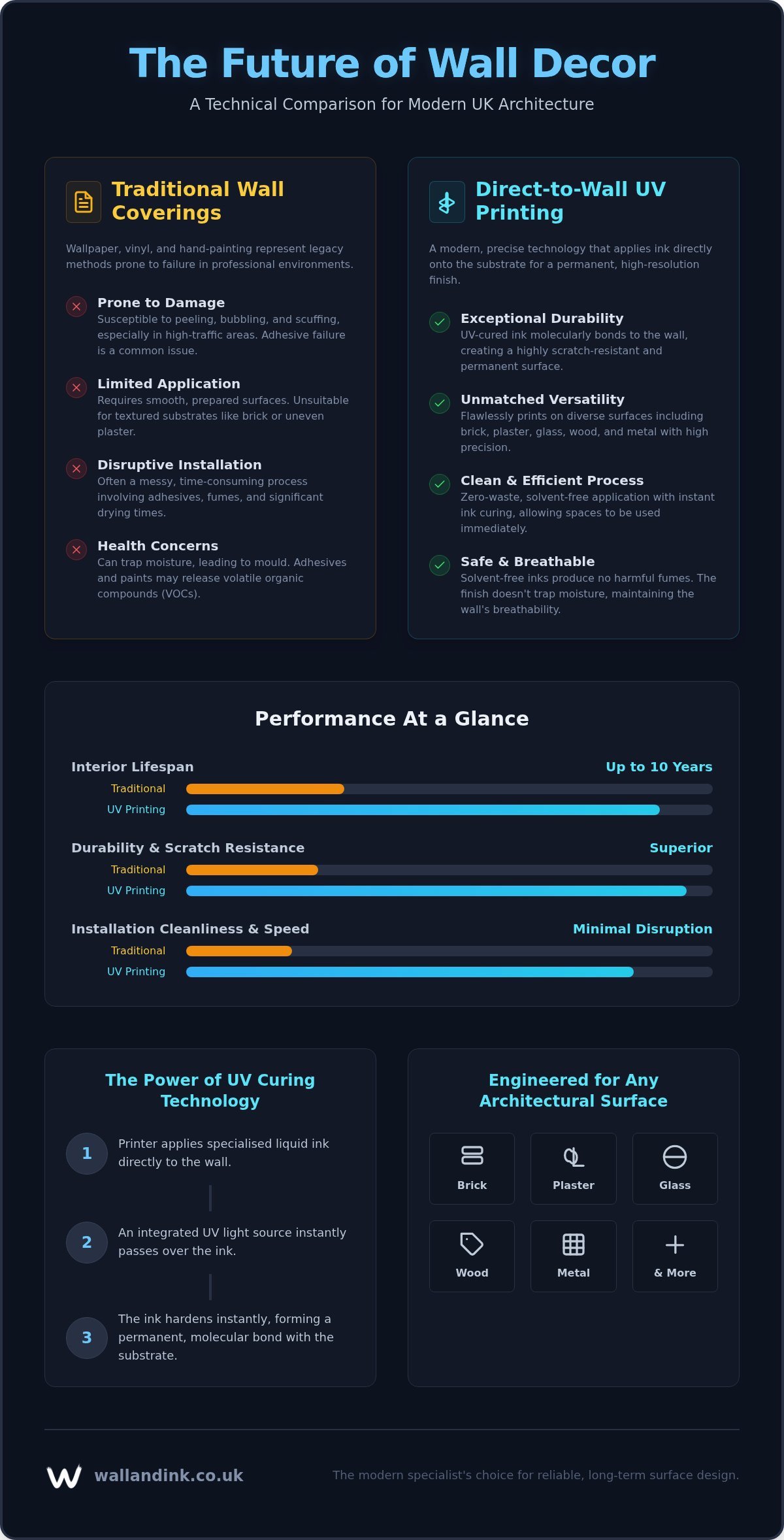
Direct-to-wall (D2W) printing represents a fundamental shift in how we approach surface architecture. Unlike traditional methods that rely on adhesive layers or physical coverings, this process involves the mechanical application of specialised inks directly onto a substrate. It’s a precise evolution of digital printing technology that allows for high-resolution graphics to be printed onto vertical surfaces with industrial accuracy. Pragmatic decision-makers across the UK are increasingly moving away from legacy solutions because they require a level of durability that wallpaper simply cannot provide. When you evaluate the total wall printing cost uk, the value is found in the technical reliability of the application. By removing the need for adhesives, we eliminate the primary cause of failure in interior decor.
The Evolution of Wall Decor: Beyond Wallpaper
Traditional wallpaper is a layered compromise that inevitably fails. It’s prone to lifting in humid environments and scuffing in busy corridors. Vinyl decals often suffer from adhesive failure, leading to unsightly bubbling that compromises a professional environment’s image. Direct-to-wall printing removes these failure points by integrating the ink into the surface itself. This method satisfies the growing demand for bespoke, high-resolution imagery amongst professional spaces whilst ensuring the artwork remains a permanent part of the interior structure. It’s a clean, waste-free alternative to the messy, time-consuming nature of hand-painted murals. It doesn’t just cover a wall; it transforms the substrate into a medium for high-fidelity communication.
Versatility Across UK Architecture
UK architecture often presents unique challenges, from the uneven textures of heritage brickwork to the sleek, non-porous surfaces of modern glass-fronted offices. The technology is engineered to adapt to these variations without loss of detail. The printer’s high-precision sensors maintain a consistent distance from the substrate, allowing for a flawless finish on materials including wood, metal, and traditional plaster. This versatility is essential for large-scale projects where a uniform aesthetic is required across multiple surface types. Additionally, the process is ideal for sensitive environments such as healthcare centres or schools. Because the UV-cured inks are solvent-free and produce no harmful fumes, installations can be completed without disrupting the daily operations of the facility. Understanding the wall printing cost uk involves recognising this operational efficiency. You’re investing in a technical process that respects the constraints of your physical environment whilst delivering a result that legacy methods cannot match.
UV Ink Technology vs. Traditional Wallpaper and Vinyl
Selecting the right surface treatment requires a technical comparison of material properties. Traditional wallpaper and vinyl decals rely on physical adhesion, which creates a barrier between the wall and the environment. This barrier often traps moisture, leading to mould growth and substrate degradation over time. Direct-to-wall printing avoids these structural failures through precise mechanical application. The equipment utilised by Wall & Ink ensures that ink is deposited with industrial accuracy, maintaining the wall’s natural breathability whilst providing a permanent finish. When calculating the wall printing cost uk, it’s vital to factor in the total elimination of these common maintenance failures.
Modern UV printing applications demonstrate a clear mechanical superiority over solvent-based methods. While traditional murals might require days of drying time and multiple coats of varnish, UV technology streamlines the entire execution. The machine’s print head moves with calibrated precision, ensuring that every pixel is perfectly placed. This level of control is impossible to achieve with hand-applied vinyl or manual painting, making it the preferred choice for high-stakes professional environments where quality is non-negotiable.
Why UV Curing Matters for Durability
The UV curing process involves the immediate exposure of liquid ink to ultraviolet light. This causes a photochemical reaction that hardens the ink instantly upon contact with the substrate. It doesn’t just sit on the surface; it bonds at a molecular level with the wall material. This ensures the mural is exceptionally scratch-resistant and durable enough for high-traffic corridors. In glass-fronted UK offices, sunlight exposure often causes traditional prints to fade or peel. UV-cured inks are engineered for high lightfastness, maintaining colour integrity for years. Because the finish is dry immediately, rooms are ready for use without the downtime associated with wallpaper.
Sustainability and Safety Standards
Environmental responsibility is an inherent part of the technical process. Traditional wallpaper installation generates significant waste through off-cuts and discarded adhesive packaging. In contrast, wall printing is a zero-waste method that uses only the exact amount of ink required for the design. These inks are low-VOC (Volatile Organic Compounds), which means they don’t release harmful gases or strong odours. This makes the technology ideal for sensitive environments like schools and healthcare centres. If you’re looking for a cleaner way to transform your space, you can view our full range of direct-to-wall services to see how this technology fits your project requirements. Factoring in these safety benefits often justifies the wall printing cost uk for public sector organisations.
Sector Applications: From Corporate Offices to UK Schools
Corporate boardrooms and reception areas serve as the primary touchpoints for a brand’s identity. Traditional signage often feels detached from the architecture; however, direct-to-wall printing integrates branding into the structural fabric of the building. This mechanical application ensures that logos and corporate values are rendered with industrial precision, creating an authoritative environment that inspires trust. When businesses evaluate the wall printing cost uk, they’re often prioritising this long-term visual consistency over the recurring expenses of temporary vinyl replacements. The result is a permanent, high-resolution finish that reflects a company’s commitment to quality.
Commercial and Retail Environments
Retail spaces require high-impact visuals that can withstand constant public interaction. The industrial technology behind Wide Format UV Printers allows for the creation of immersive environments that don’t scuff or peel. Pragmatic managers use this technology for several key functions:
- Wayfinding: Large office complexes use wall-printed graphics to guide visitors efficiently through complex layouts.
- Brand Reinforcement: Showrooms and retail centres use large-scale murals to create a cohesive brand story directly on the walls.
- High-Traffic Durability: In busy corridors, printed art remains intact where traditional murals or wallpaper would quickly show signs of wear.
Educational and Healthcare Settings
In UK schools, corridors are often underutilised. Direct-to-wall printing transforms these areas into interactive learning journeys, displaying historical timelines or complex scientific diagrams in high resolution. The technical advantage here is hygiene. Unlike wallpaper, which can harbour bacteria in its seams, printed walls are seamless and easy to sanitise. This makes the technology a superior choice for healthcare environments where clinical cleanliness is essential.
Safety is a non-negotiable requirement in these sectors. The UV inks used are odourless and non-toxic, complying with strict UK safety standards for indoor air quality. This allows installations to take place in nurseries and hospital wards where traditional paint fumes or adhesive chemicals would be prohibited. Beyond the aesthetic upgrade, the wall printing cost uk reflects a commitment to a hygienic, durable, and safe infrastructure that supports the well-being of students and patients alike. Residential clients also benefit from this level of safety, using the technology to apply bespoke feature walls or personal photography directly to plaster or brick, achieving a level of customisation that off-the-shelf designs cannot provide.
The Precision Process: From Digital Visualisation to Installation
Successful wall printing relies on a methodical approach that prioritises architectural integration over mere decoration. The process begins with a technical consultation to assess the substrate and room dimensions. This is a critical step for ensuring the final installation aligns with the structural reality of the space. Unlike traditional decorators who might estimate by eye, we use calibrated measurements to prepare the digital file. This level of foresight is a primary factor in the wall printing cost uk, as it eliminates the risk of misaligned graphics or poor resolution. Every detail is accounted for before the equipment arrives on-site.
Bespoke Design and Digital Mock-ups
The digital visualisation stage is where the project’s technical feasibility is confirmed. We adapt client logos, bespoke artwork, or photography into ultra-high-resolution formats. Using digital mock-ups, we place the mural in situ, allowing you to see the exact scale and position relative to doors, windows, and furniture. This “pixel wall” approach ensures that even large-scale graphics maintain sharpness and clarity. It removes the guesswork associated with traditional murals, providing a definitive preview of the finished result. This transparency is essential for pragmatic decision-makers who require certainty before committing to an installation.
On-Site Execution and Technical Setup
The printing day itself is defined by efficiency and cleanliness. The wall printer operates on a modular rail system, ensuring absolute horizontal and vertical alignment. Once the machine is calibrated to the wall’s surface, the printing process is quiet and produces zero waste. Key technical advantages include:
- Automatic Surface Compensation: Sensors adjust the print head in real-time to account for substrate irregularities.
- Minimal Setup: The equipment is compact, requiring no scaffolding or extensive room clearance.
- Zero-Waste Application: Ink is applied with mechanical precision, leaving no off-cuts or fumes.
Most projects are completed within a single day, allowing for immediate re-entry into the workspace. This speed reduces operational downtime, which is a significant saving when calculating the total wall printing cost uk compared to multi-day hand-painting. If you’re ready to begin the technical assessment of your space, you can contact our specialist team for a consultation and digital mock-up.
Longevity, Maintenance, and Investment Considerations
Interior wall prints are engineered for long-term performance, typically maintaining their visual integrity for up to 10 years. In exterior applications, the lifespan reaches up to 5 years depending on the level of weather exposure. This technical durability is a direct result of the UV curing process, which ensures the ink remains resistant to scratching and fading. For pragmatic property managers, this longevity transforms a decorative choice into a durable asset. When you consider the wall printing cost uk, the investment is justified by the removal of the traditional replacement cycle associated with wallpaper or vinyl. It’s a permanent solution that respects the budget by reducing the frequency of interior refurbishments.
Cleaning and Surface Care
Maintaining a printed wall is straightforward and requires no specialist chemicals. Because the UV-cured ink hardens instantly into a solid layer, it doesn’t smudge or run when exposed to moisture. You can use a damp cloth and mild detergent to remove surface scuffs or dust without damaging the artwork. This is a significant technical advantage over hand-painted murals, which are often delicate and prone to pigment lifting, or traditional wallpaper, which can absorb stains. The seamless nature of the print also prevents the accumulation of dirt in seams or edges. This supports a cleaner environment in high-traffic commercial zones and healthcare centres where hygiene is a priority.
Calculating the Long-Term Value
The financial logic of direct-to-wall printing is found in its high return on investment. Traditional interior refurbishments often involve a recurring cycle of stripping, repairing, and re-hanging wallpaper as it becomes damaged or dated. Wall printing eliminates these labour-intensive steps. If a rebrand or redesign is required, the surface can simply be painted over with a standard base coat, providing a fresh substrate for a new print. This flexibility is ideal for retail pop-ups or evolving corporate spaces that need to stay current without excessive downtime.
The professional finish also serves as a value-add for commercial properties. High-resolution branding that remains pristine for a decade communicates a level of stability and attention to detail that temporary decals cannot match. By factoring in the reduced maintenance requirements and the avoidance of frequent replacements, the wall printing cost uk represents a logical choice for those prioritising efficiency and high-quality results. It’s a modern solution for a permanent, hassle-free interior strategy that aligns with the demands of UK architectural standards.
Transforming UK Surfaces with Industrial Precision
Direct-to-wall printing is more than a decorative choice; it’s a technical solution to the inherent failures of legacy wall coverings. By utilising advanced UV ink technology, we ensure instant curing and a molecular bond that traditional wallpaper or vinyl cannot achieve. This method provides a permanent, high-resolution finish that remains resilient for up to a decade whilst maintaining the substrate’s structural integrity. The precision of the digital visualisation stage removes the guesswork, ensuring every mural is calibrated to your specific architectural dimensions.
When evaluating the wall printing cost uk, the value is found in the elimination of maintenance cycles and the efficiency of the zero-waste installation process. Our comprehensive nationwide service provides UK businesses and homeowners with a reliable, expert partner for bespoke surface design. It’s time to move beyond the limitations of traditional materials and adopt a modern, efficient approach to interior architecture. Enquire about your bespoke wall printing project today and discover how this technology can redefine your professional or private space.
Frequently Asked Questions
Can you print on any wall surface in the UK?
The technology is compatible with almost any substrate including brick, glass, plaster, wood, and metal. The printer’s sensors compensate for textures and uneven surfaces found in various UK building types. This mechanical versatility ensures a high-resolution finish regardless of whether the wall is porous or non-porous. It’s a superior alternative to vinyl, which often fails to adhere to textured materials or heritage brickwork.
How long does a direct-to-wall print actually last?
Interior prints typically maintain their visual integrity for up to 10 years. For exterior projects, the lifespan is approximately 5 years, though this varies based on environmental exposure. The UV-cured inks are engineered for high lightfastness, preventing the fading commonly seen with traditional solvent-based prints. This durability ensures that your investment remains a permanent part of the interior architecture without the need for frequent maintenance or replacement.
Is the wall printing process messy or loud for an office environment?
The printing process is exceptionally clean and quiet, making it suitable for active office environments. Unlike traditional decorating, there is no dust, no sanding, and zero waste generated from off-cuts. The machine operates with a low-decibel mechanical hum that doesn’t disrupt daily operations. Because the UV ink cures instantly, there are no wet paint hazards or lingering chemical odours, allowing your team to remain in the room during installation.
Do I need to prepare my wall before the printing team arrives?
Walls should be clean, dry, and structurally sound before the technical setup begins. Any loose paint or significant surface debris must be removed to ensure a perfect bond with the UV-cured ink. Whilst the machine’s sensors account for minor substrate irregularities, a stable base coat is recommended for the best resolution. Our team provides a technical site assessment during the consultation phase to identify any specific preparation requirements for your substrate.
How does the cost of wall printing compare to traditional wallpaper?
When evaluating the wall printing cost uk, it’s important to consider the total lifecycle value. Whilst the initial investment may be higher than off-the-shelf wallpaper, you eliminate the recurring expenses of repairs and replacements. Wallpaper often peels or bubbles in high-traffic zones, whereas direct-to-wall prints are permanent and scratch-resistant. This technical durability reduces long-term maintenance costs, providing a superior return on investment for professional and commercial properties.
Is the ink used in wall printing safe for children and pets?
The specialised UV inks are non-toxic and solvent-free, meeting strict safety standards for indoor air quality. They are low-VOC and produce no harmful fumes during or after the application process. This makes the technology ideal for sensitive environments such as nurseries, schools, and healthcare facilities. You won’t need to ventilate the room for days, as the ink is completely inert and safe for contact immediately after the curing process.
Can a wall print be removed or changed in the future?
Removing a wall print is a simple process that involves painting over the surface with a standard base coat. Unlike wallpaper, there is no need for steaming, scraping, or chemical strippers that can damage the underlying plaster. This flexibility allows for easy rebranding or design updates. Once the original print is covered, the wall is immediately ready for a new high-resolution application or a traditional paint finish, ensuring your space remains adaptable.
What resolution does my image need to be for a large-scale mural?
For optimal results on a large scale, we recommend high-resolution digital files, ideally in vector format or at least 300 DPI at a significant scale. During the digital visualisation stage, our specialists assess your artwork to ensure it meets the technical requirements for a sharp, “pixel wall” finish. We can often adapt client logos or professional photography, ensuring the final output maintains industrial precision and clarity across the entire architectural surface.