
The most effective tool for patient recovery in a modern clinical setting might not be a piece of medical equipment, but the wall itself. You understand that sterile, uninspiring corridors often contribute to patient stress, yet the risks of peeling wallpaper or scuffed vinyl make traditional decor a liability. By prioritising calming wall art for healthcare that is applied directly to the substrate, you can balance a welcoming aesthetic with the absolute necessity of infection control.
In this article, you’ll discover how evidence-based design and direct-to-wall printing technology are revolutionising clinical environments. This guide demonstrates how UV ink application creates seamless, scrubbable surfaces that eliminate the bacterial risks associated with adhesives and fissures. We will explore the technical specifications of this modern method, its long-term cost-effectiveness compared to legacy alternatives, and how a bespoke approach ensures your facility reflects the high standard of care your team provides. It’s time to move beyond the limitations of traditional wall coverings and embrace a solution designed for the rigours of the modern healthcare environment.
Key Takeaways
- Understand how evidence-based design reduces patient anxiety and mitigates “white-coat hypertension” by transforming sterile clinical environments into restorative spaces.
- Learn why nature-inspired biophilic imagery serves as the most effective calming wall art for healthcare to improve patient outcomes compared to abstract patterns.
- Discover the critical hygiene benefits of direct-to-wall printing, which eliminates the seams and adhesive-based edges where bacteria typically harbour.
- Identify how UV ink technology ensures your wall murals are durable, scrubbable, and resistant to the rigours of medical-grade cleaning chemicals.
- Explore the digital visualisation process that allows healthcare stakeholders to review and approve bespoke, professional designs in situ before any printing commences.
The Psychology of Calming Wall Art in Healthcare Environments
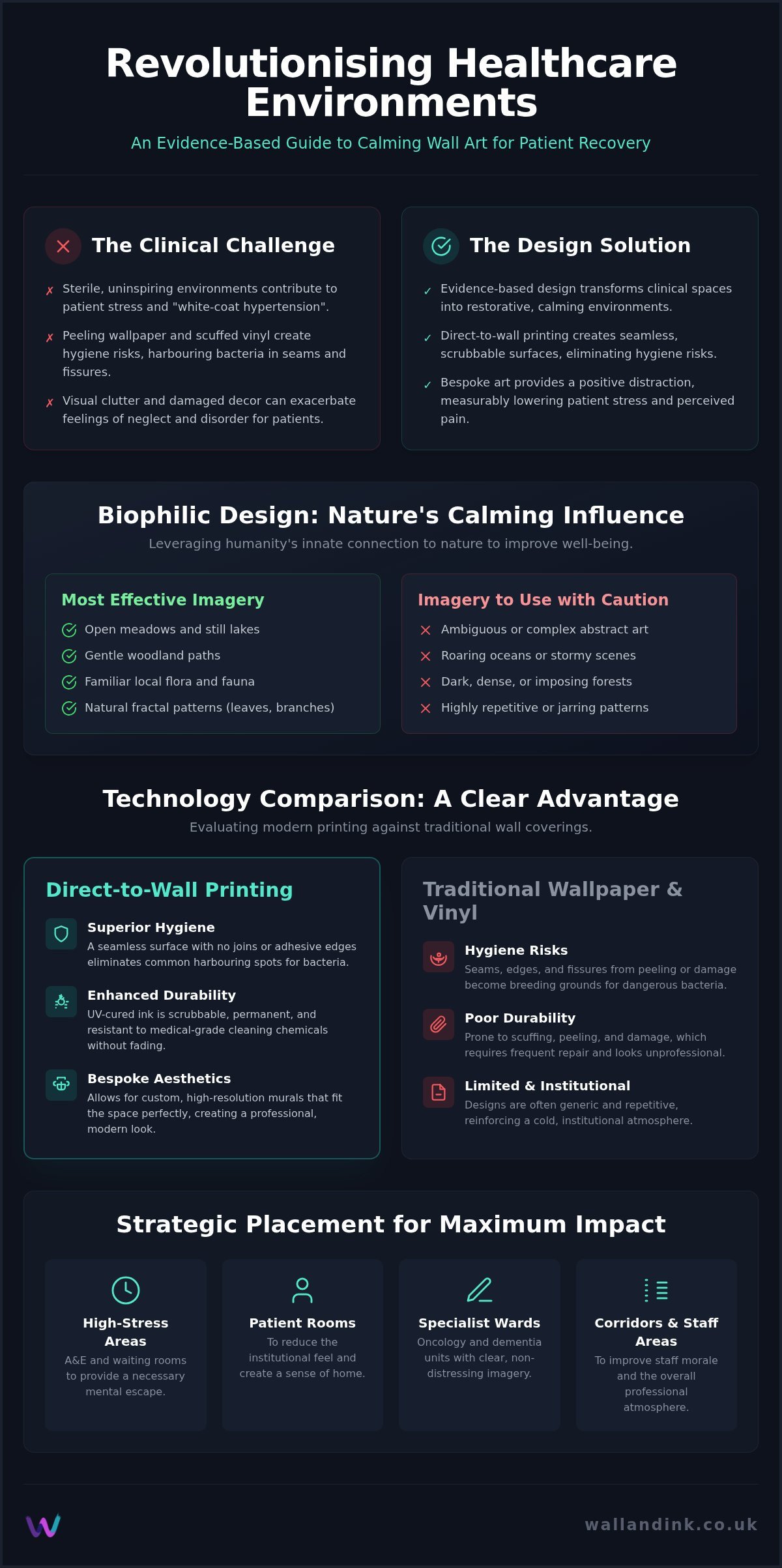
Environmental aesthetics in modern patient-centred care are functional requirements, not optional extras. A sterile room isn’t just uninspiring; it’s often actively anxiety-inducing. Studies indicate that patients in environments with high visual stress frequently experience elevated heart rates and blood pressure. This physical response, often associated with white-coat hypertension, complicates clinical assessments and prolongs recovery times. Integrating calming wall art for healthcare serves as a critical positive distraction. By providing a sophisticated focal point that isn’t a medical monitor or a blank ceiling tile, hospitals can measurably lower a patient’s perceived intensity of pain and stress. It’s a pragmatic, technical tool for recovery.
Evidence-Based Design (EBD) in Clinical Settings
Modern healthcare architecture and interior planning now rely on Evidence-based design (EBD) to improve clinical outcomes. This framework uses credible research to influence the physical environment, ensuring every design choice has a measurable benefit. This approach isn’t limited to patient health. Staff morale and retention rates improve when the workspace feels professional and intentionally designed. Strategic visual interventions, such as bespoke direct-to-wall murals, reduce the cold, institutional atmosphere common in legacy hospitals. They replace the industrial feel of traditional facilities with a sense of modern precision and reliability. Selecting the right calming wall art for healthcare environments within an EBD framework ensures that aesthetic choices support the clinical mission.
Reducing Visual Stress for Vulnerable Patients
Vulnerable patient groups require specific visual considerations. Those with dementia or sensory processing disorders can become distressed by complex, abstract, or highly repetitive patterns. In these settings, visual clarity is vital. In high-pressure zones like oncology wards or A&E waiting areas, positive distractions provide a necessary mental escape. A serene landscape or a high-resolution floral scene creates a subconscious sense of safety and home during a temporary clinical stay. It’s essential to avoid the visual clutter of peeling wallpaper or damaged vinyl, which can exacerbate feelings of neglect or disorder. By applying art directly to the substrate, the imagery remains pristine and permanent, contributing to a stable and restorative atmosphere for everyone in the building.
Biophilic Design: Why Nature-Inspired Imagery Works Best
Biophilic design is a technical framework based on the innate human connection to the natural world. In a clinical setting, this isn’t about mere decoration. It’s about using specific biological triggers to induce a relaxation response. Research from the Mayo Clinic confirms that art can help promote well-being by reducing the physiological symptoms of stress. Selecting calming wall art for healthcare requires an understanding that not all nature imagery is equal. A roaring ocean or a dark, dense forest can feel threatening to a vulnerable patient. Instead, we prioritise “prospect and refuge” imagery, such as still lakes, open meadows, or gentle woodland paths. These scenes provide a sense of safety and spatial depth that abstract art cannot match.
Abstract art often fails in healthcare because it’s open to interpretation. For patients experiencing cognitive decline or high levels of anxiety, ambiguous shapes can be confusing or even frightening. Nature-inspired imagery is universal. By utilising local flora and fauna, such as native British wildflowers or familiar coastal landscapes, facilities create a sense of place. This familiarity grounds the patient in their environment, replacing the “anywhere” feel of a sterile ward with a recognisable, comforting aesthetic. To ensure these designs fit your specific space perfectly, we offer bespoke wall murals that are tailored to your facility’s layout and patient demographic.
The Science of Fractal Patterns
Fractals are repeating geometric patterns found throughout nature, from the veins in a leaf to the branches of a tree. The human brain is hardwired to process these specific geometries efficiently, which triggers a parasympathetic nervous system response. Exposure to these naturally occurring fractal patterns in healthcare art measurably lowers cortisol levels and reduces heart rate by providing the brain with a relaxing visual task. This biological efficiency is why a high-resolution print of a forest canopy is more restorative than a plain, solid-coloured wall.
Colour Theory for Healthcare Murals
Colour selection is a critical component of calming wall art for healthcare. We avoid high-energy colours like bright reds or oranges, which can increase heart rate and agitation in treatment rooms. Instead, we utilise a palette of soft blues, sage greens, and warm earth tones. These colours are technically proven to lower blood pressure and create a tranquil atmosphere. Precision in colour application also involves considering accessibility. We ensure appropriate contrast levels in every mural to assist patients with visual impairments or age-related decline, ensuring the environment remains navigable and safe for everyone.
Direct-to-Wall Printing vs Traditional Wallpaper: The Hygiene Advantage
Infection control is the primary driver for every design decision in a clinical environment. Traditional wall coverings like wallpaper or vinyl decals present significant risks because they rely on adhesives and create physical seams. These joints are prone to peeling, especially in high-traffic corridors where trolleys and foot traffic are constant. Once a seam lifts, it creates a fissure that harbours moisture and bacteria, directly contradicting modern safety standards. Choosing calming wall art for healthcare that is printed directly to the substrate eliminates these failure points entirely.
Our technical process uses UV-cured ink applied directly to the wall surface. This method creates a monolithic finish that is integrated with the substrate rather than sitting on top of it. It results in a surface that is scrubbable and resistant to the mechanical impact of hospital equipment. While traditional wallpaper often requires replacement within a few years due to scuffing or adhesive failure, direct-to-wall printing offers industrial-grade durability that withstands the rigours of a 24-hour medical facility.
Eliminating Infection Risks with Seamless Art
By removing the “peel point” associated with traditional graphics, direct-to-wall printing ensures there are no edges for bacteria to thrive. The resulting surface is completely flat and non-porous, making it fully compatible with stringent NHS cleaning protocols. You can use medical-grade cleaning agents and harsh chemical disinfectants without risking the integrity of the art. This seamless application meets the standards that mandate clinical wall finishes must be washable and devoid of open joints that could harbour moisture.
Long-Term Maintenance and Sustainability
The cost-effectiveness of this approach is evident in the long-term maintenance cycle. Research indicates that direct-to-wall printing is approximately 40% to 50% less costly than wallpaper or vinyl over a five-year cycle when you factor in the labour for removals and replacements. It’s a “print once” solution that avoids the recurring expense of repairing torn vinyl or peeling edges. Additionally, the UV inks we use are eco-friendly, producing low VOCs and an odourless application. This allows for the installation of calming wall art for healthcare in active wards without disrupting patient comfort or air quality. We provide a professional, bespoke aesthetic that reflects the quality of your care whilst ensuring the highest standards of clinical hygiene.
Strategic Placement: Where to Implement Calming Art
Effective placement of calming wall art for healthcare follows the patient journey from the moment they enter the building. First impressions are established in the reception area; a large-scale mural here signals a professional, reliable atmosphere and immediately reduces the institutional feel of the facility. As patients move into high-traffic corridors, unique and recognisable wall graphics serve as vital wayfinding tools. By using distinct visual landmarks instead of relying solely on text-based signage, you reduce the cognitive load on visitors who may already be experiencing high levels of stress. This strategic use of imagery ensures that the environment is both functional and supportive.
Departmental tailoring is a technical necessity. Paediatric wards require engaging, vibrant nature scenes that provide immediate distraction for younger patients. Conversely, geriatric wards benefit from high-contrast, familiar local landscapes that assist with orientation and memory. Our bespoke approach ensures that every design is specifically calibrated for the patient demographic and the clinical requirements of the space. To see how these designs look in your specific facility, you can request a digital visualisation as part of our consultation process.
Waiting Rooms and Reception Areas
Reception areas are often high-anxiety zones where first impressions are critical. Large-scale murals set a reassuring tone and can actually reduce the perceived wait time by providing “positive distractions”. Detailed, high-resolution imagery gives the eye a place to rest and the mind a restorative task. You can also use direct-to-wall printing to define different seating zones or service areas. This creates clear boundaries without the need for physical barriers that might obstruct the flow of traffic or light.
Treatment Rooms and Patient Wards
In treatment rooms, patients are frequently in a supine position. Ceiling prints provide a calming view during procedures, replacing a sterile ceiling with a serene woodland canopy or sky scene. This “Window to Nature” effect is particularly vital in internal rooms that lack natural light. We ensure that every mural is balanced with necessary medical equipment and clinical signage. The art supports the clinical function of the room whilst maintaining a restorative atmosphere that aids patient cooperation and recovery.
Bespoke Wall Murals: The Wall & Ink Approach
Generic stock photography often lacks the technical specificity and emotional resonance required for calming wall art for healthcare. Whilst mass-produced imagery might provide a temporary visual fix, it rarely aligns with the evidence-based design standards necessary for optimal clinical outcomes. Our bespoke approach ensures that every mural is tailored to the specific demographic and architectural needs of your facility. By moving away from generic solutions, we provide a professional aesthetic that reinforces the quality of care provided within your walls.
Stakeholder approval is a complex process in healthcare environments. To facilitate this, we include a digital visualisation stage in every project. This allows clinicians and facility managers to see the proposed art in situ before any printing begins. It eliminates the risk of design errors and ensures the final result integrates perfectly with existing medical equipment and clinical signage. This transparent, methodical process is a hallmark of our industrial precision.
From Consultation to High-Resolution Execution
We work directly with healthcare stakeholders to select imagery that meets stringent clinical standards. Our direct-to-wall printing technology is capable of high-resolution execution on a wide range of substrates, including plaster, brick, and glass. The mechanical precision of our hardware ensures that even large-scale murals maintain absolute clarity. This method provides a level of durability that traditional vinyl or wallpaper cannot match, resulting in a permanent, high-quality finish that withstands the daily rigours of a busy hospital environment.
A Partner in Healthcare Transformation
Wall & Ink operates as a specialist partner for NHS trusts and private clinics across the UK. We understand that clinical spaces cannot afford long periods of downtime. Our installation process is fast, clean, and entirely odourless. Because the UV inks cure instantly, there is no need for wards to be closed or for patients to be relocated due to chemical fumes. This zero-disruption model allows for the seamless integration of calming wall art for healthcare into active medical environments. We are committed to providing a national service that delivers consistent, clinical-grade results on every site.
Our goal is to eliminate the traditional hassles of wall decor whilst providing a modern, hygienic solution that supports patient wellbeing. If you are ready to transform your clinical space with durable, bespoke imagery, enquire about our bespoke healthcare wall printing services today.
Advancing Patient Care through Technical Design
Creating a healing environment requires a balance between psychological comfort and industrial-grade hygiene. You’ve seen how evidence-based biophilic imagery serves as an essential tool for reducing patient anxiety and how strategic placement can transform the entire care journey. By choosing calming wall art for healthcare that is printed directly to the substrate, you eliminate the infection risks inherent in traditional wallpaper seams and peeling vinyl. Our UV-cured ink technology ensures maximum durability against harsh cleaning chemicals; meanwhile, our bespoke design process and digital mock-ups provide the precision needed for stakeholder approval.
It’s time to replace sterile, high-stress corridors with restorative, professional aesthetics that reflect your commitment to quality care. This modern approach doesn’t just improve patient outcomes; it streamlines maintenance and future-proofs your facility’s interior standards. You can take the first step toward a more serene and hygienic clinical environment today. Transform your healthcare space with bespoke, direct-to-wall murals and create a lasting positive impact on both patients and staff.
Frequently Asked Questions
Is wall art in hospitals hygienic and easy to clean?
Direct-to-wall printing is superior for hygiene because it eliminates the seams and adhesives found in wallpaper or vinyl. Pathogens often harbour in these fissures. Our UV-cured ink creates a monolithic, non-porous surface integrated with the wall. This makes the art fully compatible with medical-grade cleaning agents and NHS infection control protocols. It’s a scrubbable solution that maintains its integrity under rigorous sanitisation without peeling or lifting.
Can you print calming art directly onto hospital ward walls?
Our technology allows for high-resolution printing directly onto various substrates common in hospital wards, including plaster, brick, and glass. This method is specifically designed for clinical environments where traditional wall coverings are a liability. By applying calming wall art for healthcare directly to the surface, we ensure a permanent finish that doesn’t peel or scuff in high-traffic patient areas. It’s an ideal way to transform sterile wards into restorative spaces.
How long does it take to install a healthcare wall mural?
Installation time depends on the project’s scale, but most murals are completed within a single day. Our advanced UV printing hardware applies the image at a rapid rate, and the ink cures instantly under ultraviolet light. This efficiency is critical for healthcare facilities that operate on tight schedules. We provide a clear timeline during the digital visualisation phase so you can plan around ward requirements effectively without any unexpected delays.
Is the ink used in healthcare wall printing safe and odourless?
The UV-cured inks we use are specifically selected for their safety profile in sensitive environments. They are entirely odourless and produce low VOCs, making them ideal for use in active hospital wards or clinics. Unlike traditional paint or adhesives that require ventilation, our process allows for immediate room occupancy. This ensures that air quality remains uncompromised for patients with respiratory issues or sensory sensitivities whilst the transformation takes place.
Does calming wall art actually improve patient recovery times?
Evidence-based design research indicates that restorative imagery can measurably reduce patient stress and perceived pain levels. By providing a positive distraction, calming wall art for healthcare helps lower cortisol and heart rates, which are key factors in the recovery process. Whilst art is one part of a holistic care plan, creating a less institutional environment supports faster discharge rates and improves the overall patient experience according to various clinical studies.
Can wall art help with wayfinding in large hospital complexes?
Unique and recognisable wall graphics are highly effective wayfinding tools. Large-scale murals serve as visual landmarks that help patients and visitors navigate complex corridors more intuitively than text-based signage alone. This reduces cognitive load and anxiety for those searching for specific departments. Using distinct nature-inspired imagery for different wards or floors creates a clear, visual map that improves the flow of people across the facility whilst enhancing the aesthetic.
What kind of imagery is best for calming patients in a dentist or GP surgery?
Biophilic imagery, such as meadows, woodland canopies, or still water, is most effective for reducing anxiety in primary care settings. We avoid high-energy colours or abstract patterns that might be misinterpreted by patients under stress. Instead, we focus on scenes with prospect and refuge qualities. These provide a sense of spatial depth and safety, which is particularly useful in smaller treatment rooms where patients might feel confined or claustrophobic during procedures.
Will the printing process disrupt our clinical operations?
Our process is designed for zero disruption to clinical operations. Because the UV ink dries instantly and is odourless, there is no need to close wards or relocate patients. The equipment operates quietly and doesn’t produce dust or debris, unlike traditional refurbishment methods. This allows us to transform a space whilst your team continues to provide care, ensuring that patient services remain uninterrupted and the environment stays clean throughout the installation.